
Welcome to the tiny world that keeps ecosystems humming, foods fermenting, and scientists peering into microscopes.
These 120 microbiology questions explore cells, viruses, fungi, laboratory tools, and discoveries with big consequences.
Meet the Microbial World
Q: What does microbiology study?
A: Organisms and agents too small to see clearly without magnification.
Q: What does the prefix micro mean?
A: Small.
Q: Are all microbes single-celled?
A: No.
Q: Which cellular microbes lack a nucleus?
A: Bacteria and archaea.
Q: Which microbes are eukaryotes with nuclei?
A: Fungi, protists, and microscopic algae.
Q: Are viruses cells?
A: No.
Q: What is a community of microbes living in a particular habitat?
A: A microbiota.
Q: What term includes a microbial community and its genetic material?
A: A microbiome.
Q: Can microbes live in hot springs and polar ice?
A: Yes.
Q: What are organisms that thrive in extreme conditions called?
A: Extremophiles.
Q: What is a microbe that lives on or in a host without causing harm called?
A: A commensal.
Q: What partnership benefits both organisms?
A: Mutualism.
Q: What interaction benefits one organism while harming another?
A: Parasitism.
Q: What is a disease-causing agent called?
A: A pathogen.
Q: Are most microorganisms pathogens?
A: No.
Microscopes and Methods
Q: Who first described microscopic living organisms in detail?
A: Antonie van Leeuwenhoek.
Q: What instrument did Leeuwenhoek use?
A: A single-lens microscope.
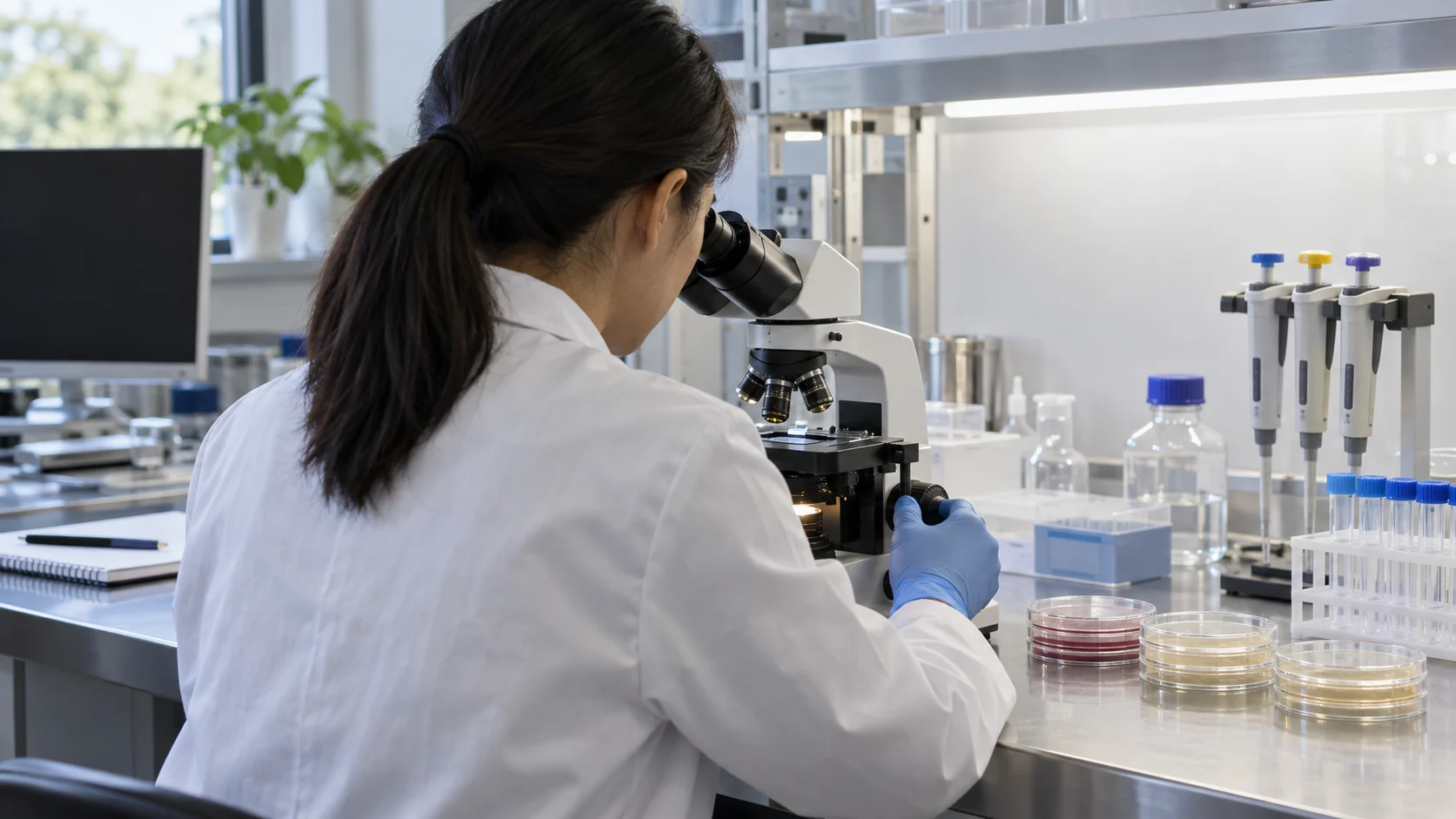
Q: What microscope uses visible light?
A: A light microscope.
Q: What microscope uses electrons for much higher resolution?
A: An electron microscope.
Q: What does magnification describe?
A: How much larger an image appears.
Q: What does resolution describe?
A: The ability to distinguish two nearby points.
Q: What technique colors cells to improve contrast?
A: Staining.
Q: What common stain separates many bacteria into two broad groups?
A: The Gram stain.
Q: What color do Gram-positive cells usually appear after Gram staining?
A: Purple.
Q: What color do Gram-negative cells usually appear after Gram staining?
A: Pink or red.
Q: What gel-like laboratory material supports microbial growth?
A: Agar.
Q: What nutrient-filled material grows microbes in a laboratory?
A: Culture medium.
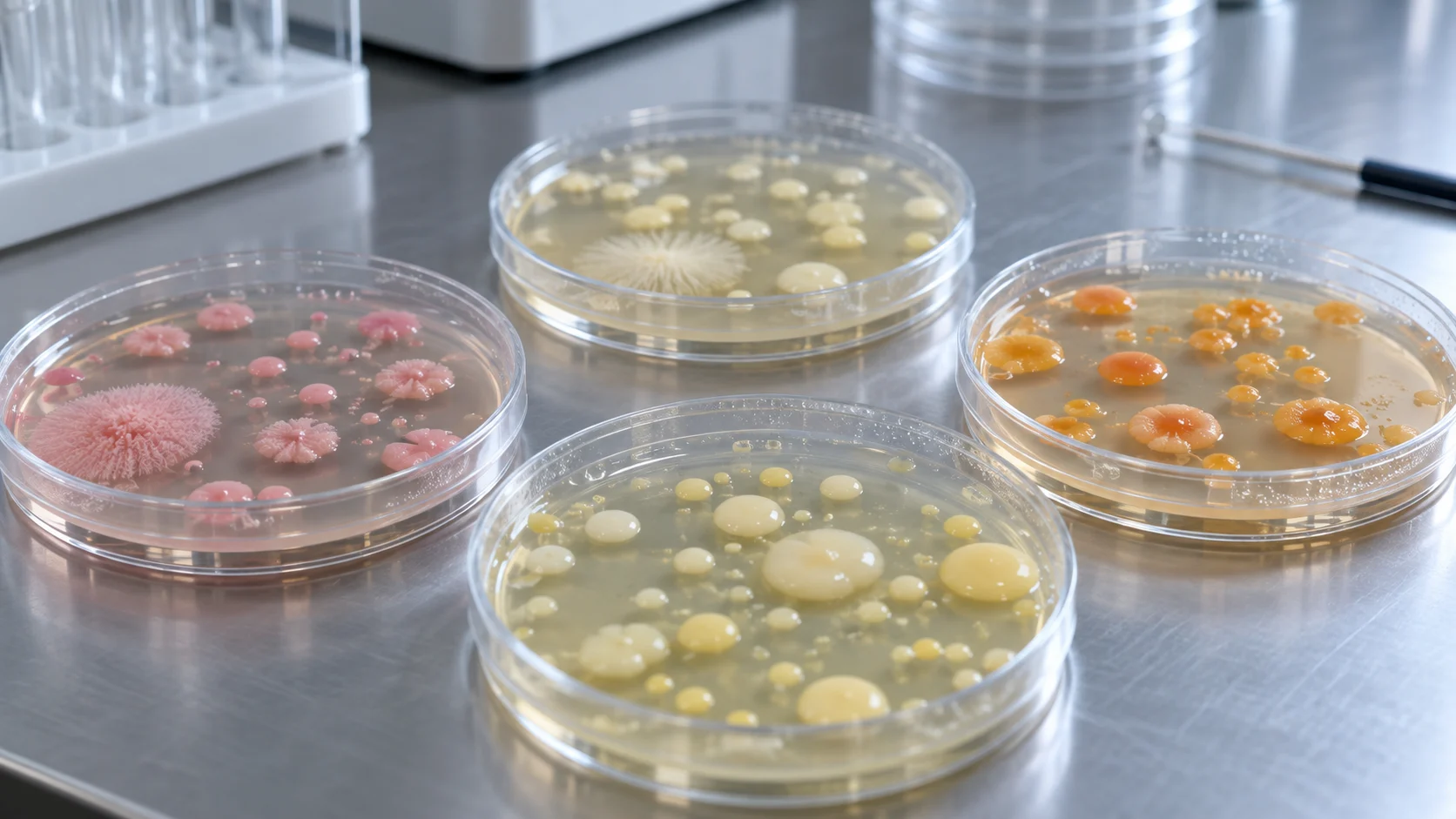
Q: What is a visible mass of microbes grown from one cell or a small cluster?
A: A colony.
Q: What technique separates microbes across an agar plate?
A: Streak plating.
Q: What device sterilizes with pressurized steam?
A: An autoclave.
Bacteria and Archaea
Q: What domain contains the familiar prokaryotes with peptidoglycan walls?
A: Bacteria.
Q: What domain contains prokaryotes distinct from bacteria?
A: Archaea.
Q: Do archaeal cell walls contain peptidoglycan?
A: No.
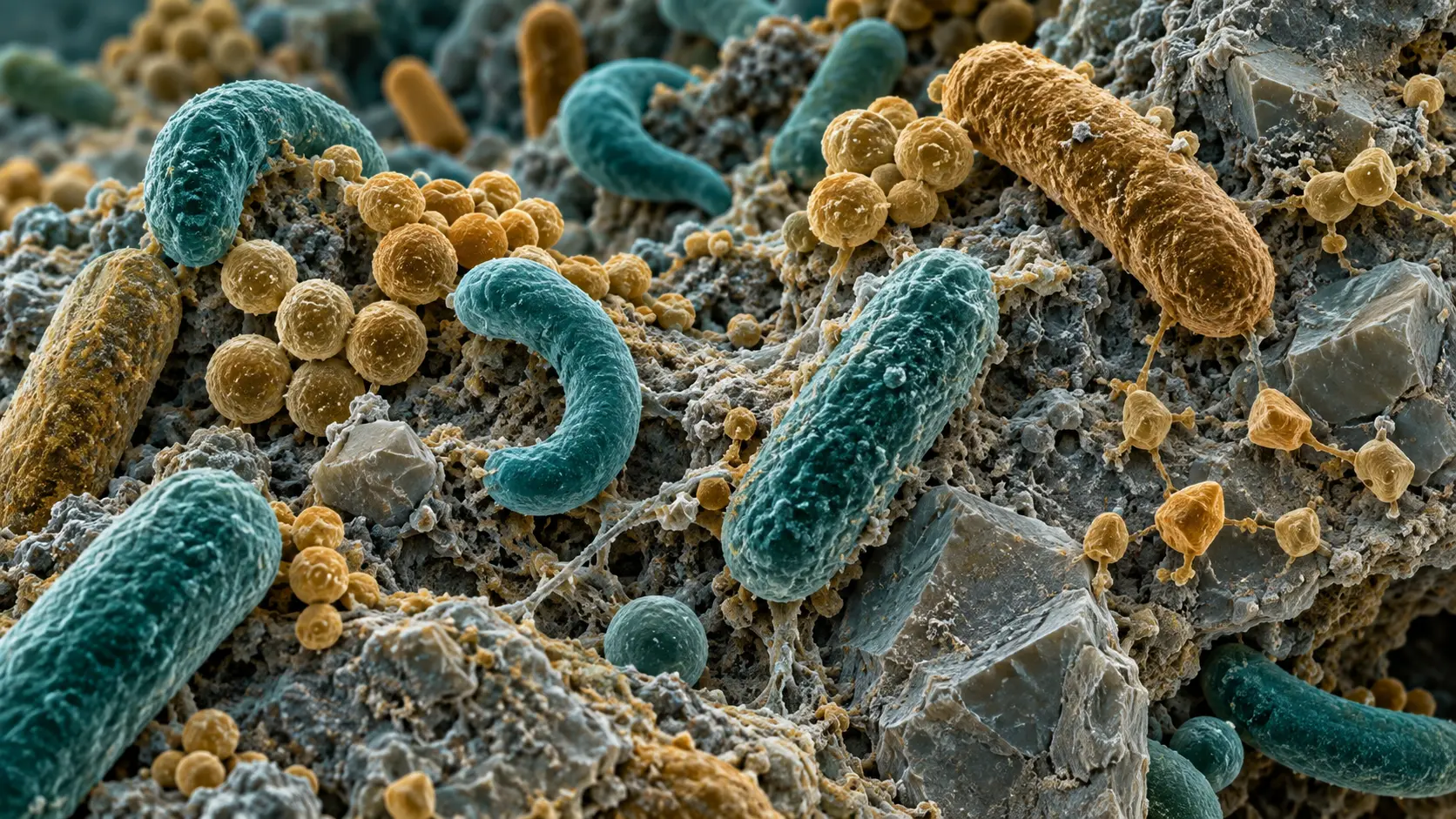
Q: What is a spherical bacterium called?
A: A coccus.
Q: What is a rod-shaped bacterium called?
A: A bacillus.
Q: What is a spiral-shaped bacterium called?
A: A spirillum.
Q: What appendage can propel a bacterial cell?
A: A flagellum.
Q: What short surface structures can help bacteria attach?
A: Pili or fimbriae.
Q: What bacterial structure contains most genetic information?
A: The chromosome.
Q: What small extra circle of bacterial DNA is called?
A: A plasmid.
Q: How do most bacteria reproduce?
A: Binary fission.
Q: What tough dormant structure can some bacteria form?
A: An endospore.
Q: What process lets bacteria take up free DNA from their surroundings?
A: Transformation.
Q: What process transfers bacterial DNA through direct cell contact?
A: Conjugation.
Q: What viruses infect bacteria?
A: Bacteriophages.
Viruses and Viroids
Q: What genetic material can a virus contain?
A: DNA or RNA.
Q: What protein shell surrounds a viral genome?
A: A capsid.
Q: What lipid layer surrounds some viruses?
A: An envelope.
Q: Can viruses reproduce without a host cell?
A: No.
Q: What cycle quickly makes new phages and bursts the host cell?
A: The lytic cycle.
Q: What cycle integrates phage DNA into a bacterial chromosome?
A: The lysogenic cycle.
Q: What enzyme lets retroviruses make DNA from RNA?
A: Reverse transcriptase.
Q: What infectious protein can cause abnormal protein folding?
A: A prion.
Q: What tiny infectious RNA agent mainly affects plants?
A: A viroid.
Q: Are prions bacteria?
A: No.
Q: What virus was declared eradicated worldwide in 1980?
A: Smallpox virus.
Q: What animal virus was eradicated globally in 2011?
A: Rinderpest virus.
Q: What mosquito-borne virus causes yellow fever?
A: Yellow fever virus.
Q: What virus causes COVID-19?
A: SARS-CoV-2.
Q: What virus causes AIDS?
A: HIV.
Fungi, Protists, and Algae
Q: What branch of microbiology studies fungi?
A: Mycology.
Q: What single-celled fungi commonly reproduce by budding?
A: Yeasts.
Q: What are the threadlike structures that make up many fungi called?
A: Hyphae.
Q: What network of hyphae forms a fungal body?
A: A mycelium.
Q: What reproductive units do many fungi make?
A: Spores.
Q: What group includes amoebas and many other diverse eukaryotic microbes?
A: Protists.
Q: How does an amoeba commonly move?
A: With pseudopods.
Q: What hairlike structures propel a paramecium?
A: Cilia.
Q: What pigment allows many algae to capture light?
A: Chlorophyll.
Q: What microscopic algae build glasslike silica shells?
A: Diatoms.
Q: What photosynthetic bacteria were once called blue-green algae?
A: Cyanobacteria.
Q: Are cyanobacteria true algae?
A: No, they are bacteria.
Q: What oomycete caused the Irish potato famine?
A: Phytophthora infestans.
Q: Are oomycetes true fungi?
A: No.
Q: What symbiosis commonly joins a fungus with an alga or cyanobacterium?
A: A lichen.
Microbes at Work
Q: What microbial process makes yogurt tangy?
A: Lactic acid fermentation.
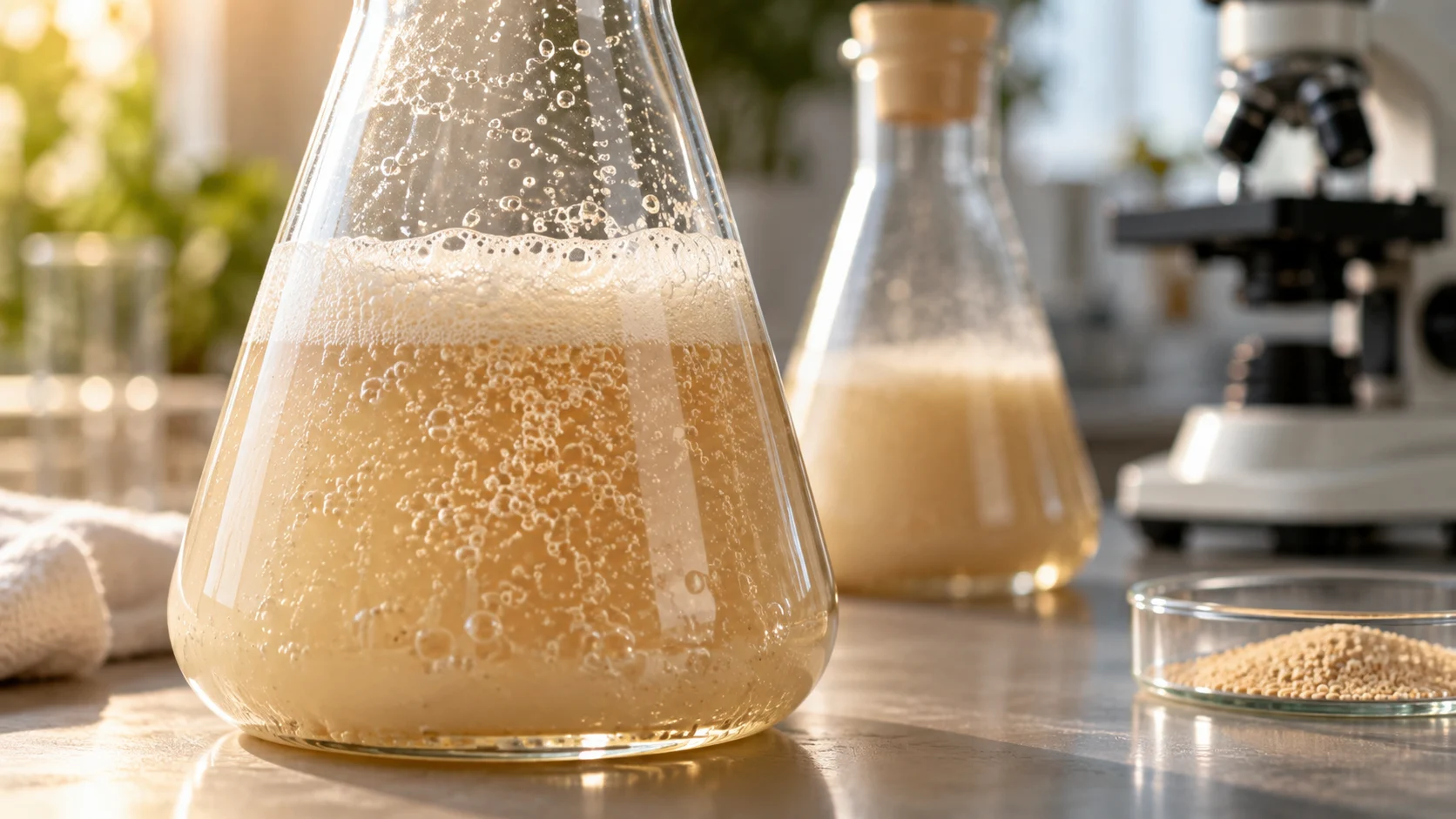
Q: What microbes make bread dough rise?
A: Yeasts.
Q: What gas from yeast expands bread dough?
A: Carbon dioxide.
Q: What yeast is widely used in bread and brewing?
A: Saccharomyces cerevisiae.
Q: What bacterial genera are common in yogurt cultures?
A: Lactobacillus and Streptococcus.
Q: What microbe helps make blue cheese veins?
A: Penicillium mold.
Q: What cultured mold is used to make miso and soy sauce?
A: Aspergillus oryzae.
Q: What process uses microbes to help clean pollutants?
A: Bioremediation.
Q: What bacteria convert atmospheric nitrogen into usable compounds?
A: Nitrogen-fixing bacteria.
Q: What bacteria oxidize ammonia during nitrification?
A: Ammonia-oxidizing bacteria.
Q: What methane-producing archaea are called?
A: Methanogens.
Q: Where are methanogens commonly found?
A: Oxygen-free environments.
Q: What microbial aggregates attach to surfaces inside a protective matrix?
A: Biofilms.
Q: What microbe is used to produce many recombinant proteins?
A: Escherichia coli.
Q: What protein was among the first medicines made with recombinant bacteria?
A: Human insulin.
Hosts, Immunity, and Disease
Q: What is the body's first physical barrier against many microbes?
A: The skin.
Q: What immune cells engulf microbes by phagocytosis?
A: Phagocytes.
Q: What proteins recognize specific antigens?
A: Antibodies.
Q: Which white blood cells make antibodies?
A: B cells.
Q: Which immune cells can kill infected body cells?
A: Cytotoxic T cells.
Q: What is immunity gained after exposure or vaccination called?
A: Adaptive immunity.
Q: What does a vaccine train the immune system to recognize?
A: A specific antigen or pathogen.
Q: Do antibiotics treat viral infections?
A: No.
Q: What can unnecessary antibiotic use promote?
A: Antibiotic resistance.
Q: What is infection acquired in a healthcare setting called?
A: A healthcare-associated infection.
Q: What term describes microbes normally living on and in the body?
A: The normal microbiota.
Q: Can normal microbiota help block invading pathogens?
A: Yes.
Q: What is transmission from animals to humans called?
A: Zoonotic transmission.
Q: What is an organism that carries a pathogen between hosts?
A: A vector.
Q: What measure describes new cases during a period?
A: Incidence.
Microbiology Milestones
Q: Who developed the first successful smallpox vaccine?
A: Edward Jenner.
Q: Who linked specific microbes to specific diseases through famous postulates?
A: Robert Koch.
Q: Who helped establish germ theory and pasteurization?
A: Louis Pasteur.
Q: Who introduced antiseptic surgery using carbolic acid?
A: Joseph Lister.
Q: Who discovered penicillin's antibacterial effect?
A: Alexander Fleming.
Q: Who pioneered handwashing to reduce childbed fever?
A: Ignaz Semmelweis.
Q: Who showed that yellow fever is transmitted by mosquitoes?
A: Walter Reed's commission.
Q: Which scientist's research guided that yellow fever work?
A: Carlos Finlay.
Q: Who developed a polio vaccine using inactivated virus?
A: Jonas Salk.
Q: Who developed an oral polio vaccine using weakened virus?
A: Albert Sabin.
Q: What 1977 technique transformed rapid DNA sequencing?
A: Sanger sequencing.
Q: What method amplifies selected DNA segments?
A: Polymerase chain reaction.
Q: Who invented PCR?
A: Kary Mullis.
Q: What genome-editing system originated as a microbial defense?
A: CRISPR-Cas.
Q: What global project studies microorganisms in and on the human body?
A: The Human Microbiome Project.
A Culture of Curiosity
You cultured 120 answers without spilling a single petri dish. That is a microscopic win with very visible bragging rights.

Ellie Ewert is the founder and author of RandomTrivia.co, blending her passion for research with years of experience in content creation to deliver accurate, engaging, and well-sourced trivia. Dedicated to providing readers with trustworthy and entertaining facts, she applies meticulous fact-checking and SEO expertise to ensure every article meets the highest standards. Read more about our high standards in our Editorial Guidelines.