
Twist into tornado trivia with spinning storms, famous outbreaks, weather radar, and safety know-how.
These questions chase the science without getting carried away by movie myths or windy exaggerations.
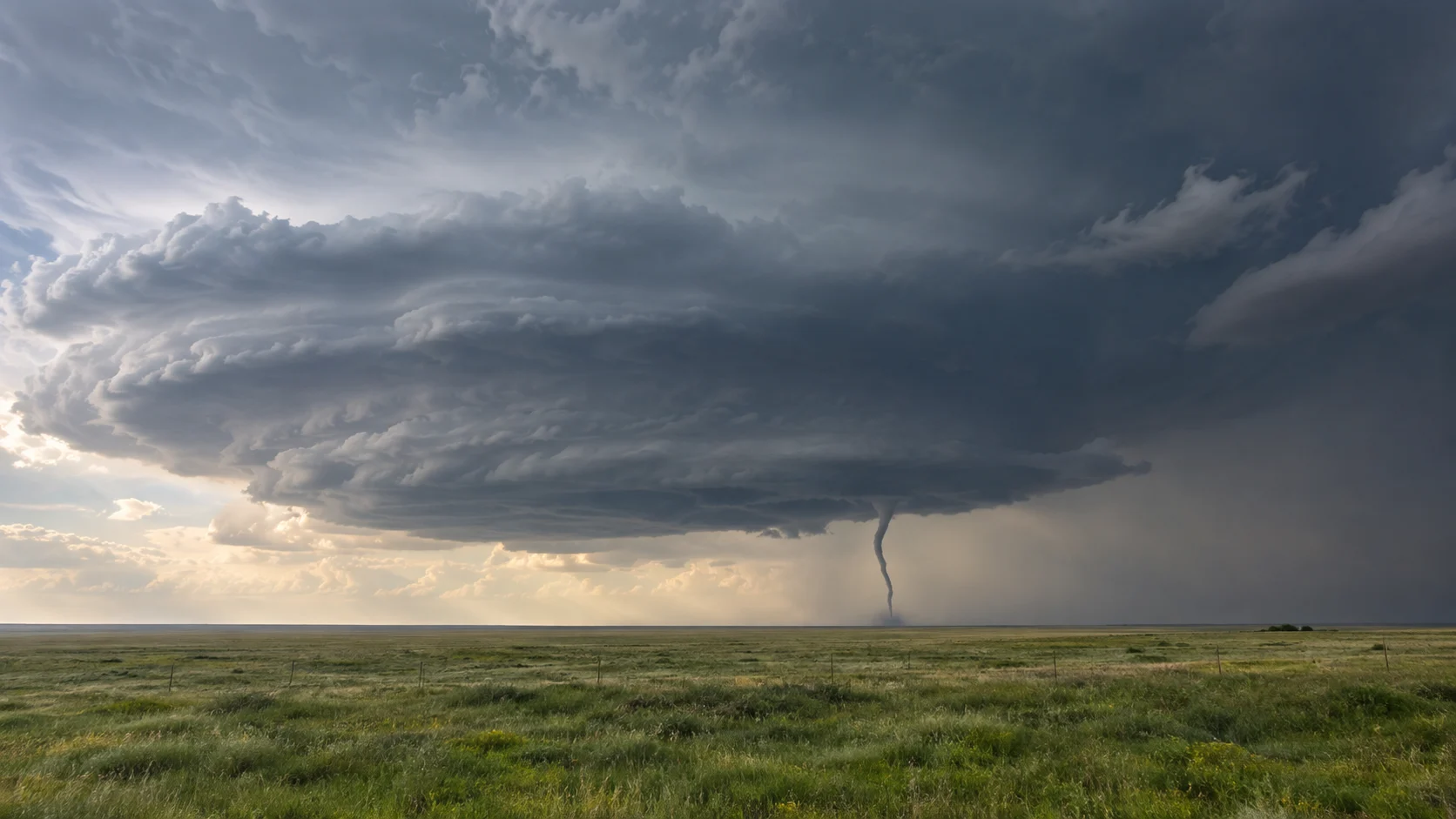
Tornado Basics
Q: What is a tornado?
A: A violently rotating column of air touching the ground and a thunderstorm.
Q: What visible feature often makes a tornado easy to recognize?
A: A condensation funnel.
Q: Can a tornado exist without a fully visible condensation funnel?
A: Yes.
Q: What debris feature may reveal a tornado at ground level?
A: A debris cloud.
Q: What science studies the atmosphere and weather?
A: Meteorology.
Q: What rotating thunderstorm produces many strong tornadoes?
A: A supercell.
Q: What is a supercell's rotating updraft called?
A: A mesocyclone.
Q: Do all supercells produce tornadoes?
A: No.
Q: Can tornadoes form from storms that are not supercells?
A: Yes.
Q: What is a tornado over water commonly called?
A: A waterspout.
Q: What narrow tornado forms from rotation near the ground beneath a growing storm?
A: A landspout.
Q: What small rotating column forms beneath a fair-weather cumulus cloud?
A: A dust devil.
Q: Is a dust devil a tornado?
A: No.
Q: What term describes several tornadoes produced by one storm?
A: A tornado family.
Q: What term describes a broad tornado that looks wider than it is tall?
A: A wedge tornado.
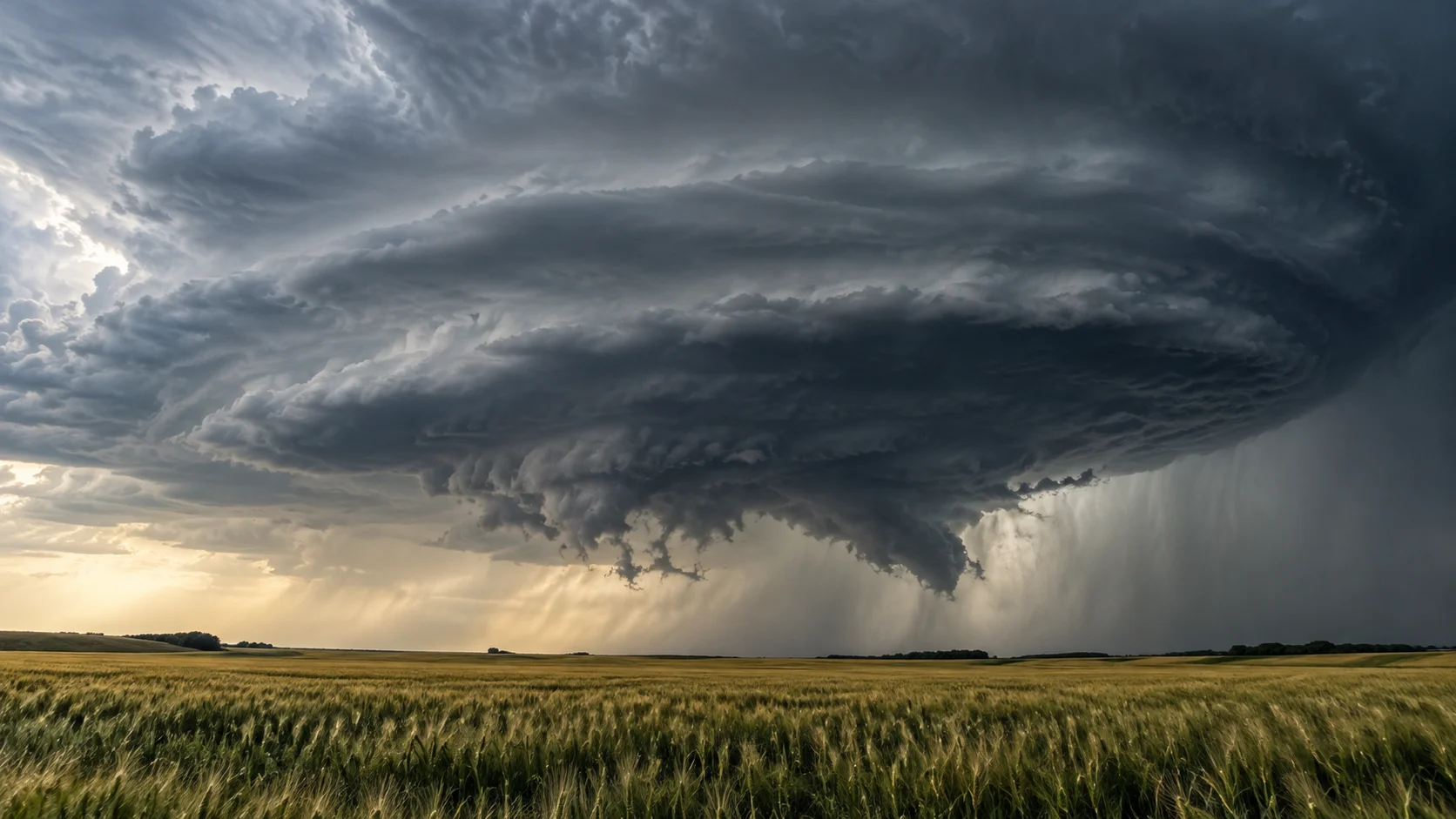
How Tornadoes Form
Q: What three ingredients commonly support severe thunderstorms?
A: Moisture, instability, and lift.
Q: What is wind shear?
A: A change in wind speed or direction with height.
Q: What can vertical wind shear create near the ground?
A: Horizontal rotation.
Q: What storm current can tilt horizontal rotation upright?
A: An updraft.
Q: What warm, humid air often fuels U.S. Plains storms?
A: Air from the Gulf of Mexico.
Q: What dry air mass can meet Gulf moisture to help trigger Plains storms?
A: Air from the Southwest.
Q: What boundary separates moist air from dry air?
A: A dryline.
Q: What boundary forms when advancing cold air pushes under warm air?
A: A cold front.
Q: What lowering beneath a rotating storm base may precede a tornado?
A: A wall cloud.
Q: Does every wall cloud produce a tornado?
A: No.
Q: What cool descending air can wrap around a mesocyclone?
A: The rear-flank downdraft.
Q: What process of tornado formation is called tornadogenesis?
A: The development of a tornado.
Q: What line-shaped storm system can produce brief tornadoes?
A: A quasi-linear convective system.
Q: What low-level ingredient helps sustain a rotating updraft?
A: Warm, moist inflow.
Q: Do scientists completely understand why one supercell produces a tornado and another does not?
A: No.
Shapes, Motion, and Life Cycle
Q: What thin, twisting tornado shape resembles a cord?
A: A rope tornado.
Q: What classic tornado shape widens toward the cloud base?
A: A cone.
Q: What tornado contains several smaller rotating vortices?
A: A multiple-vortex tornado.
Q: Can a tornado change shape during its life?
A: Yes.
Q: What is the path of damage left by a tornado called?
A: A damage path.
Q: Are tornado paths always straight?
A: No.
Q: Can tornadoes stop and then form again from the same storm?
A: Yes.
Q: In which direction do most Northern Hemisphere tornadoes rotate?
A: Counterclockwise.
Q: Can a Northern Hemisphere tornado rotate clockwise?
A: Yes.
Q: What stage begins when a tornado first reaches the ground?
A: The touchdown stage.
Q: What stage often features the tornado's greatest size and strength?
A: The mature stage.
Q: What often happens as a tornado dissipates?
A: It narrows and ropes out.
Q: Can tornadoes be hidden by rain?
A: Yes.
Q: Why are nighttime tornadoes especially dangerous?
A: They are hard to see and may catch people asleep.
Q: Can a tornado cross rivers and hills?
A: Yes.
The Enhanced Fujita Scale
Q: What scale rates U.S. tornadoes by damage?
A: The Enhanced Fujita scale.
Q: What abbreviation is used for the Enhanced Fujita scale?
A: EF.
Q: In what year did the United States begin using the EF scale?
A: 2007.
Q: Who developed the original Fujita scale?
A: Tetsuya Theodore Fujita.
Q: What is the lowest EF rating?
A: EF0.
Q: Which EF rating sits at the top of the scale?
A: EF5.
Q: EF0 damage corresponds to what estimated three-second gust range?
A: 65 to 85 mph.
Q: Which winds are estimated for EF1 damage?
A: 86 to 110 mph.
Q: The 111-to-135-mph wind band belongs to which rating?
A: EF2.
Q: At what wind range does EF3 damage begin and end?
A: 136 to 165 mph.
Q: Which rating carries estimated winds of 166 to 200 mph?
A: EF4.
Q: How fast are winds estimated in EF5 damage?
A: More than 200 mph.
Q: Are EF ratings based mainly on direct wind measurements?
A: No.
Q: What do survey teams examine to assign an EF rating?
A: Damage indicators and degrees of damage.
Q: Why can two buildings suffer different damage in the same winds?
A: Construction quality and exposure differ.
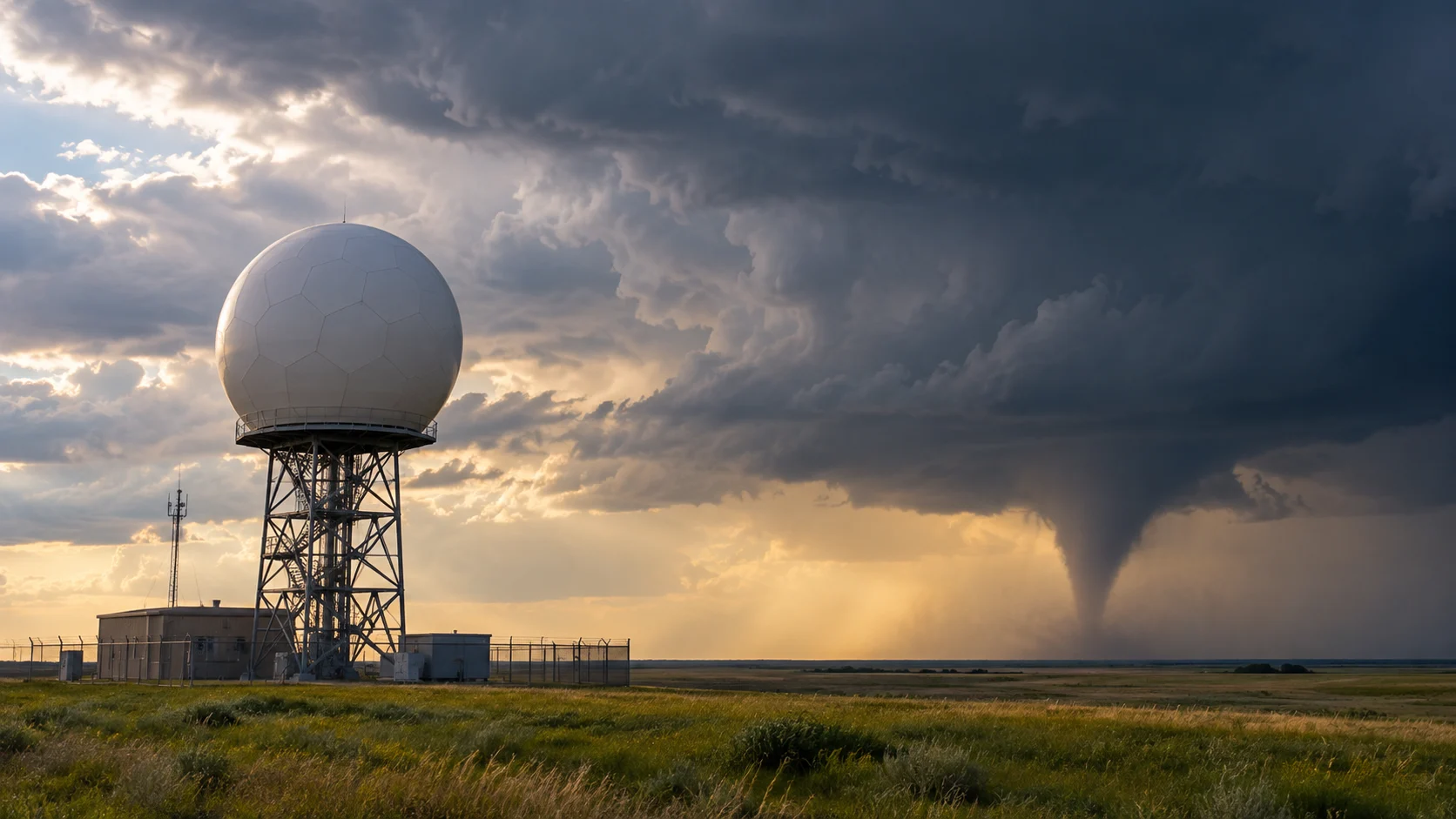
Forecasting and Detection
Q: Which U.S. agency issues official tornado warnings?
A: The National Weather Service.
Q: What does a tornado watch mean?
A: Conditions are favorable for tornadoes.
Q: Which alert means a tornado is occurring or imminent?
A: A tornado warning.
Q: Which NOAA center issues severe thunderstorm and tornado watches?
A: The Storm Prediction Center.
Q: In which Oklahoma city is the Storm Prediction Center based?
A: Norman.
Q: What instrument sends radio waves into storms to detect precipitation and motion?
A: Weather radar.
Q: What radar capability measures motion toward or away from the radar?
A: Doppler velocity.
Q: What radar clue can reveal tight storm rotation?
A: A velocity couplet.
Q: What radar product can reveal lofted tornado debris?
A: Correlation coefficient.
Q: What hook-shaped radar feature can appear with a tornadic supercell?
A: A hook echo.
Q: Does every hook echo confirm a tornado on the ground?
A: No.
Q: What volunteer network reports severe weather to forecasters?
A: SKYWARN.
Q: What portable device broadcasts continuous official weather information?
A: NOAA Weather Radio.
Q: What cellphone system can deliver tornado warnings automatically?
A: Wireless Emergency Alerts.
Q: Can meteorologists predict a tornado's exact path days in advance?
A: No.
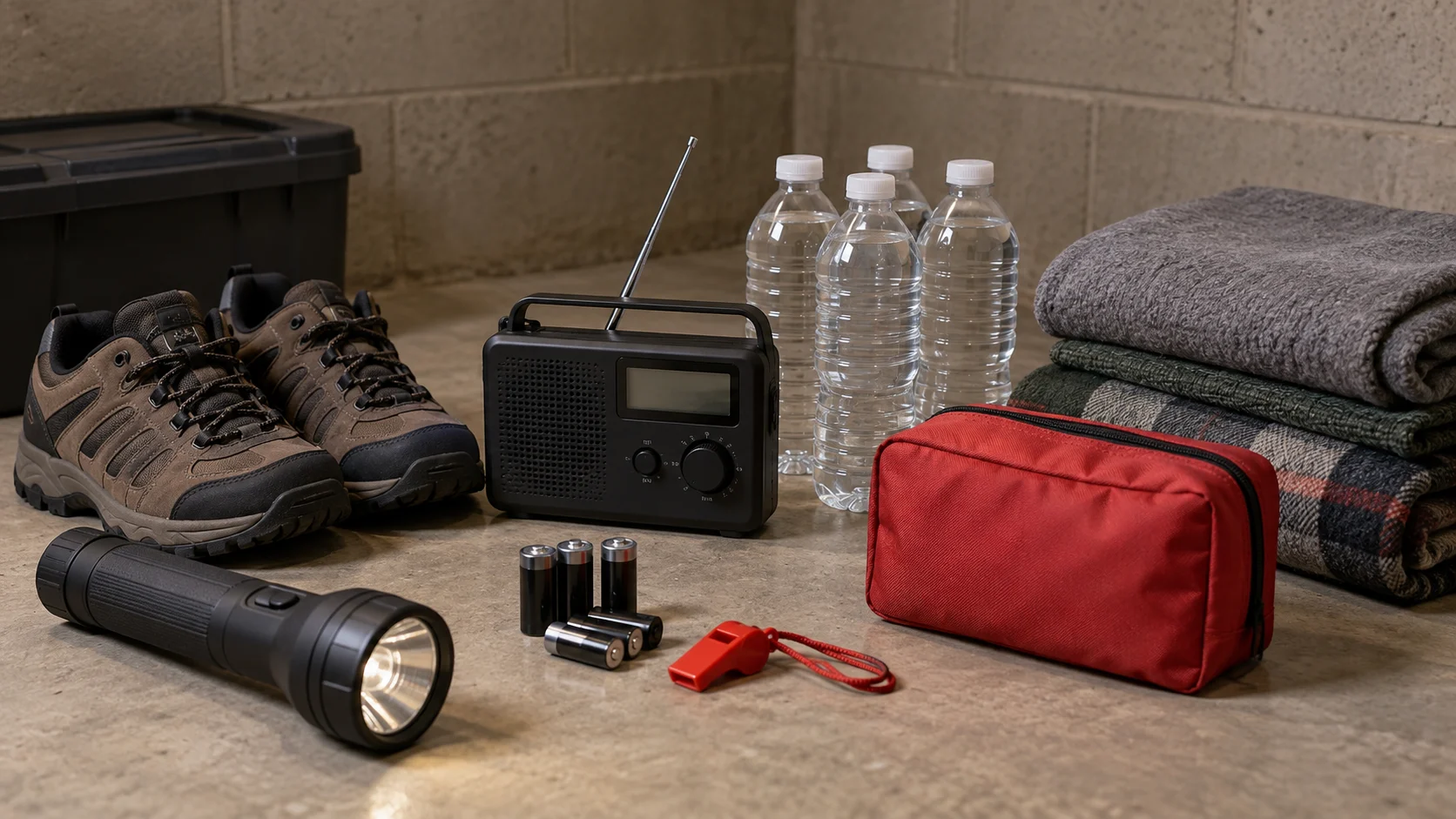
Tornado Safety
Q: What is the safest place in a house during a tornado?
A: A basement or small interior room on the lowest floor.
Q: Should you shelter near windows during a tornado?
A: No.
Q: What body area should you protect from flying debris?
A: Your head and neck.
Q: What can you use to cover yourself in a sturdy shelter?
A: A mattress, blanket, or helmet.
Q: Is opening windows recommended before a tornado?
A: No.
Q: Is a highway overpass a safe tornado shelter?
A: No.
Q: What should mobile-home residents do when a tornado threatens?
A: Go to a sturdy shelter.
Q: Should people rely on outdoor sirens to wake them indoors?
A: No.
Q: Why should families practice a tornado plan?
A: To reach shelter quickly.
Q: What footwear is useful after a tornado?
A: Sturdy closed-toe shoes.
Q: What danger may remain around fallen utility lines?
A: Electrocution.
Q: Should you enter a damaged building before officials say it is safe?
A: No.
Q: What should schools keep away from during tornado sheltering?
A: Windows and large open rooms.
Q: What kind of purpose-built room offers strong tornado protection?
A: A safe room.
Q: What is the first step when a tornado warning arrives?
A: Take shelter immediately.
Historic Tornadoes and Outbreaks
Q: What 1925 tornado crossed Missouri, Illinois, and Indiana?
A: The Tri-State Tornado.
Q: Which U.S. tornado has the longest documented path?
A: The Tri-State Tornado.
Q: What 1974 event produced scores of tornadoes across multiple states?
A: The Super Outbreak.
Q: What 2011 outbreak struck the Southeast on April 27?
A: The 2011 Super Outbreak.
Q: Which Alabama city was hit by a violent tornado on April 27, 2011?
A: Tuscaloosa.
Q: Which Missouri city suffered a deadly EF5 tornado in 2011?
A: Joplin.
Q: Which Oklahoma City suburb was struck by major tornadoes in 1999 and 2013?
A: Moore.
Q: What 2013 Oklahoma tornado reached a record observed width of about 2.6 miles?
A: The El Reno tornado.
Q: Which city was struck by an F5 tornado in 1997?
A: Jarrell, Texas.
Q: Which Kansas town was largely destroyed by an EF5 tornado in 2007?
A: Greensburg.
Q: Which Mississippi town was struck by a long-track EF4 tornado in 2023?
A: Rolling Fork.
Q: What 1966 tornado hit Topeka, Kansas?
A: The Topeka tornado.
Q: What 1953 tornado devastated downtown Waco, Texas?
A: The Waco tornado.
Q: Which Massachusetts city was struck by a deadly tornado in 1953?
A: Worcester.
Q: Which Canadian city was hit by a deadly tornado in 1987?
A: Edmonton.
Tornado Geography and Research
Q: What informal name describes the tornado-prone central United States?
A: Tornado Alley.
Q: Is Tornado Alley an officially defined region with fixed borders?
A: No.
Q: What nickname is used for a tornado-prone area in the Southeast?
A: Dixie Alley.
Q: Which country records more tornadoes than any other?
A: The United States.
Q: Can tornadoes occur on every continent except Antarctica?
A: Yes.
Q: What season brings the broad U.S. peak in tornado activity?
A: Spring.
Q: Does the U.S. Southeast also face tornado risk in fall and winter?
A: Yes.
Q: What research laboratory in Norman studies severe storms?
A: The National Severe Storms Laboratory.
Q: What mobile radar project famously studies tornadoes up close?
A: Doppler on Wheels.
Q: What field project name stood for Verification of the Origins of Rotation in Tornadoes Experiment?
A: VORTEX.
Q: What small instruments can researchers place in a tornado's path?
A: In situ probes.
Q: Why are tornado wind speeds difficult to measure directly near the ground?
A: Tornadoes are brief, dangerous, and localized.
Q: What data source lets researchers reconstruct historic tornado paths?
A: Damage surveys.
Q: What citizen observations can help confirm a radar-detected tornado?
A: Trained spotter reports.
Q: What broad scientific goal drives tornado research?
A: Better forecasts and warnings.
That Round Was a Whirlwind
If you spun through all 120 without losing your place, your forecast calls for bragging rights. Keep the fun moving with our famous people trivia and decades trivia.

Ellie Ewert is the founder and author of RandomTrivia.co, blending her passion for research with years of experience in content creation to deliver accurate, engaging, and well-sourced trivia. Dedicated to providing readers with trustworthy and entertaining facts, she applies meticulous fact-checking and SEO expertise to ensure every article meets the highest standards. Read more about our high standards in our Editorial Guidelines.