
Pull up a chair, whisper the password, and keep an eye out for federal agents, because Prohibition made American nightlife anything but quiet.
These Prohibition trivia questions mix reform politics, constitutional history, speakeasies, bootleggers, organized crime, pop culture, repeal, and a splash of cocktail lore.
The Long Road to Prohibition
Q: What social campaign sought to reduce or eliminate alcohol consumption?
A: The temperance movement.
Q: What did early temperance advocates usually promote before many embraced total abstinence?
A: Moderation in drinking.
Q: Which 19th-century women's organization became a major force for prohibition?
A: The Woman's Christian Temperance Union.
Q: Who became president of the Woman's Christian Temperance Union in 1879?
A: Frances Willard.
Q: Which organization founded in 1893 focused tightly on outlawing alcohol?
A: The Anti-Saloon League.
Q: Which strategist became the Anti-Saloon League's powerful national leader?
A: Wayne Wheeler.
Q: Which hatchet-wielding activist became famous for smashing saloons?
A: Carrie Nation.
Q: What name described communities or states that banned alcohol before national Prohibition?
A: Dry.
Q: What name described places that continued allowing alcohol sales?
A: Wet.
Q: Which religious movement often supported temperance as a moral reform?
A: Evangelical Protestantism.
Q: Why did many labor and family reformers oppose saloons?
A: They linked heavy drinking to poverty, violence, and lost wages.
Q: Which wartime argument said grain should feed soldiers rather than make beer?
A: Grain conservation during World War I.
Q: How did anti-German sentiment affect breweries during World War I?
A: It weakened public support for an industry associated with German Americans.
Q: What tax change made banning alcohol easier for the federal government?
A: The federal income tax reduced reliance on liquor excise revenue.
Q: Which amendment authorized a federal income tax in 1913?
A: The 16th Amendment.
The 18th Amendment and Volstead Act
Q: Which constitutional amendment established national Prohibition?
A: The 18th Amendment.
Q: When was the 18th Amendment ratified?
A: January 16, 1919.
Q: When did national Prohibition take effect?
A: January 17, 1920.
Q: Did the 18th Amendment ban drinking alcohol itself?
A: No, it banned manufacture, sale, and transportation for beverage purposes.
Q: Which law defined and enforced the 18th Amendment?
A: The National Prohibition Act, or Volstead Act.
Q: Which congressman sponsored the Volstead Act?
A: Andrew Volstead.
Q: What alcohol threshold generally made a beverage intoxicating under the Volstead Act?
A: More than 0.5 percent alcohol by volume.
Q: Which president vetoed the Volstead Act?
A: Woodrow Wilson.
Q: How did the Volstead Act become law despite Wilson's veto?
A: Congress overrode the veto.
Q: Which federal department initially oversaw Prohibition enforcement?
A: The Treasury Department.
Q: What federal unit was created to enforce the law?
A: The Prohibition Unit.
Q: Which uses of alcohol remained legal under federal law?
A: Certain medicinal, sacramental, and industrial uses.
Q: Could Americans legally keep alcohol purchased before Prohibition began?
A: Yes, private possession of pre-Prohibition alcohol was generally allowed.
Q: What nickname was given to supporters of Prohibition?
A: Drys.
Q: What nickname was given to opponents of Prohibition?
A: Wets.
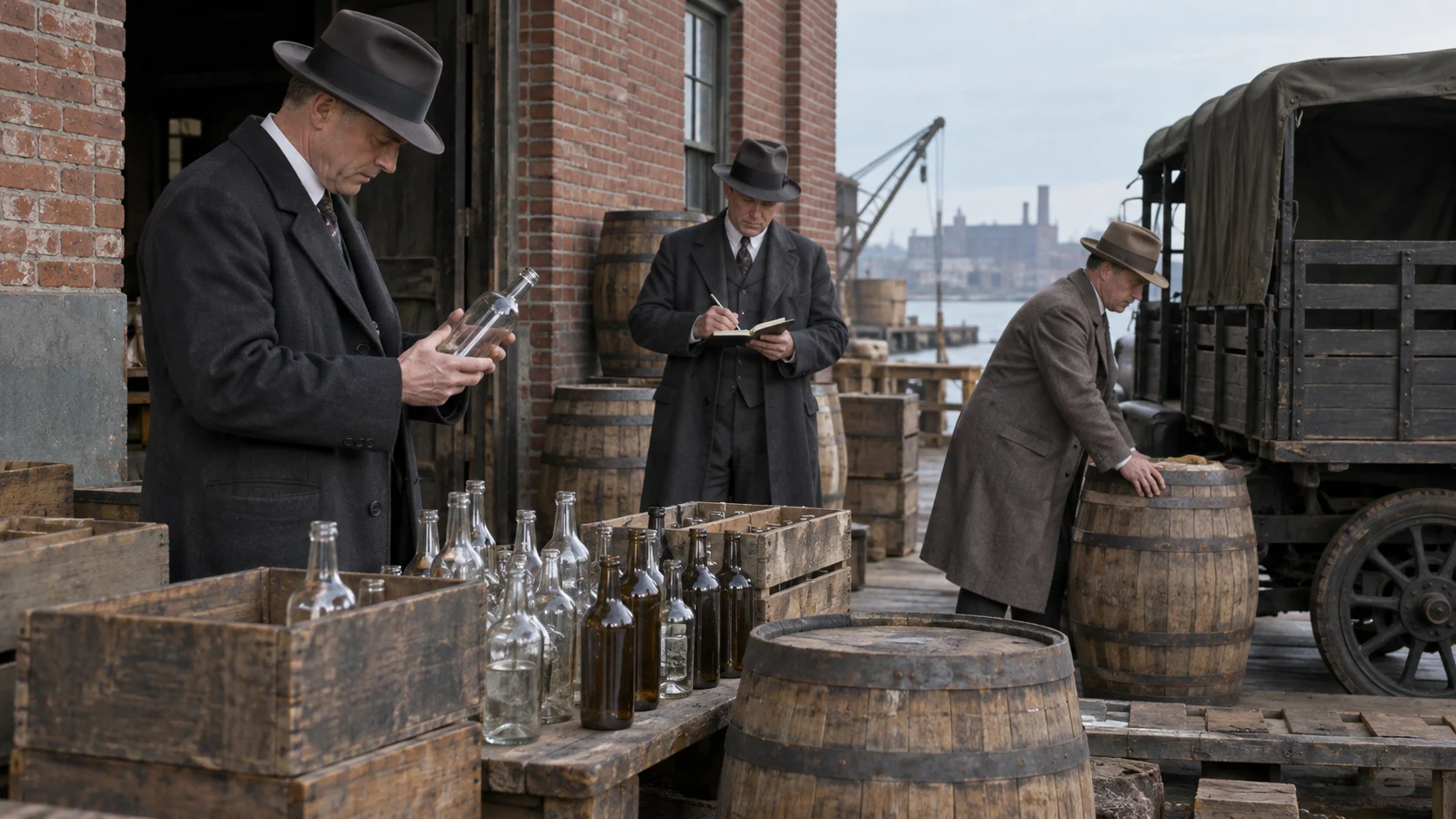
Agents, Raids, and Enforcement Gaps
Q: What slang term described a person who illegally transported liquor?
A: Bootlegger.
Q: Where did the word bootlegger originate?
A: From hiding flasks in the legs of boots.
Q: What illegal distilling operation was called a still?
A: Equipment used to produce distilled spirits.
Q: What illegally distilled liquor was often called moonshine?
A: Untaxed homemade spirits.
Q: What were federal Prohibition agents commonly called?
A: Prohibition agents, or revenuers.
Q: Which famous agent helped pursue Al Capone?
A: Eliot Ness.
Q: What nickname was given to Ness's handpicked enforcement team?
A: The Untouchables.
Q: Which federal agency pursued tax charges against major gangsters?
A: The Bureau of Internal Revenue's Intelligence Unit.
Q: Which accountant-agent helped build the tax case against Al Capone?
A: Frank J. Wilson.
Q: Why was nationwide enforcement so difficult?
A: The country had long borders, huge coastlines, limited agents, and widespread resistance.
Q: How did corruption weaken enforcement?
A: Bootleggers bribed police, officials, judges, and agents.
Q: What happened to many seized automobiles used to carry liquor?
A: They could be confiscated and sold.
Q: Which service intercepted liquor smugglers at sea?
A: The U.S. Coast Guard.
Q: What was Rum Row?
A: Lines of liquor ships anchored beyond U.S. territorial waters.
Q: Which two neighboring countries supplied much smuggled liquor?
A: Canada and Mexico.
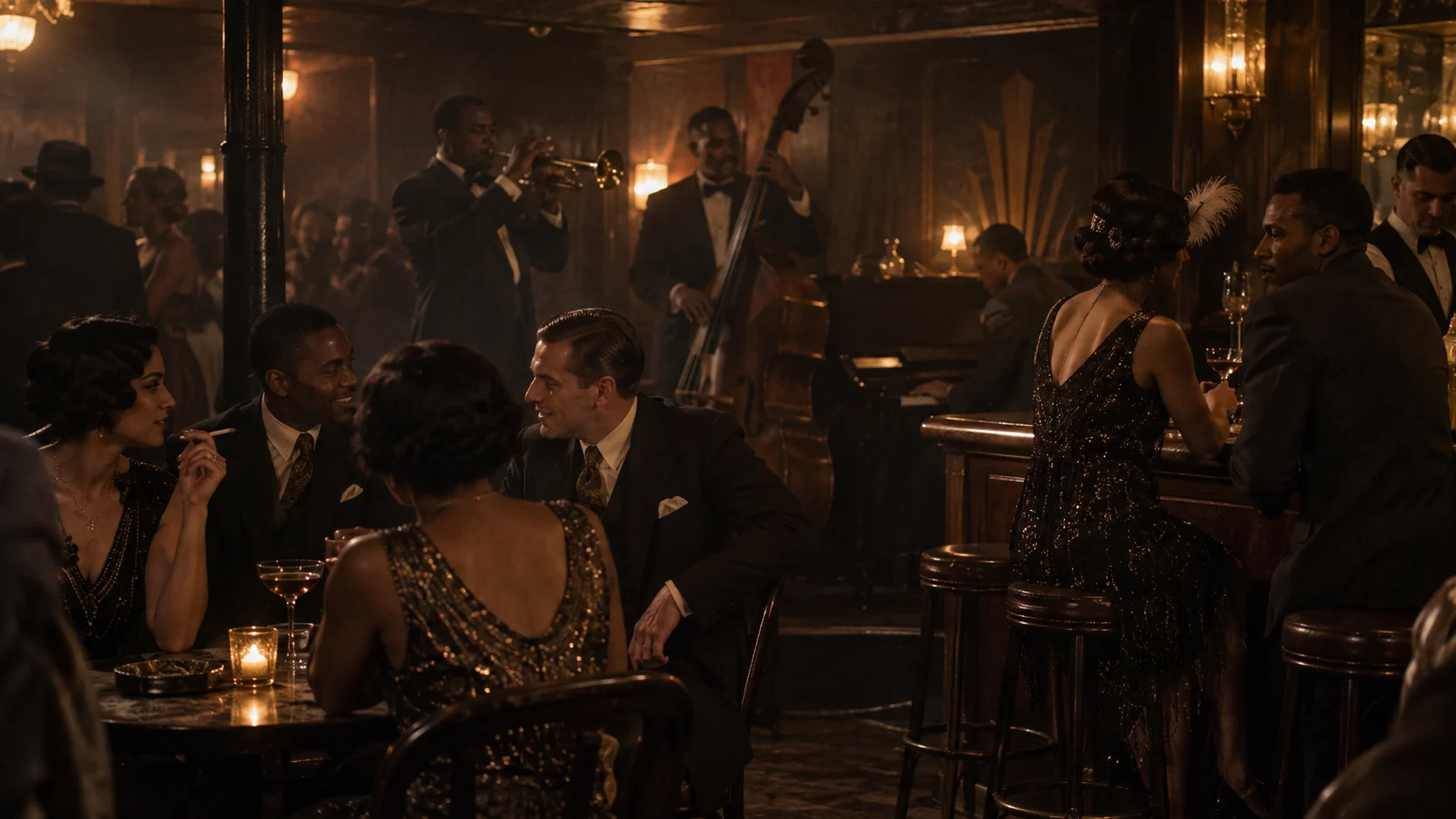
Speakeasies and Secret Nightlife
Q: What was a speakeasy?
A: An illegal drinking establishment.
Q: Why were these clubs called speakeasies?
A: Patrons were supposedly told to speak quietly about them.
Q: What might a customer need to enter a speakeasy?
A: A password, membership card, or trusted introduction.
Q: What small viewing opening let a doorman inspect visitors?
A: A peephole.
Q: What was a blind pig or blind tiger?
A: Another name for an illegal drinking place.
Q: How did some blind pigs disguise an alcohol sale?
A: They charged admission to see an attraction and gave drinks away.
Q: Which music became a soundtrack of speakeasy nightlife?
A: Jazz.
Q: What nickname described fashionable young women associated with 1920s nightlife?
A: Flappers.
Q: Why did cocktails flourish during Prohibition?
A: Mixers helped disguise the harsh flavor of poor-quality liquor.
Q: What was bathtub gin?
A: Illicit gin made by flavoring industrial alcohol or neutral spirits.
Q: Did bathtub gin usually require an actual bathtub?
A: No, the phrase was slang for homemade or illicit gin.
Q: Which New York nightclub became famous for jazz while serving a mostly white audience?
A: The Cotton Club.
Q: Which bandleader led the Cotton Club orchestra during much of the late 1920s?
A: Duke Ellington.
Q: What hidden mechanism might dispose of liquor during a raid?
A: A trapdoor, drain, or quick-dump system.
Q: Did speakeasies disappear when raided?
A: Not always; many reopened or moved with help from bribed officials.
Gangsters and the Illegal Liquor Trade
Q: Which Chicago gangster became the era's most notorious bootlegger?
A: Al Capone.
Q: What nickname was given to Al Capone?
A: Scarface.
Q: Which Chicago crime group did Capone lead?
A: The Chicago Outfit.
Q: Which gangster mentored Capone before leaving Chicago?
A: Johnny Torrio.
Q: What 1929 gangland killing was linked to Capone's organization?
A: The St. Valentine's Day Massacre.
Q: How many victims were killed in the St. Valentine's Day Massacre?
A: Seven.
Q: Which rival Chicago gang was targeted in that massacre?
A: Bugs Moran's North Side Gang.
Q: Was Capone convicted of bootlegging?
A: No, his famous federal conviction was for income tax evasion.
Q: In what year was Capone convicted of tax evasion?
A: 1931.
Q: Which prison island later held Capone?
A: Alcatraz.
Q: Which New York gangster was known as Lucky Luciano?
A: Charles Luciano.
Q: Which gangster was nicknamed Legs Diamond?
A: Jack Diamond.
Q: What criminal practice forced businesses to pay for protection?
A: Racketeering.
Q: Why did Prohibition benefit organized crime?
A: It created a huge illegal market with high profits.
Q: Did organized crime begin with Prohibition?
A: No, but the illegal liquor trade expanded its wealth and reach.
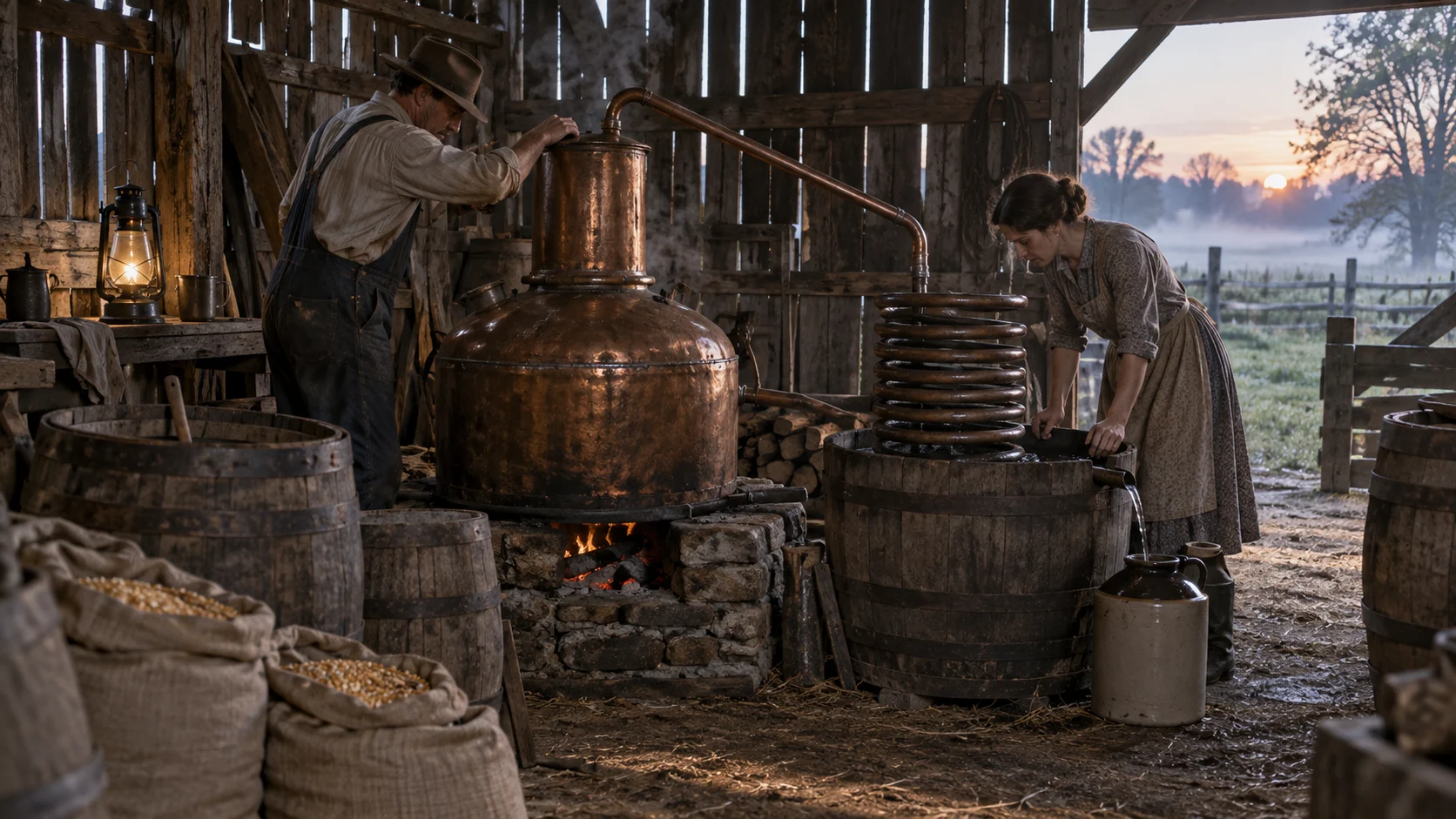
Loopholes, Recipes, and Risky Drinks
Q: How could a person legally obtain medicinal whiskey?
A: With a doctor's prescription.
Q: What document did a doctor provide for a legal medicinal liquor purchase?
A: A prescription.
Q: What was sacramental wine?
A: Wine legally used in religious ceremonies.
Q: What product warned buyers not to dissolve it in water and let it ferment?
A: A grape concentrate brick.
Q: Why did California grape acreage initially grow during Prohibition?
A: Demand rose for grapes, juice, and home winemaking materials.
Q: What home winemaking ingredient did grape growers sell in compact blocks?
A: Concentrated grape juice.
Q: What dangerous substance did the government require in industrial alcohol?
A: Poisonous denaturants.
Q: Why did denatured industrial alcohol cause deaths?
A: Bootleggers redistilled or sold it for drinking despite toxic additives.
Q: What alcohol can cause blindness or death when consumed?
A: Methanol.
Q: What was near beer?
A: A very low-alcohol malt beverage permitted under the Volstead limit.
Q: Which beer company marketed Bevo, a nonalcoholic malt drink?
A: Anheuser-Busch.
Q: What term described liquor that had been diverted from legal industrial or medicinal channels?
A: Diversion.
Q: Which spirit was often smuggled from the Caribbean?
A: Rum.
Q: Which Canadian spirit became especially popular with American smugglers?
A: Canadian whisky.
Q: What did a hip flask allow a drinker to do?
A: Conceal and carry a small amount of liquor.
Popular Culture and Public Backlash
Q: Which F. Scott Fitzgerald novel depicts wealthy bootlegger Jay Gatsby?
A: The Great Gatsby.
Q: Which 1932 film helped define the gangster-movie genre with a Capone-inspired lead?
A: Scarface.
Q: Which actor starred as the gangster in the 1932 Scarface?
A: Paul Muni.
Q: What slang term described illegal liquor of poor quality?
A: Rotgut.
Q: Which New York mayor became a colorful symbol of urban opposition to Prohibition?
A: Jimmy Walker.
Q: Which journalist and critic became a famous opponent of Prohibition?
A: H. L. Mencken.
Q: What women's organization founded in 1929 campaigned for repeal?
A: The Women's Organization for National Prohibition Reform.
Q: Who founded that repeal organization?
A: Pauline Sabin.
Q: Why did some former supporters turn against Prohibition?
A: They objected to crime, corruption, unsafe alcohol, and unenforceable laws.
Q: How did the Great Depression strengthen arguments for repeal?
A: Legal alcohol promised tax revenue and jobs.
Q: Which presidential candidate promised to support repeal in 1932?
A: Franklin D. Roosevelt.
Q: What campaign song was associated with Roosevelt and the Democrats in 1932?
A: “Happy Days Are Here Again.”
Q: What did the Cullen-Harrison Act legalize in 1933?
A: Beer and wine with up to 3.2 percent alcohol by weight.
Q: On what date did legal 3.2 beer return?
A: April 7, 1933.
Q: What informal celebration now marks April 7?
A: National Beer Day.
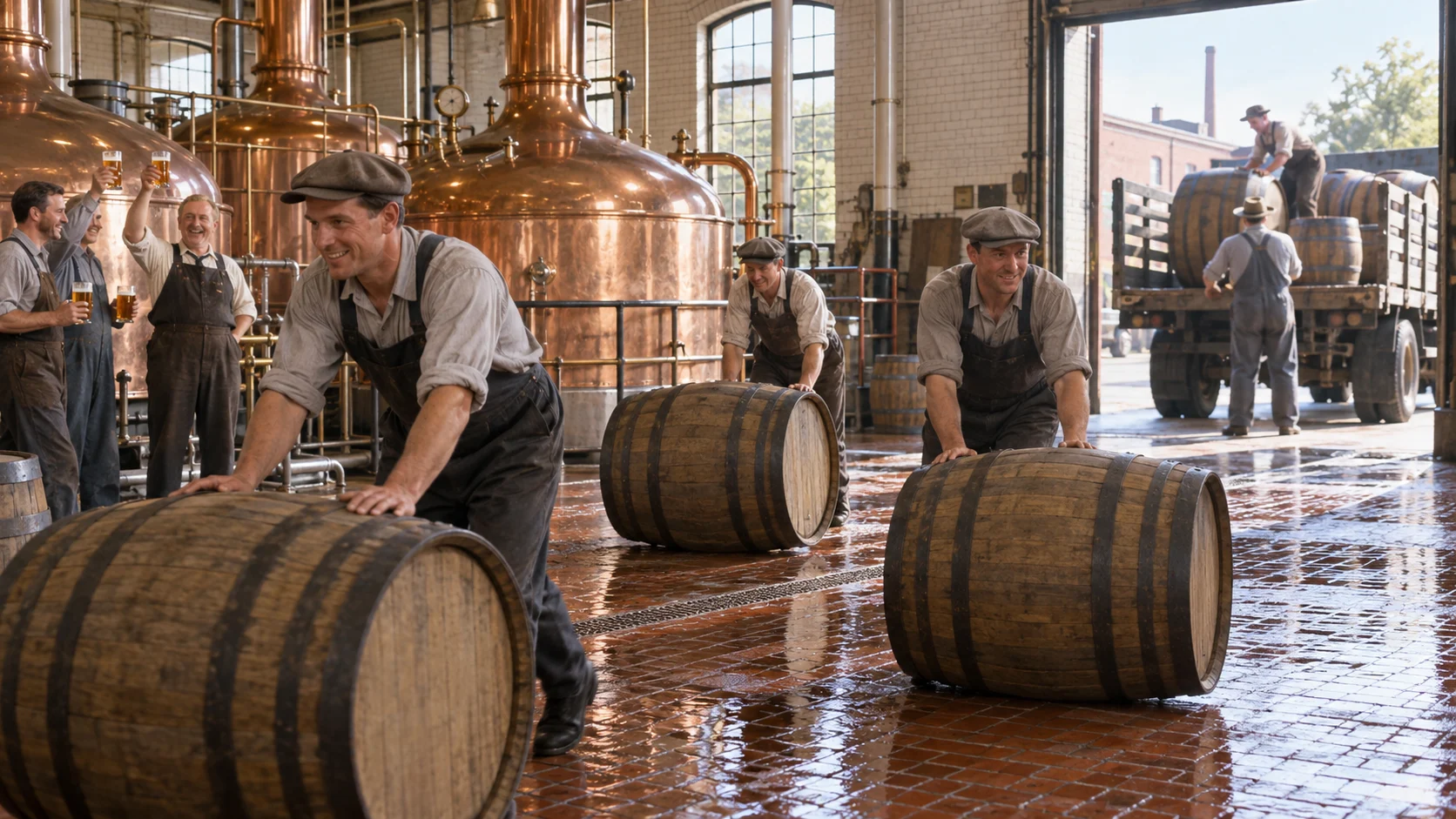
Repeal and Prohibition's Legacy
Q: Which amendment repealed national Prohibition?
A: The 21st Amendment.
Q: On what date was the 21st Amendment ratified?
A: December 5, 1933.
Q: Which state became the 36th to ratify repeal, completing the process?
A: Utah.
Q: What was unique about the way the 21st Amendment was ratified?
A: State conventions, rather than state legislatures, ratified it.
Q: Which amendment is the only one repealed by another amendment?
A: The 18th Amendment.
Q: Did repeal eliminate all local alcohol bans?
A: No, states and counties could remain dry.
Q: What authority did Section 2 of the 21st Amendment preserve for states?
A: Broad power to regulate alcohol importation and sale.
Q: What system separates alcohol producers, distributors, and retailers in many states?
A: The three-tier system.
Q: Which federal agency now regulates alcohol labeling and taxation?
A: The Alcohol and Tobacco Tax and Trade Bureau.
Q: What happened to federal alcohol tax revenue after repeal?
A: It became an important government revenue source again.
Q: Did national alcohol consumption immediately return to pre-Prohibition levels?
A: No, it remained lower for years.
Q: What constitutional lesson did Prohibition demonstrate?
A: A constitutional amendment can be repealed when public and political support collapses.
Q: Which modern nightlife trend recreates the hidden-door atmosphere of the 1920s?
A: Speakeasy-style bars.
Q: What major public-health danger accompanied illicit alcohol?
A: Poisoning from contaminated or improperly made liquor.
Q: How long did national Prohibition last?
A: Nearly 14 years, from January 1920 to December 1933.
Last Call
If you kept the amendments, agents, and bootleggers straight, consider this round officially out of the shadows. Keep exploring the era with our decades trivia or meet more headline-makers in famous people trivia.

Ellie Ewert is the founder and author of RandomTrivia.co, blending her passion for research with years of experience in content creation to deliver accurate, engaging, and well-sourced trivia. Dedicated to providing readers with trustworthy and entertaining facts, she applies meticulous fact-checking and SEO expertise to ensure every article meets the highest standards. Read more about our high standards in our Editorial Guidelines.