
Turn up the jazz and mind the stock ticker, because the 1920s could swing from dazzling modernity to serious trouble in a single headline.
These Roaring Twenties trivia questions explore politics, prosperity, inventions, flappers, the Harlem Renaissance, entertainment, sports, social conflict, and the crash.
Welcome to the Roaring Twenties
Q: Which decade is known as the Roaring Twenties?
A: The 1920s.
Q: What nickname emphasized the decade's love of jazz?
A: The Jazz Age.
Q: Which novelist helped popularize the term Jazz Age?
A: F. Scott Fitzgerald.
Q: What major war had ended shortly before the decade began?
A: World War I.
Q: Which deadly pandemic was fading as the 1920s opened?
A: The 1918 influenza pandemic.
Q: Which three Republican presidents served during the decade?
A: Warren G. Harding, Calvin Coolidge, and Herbert Hoover.
Q: What campaign promise helped Warren G. Harding win the 1920 election?
A: A return to normalcy.
Q: Who became president after Harding died in 1923?
A: Calvin Coolidge.
Q: Which 1928 presidential winner took office in 1929?
A: Herbert Hoover.
Q: Which constitutional amendment gave women the vote nationwide in 1920?
A: The 19th Amendment.
Q: Which amendment established national Prohibition?
A: The 18th Amendment.
Q: What term described a person who supported Prohibition?
A: A dry.
Q: What term described a person who opposed Prohibition?
A: A wet.
Q: What broad cultural tension pitted new urban values against older traditions?
A: Modernism versus traditionalism.
Q: Did the decade's prosperity reach all Americans equally?
A: No, many farmers, workers, and minority communities were left behind.
Boom Times and Consumer Culture
Q: What production method helped manufacturers make goods quickly and cheaply?
A: The moving assembly line.
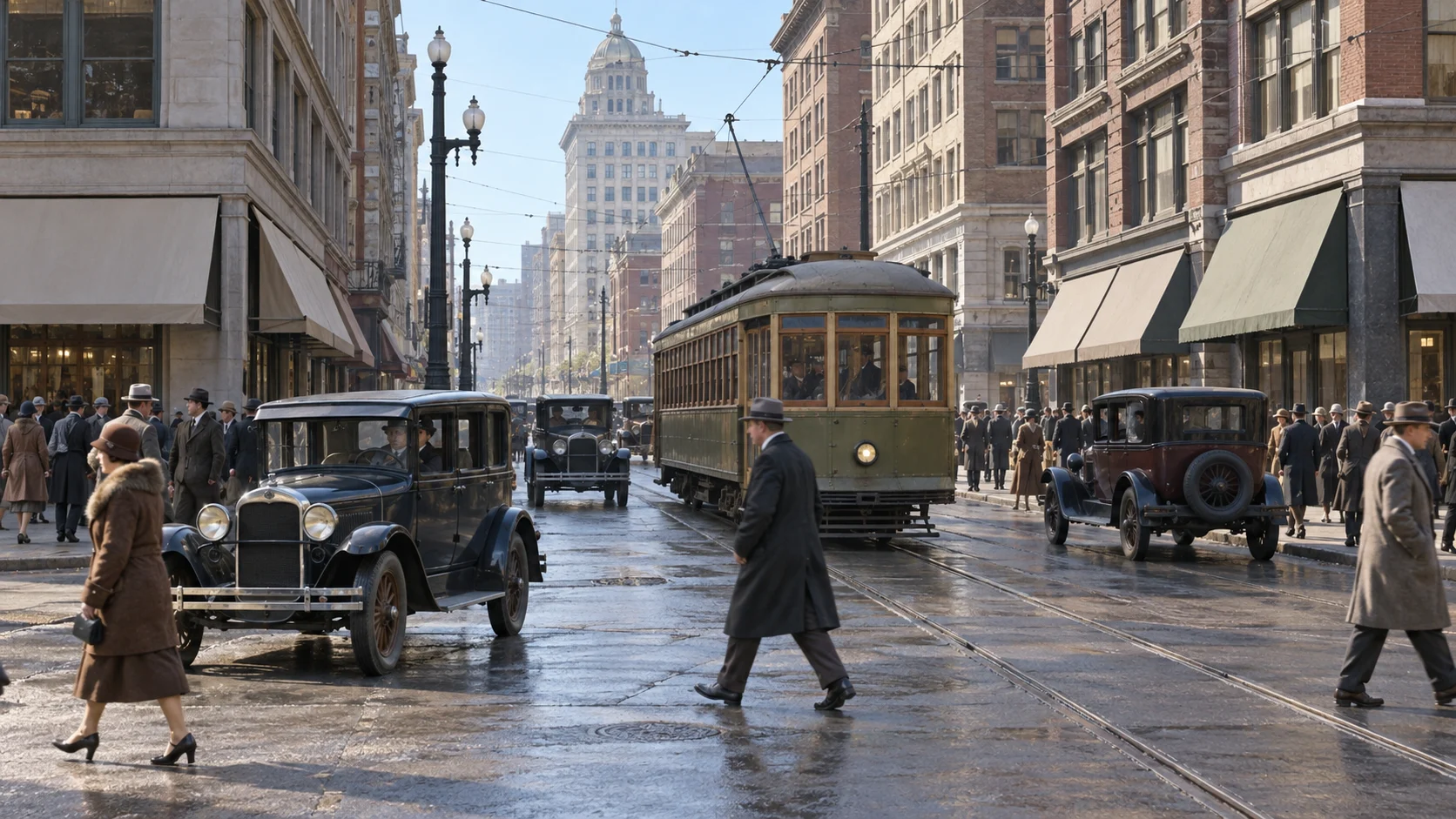
Q: Which automaker popularized mass production with the Model T?
A: Ford Motor Company.
Q: Which Ford model was nicknamed the Tin Lizzie?
A: The Model T.
Q: In what year did Ford stop making the Model T?
A: 1927.
Q: Which Ford car replaced the Model T?
A: The Model A.
Q: What buying method let consumers pay for products over time?
A: Installment buying.
Q: What phrase encouraged shoppers to purchase immediately and pay later?
A: Buy now, pay later.
Q: Which household appliance reduced the work of cleaning floors?
A: The vacuum cleaner.
Q: Which electric appliance helped preserve food at home?
A: The refrigerator.
Q: Which industry used catchy copy and images to fuel consumer demand?
A: Advertising.
Q: What financial instrument lets a person own a share of a company?
A: Stock.
Q: What did buying stock on margin mean?
A: Purchasing shares largely with borrowed money.
Q: Which economic sector struggled despite urban prosperity?
A: Agriculture.
Q: Why did many farmers face falling prices after World War I?
A: Wartime demand dropped while production remained high.
Q: What retail format offered many departments under one roof?
A: The department store.
Cars, Radios, and Modern Marvels
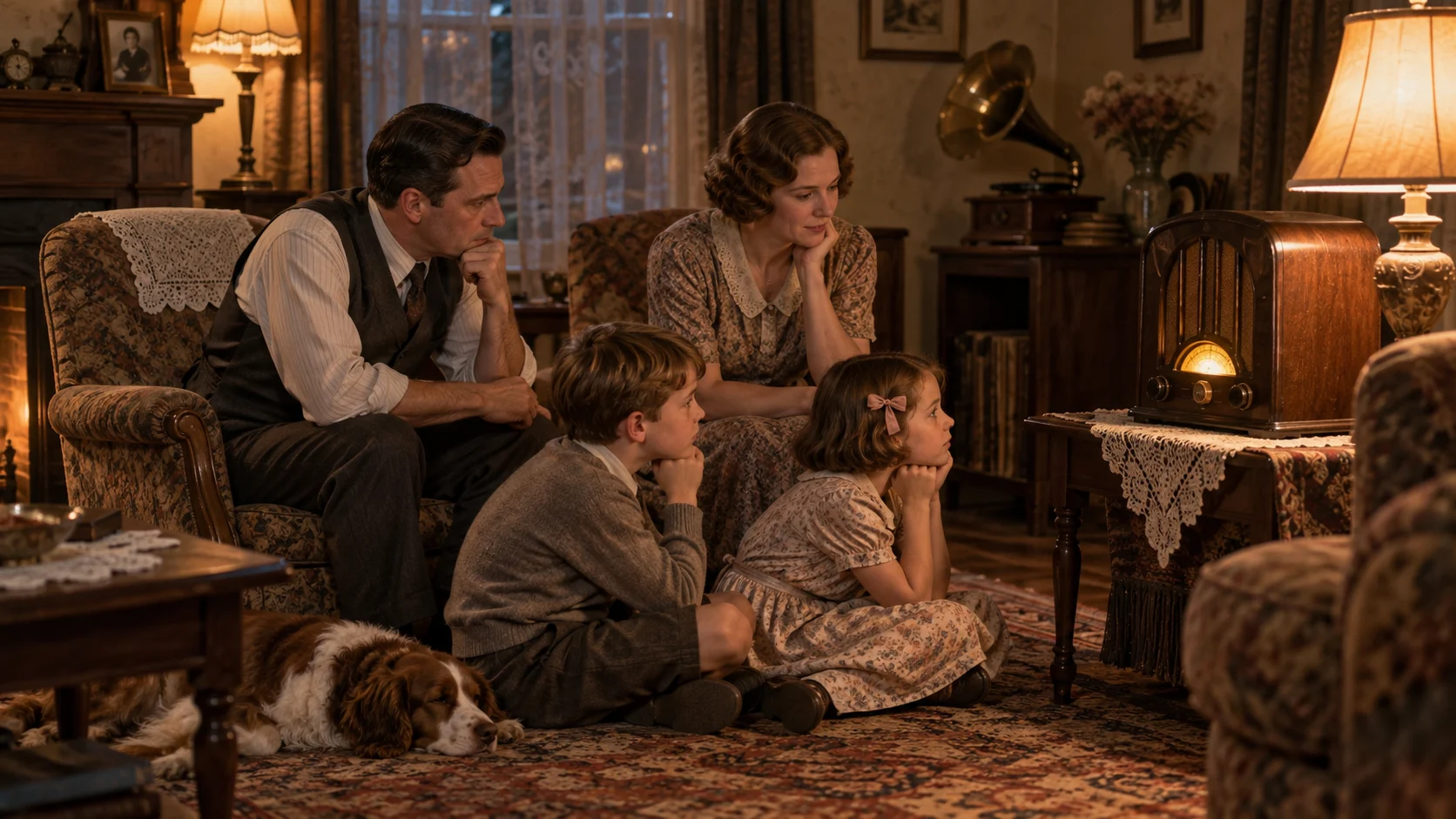
Q: Which device became the centerpiece of many living rooms?
A: The radio.
Q: Which Pittsburgh station is often credited as the first commercial radio station?
A: KDKA.
Q: What 1920 event did KDKA famously broadcast?
A: Presidential election returns.
Q: Which broadcasting network was founded in 1926?
A: NBC.
Q: Which rival network began broadcasting as CBS in 1927?
A: The Columbia Broadcasting System.
Q: What household service expanded as communities became electrified?
A: Electric power.
Q: Which frozen-food pioneer developed quick-freezing methods?
A: Clarence Birdseye.
Q: Which sliced food was first sold commercially in 1928?
A: Pre-sliced bread.
Q: Who made the first solo nonstop flight across the Atlantic in 1927?
A: Charles Lindbergh.
Q: What was Lindbergh's airplane called?
A: Spirit of St. Louis.
Q: Which cities did Lindbergh connect on his famous flight?
A: New York and Paris.
Q: Which aviation legend made her first transatlantic flight as a passenger in 1928?
A: Amelia Earhart.
Q: What traffic-control device did Garrett Morgan patent in 1923?
A: A three-position traffic signal.
Q: Which medical breakthrough discovered in 1928 transformed treatment of bacterial infections?
A: Penicillin.
Q: Who discovered penicillin?
A: Alexander Fleming.
Flappers, Fashion, and Changing Roles
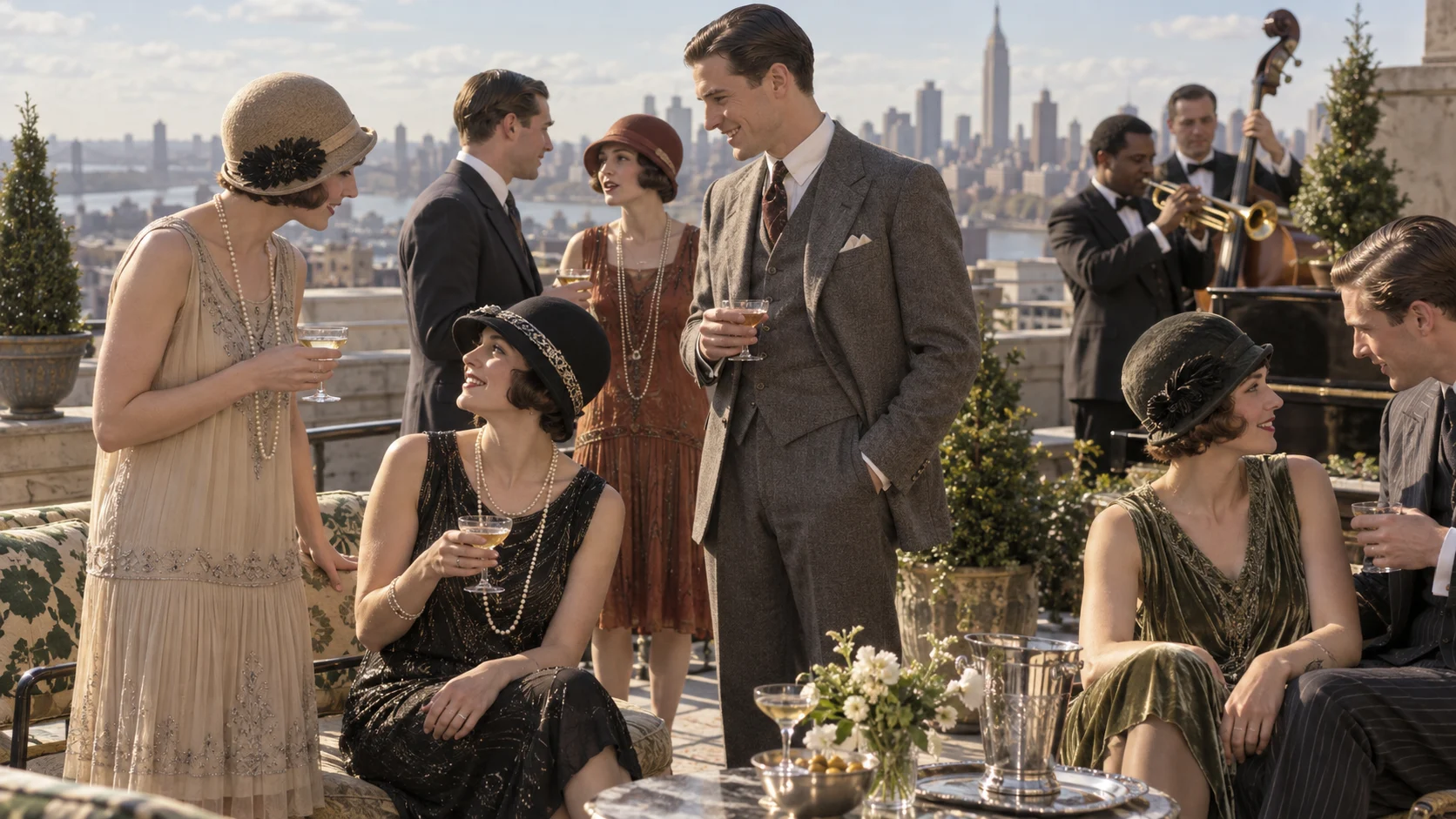
Q: What nickname described fashionable young women who challenged social conventions?
A: Flappers.
Q: What hairstyle became a symbol of flapper fashion?
A: The bob.
Q: What dress feature rose noticeably during the decade?
A: Hemlines.
Q: What straight, loose silhouette characterized many women's dresses?
A: The drop-waist silhouette.
Q: Which French designer popularized the little black dress?
A: Coco Chanel.
Q: What close-fitting bell-shaped hat was a 1920s favorite?
A: The cloche hat.
Q: Which dance featured swiveling feet and swinging knees?
A: The Charleston.
Q: Which Harlem ballroom became a celebrated home of the Lindy Hop?
A: The Savoy Ballroom.
Q: What makeup product helped create the era's dramatic dark-lipped look?
A: Lipstick.
Q: Which birth-control advocate founded the American Birth Control League in 1921?
A: Margaret Sanger.
Q: Which organization emerged from the American Birth Control League decades later?
A: Planned Parenthood Federation of America.
Q: What employment trend brought more women into offices and retail work?
A: Growth in clerical and sales jobs.
Q: Did the flapper image represent every American woman?
A: No, it was most visible among some young urban women.
Q: Which pageant began in Atlantic City in 1921?
A: The Miss America Pageant.
Q: Why did Atlantic City launch that early beauty competition?
A: To extend the seaside tourist season beyond Labor Day.
Jazz and the Harlem Renaissance
Q: Which New York neighborhood became the center of a major Black cultural flowering?
A: Harlem.
Q: What was that flowering of Black literature, art, and music called?
A: The Harlem Renaissance.
Q: Which poet wrote “The Negro Speaks of Rivers”?
A: Langston Hughes.
Q: Which writer studied anthropology at Barnard and collected Black Southern folklore?
A: Zora Neale Hurston.
Q: Which philosopher edited The New Negro in 1925?
A: Alain Locke.
Q: Which novelist wrote Home to Harlem?
A: Claude McKay.
Q: Which singer was known as the Empress of the Blues?
A: Bessie Smith.
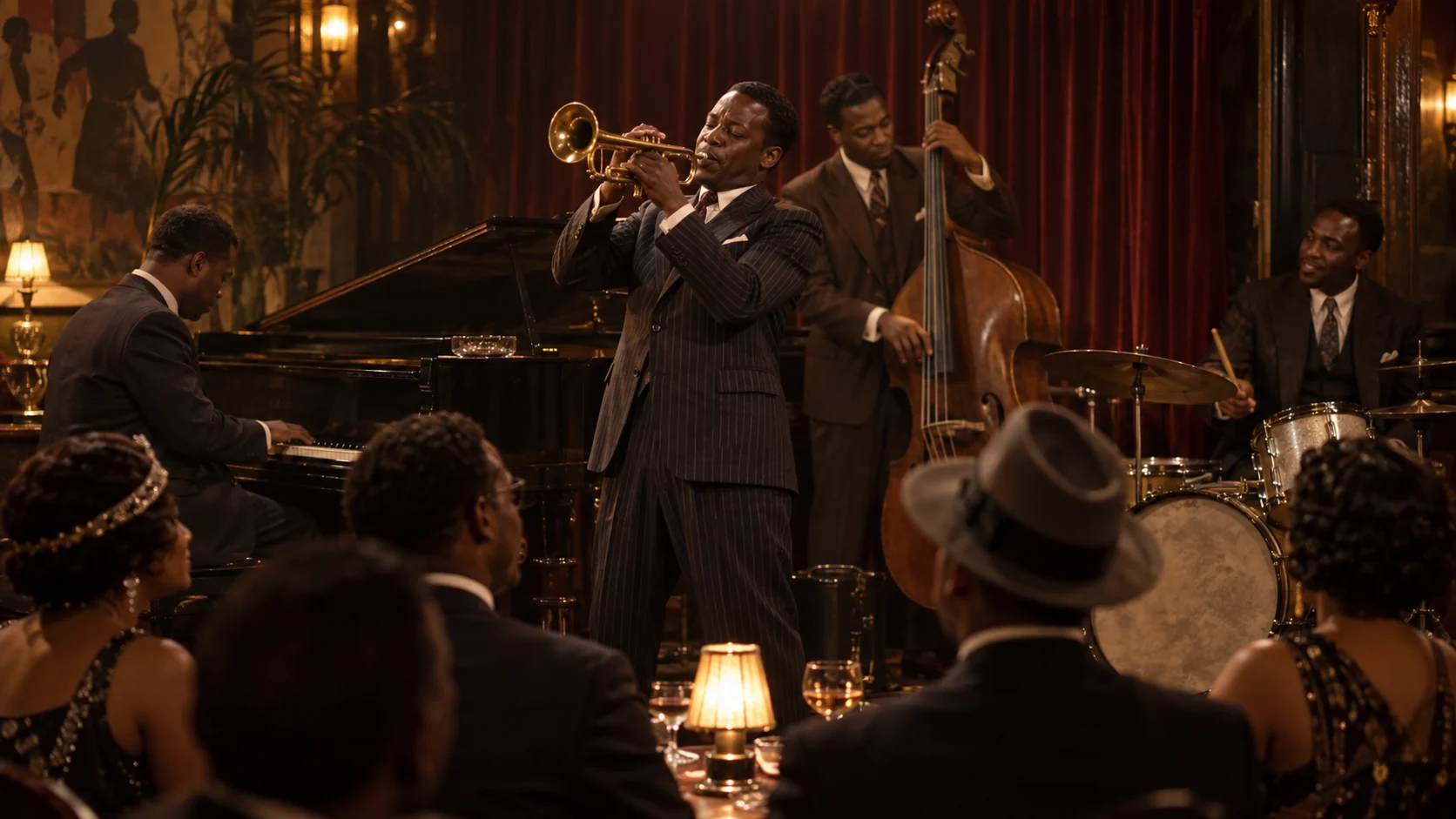
Q: Which trumpeter transformed jazz with his brilliant improvisation?
A: Louis Armstrong.
Q: Which bandleader led the orchestra at Harlem's Cotton Club?
A: Duke Ellington.
Q: Which Harlem ballroom became famous for integrated audiences and elite dancing?
A: The Savoy Ballroom.
Q: Which Black nationalist leader built the Universal Negro Improvement Association?
A: Marcus Garvey.
Q: What migration brought millions of Black Americans from the rural South to northern cities?
A: The Great Migration.
Q: Which artist created modernist images of Black life and culture?
A: Aaron Douglas.
Q: Which photographer documented Harlem society and celebrities?
A: James Van Der Zee.
Q: Which NAACP magazine published major Harlem Renaissance writers?
A: The Crisis.
Movies, Books, and Mass Entertainment
Q: What were movies without synchronized spoken dialogue called?
A: Silent films.
Q: Which 1927 film featured famous synchronized dialogue sequences?
A: The Jazz Singer.
Q: What nickname was given to movies with synchronized speech?
A: Talkies.
Q: Which silent-film comedian created the Little Tramp character?
A: Charlie Chaplin.
Q: Which stone-faced comedian starred in The General?
A: Buster Keaton.
Q: Which comedian dangled from a clock in Safety Last!?
A: Harold Lloyd.
Q: Which animated mouse debuted in Steamboat Willie in 1928?
A: Mickey Mouse.
Q: Who co-created Mickey Mouse with Ub Iwerks?
A: Walt Disney.
Q: Which novel features Jay Gatsby and Daisy Buchanan?
A: The Great Gatsby.
Q: Who wrote The Great Gatsby?
A: F. Scott Fitzgerald.
Q: Which Hemingway novel follows American expatriates in Europe?
A: The Sun Also Rises.
Q: What term described disillusioned American writers living abroad?
A: The Lost Generation.
Q: Which poet wrote The Waste Land, published in 1922?
A: T. S. Eliot.
Q: Which magazine launched in 1925 with a monocled dandy on its first cover?
A: The New Yorker.
Q: Which weekly news magazine was founded in 1923?
A: Time.
Sports Heroes and Spectacle
Q: Which baseball slugger was nicknamed the Sultan of Swat?
A: Babe Ruth.
Q: Which team did Babe Ruth join in 1920?
A: The New York Yankees.
Q: How many home runs did Ruth hit in the 1927 season?
A: Sixty.
Q: What nickname was given to the Yankees' powerful 1927 lineup?
A: Murderers' Row.
Q: Which boxer was heavyweight champion for most of the decade?
A: Jack Dempsey.
Q: Who defeated Dempsey for the heavyweight title in 1926?
A: Gene Tunney.
Q: What nickname was given to the 1927 Tunney-Dempsey rematch?
A: The Long Count Fight.
Q: Which football star was known as the Galloping Ghost?
A: Red Grange.
Q: Which swimmer became the first woman to cross the English Channel in 1926?
A: Gertrude Ederle.
Q: Which golfer dominated the U.S. amateur and professional championships?
A: Bobby Jones.
Q: Which tennis champion was nicknamed Little Miss Poker Face?
A: Helen Wills.
Q: Which annual horse race grew into a major radio spectacle?
A: The Kentucky Derby.
Q: What 1924 competition took place in Chamonix, France?
A: The first Winter Olympic Games.
Q: Which city hosted the 1924 Summer Olympics?
A: Paris.
Q: Which bowl game moved into its Pasadena stadium for its January 1923 matchup?
A: The Rose Bowl.
Conflict, Crash, and the End of the Boom
Q: Which 1925 trial debated teaching evolution in Tennessee schools?
A: The Scopes trial.
Q: Who was the teacher prosecuted in the Scopes trial?
A: John T. Scopes.
Q: Which lawyer defended Scopes?
A: Clarence Darrow.
Q: Which politician argued for the prosecution?
A: William Jennings Bryan.
Q: What revived white supremacist organization expanded during the decade?
A: The Ku Klux Klan.
Q: Which 1924 law imposed strict national-origin immigration quotas?
A: The Immigration Act of 1924.
Q: What fear of communism and radicalism gripped the country around 1919 and 1920?
A: The First Red Scare.
Q: Which attorney general directed the Palmer Raids?
A: A. Mitchell Palmer.
Q: Which scandal involved federal oil reserves at Teapot Dome?
A: The Teapot Dome scandal.
Q: Which cabinet official was convicted for accepting bribes in that scandal?
A: Albert B. Fall.
Q: What name is commonly given to October 24, 1929?
A: Black Thursday.
Q: What name is commonly given to October 29, 1929?
A: Black Tuesday.
Q: Which financial market collapsed in late October 1929?
A: The U.S. stock market.
Q: Did the stock market crash alone cause the Great Depression?
A: No, it was one of several major factors.
Q: What economic crisis brought the Roaring Twenties to a close?
A: The Great Depression.
The Music Fades, but the Decade Lingers
If you kept pace with every flapper, flyer, and falling ticker, your score is the bee's knees. Keep the time machine running with our decades trivia or meet more remarkable figures in famous people trivia.

Ellie Ewert is the founder and author of RandomTrivia.co, blending her passion for research with years of experience in content creation to deliver accurate, engaging, and well-sourced trivia. Dedicated to providing readers with trustworthy and entertaining facts, she applies meticulous fact-checking and SEO expertise to ensure every article meets the highest standards. Read more about our high standards in our Editorial Guidelines.