
Pack the wagon carefully, because the Oregon Trail had no room for extra furniture and even less patience for bad planning.
These Oregon Trail trivia questions follow the route west through geography, forts, daily life, famous landmarks, real dangers, and lasting legends.
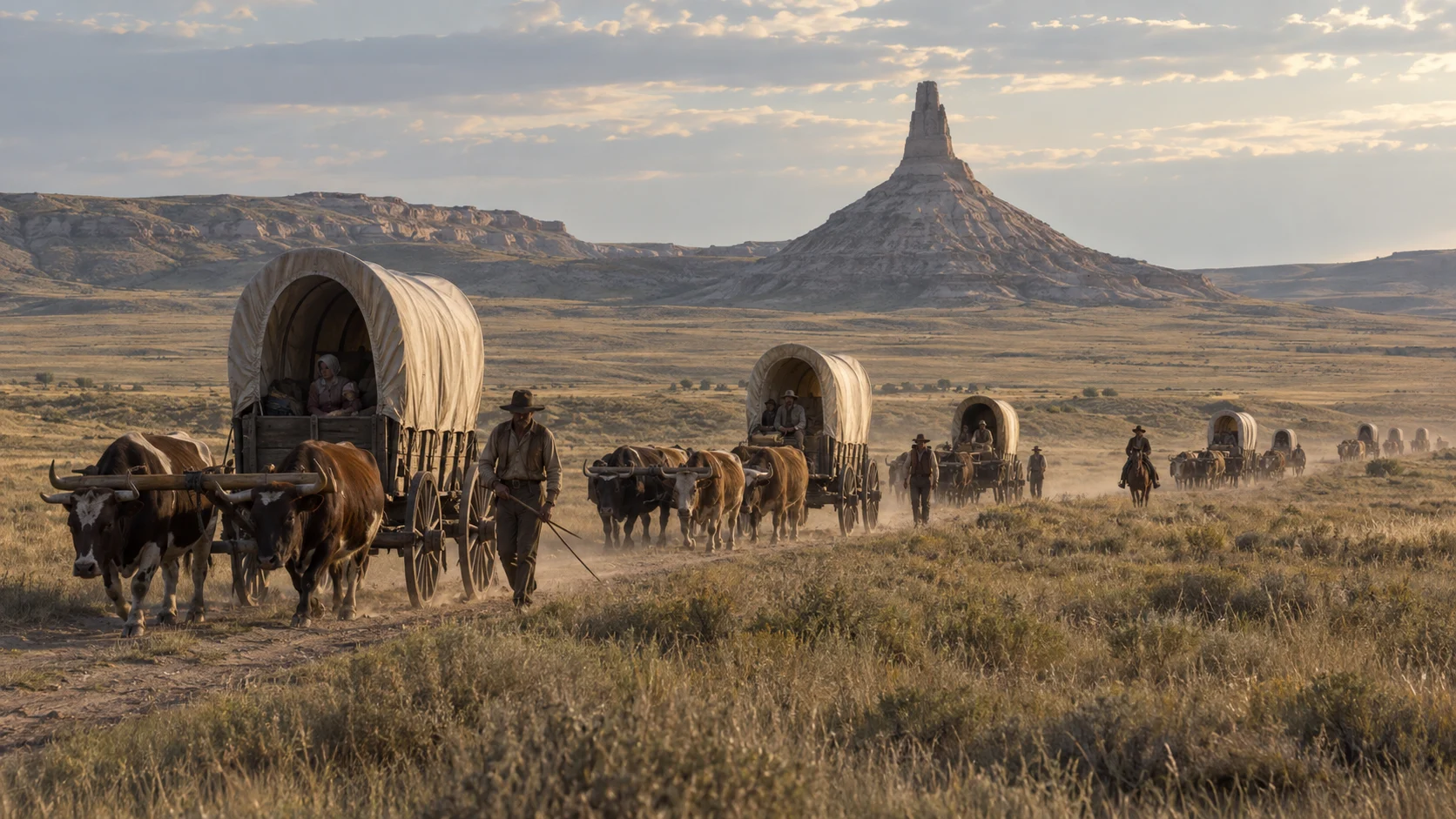
Mapping the Trail West
Q: About how long was the Oregon Trail?
A: Roughly 2,000 miles.
Q: Which Missouri town became the best-known eastern starting point?
A: Independence.
Q: Which river did emigrants generally follow across present-day Nebraska?
A: The Platte River.
Q: Which branch of the Platte led travelers toward Wyoming?
A: The North Platte River.
Q: Which mountain range did the Oregon Trail cross?
A: The Rocky Mountains.
Q: Which broad Wyoming pass offered a relatively gentle route across the Continental Divide?
A: South Pass.
Q: Which river did travelers follow across much of southern Idaho?
A: The Snake River.
Q: Which major river guided travelers along the final stretch toward Oregon Country?
A: The Columbia River.
Q: In which valley did many Oregon Trail settlers establish farms?
A: The Willamette Valley.
Q: Which modern states did the main route cross after leaving Missouri?
A: Kansas, Nebraska, Wyoming, Idaho, and Oregon.
Q: What other major emigrant route shared much of the trail before splitting toward California?
A: The California Trail.
Q: Which religious migration route shared the trail to Utah?
A: The Mormon Trail.
Q: What river crossing near present-day Kansas City marked an early hurdle?
A: The Kansas River.
Q: Which fort near the Platte marked a major junction for western travelers?
A: Fort Kearny.
Q: What term described the lands west of the Rockies claimed by both Britain and the United States?
A: Oregon Country.
Opening a Route to Oregon
Q: Which expedition helped map lands later crossed by overland migrants?
A: The Lewis and Clark Expedition.
Q: Which fur company employee led an eastbound overland journey from Astoria in 1812 and 1813?
A: Robert Stuart.
Q: What important pass did Robert Stuart's party help publicize?
A: South Pass.
Q: Which missionaries traveled to Oregon Country in 1836?
A: Marcus and Narcissa Whitman.
Q: Which two missionary women became the first white women documented crossing the Rockies overland?
A: Narcissa Whitman and Eliza Spalding.
Q: What 1843 wagon migration became known as the Great Migration?
A: A large wagon train of about 1,000 emigrants to Oregon.
Q: What settler government was organized in Oregon Country in 1843?
A: The Provisional Government of Oregon.
Q: What 1846 treaty settled the U.S.-British boundary in Oregon Country?
A: The Oregon Treaty.
Q: At what parallel did the Oregon Treaty set most of the boundary?
A: The 49th parallel.
Q: What expansionist idea encouraged Americans to settle western lands?
A: Manifest Destiny.
Q: Which 1850 law offered western land to qualifying settlers in Oregon Territory?
A: The Donation Land Claim Act.
Q: In what decade did traffic on the Oregon Trail reach its peak?
A: The 1850s.
Q: Which 1869 transportation milestone sharply reduced overland wagon travel?
A: Completion of the first transcontinental railroad.
Q: Which Indigenous peoples had long used many paths later incorporated into the trail?
A: Numerous nations, including Pawnee, Shoshone, Nez Perce, and others.
Q: Did the Oregon Trail begin as a single newly built road?
A: No, it developed from Indigenous paths, fur-trade routes, and wagon tracks.
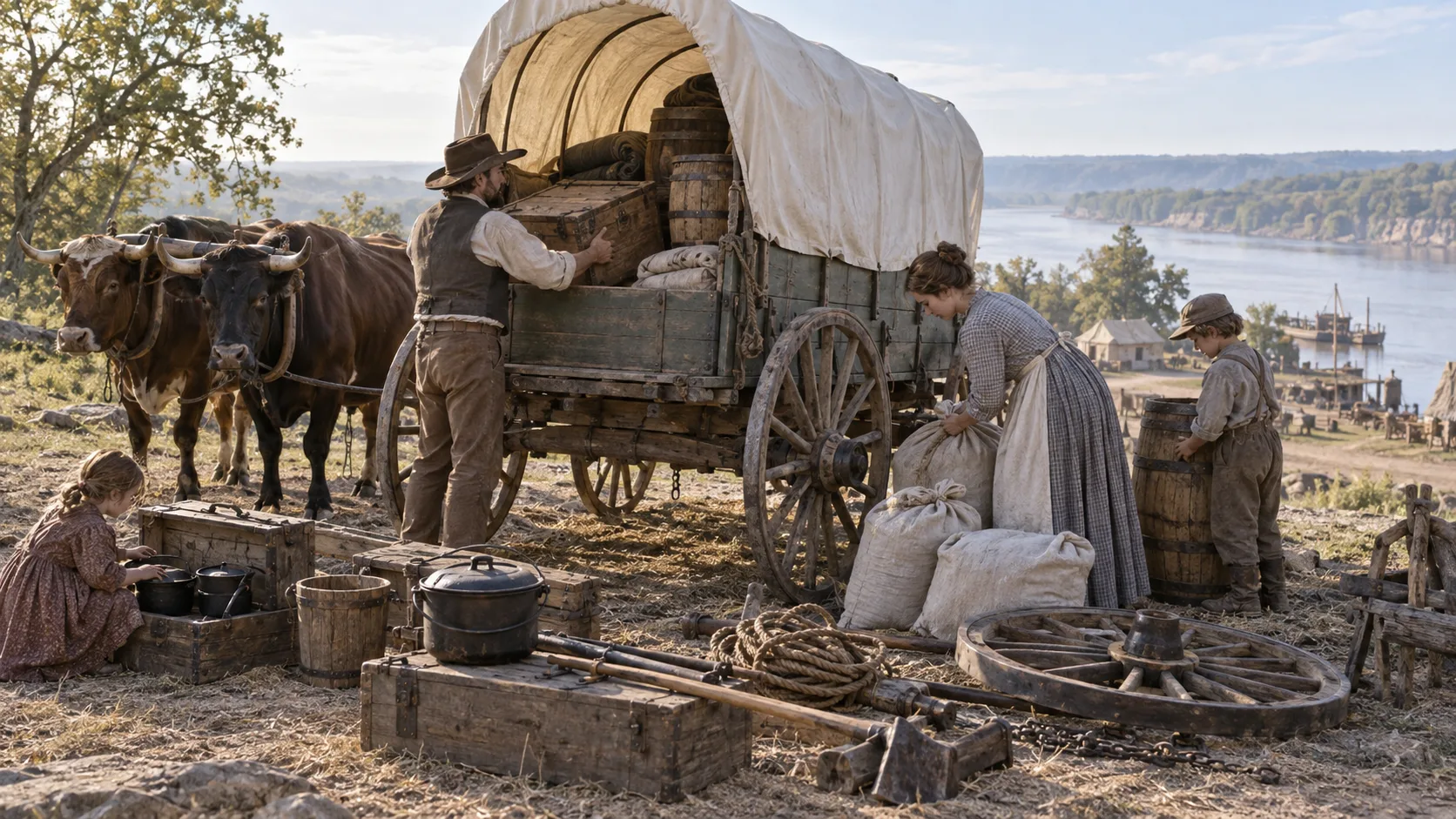
Wagons, Oxen, and Essential Gear
Q: What light farm wagon was most commonly used on the Oregon Trail?
A: A prairie schooner.
Q: Why was it called a prairie schooner?
A: Its white canvas cover resembled a ship's sail.
Q: Were the huge Conestoga wagons the usual choice for Oregon Trail families?
A: No, they were generally too heavy.
Q: Which draft animals were usually preferred for pulling emigrant wagons?
A: Oxen.
Q: Why did many emigrants choose oxen over horses?
A: Oxen were sturdy, relatively inexpensive, and could graze along the route.
Q: What fabric commonly covered a wagon?
A: Cotton canvas.
Q: What staple flour mixture could be cooked into biscuits along the trail?
A: Flour mixed with water or milk and leavening.
Q: Which preserved meat was a common trail provision?
A: Bacon.
Q: Which dried food made from corn was practical for travel?
A: Cornmeal.
Q: Why did many travelers walk beside their wagons?
A: To spare the animals and leave wagon space for supplies.
Q: What tool was essential for repairing wagon wheels and hardware?
A: A wagon jack and basic blacksmithing tools.
Q: What container was mounted on many wagons to carry drinking water?
A: A water barrel.
Q: What did emigrants often discard when wagons became overloaded?
A: Furniture and other nonessential belongings.
Q: Which part of a wagon helped keep cargo dry but did not make it reliably watertight?
A: The canvas cover.
Q: What name was given to a group of wagons traveling together?
A: A wagon train.
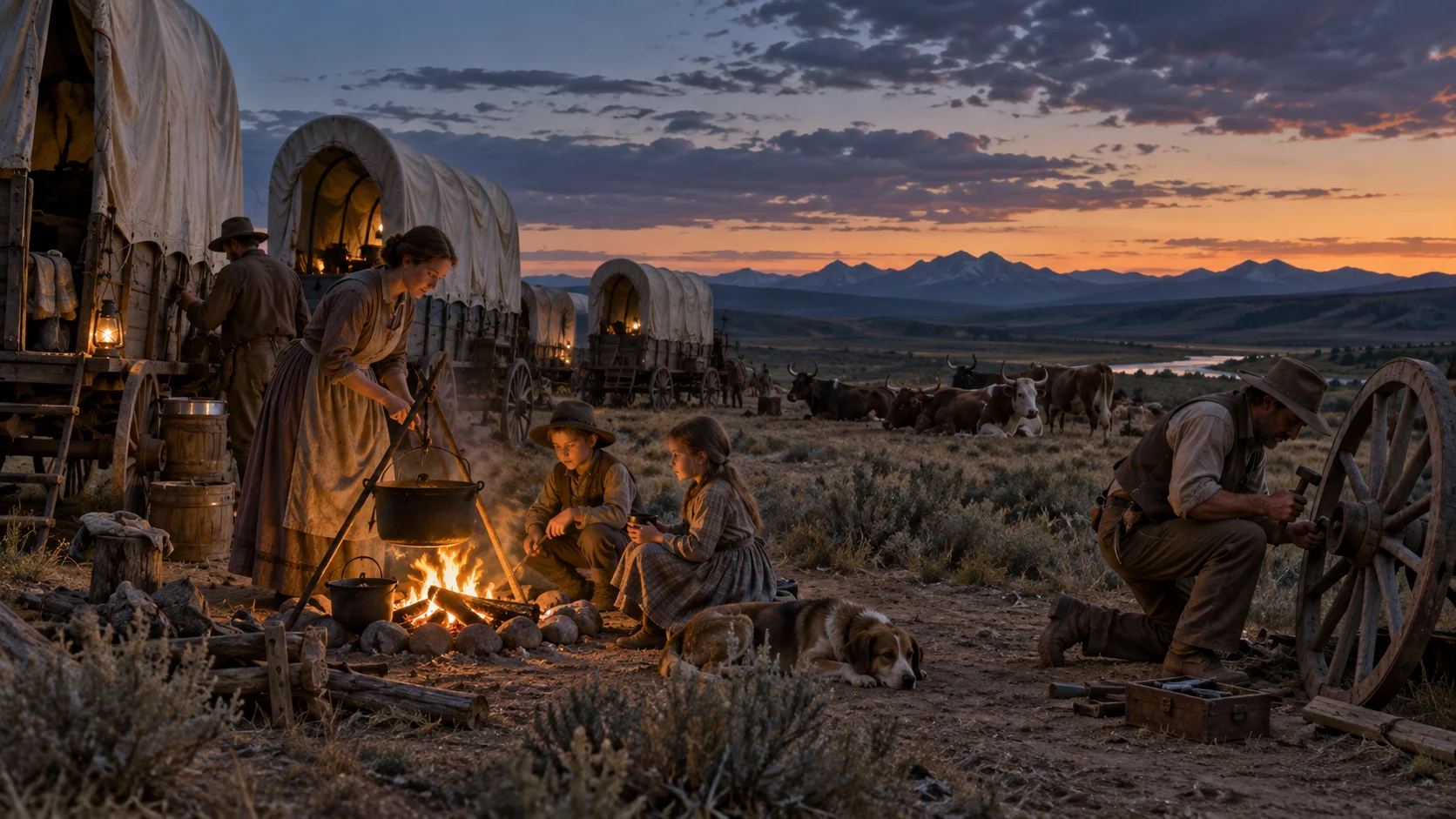
Life in a Wagon Train
Q: In which season did most wagon trains leave Missouri?
A: Spring.
Q: Why was departure timing so important?
A: Travelers needed grass for livestock and had to cross mountains before winter.
Q: About how far might a wagon train travel on a typical day?
A: Roughly 10 to 20 miles.
Q: What early-morning sound often signaled time to break camp?
A: A bugle, horn, or shouted call.
Q: What position was sometimes elected to organize a wagon train?
A: Captain.
Q: What did a wagon train's guide help choose?
A: Routes, campsites, and river crossings.
Q: Where did many families sleep at night?
A: In tents or beneath the stars, not always inside the wagon.
Q: What fuel did emigrants use when wood was scarce on the plains?
A: Dried buffalo dung, often called buffalo chips.
Q: Which chore involved gathering grazing animals each morning?
A: Rounding up the livestock.
Q: How were clothes commonly washed on the trail?
A: In rivers or tubs when water and time allowed.
Q: What kinds of records give historians firsthand views of trail life?
A: Diaries, letters, and journals.
Q: What day did some wagon trains reserve for rest and worship?
A: Sunday.
Q: What evening activity helped entertain travelers in camp?
A: Music, dancing, storytelling, or games.
Q: Who usually carried much of the work of cooking, washing, and caring for children?
A: Women and older children.
Q: What circular formation could organize wagons at camp?
A: A wagon corral.
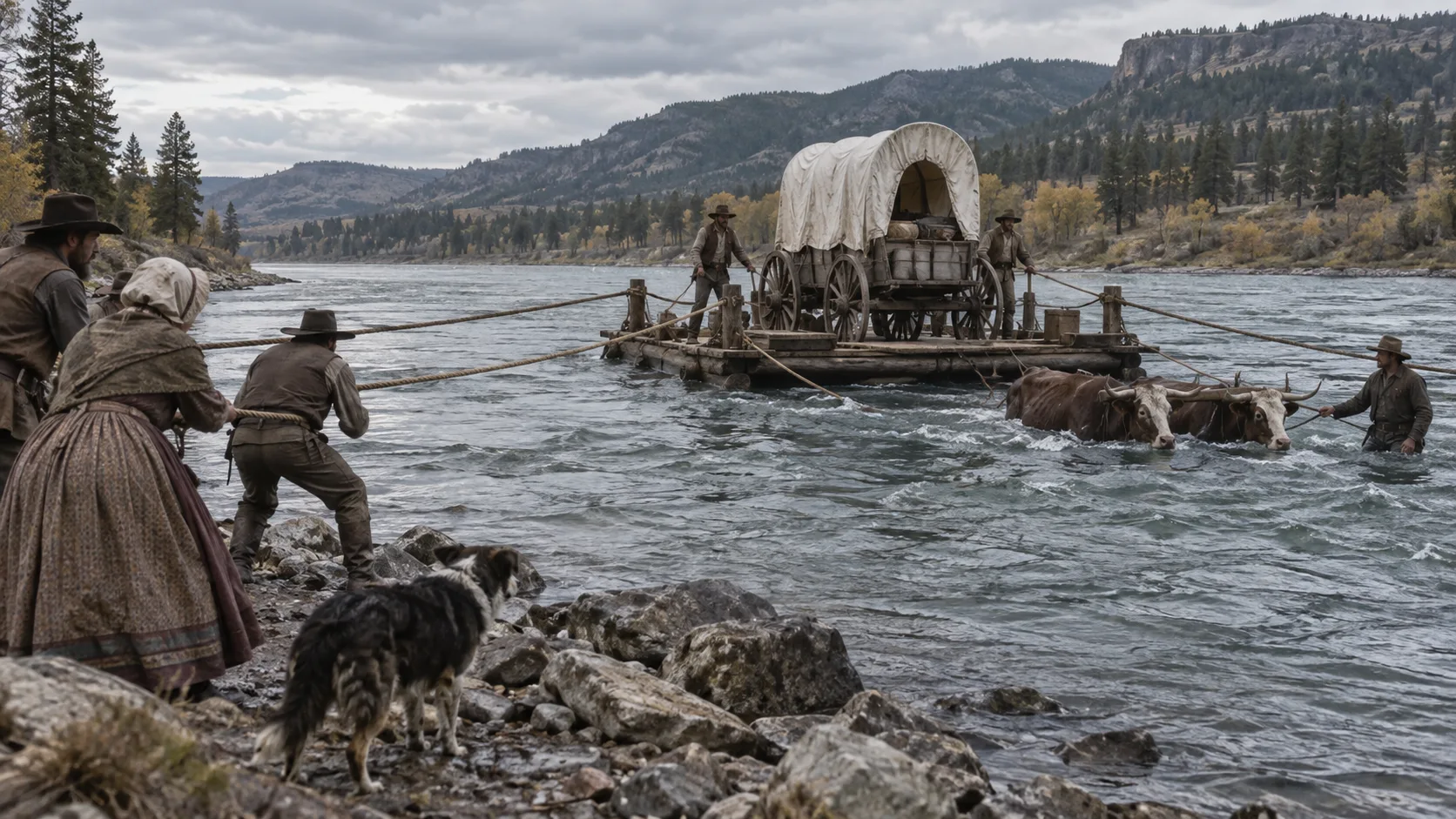
Rivers, Disease, and Other Dangers
Q: What disease killed more Oregon Trail emigrants than any other?
A: Cholera.
Q: How is cholera usually spread?
A: Through water or food contaminated with the bacterium Vibrio cholerae.
Q: Which symptom made cholera especially deadly?
A: Severe dehydration from diarrhea and vomiting.
Q: What other intestinal illness frequently struck travelers?
A: Dysentery.
Q: What river-crossing danger caused many accidental deaths?
A: Drowning.
Q: What did it mean to ford a river?
A: To cross through shallow water.
Q: How could emigrants float a wagon across deep water?
A: By caulking the wagon box or using a ferry.
Q: What weather threat could trap late travelers in mountain passes?
A: Snowstorms.
Q: What accident involving a wagon wheel could cause severe injury?
A: Being crushed or run over.
Q: Which animals sometimes stampeded and scattered a wagon train's livestock?
A: Cattle or oxen.
Q: Were attacks by Indigenous people the leading cause of emigrant deaths?
A: No, disease and accidents were far deadlier.
Q: How did heavy emigrant traffic harm Indigenous communities?
A: It depleted resources, spread disease, damaged land, and accelerated dispossession.
Q: What environmental problem occurred where large wagon trains overgrazed campsites?
A: Livestock found too little grass.
Q: Why could alkali water be dangerous?
A: High mineral concentrations could sicken people and animals.
Q: What trail-side evidence often marked the graves of travelers?
A: Simple wooden markers or piles of stones.
Forts and Famous Landmarks
Q: Which tall rock formation in Nebraska became a celebrated trail landmark?
A: Chimney Rock.
Q: Which Nebraska bluff resembles a fortress?
A: Scotts Bluff.
Q: What Wyoming rock formation bears thousands of emigrant names?
A: Register Cliff.
Q: Which nearby Wyoming landmark has deep wagon ruts cut into sandstone?
A: Guernsey Ruts.
Q: What great granite outcrop became a milestone for emigrants crossing Wyoming?
A: Independence Rock.
Q: Why did travelers hope to reach Independence Rock by July 4?
A: It suggested they were on schedule to cross the mountains before winter.
Q: Which Wyoming fort began as a fur-trading post called Fort William?
A: Fort Laramie.
Q: Which fort in present-day Nebraska supplied travelers beside the Platte?
A: Fort Kearny.
Q: Which Idaho trading post near the Snake River became an important resupply stop?
A: Fort Hall.
Q: Which Hudson's Bay Company post on the Columbia welcomed many emigrants?
A: Fort Vancouver.
Q: What narrow Sweetwater River gorge in Wyoming was a trail landmark?
A: Devil's Gate.
Q: What steep climb over Oregon's Blue Mountains challenged exhausted travelers near present-day Pendleton?
A: Emigrant Hill.
Q: What steep descent near Mount Hood was known for a dangerous toll road?
A: Laurel Hill.
Q: Which mission site near present-day Walla Walla was associated with Marcus and Narcissa Whitman?
A: Waiilatpu.
Q: What natural formation near present-day Soda Springs bubbled with carbonated water?
A: Soda Springs.
Choices at the Trail's End
Q: What hazardous river route carried travelers through the Columbia Gorge?
A: Floating or rafting down the Columbia River.
Q: What overland alternative around Mount Hood opened in 1846?
A: The Barlow Road.
Q: Who developed the Barlow Road?
A: Samuel K. Barlow and Philip Foster.
Q: Was the Barlow Road free to use?
A: No, it was a toll road.
Q: Which waterfall marks the Columbia River near the western end of the trail?
A: Multnomah Falls.
Q: Which Oregon City served as an official end of the Oregon Trail?
A: Oregon City.
Q: Which river runs beside Oregon City?
A: The Willamette River.
Q: What office in Oregon City processed many land claims?
A: The federal land office.
Q: What kind of livelihood attracted many settlers to the Willamette Valley?
A: Farming.
Q: Which wet climate feature surprised some newcomers to western Oregon?
A: Long rainy seasons.
Q: What did settlers often build first on a land claim?
A: A simple cabin or shelter.
Q: Which crop became an early commercial success in the Willamette Valley?
A: Wheat.
Q: What Indigenous nation lived in much of the Willamette Valley before American settlement?
A: The Kalapuya.
Q: What devastating effect did settlement have on Native peoples in Oregon?
A: Dispossession, forced removal, violence, and population loss from disease.
Q: Did every traveler remain in Oregon after arriving?
A: No, some continued to California or later moved elsewhere.
Memory, Myth, and Pop Culture
Q: Which educational computer game made “You have died of dysentery” a famous phrase?
A: The Oregon Trail.
Q: Which organization created the earliest version of The Oregon Trail game?
A: The Minnesota Educational Computing Consortium, or MECC.
Q: In what year was the original classroom version of the game created?
A: 1971.
Q: Which three student teachers created the original game?
A: Don Rawitsch, Bill Heinemann, and Paul Dillenberger.
Q: What risky game decision involves crossing a river without a ferry?
A: Fording the river.
Q: What activity in the game supplies food but can waste bullets?
A: Hunting.
Q: Which federal historic designation recognizes the Oregon Trail today?
A: The Oregon National Historic Trail.
Q: Which agency administers the Oregon National Historic Trail?
A: The National Park Service.
Q: What physical marks of wagon traffic can still be seen at some sites?
A: Wagon ruts.
Q: What modern road roughly parallels portions of the trail in Nebraska and Wyoming?
A: Interstate 80.
Q: Which Oregon museum interprets the trail at its traditional endpoint?
A: The End of the Oregon Trail Interpretive Center.
Q: What romantic image often hides the trail's human and environmental costs?
A: The lone covered wagon heading into an empty West.
Q: Why is describing the West as “empty” historically inaccurate?
A: Indigenous nations had lived there for thousands of years.
Q: What broad migration does the Oregon Trail represent in U.S. history?
A: The 19th-century overland migration to the American West.
Q: What made trail travel possible despite its dangers?
A: Cooperation, planning, practical skills, and extensive existing knowledge of the land.
End of the Trail
If you kept the oxen moving and made it past every river crossing, your score has officially reached Oregon City. Keep traveling through the past with our decades trivia or meet more history-makers in famous people trivia.

Ellie Ewert is the founder and author of RandomTrivia.co, blending her passion for research with years of experience in content creation to deliver accurate, engaging, and well-sourced trivia. Dedicated to providing readers with trustworthy and entertaining facts, she applies meticulous fact-checking and SEO expertise to ensure every article meets the highest standards. Read more about our high standards in our Editorial Guidelines.