
The Moon controls tides, records ancient impacts, creates eclipses, and remains the only world beyond Earth where humans have walked. These 120 Moon trivia questions cover phases, geology, missions, observing, and the stories we have attached to that familiar bright disk.
Keep looking up with our space trivia, solar system trivia, and astronomy trivia.
Moon Basics, Orbit, and Phases
The Moon looks calm because it is far away and cannot hear us misname its phases. Up close, it is a battered world that raises tides, steadies Earth, and keeps an impressively complicated calendar.
Q: What is Earth’s only natural satellite?
A: The Moon.
Q: How far is the Moon from Earth on average?
A: About 238,855 miles.
Q: What is the Moon’s diameter?
A: About 2,159 miles.
Q: How strong is lunar surface gravity compared with Earth’s?
A: About one-sixth as strong.
Q: How long does the Moon take to orbit Earth relative to the stars?
A: About 27.3 days.
Q: How long is the cycle from one new moon to the next?
A: About 29.5 days.
Q: Why does the Moon show nearly the same face to Earth?
A: Its rotation period matches its orbital period through synchronous rotation.
Q: What is the side of the Moon facing away from Earth called?
A: The far side.
Q: Why is “dark side of the Moon” an inaccurate name for the far side?
A: The far side receives sunlight just as the near side does.
Q: What phase occurs when the Moon lies roughly between Earth and the Sun?
A: New moon.
Q: What phase occurs when Earth lies roughly between the Sun and Moon?
A: Full moon.
Q: What phase shows half of the visible disk illuminated while light is increasing?
A: First quarter.
Q: What phase shows half of the visible disk illuminated while light is decreasing?
A: Third quarter or last quarter.
Q: What does waxing mean in lunar phases?
A: The illuminated portion visible from Earth is increasing.
Q: What does waning mean in lunar phases?
A: The illuminated portion visible from Earth is decreasing.
Q: What is a crescent moon?
A: A phase with less than half of the visible disk illuminated.
Q: What is a gibbous moon?
A: A phase with more than half but less than all of the disk illuminated.
Q: What causes the Moon’s phases?
A: Our changing view of the Moon’s sunlit half as it orbits Earth.
Q: What does not cause ordinary lunar phases?
A: Earth’s shadow.
Q: What is perigee?
A: The point in the Moon’s orbit closest to Earth.
Q: What is apogee?
A: The point in the Moon’s orbit farthest from Earth.
Q: What popular term describes a full moon near perigee?
A: A supermoon.
Q: What popular term describes the second full moon in one calendar month?
A: A blue moon.
Q: What force from the Moon helps create ocean tides?
A: Gravity.
Q: What tidal condition occurs near new and full moon?
A: Spring tides with a larger tidal range.
Q: What tidal condition occurs near first and third quarter?
A: Neap tides with a smaller tidal range.
Q: What slow motion makes the Moon appear to wobble and reveals slightly more than half its surface over time?
A: Libration.
Q: How much of the Moon’s surface can Earth observers see over time because of libration?
A: About 59 percent.
Q: What direction does the Moon orbit Earth when viewed from above the North Pole?
A: Counterclockwise.
Q: How does the Moon’s orbit affect Earth’s axial tilt?
A: It helps stabilize Earth’s tilt over long periods.
Lunar Surface, Geology, and Environment
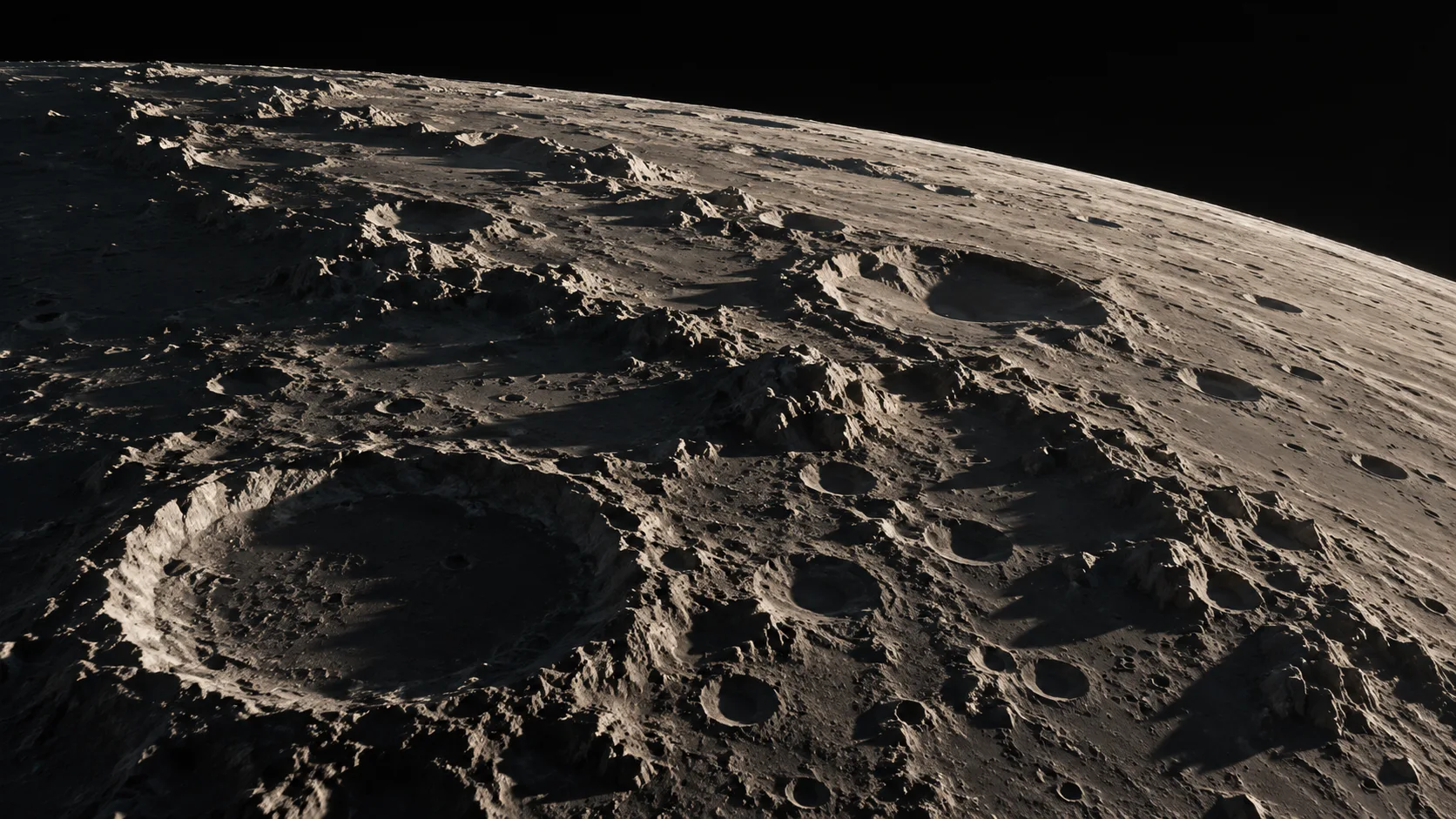
The Moon has no weather to soften the evidence, so ancient impacts remain written across its face. It is geology with the eraser taken away, plus dust that managed to annoy every astronaut who met it.
Q: What are the Moon’s dark plains called?
A: Maria.
Q: What does the Latin word maria mean?
A: Seas.
Q: What created most lunar maria?
A: Ancient basaltic lava flows filled large impact basins.
Q: What are the Moon’s bright heavily cratered regions called?
A: The lunar highlands.
Q: Which side has far fewer maria than the near side?
A: The far side.
Q: What is lunar regolith?
A: Loose dust, soil, and broken rock covering the Moon’s surface.
Q: What continually breaks lunar surface material into regolith?
A: Meteorite and micrometeorite impacts.
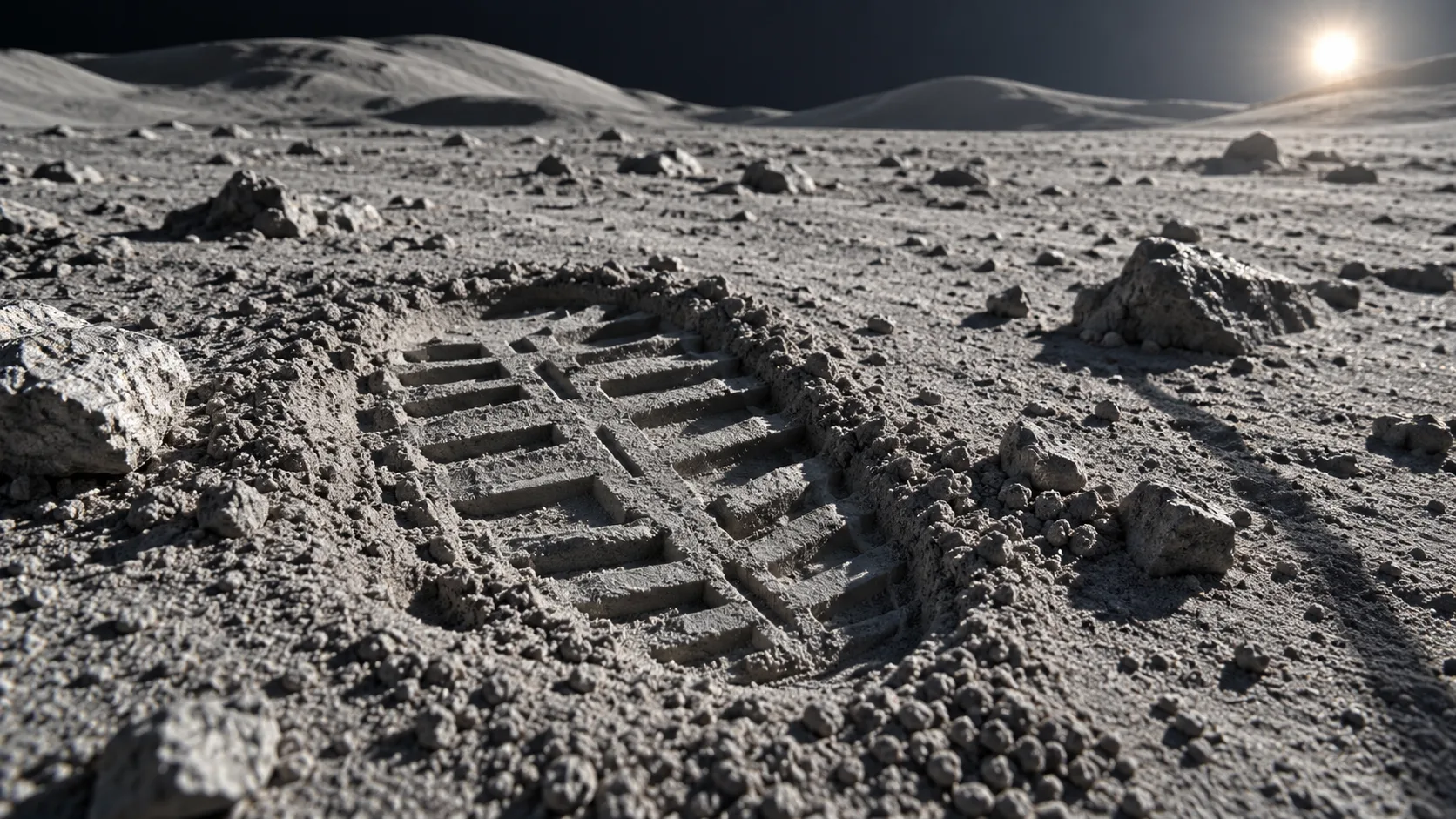
Q: Why do footprints last so long on the Moon?
A: There is no wind or liquid rain to erase them.
Q: What is the Moon’s extremely thin envelope of gases called?
A: An exosphere.
Q: Why is the lunar sky black even during daytime?
A: The Moon lacks a substantial atmosphere to scatter sunlight.
Q: What temperature challenge exists on the Moon?
A: Surface temperatures swing drastically between sunlit day and night.
Q: How long does daylight last at many lunar equatorial locations?
A: About 14 Earth days.
Q: Which enormous impact basin dominates the lunar far side?
A: The South Pole-Aitken Basin.
Q: Which prominent ray crater is easy to see near full moon?
A: Tycho.
Q: Which crater is named for the astronomer who proposed a Sun-centered system?
A: Copernicus.
Q: Which crater lies near the Moon’s south pole and may contain permanently shadowed areas?
A: Shackleton.
Q: Why are permanently shadowed polar craters scientifically important?
A: They can preserve water ice and other volatile materials.
Q: What evidence confirmed water ice in some lunar polar regions?
A: Spacecraft measurements and impact-plume observations.
Q: What mineral is abundant in lunar highland rock?
A: Plagioclase feldspar, especially anorthite.
Q: What rock type makes up much of the lunar maria?
A: Basalt.
Q: What are moonquakes?
A: Seismic vibrations within the Moon.
Q: What instruments left by Apollo astronauts measured moonquakes?
A: Seismometers.
Q: What may cause shallow moonquakes?
A: Tectonic stresses as the Moon cools and contracts.
Q: What small cliff-like landforms show that the Moon has contracted?
A: Lobate scarps.
Q: Why does the Moon have so many preserved impact craters?
A: It lacks active weather, oceans, and widespread plate tectonics to erase them.
Q: What produces the bright rays around young lunar craters?
A: Material blasted outward during impacts.
Q: What is the lunar terminator?
A: The moving boundary between lunar day and night.
Q: Why is the terminator useful for telescope viewing?
A: Low-angle sunlight casts long shadows that reveal relief.
Q: What color is the Moon’s surface overall?
A: Dark gray, despite appearing bright against the night sky.
Q: What property makes lunar dust cling to suits and equipment?
A: Its fine jagged grains become electrostatically charged and mechanically abrasive.
Moon Missions and Human Exploration
Lunar exploration began with metal spheres, grainy photographs, and a few spectacular crashes before anyone tried footprints. The engineering progression is humbling, especially when my phone struggles to connect to headphones in the same room.
Q: Which nation sent the first spacecraft to reach the Moon?
A: The Soviet Union.
Q: Which spacecraft became the first human-made object to reach the Moon?
A: Luna 2 in 1959.
Q: Which spacecraft returned the first images of the Moon’s far side?
A: Luna 3 in 1959.
Q: Which spacecraft made the first successful soft landing on the Moon?
A: Luna 9 in 1966.
Q: Which U.S. program tested robotic lunar landings before Apollo?
A: The Surveyor program.
Q: Which mission carried the first humans to orbit the Moon?
A: Apollo 8.
Q: When did Apollo 8 orbit the Moon?
A: December 1968.
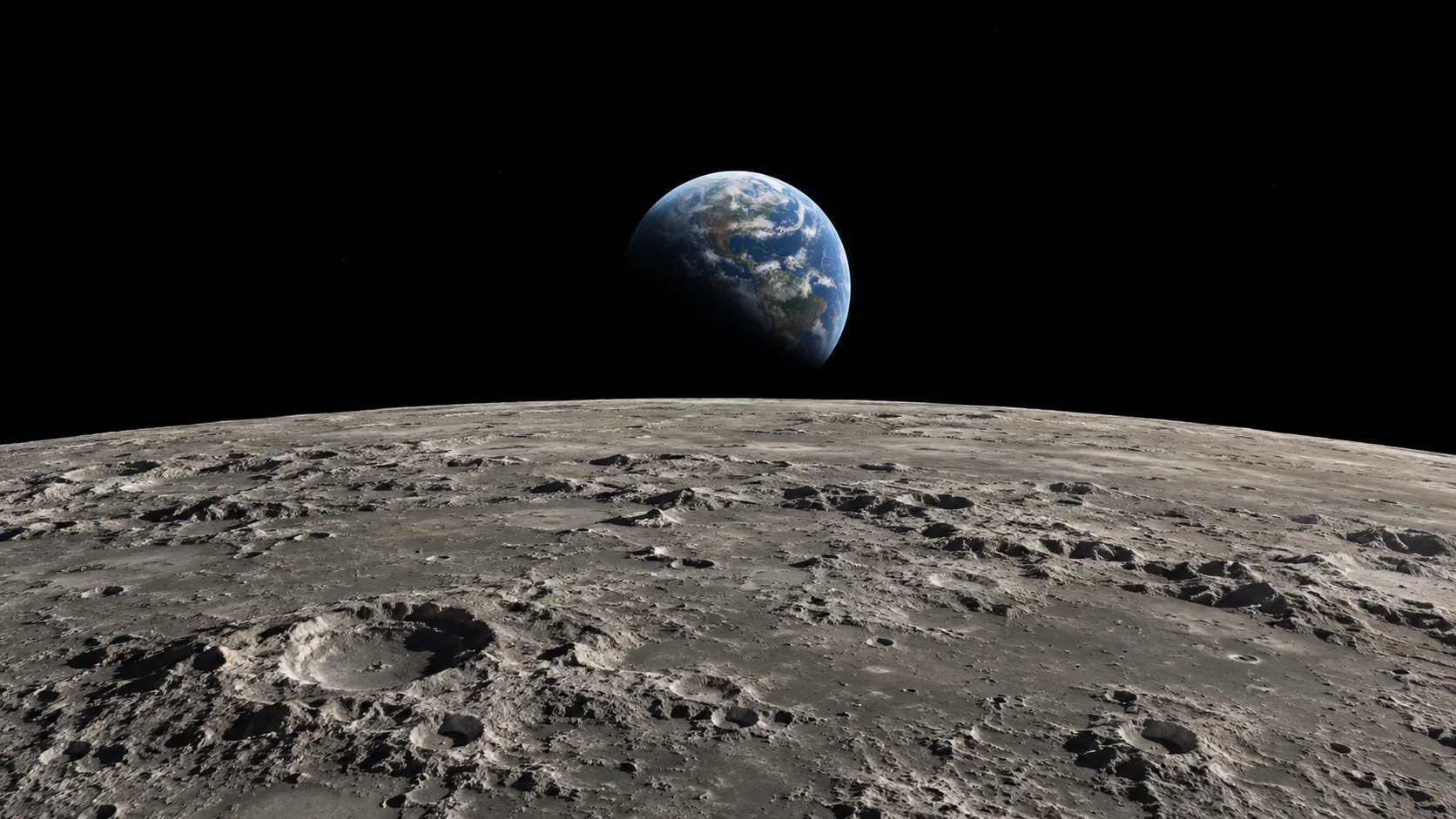
Q: Which Apollo 8 astronaut took the famous Earthrise photograph?
A: William Anders.
Q: Which mission first landed humans on the Moon?
A: Apollo 11.
Q: When did Apollo 11 land on the Moon?
A: July 20, 1969.
Q: Who became the first person to walk on the Moon?
A: Neil Armstrong.
Q: Who became the second person to walk on the Moon?
A: Buzz Aldrin.
Q: Who remained in lunar orbit during the Apollo 11 landing?
A: Michael Collins.
Q: What was Apollo 11’s lunar module called?
A: Eagle.
Q: Where did Apollo 11 land?
A: Mare Tranquillitatis, or the Sea of Tranquility.
Q: How many Apollo missions landed astronauts on the Moon?
A: Six.
Q: How many people have walked on the Moon?
A: Twelve.
Q: Which Apollo mission was aborted after an oxygen tank exploded?
A: Apollo 13.
Q: What phrase became associated with Apollo 13’s emergency?
A: Houston, we’ve had a problem.
Q: Which mission first used the Lunar Roving Vehicle?
A: Apollo 15.
Q: Which scientist became the only professional geologist to walk on the Moon?
A: Harrison Schmitt.
Q: Which Apollo mission made the last crewed lunar landing of the 20th century?
A: Apollo 17.
Q: When did Apollo 17 leave the lunar surface?
A: December 1972.
Q: Who was the last person to walk on the Moon during Apollo 17?
A: Eugene Cernan.
Q: Which Soviet robotic missions returned lunar samples to Earth?
A: Luna 16, Luna 20, and Luna 24.
Q: Which spacecraft became the first to land on the lunar far side?
A: China’s Chang’e 4 in 2019.
Q: Which Chinese mission returned lunar samples in 2020?
A: Chang’e 5.
Q: Which Indian mission landed near the lunar south polar region in 2023?
A: Chandrayaan-3.
Q: Which country became the fifth to make a soft lunar landing with SLIM in 2024?
A: Japan.
Q: What is NASA’s modern program for returning astronauts to the Moon called?
A: Artemis.
Eclipses, Observation, Names, and Lunar Culture
The Moon can hide the Sun, turn copper-colored in Earth’s shadow, and collect more nicknames than a small-town baseball team. Most observing requires only clear weather, patience, and the ability to resist buying one more telescope eyepiece.
Q: What happens during a solar eclipse?
A: The Moon passes between Earth and the Sun and blocks some or all of the Sun.
Q: What happens during a lunar eclipse?
A: The Moon passes through Earth’s shadow.
Q: Why does a lunar eclipse not occur every full moon?
A: The Moon’s orbit is tilted about 5 degrees to Earth’s orbital plane.
Q: Why does a solar eclipse not occur every new moon?
A: The tilted lunar orbit usually carries the Moon above or below the Sun in our sky.
Q: What is the darkest central part of a shadow called?
A: The umbra.
Q: What is the lighter outer part of a shadow called?
A: The penumbra.
Q: What eclipse occurs when the Moon appears too small to cover the Sun completely?
A: An annular solar eclipse.
Q: What bright ring appears during an annular eclipse?
A: The ring of fire.
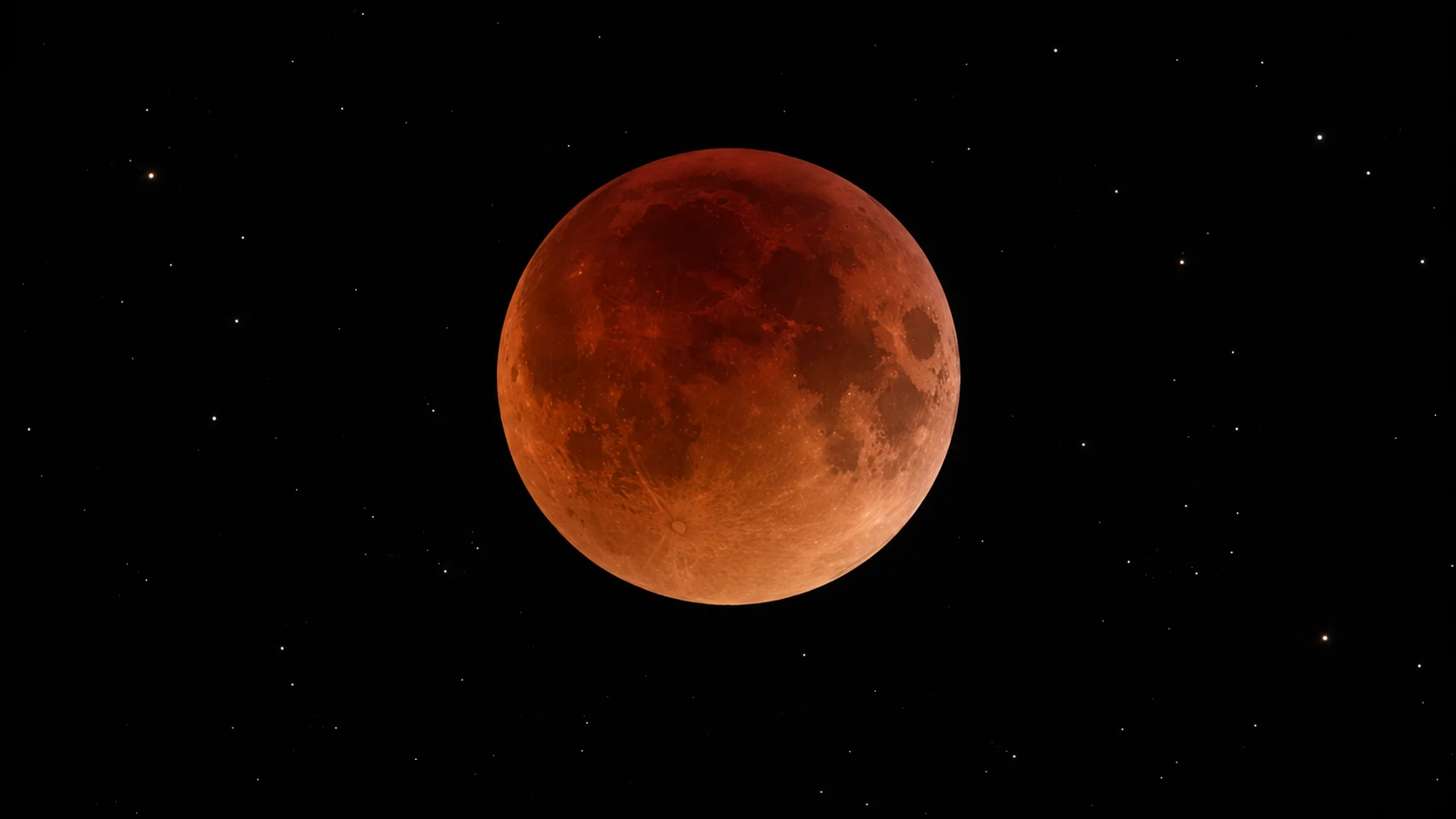
Q: Why can the Moon look red during a total lunar eclipse?
A: Earth’s atmosphere bends filtered red sunlight into the shadow.
Q: What popular nickname describes a totally eclipsed Moon?
A: A blood moon.
Q: What must viewers use during partial or annular phases of a solar eclipse?
A: Proper certified solar viewing protection.
Q: When is it safe to look directly at a total solar eclipse without a filter?
A: Only during the brief total phase when the Sun’s bright surface is completely covered.
Q: Which full moon name is commonly used for January?
A: Wolf Moon.
Q: Which full moon name is commonly used for June?
A: Strawberry Moon.
Q: Which full moon name is commonly used near the autumn equinox?
A: Harvest Moon.
Q: What makes a harvest moon astronomically distinctive?
A: Successive moonrises occur at relatively similar evening times near the autumn equinox.
Q: What is earthshine?
A: Sunlight reflected from Earth that faintly lights the Moon’s dark portion.
Q: When is earthshine easiest to see?
A: Around a thin crescent moon.
Q: What apparent face or figure do many cultures imagine in lunar markings?
A: The Man in the Moon.
Q: Which animal is seen in the Moon’s markings in several East Asian and Indigenous American traditions?
A: A rabbit or hare.
Q: Which Roman goddess was associated with the Moon?
A: Luna.
Q: Which Greek goddess personified the Moon?
A: Selene.
Q: What word meaning “Moon” gives us the adjective lunar?
A: The Latin word luna.
Q: What calendar is based mainly on cycles of lunar phases?
A: A lunar calendar.
Q: Which Islamic month begins after the sighting of a new crescent and includes fasting?
A: Ramadan.
Q: Why do lunar calendar months shift through the solar year?
A: Twelve lunar months are shorter than a solar year.
Q: What simple optical aid reveals lunar craters and maria well?
A: Binoculars.
Q: Which Moon phase is often best for seeing crater shadows?
A: A quarter or crescent phase near the terminator.
Q: Why can a full moon look flatter through a telescope?
A: Overhead sunlight casts few visible shadows across its center.
Q: What rule makes safe Moon viewing easy?
A: Ordinary moonlight is safe to view directly, unlike the Sun.
How Did You Score?
If you knew libration, found Shackleton crater, and remembered who stayed in orbit during Apollo 11, your Moon score is glowing. Mine briefly waned around the Soviet mission numbers but waxed again.

Ellie Simons creates and edits Random Trivia. She researches trivia using primary and authoritative sources whenever possible and is currently reviewing the site's older trivia library for accuracy, clarity, and playability. Read more on the About page.
About this quiz
Site editor: Ellie Simons. Read our Trivia Methodology to learn how questions are researched and updated. Page last updated: . Report an error.