
Volcanoes build islands, bury cities, fertilize soil, reshape climate, and make “the ground is moving” a sentence worth taking seriously. These 120 volcano trivia questions cover magma, famous eruptions, the Ring of Fire, monitoring, hazards, and other worlds.
Dig deeper with our Earth science trivia, mountain trivia, and geography trivia.
Volcano Science, Magma, and Eruption Types
Volcanoes are pressure valves, landscape builders, climate disruptors, and firm reminders that “solid ground” is partly a confidence trick. I prefer learning their warning signs from a safe chair with no ash in my coffee.
Q: What is molten rock beneath Earth’s surface called?
A: Magma.
Q: What is molten rock called after it reaches the surface?
A: Lava.
Q: What opening releases lava, ash, and gas from a volcano?
A: A vent.
Q: What underground reservoir holds magma beneath a volcano?
A: A magma chamber.
Q: What bowl-shaped depression surrounds many volcanic vents?
A: A crater.
Q: What large depression forms when a volcano collapses after a major eruption?
A: A caldera.
Q: What broad volcano forms from fluid basaltic lava flows?
A: A shield volcano.
Q: What steep symmetrical volcano forms from layers of lava and fragmented material?
A: A stratovolcano or composite volcano.
Q: What small steep volcano is built mainly from loose cinders?
A: A cinder cone.
Q: What rounded mound forms when thick lava piles up near a vent?
A: A lava dome.
Q: Which magma composition is usually least viscous?
A: Basaltic magma.
Q: Which magma composition is generally most viscous and silica-rich?
A: Rhyolitic magma.
Q: How does high silica content affect magma?
A: It makes magma more viscous and better able to trap gas.
Q: Why can trapped volcanic gas produce explosive eruptions?
A: Pressure builds until magma and rock fragment violently.
Q: What is tephra?
A: Rock fragments and particles ejected during an eruption.
Q: What is volcanic ash made of?
A: Tiny sharp fragments of rock, minerals, and volcanic glass.
Q: What fast ground-hugging avalanche of hot gas and debris is called?
A: A pyroclastic flow.
Q: What volcanic mudflow mixes water with ash and debris?
A: A lahar.
Q: What ropey basaltic lava texture is called?
A: Pāhoehoe.
Q: What rough blocky basaltic lava texture is called?
A: ‘A‘ā.
Q: What glassy volcanic rock forms when lava cools rapidly?
A: Obsidian.
Q: What light volcanic rock can float because it contains many gas bubbles?
A: Pumice.
Q: What dark bubbly volcanic rock is denser than pumice?
A: Scoria.
Q: What scale ranks explosive eruption size by erupted material and plume height?
A: The Volcanic Explosivity Index.
Q: What does VEI stand for?
A: Volcanic Explosivity Index.
Q: What is a fumarole?
A: A vent that releases steam and volcanic gases.
Q: What is a hotspot in volcanology?
A: A long-lived source of rising hot mantle material beneath a plate.
Q: How can a hotspot create an island chain?
A: A moving plate carries older volcanoes away while a new one forms over the hotspot.
Q: What is a dormant volcano?
A: A volcano not currently erupting but capable of erupting again.
Q: What is an extinct volcano?
A: A volcano considered unlikely to erupt again.
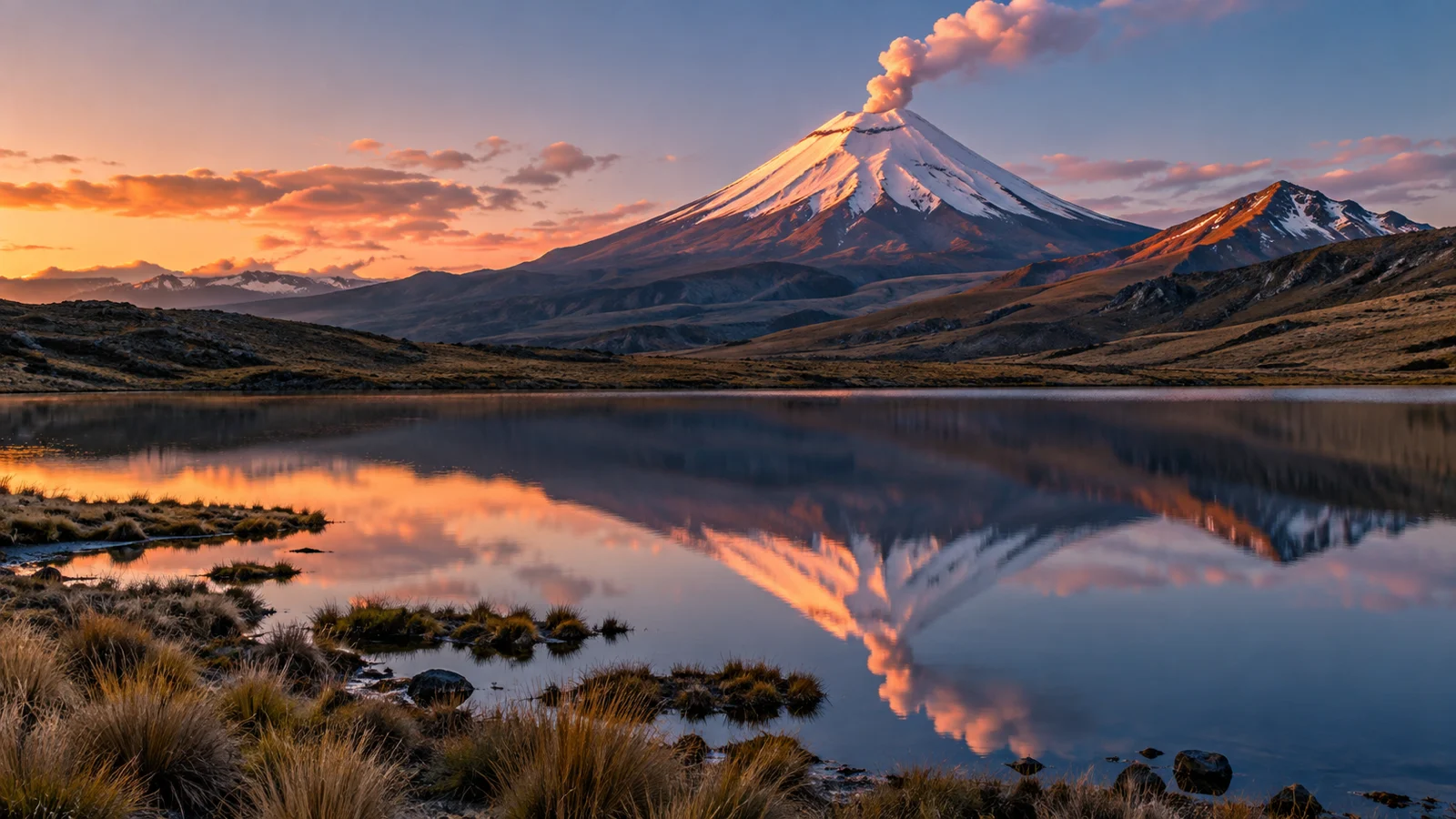
Historic Eruptions That Changed the World
The historical record is full of volcanoes that buried cities, darkened skies, created islands, and rewrote disaster planning. This section is dramatic enough without embellishment, which makes my job pleasantly easy.
Q: Which volcano buried Pompeii and Herculaneum in A.D. 79?
A: Mount Vesuvius.
Q: Which Roman writer died while observing the A.D. 79 Vesuvius eruption?
A: Pliny the Elder.
Q: Who wrote surviving eyewitness letters about the Vesuvius eruption?
A: Pliny the Younger.
Q: Which Indonesian volcano produced the enormous 1815 eruption?
A: Mount Tambora.
Q: What climate nickname was given to 1816 after Tambora’s eruption?
A: The Year Without a Summer.
Q: Which Indonesian volcano erupted catastrophically in 1883?
A: Krakatoa.
Q: Which narrow body of water contained Krakatoa?
A: The Sunda Strait.
Q: What deadly ocean waves followed the 1883 Krakatoa eruption?
A: Tsunamis.
Q: Which volcano grew in Krakatoa’s caldera after the 1883 eruption?
A: Anak Krakatau.
Q: Which Caribbean volcano destroyed Saint-Pierre in 1902?
A: Mount Pelée.
Q: Which island contains Mount Pelée?
A: Martinique.
Q: Which Alaska volcano produced the 1912 eruption that formed the Valley of Ten Thousand Smokes?
A: Novarupta.
Q: Which national park contains the Valley of Ten Thousand Smokes?
A: Katmai National Park and Preserve.
Q: Which Mexican volcano emerged in a farmer’s field in 1943?
A: Parícutin.
Q: How long did Parícutin erupt after appearing in 1943?
A: About nine years.
Q: Which Colombian volcano caused the Armero tragedy in 1985?
A: Nevado del Ruiz.
Q: What volcanic hazard buried Armero?
A: Lahars.
Q: Which Philippine volcano erupted explosively in 1991?
A: Mount Pinatubo.
Q: How did Pinatubo’s 1991 eruption briefly affect global climate?
A: Sulfur aerosols cooled average global temperatures for a short period.
Q: Which Washington volcano erupted on May 18, 1980?
A: Mount St. Helens.
Q: What triggered Mount St. Helens’s devastating lateral blast?
A: A large earthquake caused the volcano’s north flank to collapse.
Q: Which Icelandic volcano disrupted European air travel in 2010?
A: Eyjafjallajökull.
Q: Why did Eyjafjallajökull disrupt flights?
A: Its ash cloud posed a risk to aircraft engines.
Q: Which Icelandic island formed during eruptions from 1963 to 1967?
A: Surtsey.
Q: Which undersea volcano produced a new island near Tonga in 2015?
A: Hunga Tonga-Hunga Haʻapai.
Q: What major event did Hunga Tonga-Hunga Haʻapai produce in January 2022?
A: An enormous explosive eruption and Pacific-wide tsunami.
Q: Which Greek island preserves a caldera linked to a Bronze Age eruption?
A: Santorini.
Q: What ancient town was buried by the Santorini eruption?
A: Akrotiri.
Q: Which volcano’s 1980 eruption transformed modern U.S. volcano monitoring?
A: Mount St. Helens.
Q: What lesson links many historic volcano disasters?
A: Hazard maps, monitoring, evacuation planning, and clear warnings save lives.
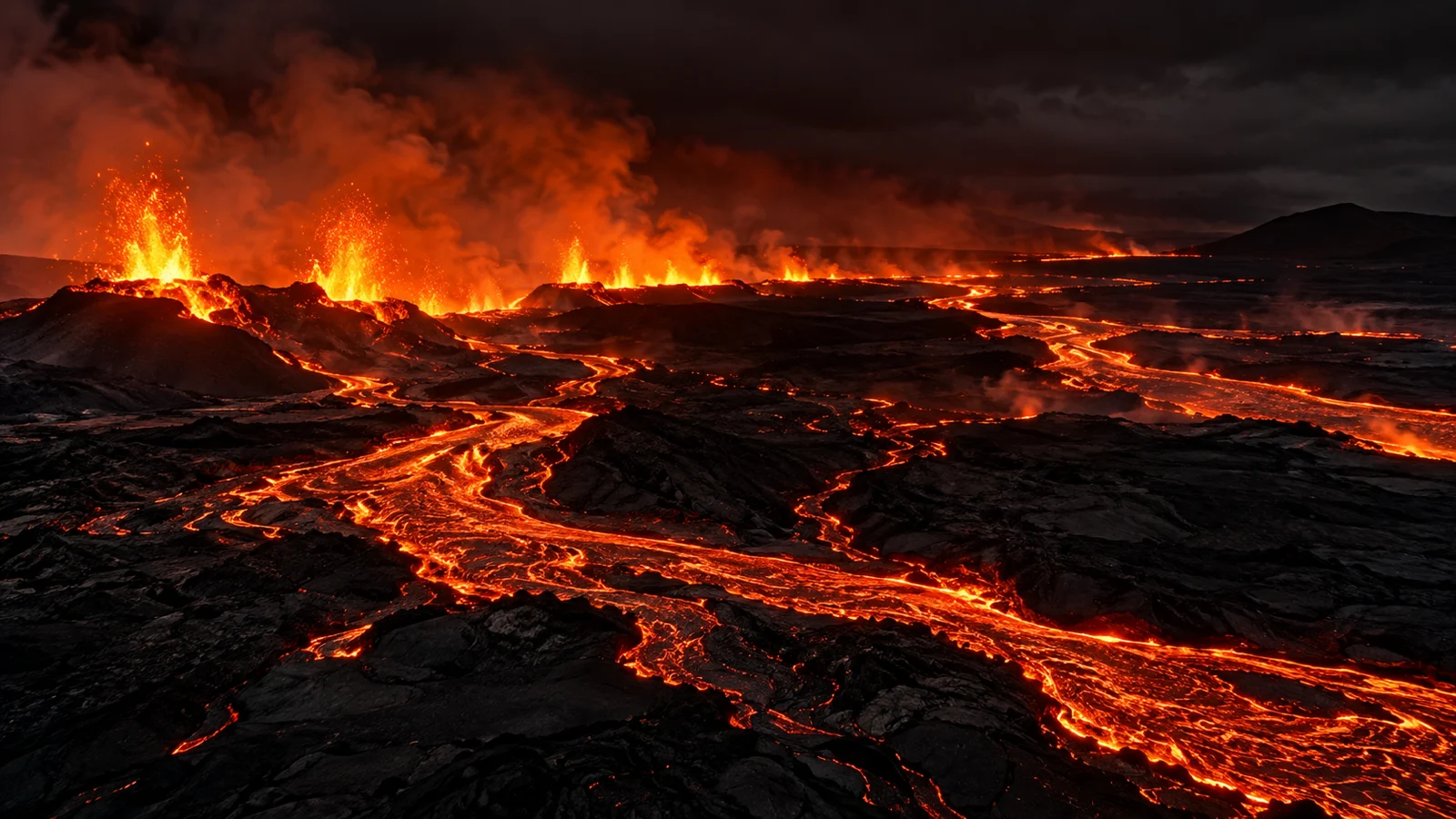
Pacific Ring of Fire Volcanoes
The Ring of Fire is not a literal ring, and thankfully nobody tried to trademark it. It is a broad tectonic belt where subduction zones produce deep trenches, earthquakes, and an extraordinary number of active volcanoes.
Q: What is the Pacific Ring of Fire?
A: A belt of frequent earthquakes and volcanoes around much of the Pacific Ocean.
Q: What plate-boundary process creates many Ring of Fire volcanoes?
A: Subduction.
Q: What happens during subduction?
A: One tectonic plate sinks beneath another.
Q: Which Japanese mountain is an active stratovolcano and national symbol?
A: Mount Fuji.
Q: When did Mount Fuji last erupt?
A: During the Hōei eruption of 1707 to 1708.
Q: Which Japanese volcano has frequent eruptions near Kagoshima?
A: Sakurajima.
Q: Which Indonesian island contains Mount Merapi?
A: Java.
Q: What does Merapi mean in Indonesian?
A: Mountain of fire.
Q: Which Indonesian volcano has a turquoise acidic crater lake and sulfur mining?
A: Kawah Ijen.
Q: Which Indonesian volcano is famous for a large caldera containing Mount Bromo?
A: The Tengger volcanic complex.
Q: Which Philippine volcano is known for a nearly symmetrical cone?
A: Mayon Volcano.
Q: Which Philippine volcano occupies an island within Taal Lake?
A: Taal Volcano.
Q: Which New Zealand volcanic zone includes Rotorua and Taupō?
A: The Taupō Volcanic Zone.
Q: Which New Zealand volcano was called Mount Doom in The Lord of the Rings films?
A: Mount Ngauruhoe.
Q: Which New Zealand mountain erupted destructively in 1953, contributing to the Tangiwai disaster?
A: Mount Ruapehu.
Q: Which Russian peninsula contains dozens of active volcanoes?
A: The Kamchatka Peninsula.
Q: Which volcano is the highest active volcano in Eurasia?
A: Klyuchevskaya Sopka.
Q: Which Alaska island chain contains many volcanoes?
A: The Aleutian Islands.
Q: Which Alaskan volcano threatened Anchorage with ash in 2009?
A: Mount Redoubt.
Q: Which Canadian volcanic complex produced a large explosive eruption about 2,400 years ago?
A: Mount Meager.
Q: Which Cascade volcano towers over Seattle and Tacoma?
A: Mount Rainier.
Q: Which Cascade volcano erupted in 1980?
A: Mount St. Helens.
Q: Which Oregon volcano contains Crater Lake in its collapsed caldera?
A: Mount Mazama.
Q: Which California volcano last erupted from 1914 to 1917?
A: Lassen Peak.
Q: Which active volcano is the highest in North America?
A: Pico de Orizaba in Mexico.
Q: What is Pico de Orizaba called in Nahuatl?
A: Citlaltépetl.
Q: Which Mexican volcano overlooks Puebla and is often called Popo?
A: Popocatépetl.
Q: Which Ecuadorian volcano is one of the world’s highest active volcanoes?
A: Cotopaxi.
Q: Which Chilean volcano erupted dramatically in 2015?
A: Calbuco.
Q: Which countries share Ojos del Salado, the world’s highest active volcano?
A: Chile and Argentina.
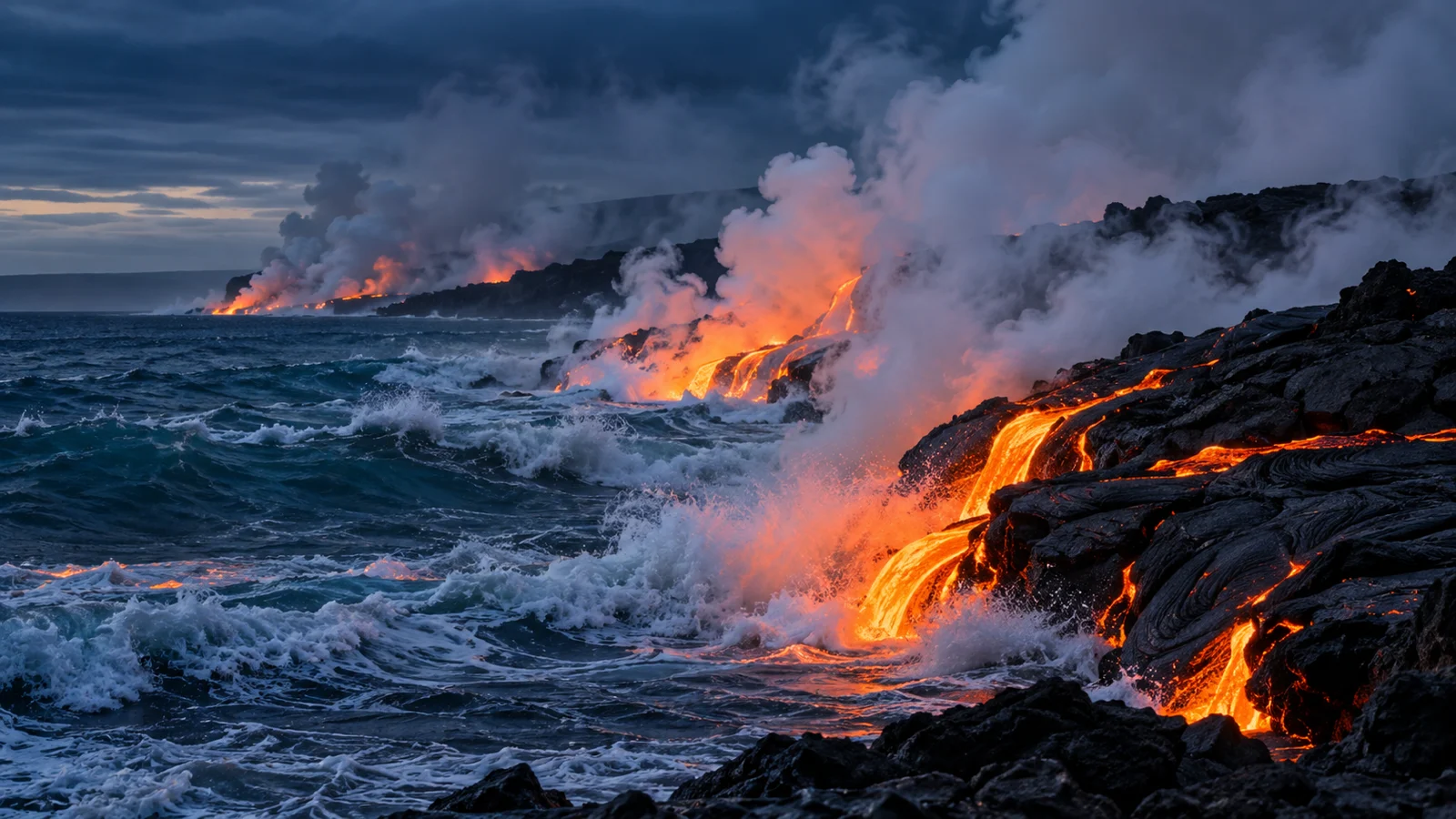
Volcanoes Beyond the Ring of Fire and Modern Monitoring
The final round visits hotspots, rifts, Mediterranean peaks, extraterrestrial giants, and the instruments watching them. Volcano forecasting is not fortune-telling; it is patient detective work with seismometers and very serious gas samples.
Q: Which Hawaiian volcano is the largest active volcano on Earth by volume?
A: Mauna Loa.
Q: Which Hawaiian volcano has produced frequent eruptions in recent decades?
A: Kīlauea.
Q: Which process formed the Hawaiian island chain?
A: The Pacific Plate moved over a mantle hotspot.
Q: Which Hawaiian island contains Mauna Loa and Kīlauea?
A: Hawaiʻi Island.
Q: Which Yellowstone feature is the remnant of enormous eruptions?
A: The Yellowstone caldera.
Q: Which U.S. states contain parts of Yellowstone National Park?
A: Wyoming, Montana, and Idaho.
Q: Which African volcano contains one of the world’s largest persistent lava lakes?
A: Nyiragongo.
Q: Which country contains Nyiragongo?
A: The Democratic Republic of the Congo.
Q: Which Tanzanian volcano erupts unusual carbonatite lava?
A: Ol Doinyo Lengai.
Q: What is unusual about Ol Doinyo Lengai’s lava?
A: It is rich in carbonate minerals and erupts at relatively low temperatures.
Q: Which Ethiopian depression contains Erta Ale volcano?
A: The Danakil Depression.
Q: Which active Sicilian volcano is Europe’s tallest?
A: Mount Etna.
Q: Which volcano lies near Naples and destroyed Pompeii?
A: Mount Vesuvius.
Q: Which Greek volcanic island is also called Thera?
A: Santorini.
Q: Which Atlantic archipelago contains the volcano Mount Pico?
A: The Azores.
Q: Which island contains Mount Teide?
A: Tenerife in the Canary Islands.
Q: Which dormant Tanzanian volcano is Africa’s highest mountain?
A: Mount Kilimanjaro.
Q: Which Antarctic volcano is the southernmost active volcano on Earth?
A: Mount Erebus.
Q: Which planet contains Olympus Mons, the solar system’s largest known volcano?
A: Mars.
Q: What type of volcano is Olympus Mons?
A: A giant shield volcano.
Q: Which Jupiter moon is the most volcanically active world known?
A: Io.
Q: What instrument records volcanic earthquakes?
A: A seismometer.
Q: How can GPS help monitor a volcano?
A: It detects ground movement as magma changes pressure underground.
Q: What does satellite radar measure around volcanoes?
A: Small changes in ground shape and elevation.
Q: Which volcanic gas is commonly monitored as magma rises?
A: Sulfur dioxide.
Q: Why can carbon dioxide be dangerous near volcanic vents?
A: It can collect in low areas and displace breathable oxygen.
Q: What change in a crater lake may warn of volcanic unrest?
A: Rising temperature, changing chemistry, or altered water level.
Q: Why can scientists forecast risk but not promise an exact eruption time?
A: Volcanic systems are complex, and similar warning signs can lead to different outcomes.
Q: What official map shows areas exposed to lava, ash, lahars, or pyroclastic flows?
A: A volcanic hazard map.
Q: What is the safest response to an official volcano evacuation order?
A: Leave promptly by the designated route and follow emergency instructions.
How Did You Score?
If you separated magma from lava, tracked Krakatoa, and knew why GPS watches volcanoes, your score is safely above the ash cloud. Mine briefly became a lahar of crossed-out spellings near Eyjafjallajökull.

Ellie Simons creates and edits Random Trivia. She researches trivia using primary and authoritative sources whenever possible and is currently reviewing the site's older trivia library for accuracy, clarity, and playability. Read more on the About page.
About this quiz
Site editor: Ellie Simons. Read our Trivia Methodology to learn how questions are researched and updated. Page last updated: . Report an error.