
From the Acropolis and ancient Olympia to island villages, olive groves, philosophy, mythology, feta, theatre, democracy, and a coastline that seems determined to create another beach every few kilometres, Greece is built for trivia. These 120 questions connect ancient heritage with the modern country.
Destination facts are checked against Visit Greece and UNESCO. Keep exploring with our geography trivia, Ancient Greece trivia, and Greek mythology trivia.
Greece Basics, Athens & Geography
Q: What is the capital of Greece?
A: Athens.
Q: What peninsula makes up much of southern mainland Greece?
A: Peloponnese.
Q: What narrow land bridge connects the Peloponnese to the mainland?
A: Isthmus of Corinth.
Q: What canal cuts through that isthmus?
A: Corinth Canal.
Q: What sea lies east of mainland Greece?
A: Aegean Sea.
Q: What sea lies west of mainland Greece?
A: Ionian Sea.
Q: What broader sea surrounds Greece?
A: Mediterranean Sea.
Q: Does Greece have many islands?
A: Yes, thousands of islands and islets, though only a fraction are inhabited.
Q: What is Greece's largest island?
A: Crete.
Q: What island group includes Mykonos and Santorini?
A: Cyclades.
Q: What island group lies in the Ionian Sea?
A: Ionian Islands.
Q: What island is famous as the setting of the Colossus in antiquity?
A: Rhodes.
Q: What island is associated with the myth of the Minotaur and Palace of Knossos?
A: Crete.
Q: What is the highest mountain in Greece?
A: Mount Olympus.
Q: What mythological importance does Mount Olympus have?
A: It was regarded as the home of the Olympian gods.
Q: What is Greece's second-largest city?
A: Thessaloniki.
Q: What region is Thessaloniki in?
A: Macedonia in northern Greece.
Q: What currency does Greece use?
A: Euro.
Q: What language is official?
A: Greek.
Q: What alphabet does Greek use?
A: Greek alphabet.
Q: What letter begins the Greek alphabet?
A: Alpha.
Q: What letter ends it?
A: Omega.
Q: What white-and-blue flag symbol appears in the upper corner of Greece's flag?
A: A white cross on blue.
Q: What does the cross reflect historically?
A: Greece's strong Eastern Orthodox Christian tradition.
Q: What national holiday is celebrated on March 25?
A: Greek Independence Day.
Q: Independence from what empire is commemorated?
A: Ottoman Empire.
Q: What city hosted the first modern Olympic Games in 1896?
A: Athens.
Q: What marble stadium hosted major events in 1896?
A: Panathenaic Stadium.
Q: What unusual feature distinguishes Panathenaic Stadium?
A: It is built almost entirely of marble.
Q: Why is Greece's geography central to its history?
A: Mountains and seas encouraged local city-states, seafaring, trade, island cultures, and strong regional identities.
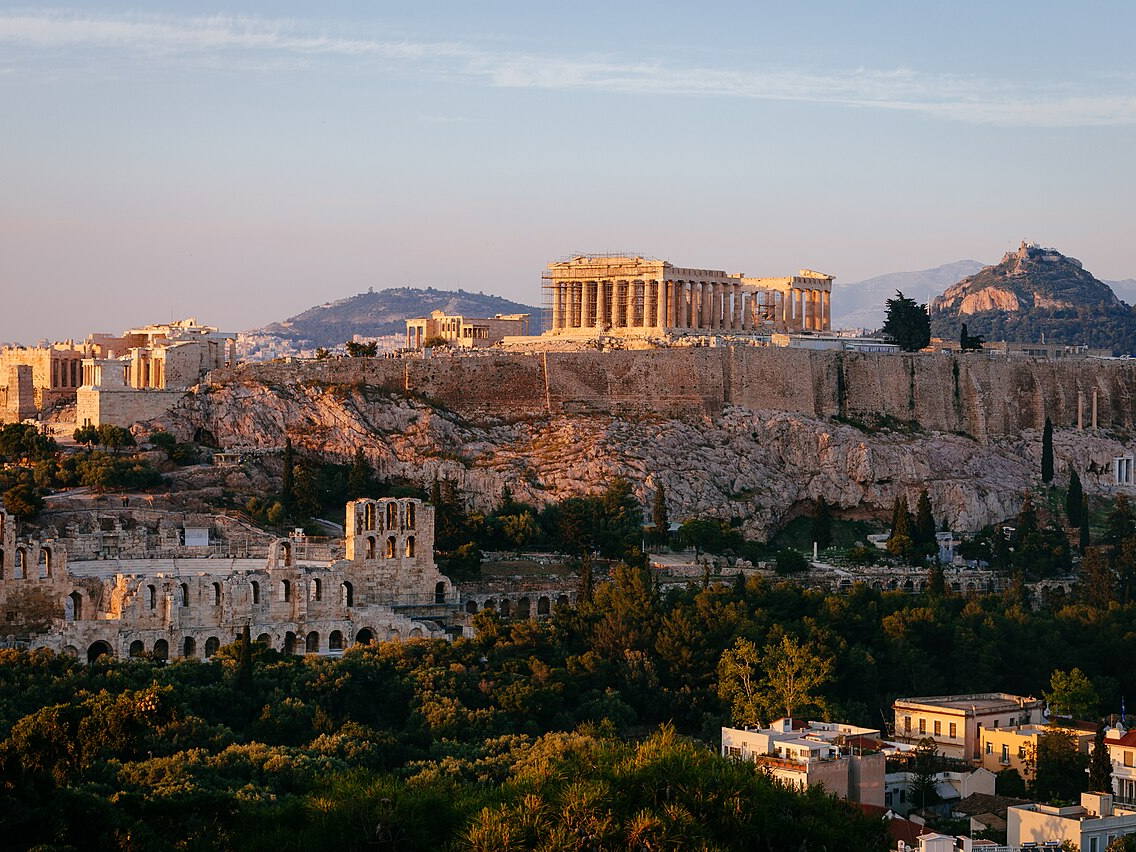
Acropolis, Democracy, Philosophy & Ancient Greece
Q: What hilltop complex dominates Athens?
A: Acropolis.
Q: What temple is its most famous monument?
A: Parthenon.
Q: Which goddess was the Parthenon dedicated to?
A: Athena.
Q: What city was Athena the patron goddess of?
A: Athens.
Q: What architectural orders appear in ancient Greek temples?
A: Doric, Ionic, and Corinthian.
Q: What order is the Parthenon primarily associated with?
A: Doric.
Q: What porch on the Erechtheion uses sculpted women as columns?
A: Porch of the Caryatids.
Q: What is a caryatid?
A: A sculpted female figure serving as an architectural support.
Q: What political concept is ancient Athens famous for developing?
A: Democracy.
Q: Did ancient Athenian democracy give equal political rights to every resident?
A: No.
Q: Who could generally participate as citizens?
A: Adult free male citizens meeting Athenian citizenship rules.
Q: Who was excluded?
A: Women, enslaved people, foreigners, and others without citizen status.
Q: What public hill hosted Athenian political assemblies?
A: Pnyx.
Q: What marketplace was central to public life?
A: Agora.
Q: What philosopher was sentenced to death in Athens in 399 BCE?
A: Socrates.
Q: How did Socrates die?
A: He drank hemlock.
Q: Who was Socrates's famous student?
A: Plato.
Q: What school did Plato found?
A: Academy.
Q: Who studied under Plato?
A: Aristotle.
Q: Who did Aristotle tutor?
A: Alexander the Great.
Q: What kingdom did Alexander come from?
A: Macedon.
Q: Who was Alexander's father?
A: Philip II of Macedon.
Q: What war pitted Greek city-states against the Persian Empire?
A: Greco-Persian Wars.
Q: What battle is associated with 300 Spartans?
A: Thermopylae.
Q: Who led the Spartan force there?
A: King Leonidas I.
Q: What naval battle was a major Greek victory over Persia?
A: Salamis.
Q: What conflict later pitted Athens against Sparta?
A: Peloponnesian War.
Q: Who won the Peloponnesian War?
A: Sparta and its allies.
Q: What is a polis?
A: An ancient Greek city-state.
Q: Why is “ancient Greece” not one unified country for most of its history?
A: Independent city-states had separate governments, rivalries, laws, and identities.
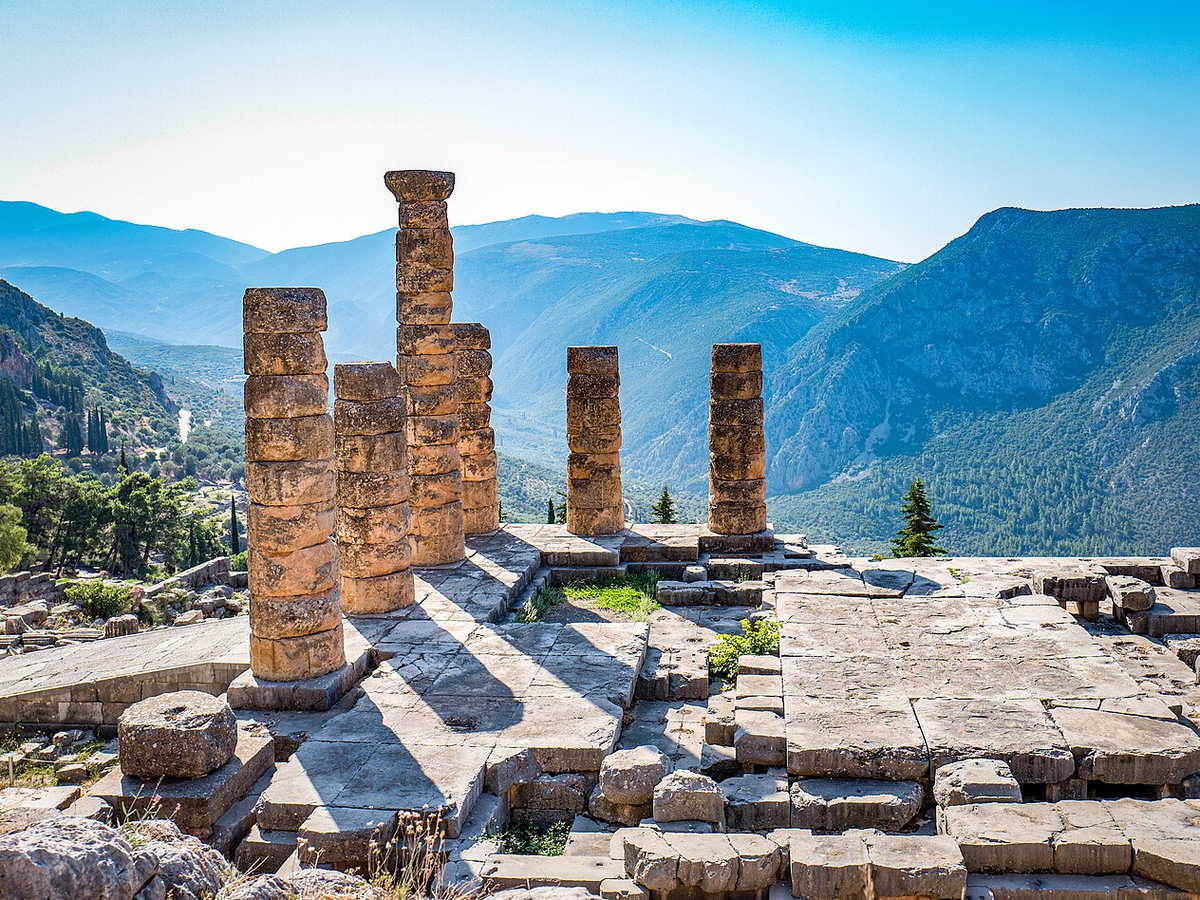
Mythology, Delphi, Olympia & Greek Culture
Q: Who is king of the Olympian gods?
A: Zeus.
Q: Who is goddess of wisdom?
A: Athena.
Q: Who is god of the sea?
A: Poseidon.
Q: Who is god of the underworld?
A: Hades.
Q: Who is messenger of the gods?
A: Hermes.
Q: Who is goddess of love?
A: Aphrodite.
Q: Who is god of music, prophecy, and healing among other roles?
A: Apollo.
Q: What sanctuary was famous for Apollo's oracle?
A: Delphi.
Q: What priestess delivered Delphic oracles?
A: Pythia.
Q: What phrase was famously associated with Delphi?
A: “Know thyself.”
Q: What ancient games were held at Olympia?
A: Olympic Games.
Q: Which god did the ancient Olympics honor?
A: Zeus.
Q: In what year were the first modern Olympics held in Athens?
A: 1896.
Q: Where is the modern Olympic flame lit for each Games?
A: Ancient Olympia.
Q: What famous dramatic art forms developed in ancient Greece?
A: Tragedy and comedy.
Q: Who wrote Oedipus Rex?
A: Sophocles.
Q: Who wrote Medea?
A: Euripides.
Q: Who wrote Lysistrata?
A: Aristophanes.
Q: What outdoor theatre near the Acropolis is associated with ancient drama?
A: Theatre of Dionysus.
Q: What theatre below the Acropolis still hosts performances?
A: Odeon of Herodes Atticus.
Q: What epic poet is traditionally credited with the Iliad and Odyssey?
A: Homer.
Q: What war is the Iliad centered on?
A: Trojan War.
Q: Who is the hero trying to return home in the Odyssey?
A: Odysseus.
Q: What island is Odysseus king of?
A: Ithaca.
Q: What mythological creature lives in a labyrinth on Crete?
A: Minotaur.
Q: Who kills the Minotaur?
A: Theseus.
Q: Who helps Theseus escape the labyrinth?
A: Ariadne.
Q: What archaeologist excavated Knossos and popularized the term Minoan?
A: Arthur Evans.
Q: What Bronze Age civilization centered on Crete?
A: Minoan civilization.
Q: Why does mythology remain intertwined with Greek travel trivia?
A: Mountains, islands, temples, caves, and ancient cities are continually linked with mythic stories and cult traditions.
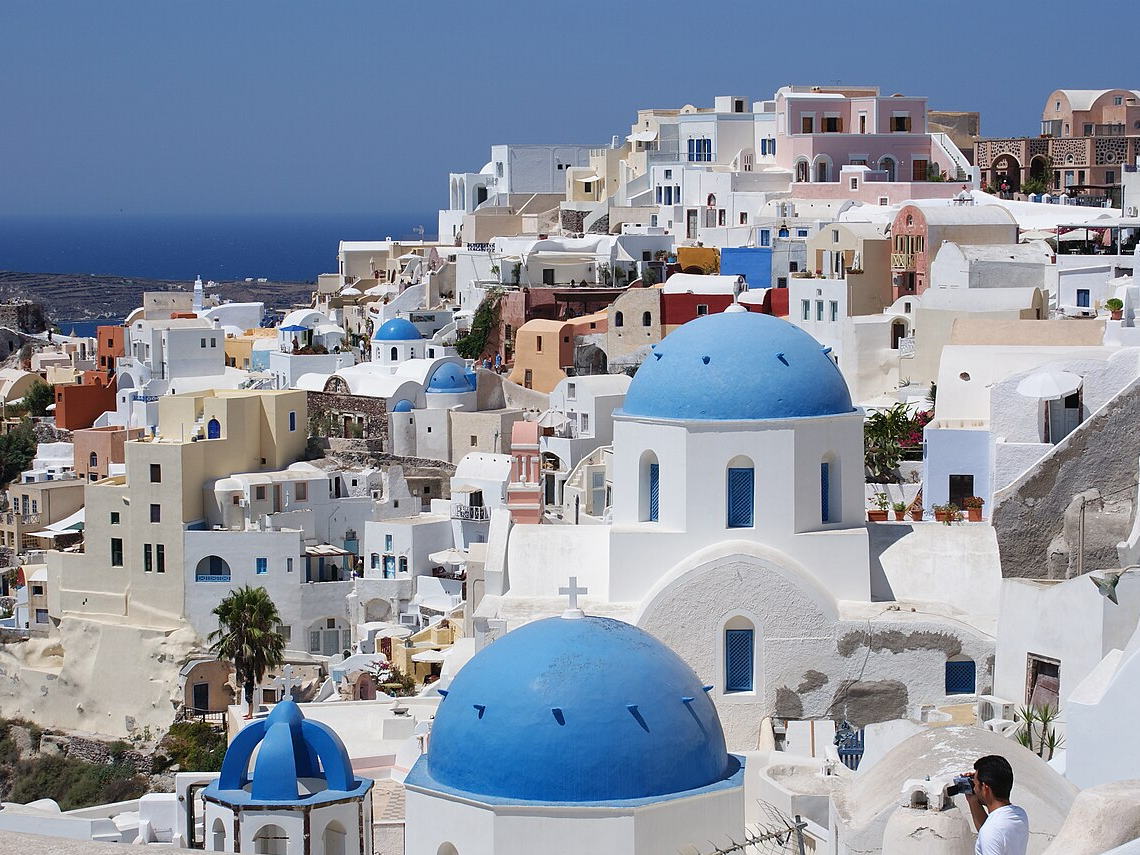
Islands, Food, Music & Hard Greece Trivia
Q: What island is famous for white buildings and blue domes above a volcanic caldera?
A: Santorini.
Q: What ancient name is associated with Santorini?
A: Thera.
Q: What massive Bronze Age eruption occurred there?
A: Thera eruption.
Q: What archaeological site preserves a buried Bronze Age settlement on Santorini?
A: Akrotiri.
Q: What island is famous for Mykonos Town and windmills?
A: Mykonos.
Q: What island is associated with Hippocrates?
A: Kos.
Q: What island has the medieval Old Town of Rhodes?
A: Rhodes.
Q: What island is famous for Navagio Shipwreck Beach?
A: Zakynthos.
Q: What island is famous for Venetian architecture and green landscapes in the Ionian Sea?
A: Corfu.
Q: What cheese is one of Greece's most famous?
A: Feta.
Q: What milk is traditionally used in protected feta production?
A: Sheep's milk, sometimes blended with goat's milk under PDO rules.
Q: What yogurt-based sauce contains cucumber and garlic?
A: Tzatziki.
Q: What dish layers eggplant, meat sauce, and béchamel in a famous form?
A: Moussaka.
Q: What stuffed vine-leaf dish is common?
A: Dolmades.
Q: What grilled meat is served on skewers or in pita?
A: Souvlaki.
Q: What pastry uses layers of phyllo, nuts, and syrup?
A: Baklava.
Q: Is baklava exclusively Greek?
A: No. Related traditions exist across the eastern Mediterranean, Balkans, Middle East, and former Ottoman regions.
Q: What anise-flavored spirit is famous in Greece?
A: Ouzo.
Q: What strong spirit is made from grape pomace and is common in Greece?
A: Tsipouro.
Q: What small strong coffee is served with grounds settled in the cup?
A: Greek coffee.
Q: What dance is strongly associated internationally with the film Zorba the Greek?
A: Sirtaki.
Q: Was sirtaki an ancient folk dance?
A: No. It was created for the 1964 film using elements of Greek dance traditions.
Q: What stringed instrument is strongly associated with rebetiko and popular Greek music?
A: Bouzouki.
Q: What is rebetiko?
A: An urban Greek music tradition shaped by migration, working-class communities, and eastern Mediterranean influences.
Q: What famous marathon derives its name from a place in Greece?
A: Marathon.
Q: What battle occurred there in 490 BCE?
A: Battle of Marathon.
Q: Is the modern marathon distance identical to a verified ancient messenger route?
A: No. The modern standardized distance developed much later.
Q: What Greek word became the English word democracy?
A: Dēmokratia, combining people and power/rule.
Q: What Greek word is the source of “theatre”?
A: Theatron, a place for viewing.
Q: Why is Greece especially deep trivia material?
A: Islands, ancient city-states, mythology, language, philosophy, theatre, Christianity, Ottoman history, food, music, archaeology, and modern sport all overlap.
How Did You Score?
If the Pnyx, caryatids, Salamis, Pythia, Akrotiri, rebetiko, Mount Olympus, and the fact that sirtaki is modern all came easily, your Greece trivia is worthy of an olive wreath.

Ellie Simons creates and edits Random Trivia. She researches trivia using primary and authoritative sources whenever possible and is currently reviewing the site's older trivia library for accuracy, clarity, and playability. Read more on the About page.
About this quiz
Site editor: Ellie Simons. Read our Trivia Methodology to learn how questions are researched and updated. Page last updated: . Report an error.