
Mind the gap. These 120 London trivia questions travel along the Thames, inside royal palaces and museums, across famous bridges, through Tube stations, into West End theatres, and back through nearly two thousand years of city history.
Landmark facts are checked against Visit London's Big Ben guide and official heritage sources. Keep exploring with our geography trivia, United Kingdom trivia, and world capitals trivia.
London Basics & the River Thames
Q: What country is London the capital of?
A: The United Kingdom.
Q: What river flows through London?
A: The River Thames.
Q: Which sea does the Thames eventually reach?
A: The North Sea.
Q: What is the historic financial core of London called?
A: The City of London.
Q: What nickname is commonly used for the City of London's roughly square-mile historic core?
A: The Square Mile.
Q: Is the City of London the same thing as all of Greater London?
A: No. It is one small historic part of the wider metropolis.
Q: What local authority covers much of central government London?
A: The City of Westminster.
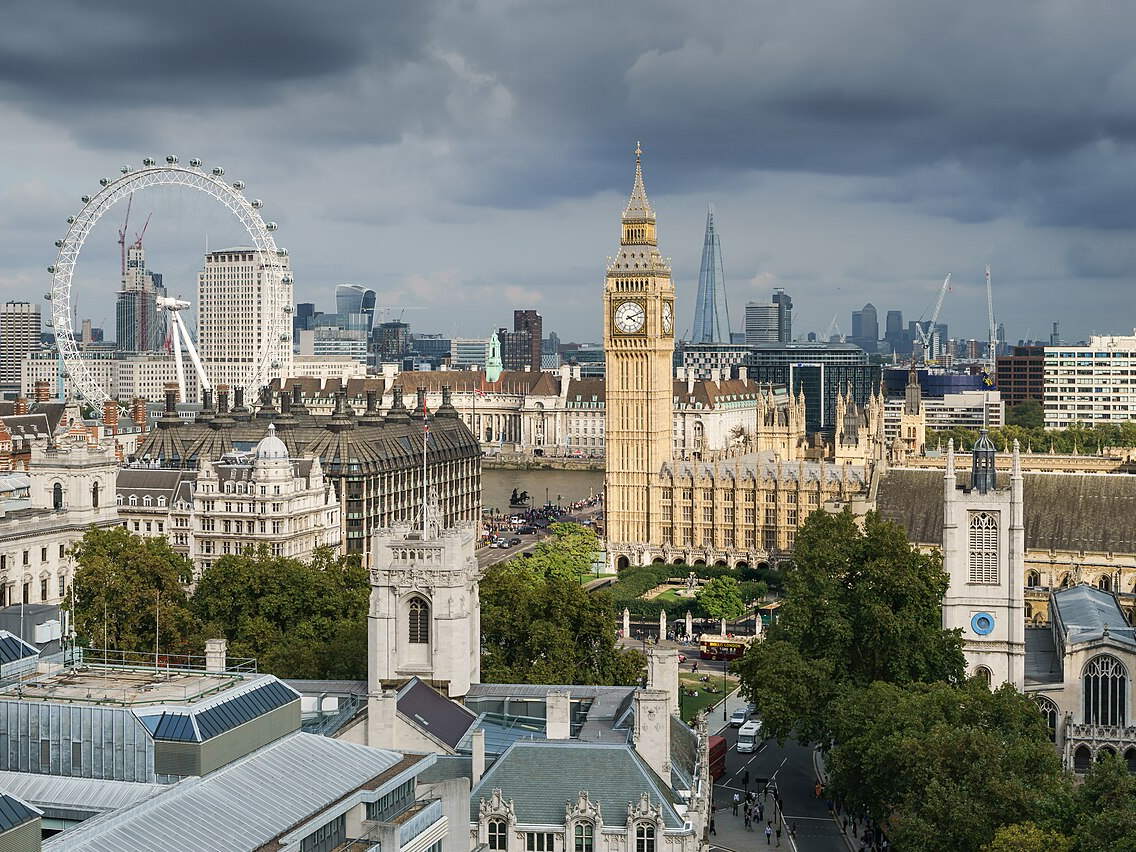
Q: What palace gives Westminster its political importance?
A: The Palace of Westminster.
Q: What legislative body meets there?
A: The Parliament of the United Kingdom.
Q: What two chambers make up Parliament?
A: House of Commons and House of Lords.
Q: What is the official name of the tower commonly called Big Ben?
A: Elizabeth Tower.
Q: What is Big Ben technically?
A: The Great Bell inside Elizabeth Tower.
Q: In what year was the clock tower renamed Elizabeth Tower?
A: 2012.
Q: Why was it renamed?
A: To mark Queen Elizabeth II's Diamond Jubilee.
Q: When did Big Ben first ring?
A: May 31, 1859.
Q: Is Elizabeth Tower taller than 90 metres?
A: Yes, it is more than 96 metres tall.
Q: What famous church stands beside the Palace of Westminster?
A: Westminster Abbey.
Q: What major royal ceremonies take place at Westminster Abbey?
A: Coronations, royal weddings, funerals, and national services.
Q: What London landmark is the official residence of the British monarch?
A: Buckingham Palace.
Q: What ceremony outside Buckingham Palace attracts visitors?
A: Changing the Guard.
Q: What large park lies directly beside Buckingham Palace?
A: St James's Park.
Q: What road leads ceremonially from Buckingham Palace toward Trafalgar Square?
A: The Mall.
Q: What square contains Nelson's Column?
A: Trafalgar Square.
Q: Who does Nelson's Column honor?
A: Admiral Horatio Nelson.
Q: What battle is Trafalgar Square named after?
A: The Battle of Trafalgar.
Q: What lions sit around Nelson's Column?
A: Four bronze lions.
Q: What major art museum faces Trafalgar Square?
A: The National Gallery.
Q: What does “South Bank” mean in central London?
A: The area along the southern bank of the Thames.
Q: What giant observation wheel stands on the South Bank?
A: The London Eye.
Q: Why is the Thames central to London's history?
A: It supported trade, transport, defense, industry, settlement, and the city's growth.
Tower of London, Bridges & Royal History
Q: What fortress was begun by William the Conqueror after 1066?
A: The Tower of London.
Q: What central Norman keep dominates the Tower complex?
A: The White Tower.
Q: What famous royal collection is displayed at the Tower of London?
A: The Crown Jewels.
Q: What black birds are famously kept at the Tower?
A: Ravens.
Q: What legend surrounds the Tower ravens?
A: The kingdom is said to fall if the ravens leave.
Q: What are the ceremonial guardians at the Tower commonly called?
A: Yeoman Warders, popularly known as Beefeaters.
Q: Was the Tower of London only a prison?
A: No. It has served as fortress, palace, treasury, armory, prison, and more.
Q: What queen was executed at the Tower in 1536?
A: Anne Boleyn.
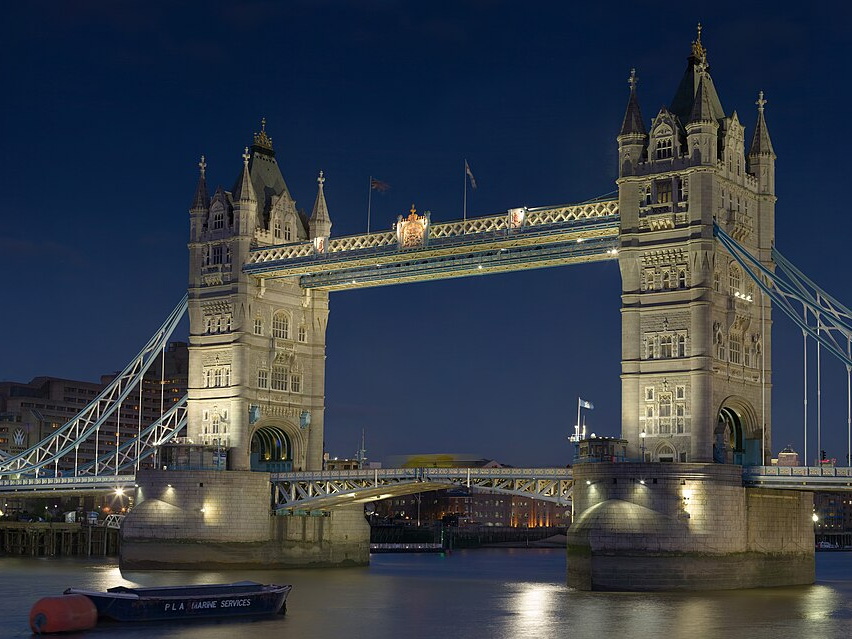
Q: What bridge near the Tower is often mistakenly called London Bridge by visitors?
A: Tower Bridge.
Q: What type of bridge is Tower Bridge?
A: A bascule and suspension bridge.
Q: What happens to Tower Bridge's central roadway for tall ships?
A: Its bascules can raise.
Q: In what year did Tower Bridge open?
A: 1894.
Q: Is London Bridge the same structure as Tower Bridge?
A: No.
Q: What happened to an older London Bridge sold to an American businessman?
A: It was dismantled and rebuilt in Lake Havasu City, Arizona.
Q: What modern footbridge connects St Paul's area with Tate Modern?
A: Millennium Bridge.
Q: What cathedral stands north of Millennium Bridge?
A: St Paul's Cathedral.
Q: Who designed the present St Paul's Cathedral?
A: Sir Christopher Wren.
Q: What disaster destroyed the medieval St Paul's and much of central London in 1666?
A: The Great Fire of London.
Q: Where did the Great Fire begin?
A: Pudding Lane.
Q: What monument commemorates the Great Fire?
A: The Monument to the Great Fire of London.
Q: Who designed the Monument with Robert Hooke?
A: Christopher Wren.
Q: What earlier epidemic struck London severely in 1665?
A: The Great Plague.
Q: What Roman settlement grew into London?
A: Londinium.
Q: Roughly when was Roman Londinium founded?
A: In the first century CE after the Roman conquest of Britain.
Q: What defensive structure once encircled much of Roman and medieval London?
A: London Wall.
Q: What medieval rebellion saw peasants enter London in 1381?
A: The Peasants' Revolt.
Q: What palace once stood at Whitehall before a major fire?
A: Palace of Whitehall.
Q: What surviving building from Whitehall Palace remains famous?
A: Banqueting House.
Q: What event transformed London's skyline during World War II?
A: The Blitz.
Q: Why are London bridges good trivia territory?
A: Different bridges span centuries of engineering, royal processions, railways, pedestrians, and common naming mistakes.
The Underground, Museums, Parks & Culture
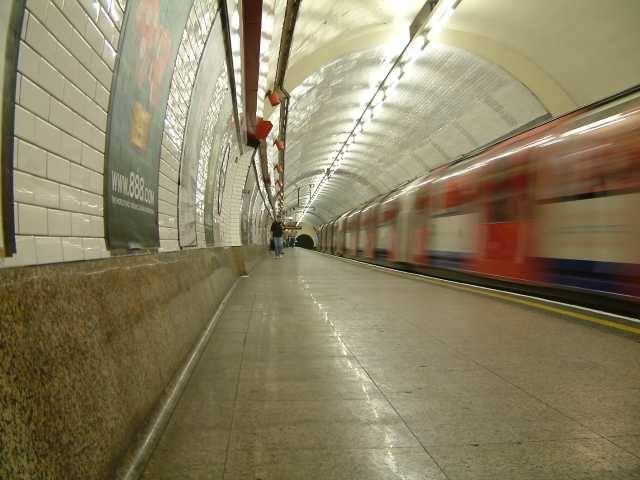
Q: What is London's rapid-transit system commonly called?
A: The Underground or the Tube.
Q: In what year did the world's first underground railway open in London?
A: 1863.
Q: What early line opened in 1863?
A: The Metropolitan Railway.
Q: Why is the nickname Tube slightly misleading for the whole system?
A: Some early Underground lines were built by cut-and-cover methods rather than deep circular tunnels.
Q: What phrase warns passengers about the space between train and platform?
A: “Mind the gap.”
Q: What map design made the Underground easier to understand?
A: Harry Beck's schematic Tube map.
Q: What does the Underground roundel look like?
A: A red circle with a blue bar.
Q: What contactless transit card is strongly associated with London?
A: Oyster card.
Q: What museum houses the Rosetta Stone?
A: The British Museum.
Q: What museum focuses on art and design and is abbreviated V&A?
A: Victoria and Albert Museum.
Q: What museum contains famous dinosaur displays?
A: Natural History Museum.
Q: What neighboring museum focuses on science and technology?
A: Science Museum.
Q: What modern art museum occupies a former power station?
A: Tate Modern.
Q: What was Tate Modern's building originally?
A: Bankside Power Station.
Q: What gallery displays British art from the 16th century onward?
A: Tate Britain.
Q: What huge royal park includes the Serpentine lake?
A: Hyde Park.
Q: What famous free-speech area is in Hyde Park?
A: Speakers' Corner.
Q: What royal park is famous for deer?
A: Richmond Park.
Q: What park contains the Prime Meridian observatory nearby?
A: Greenwich Park.
Q: What London district gives Greenwich Mean Time its name?
A: Greenwich.
Q: What historic ship is preserved at Greenwich?
A: Cutty Sark.
Q: What arena complex stands across the Thames at Greenwich Peninsula?
A: The O2.
Q: What district is London's famous theatre hub?
A: West End.
Q: What does West End theatre roughly correspond to in New York?
A: Broadway theatre.
Q: What Shakespeare theatre has been reconstructed beside the Thames?
A: Shakespeare's Globe.
Q: What original theatre company is Shakespeare associated with?
A: The Lord Chamberlain's Men, later the King's Men.
Q: What street is famous for major shopping and holiday lights?
A: Oxford Street.
Q: What street is famous for luxury shopping?
A: Bond Street.
Q: What market district is famous for street performers and former fruit-and-vegetable market history?
A: Covent Garden.
Q: Why is London culture difficult to summarize in one era?
A: Roman, medieval, royal, industrial, imperial, immigrant, punk, theatre, finance, and contemporary cultures overlap throughout the city.
Neighborhoods, Sports & Hard London Trivia
Q: What colorful west London neighborhood is famous for Portobello Road?
A: Notting Hill.
Q: What annual Caribbean celebration fills Notting Hill streets?
A: Notting Hill Carnival.
Q: What neighborhood is historically associated with London's Chinatown?
A: Soho and the West End area around Gerrard Street.
Q: What neighborhood is famous for punk history and a large market?
A: Camden.
Q: What neighborhood is associated with Sherlock Holmes's fictional address?
A: Marylebone.
Q: What is Sherlock Holmes's famous address?
A: 221B Baker Street.
Q: What grand railway station is associated with a famous fictional bear?
A: Paddington Station.
Q: What bear is named after it?
A: Paddington Bear.
Q: What station is famous for the fictional Platform 9¾?
A: King's Cross.
Q: What adjacent international rail station has a dramatic Victorian train shed?
A: St Pancras International.
Q: What major tennis tournament is held in southwest London?
A: Wimbledon.
Q: What surface is Wimbledon famous for?
A: Grass.
Q: What national football stadium stands in London?
A: Wembley Stadium.
Q: What arch dominates modern Wembley?
A: Wembley Arch.
Q: What Premier League club plays at Stamford Bridge?
A: Chelsea.
Q: What club plays at Emirates Stadium?
A: Arsenal.
Q: What club plays at Tottenham Hotspur Stadium?
A: Tottenham Hotspur.
Q: What famous cricket ground is known as the Home of Cricket?
A: Lord's.
Q: What sport is played at Lord's?
A: Cricket.
Q: What annual rowing race takes place on the Thames?
A: The Boat Race.
Q: Which universities compete?
A: Oxford and Cambridge.
Q: What marathon runs through London each year?
A: London Marathon.
Q: What does “the City” often mean in business conversation?
A: London's historic financial district.
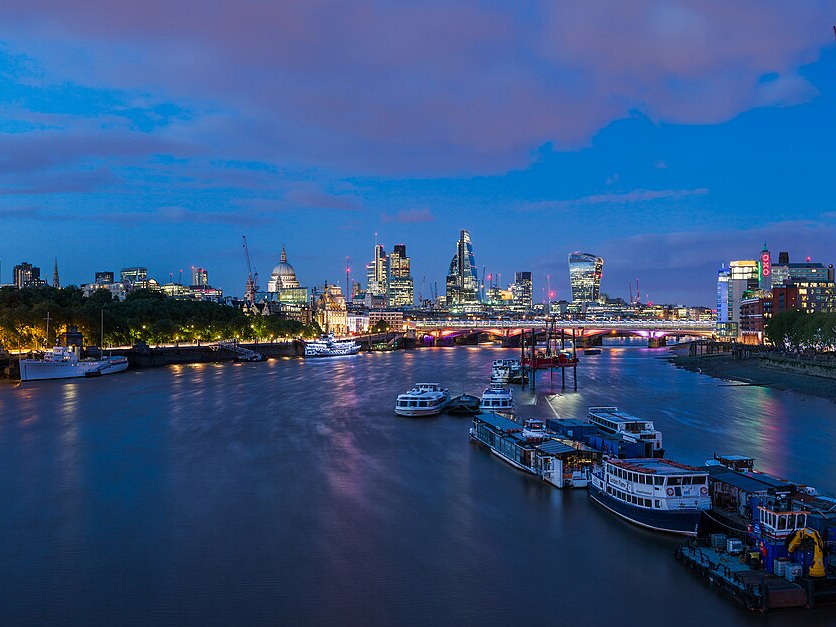
Q: What skyscraper is nicknamed the Gherkin?
A: 30 St Mary Axe.
Q: What skyscraper is nicknamed the Shard?
A: The Shard, a glass tower near London Bridge.
Q: What market near the Shard is famous for food?
A: Borough Market.
Q: What street was historically linked with British newspapers?
A: Fleet Street.
Q: What building is nicknamed the Old Bailey?
A: Central Criminal Court.
Q: What is the correct answer if a trivia host asks “Is Big Ben the clock tower?”
A: No. Big Ben is the Great Bell; the tower is Elizabeth Tower.
Q: Why is London especially deep trivia material?
A: Roman ruins, monarchy, Parliament, railways, museums, theatres, sports, neighborhoods, finance, bridges, parks, and global immigration overlap across nearly two millennia.
How Did You Score?
If Londinium, the White Tower, Pudding Lane, Harry Beck, the Rosetta Stone, Cutty Sark, 221B Baker Street, and the Big Ben distinction all came easily, your London trivia is properly underground.

Ellie Simons creates and edits Random Trivia. She researches trivia using primary and authoritative sources whenever possible and is currently reviewing the site's older trivia library for accuracy, clarity, and playability. Read more on the About page.
About this quiz
Site editor: Ellie Simons. Read our Trivia Methodology to learn how questions are researched and updated. Page last updated: . Report an error.