
Saddle up for a trip through the real American West, where the history is even wilder than the movie version.
These Wild West trivia questions cover cowboys, outlaws, Native nations, boomtowns, trails, and the legends that still ride across pop culture.
Mapping the American Frontier
Q: What 1803 land deal nearly doubled the size of the United States?
A: The Louisiana Purchase.
Q: Which expedition explored western lands from 1804 to 1806?
A: The Lewis and Clark Expedition.
Q: What belief held that the United States was destined to expand across North America?
A: Manifest Destiny.
Q: Which 1848 treaty ended the Mexican-American War and transferred vast western lands to the United States?
A: The Treaty of Guadalupe Hidalgo.
Q: What 1862 law offered western land to settlers who improved it?
A: The Homestead Act.
Q: How many acres could a qualifying settler claim under the original Homestead Act?
A: 160 acres.
Q: What imaginary line marked the advancing edge of Euro-American settlement?
A: The frontier.
Q: Which city became known as the Gateway to the West?
A: St. Louis.
Q: What mountain range presented a major barrier to westward travelers?
A: The Rocky Mountains.
Q: In what year did the U.S. Census Bureau report that a clear frontier line no longer existed?
A: 1890.
Q: Who developed the influential Frontier Thesis in 1893?
A: Frederick Jackson Turner.
Q: What territory purchased from Russia in 1867 was nicknamed Seward's Folly?
A: Alaska.
Q: Which 1869 event linked the eastern and western U.S. rail networks?
A: Completion of the first transcontinental railroad.
Q: At what Utah location did the Union Pacific and Central Pacific railroads meet?
A: Promontory Summit.
Q: What ceremonial object marked the joining of the rails there?
A: The Golden Spike.
Cowboys, Cattle, and Ranch Life
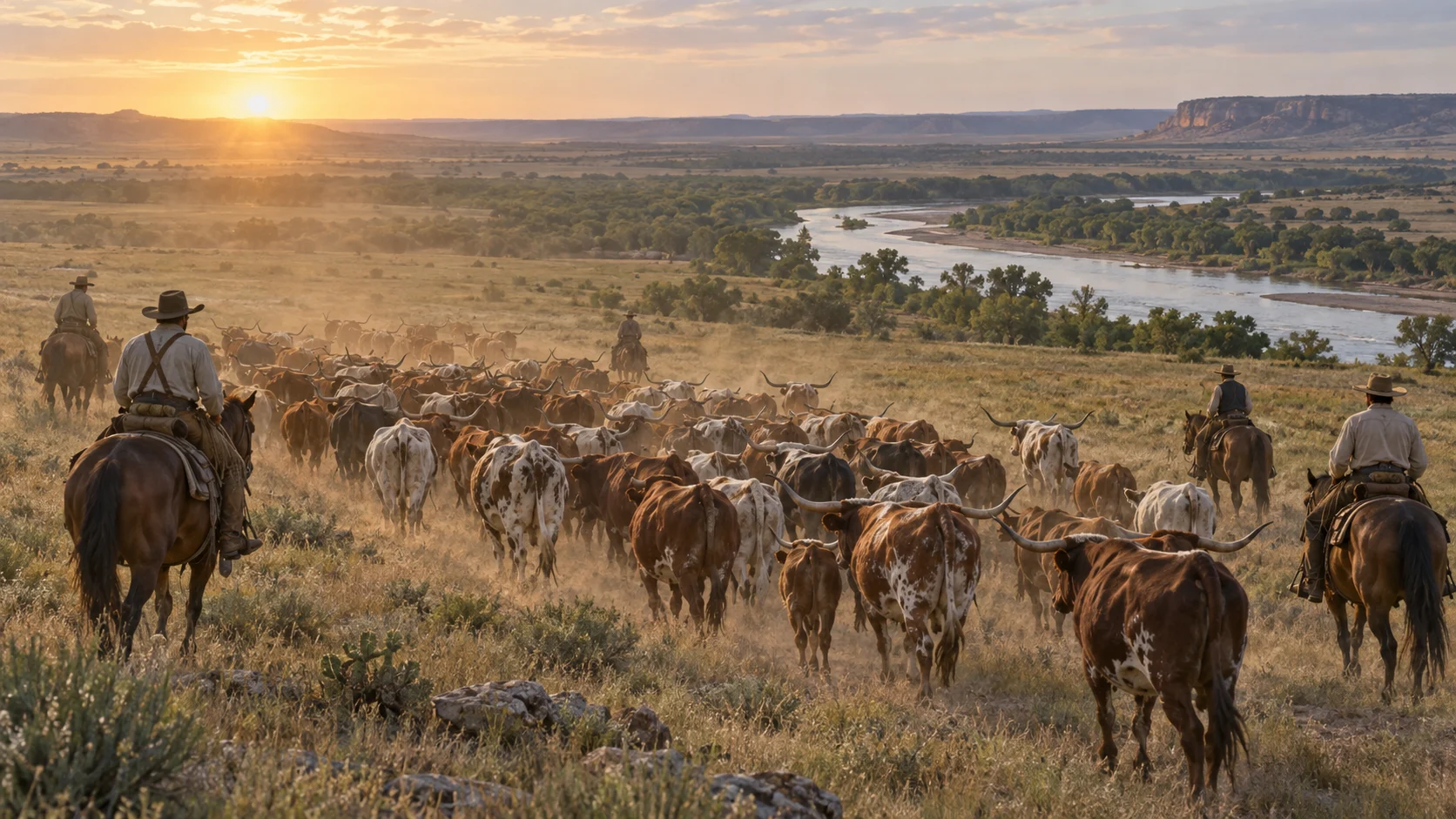
Q: What job did cowboys perform on a cattle drive?
A: They moved herds over long distances.
Q: Which cattle breed became an icon of the Texas range?
A: The Texas Longhorn.
Q: What trail carried cattle from Texas to railheads in Kansas?
A: The Chisholm Trail.
Q: Which Kansas town became a major northern endpoint of the Chisholm Trail?
A: Abilene.
Q: What was the cowboy in charge of a cattle drive called?
A: The trail boss.
Q: Which riders kept cattle moving in line along the sides of a herd?
A: Swing riders.
Q: What did drag riders do on a cattle drive?
A: They followed behind the herd and pushed stragglers forward.
Q: What was a chuck wagon used for?
A: Carrying food and cooking supplies.
Q: Who is credited with popularizing the chuck wagon in 1866?
A: Charles Goodnight.
Q: What rope was a cowboy likely to use for catching cattle?
A: A lariat.
Q: Why were cattle branded?
A: To identify ownership.
Q: What event gathered scattered cattle for sorting and branding?
A: A roundup.
Q: What Spanish word is the source of the English word buckaroo?
A: Vaquero.
Q: Roughly what share of cowboys on post-Civil War cattle drives were Black?
A: About one quarter.
Q: What harsh winters of 1886 and 1887 helped end the open-range cattle era?
A: The Great Die-Up.
Lawmen, Outlaws, and Famous Feuds
Q: Which lawman took part in the gunfight near the O.K. Corral?
A: Wyatt Earp.
Q: In which Arizona town did the O.K. Corral gunfight occur?
A: Tombstone.
Q: What dentist turned gambler fought beside the Earp brothers in Tombstone?
A: Doc Holliday.
Q: About how long did the 1881 O.K. Corral gunfight last?
A: Roughly 30 seconds.
Q: Which outlaw was born Henry McCarty and also known as William H. Bonney?
A: Billy the Kid.
Q: Which sheriff shot Billy the Kid in 1881?
A: Pat Garrett.
Q: What New Mexico conflict made Billy the Kid famous?
A: The Lincoln County War.
Q: Which outlaw brothers led the James-Younger Gang?
A: Jesse and Frank James.
Q: Who killed Jesse James in 1882?
A: Robert Ford.
Q: What outlaw led the Wild Bunch gang?
A: Butch Cassidy.
Q: What was the Sundance Kid's real name?
A: Harry Longabaugh.
Q: Which marshal served in Dodge City and later became a sportswriter in New York?
A: Bat Masterson.
Q: Which lawman was killed while holding aces and eights, later called the dead man's hand?
A: Wild Bill Hickok.
Q: In which Dakota Territory town was Wild Bill Hickok killed?
A: Deadwood.
Q: Which deputy U.S. marshal, born into slavery, made more than 3,000 arrests in Indian Territory?
A: Bass Reeves.
Native Nations and a Changing West
Q: Which Lakota leader helped defeat George Custer's forces at the Little Bighorn?
A: Sitting Bull.
Q: Which Oglala Lakota war leader also fought at the Little Bighorn?
A: Crazy Horse.
Q: In what present-day state did the Battle of the Little Bighorn occur?
A: Montana.
Q: What U.S. cavalry commander died at the Little Bighorn in 1876?
A: George Armstrong Custer.
Q: Which Apache leader resisted U.S. and Mexican forces before surrendering in 1886?
A: Geronimo.
Q: To which Apache group did Geronimo belong?
A: The Bedonkohe band of the Chiricahua Apache.
Q: Which Nez Perce leader is associated with the 1877 flight toward Canada?
A: Chief Joseph.
Q: What forced journey removed the Cherokee and other southeastern nations westward in the 1830s?
A: The Trail of Tears.
Q: What animal was central to the food, shelter, and cultures of many Plains nations?
A: The American bison.
Q: What 1868 agreement recognized the Black Hills as part of the Great Sioux Reservation?
A: The Treaty of Fort Laramie.
Q: What discovery in the Black Hills intensified illegal settlement on Lakota land?
A: Gold.
Q: Which Paiute prophet inspired the Ghost Dance movement?
A: Wovoka.
Q: What 1890 massacre of Lakota people occurred in South Dakota?
A: The Wounded Knee Massacre.
Q: What federal policy divided many tribal lands into individual parcels beginning in 1887?
A: The Dawes Act.
Q: Which Indigenous people gave the state of Utah its name?
A: The Ute people.
Trails, Trains, and Frontier Towns
Q: What major wagon route ran from Missouri to the Pacific Northwest?
A: The Oregon Trail.
Q: Which Missouri city was a major jumping-off point for western trails?
A: Independence.
Q: What desert crossing in present-day Utah and Nevada challenged California-bound emigrants?
A: The Great Salt Lake Desert crossing.
Q: What ill-fated wagon party became trapped in the Sierra Nevada in 1846?
A: The Donner Party.
Q: What mail service used relays of riders between Missouri and California?
A: The Pony Express.
Q: How long did the Pony Express operate?
A: About 18 months, from 1860 to 1861.
Q: What technology quickly made the Pony Express obsolete?
A: The transcontinental telegraph.
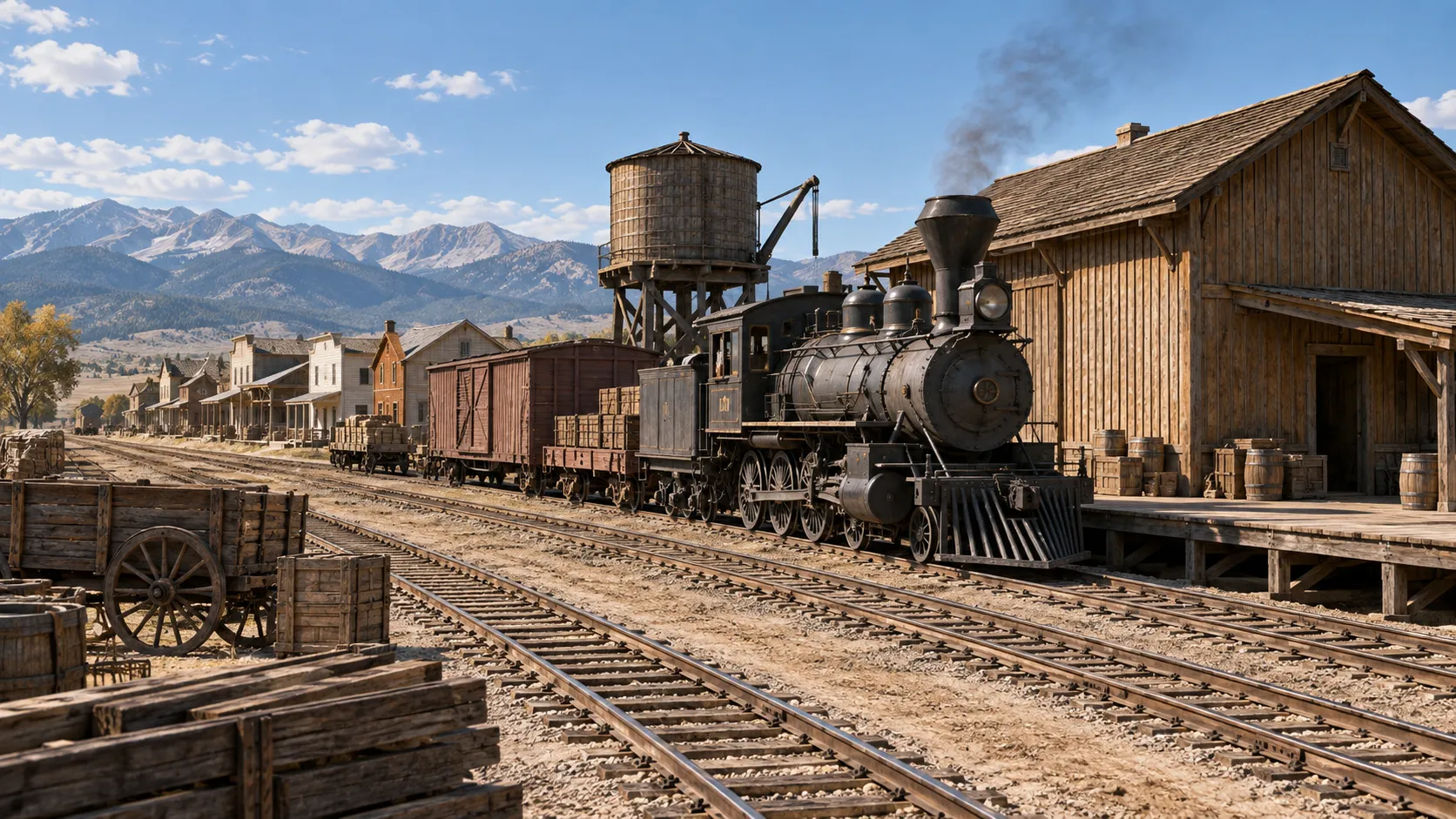
Q: Which railroad built eastward from Sacramento for the first transcontinental line?
A: The Central Pacific.
Q: Which railroad built westward from Omaha?
A: The Union Pacific.
Q: Which immigrant workers supplied much of the Central Pacific's labor?
A: Chinese workers.
Q: Which Nebraska city was the Union Pacific's eastern terminus?
A: Omaha.
Q: What Kansas cattle town became famous for lawmen, saloons, and Boot Hill?
A: Dodge City.
Q: What was a stagecoach used to carry?
A: Passengers, mail, and valuables.
Q: Which company became famous for stagecoach and express services in the West?
A: Wells Fargo.
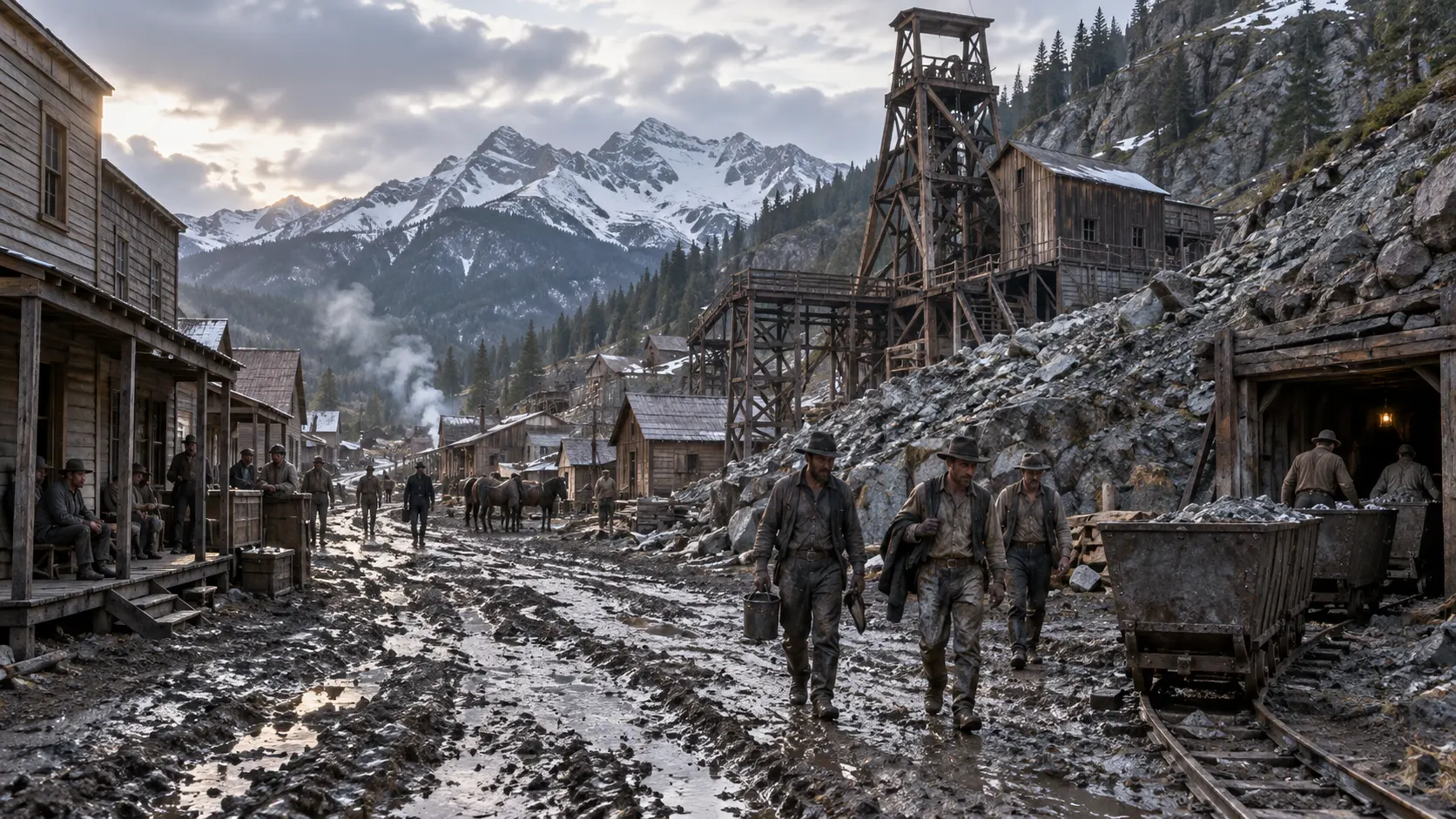
Q: What term described a hastily built settlement near a new mine?
A: A boomtown.
Gold, Silver, and Boomtown Fortunes
Q: At what California mill was gold discovered in January 1848?
A: Sutter's Mill.
Q: Who found the gold at Sutter's Mill?
A: James W. Marshall.
Q: What nickname was given to people who rushed to California in 1849?
A: Forty-niners.
Q: Which city grew rapidly as the California Gold Rush's major port?
A: San Francisco.
Q: What simple tool used water to separate gold from gravel?
A: A gold pan.
Q: What Nevada silver discovery began a major mining boom in 1859?
A: The Comstock Lode.
Q: Which Nevada city flourished beside the Comstock Lode?
A: Virginia City.
Q: What was a prospector's legal assertion to the right to mine a site called?
A: A mining claim.
Q: What mining method blasted hillsides with powerful jets of water?
A: Hydraulic mining.
Q: Which South Dakota town boomed after gold was found in the Black Hills?
A: Deadwood.
Q: Who led the prospecting party credited with a major 1858 gold strike near present-day Denver?
A: William Green Russell.
Q: What slogan drew fortune seekers toward Colorado?
A: “Pike's Peak or Bust!”
Q: Which precious metal drove boomtown growth in Tombstone?
A: Silver.
Q: What happened to many boomtowns after nearby mines closed?
A: They became ghost towns.
Q: Who often made steadier profits than miners by selling tools, meals, and lodging?
A: Merchants and service providers.
Women, Workers, and Everyday Life
Q: Which frontierswoman was born Martha Canary?
A: Calamity Jane.
Q: Which sharpshooter starred in Buffalo Bill's Wild West show?
A: Annie Oakley.
Q: What was Annie Oakley's birth name?
A: Phoebe Ann Moses.
Q: Which formerly enslaved woman became a mail carrier in Montana?
A: Mary Fields, also called Stagecoach Mary.
Q: Which Black entrepreneur and abolitionist built a fortune in Gold Rush-era San Francisco?
A: Mary Ellen Pleasant.
Q: Which western territory first granted women equal voting rights in 1869?
A: Wyoming Territory.
Q: What nickname did Wyoming adopt because of its early support for women's rights?
A: The Equality State.
Q: What one-room institution often served as both school and community gathering place?
A: The schoolhouse.
Q: What material was commonly used for houses on the treeless Great Plains?
A: Sod.
Q: What device made scarce Great Plains water easier to pump?
A: A windmill.
Q: What invention helped farmers fence land and contributed to the end of the open range?
A: Barbed wire.
Q: Who received the first U.S. patent for a practical barbed-wire design in 1874?
A: Joseph Glidden.
Q: What army units made up of Black soldiers served widely in the post-Civil War West?
A: The Buffalo Soldiers.
Q: Which two U.S. Cavalry regiments are most closely associated with the original Buffalo Soldiers?
A: The 9th and 10th Cavalry Regiments.
Q: What communal building was a frontier town's center for drinking, gambling, and entertainment?
A: The saloon.
From Dime Novels to the Silver Screen
Q: Who created Buffalo Bill's Wild West show?
A: William F. Cody.
Q: Which Lakota leader appeared for a season in Buffalo Bill's show?
A: Sitting Bull.
Q: What inexpensive publications turned western figures into sensational heroes and villains?
A: Dime novels.
Q: What 1903 film is often credited with helping establish the Western genre?
A: The Great Train Robbery.
Q: Who directed The Great Train Robbery?
A: Edwin S. Porter.
Q: Which actor became famous for playing the Ringo Kid in Stagecoach?
A: John Wayne.
Q: Who directed the 1939 film Stagecoach?
A: John Ford.
Q: What Utah-Arizona landscape became closely associated with John Ford's Westerns?
A: Monument Valley.
Q: Which television marshal kept order in Dodge City on Gunsmoke?
A: Matt Dillon.
Q: Which fictional masked hero rode a horse named Silver?
A: The Lone Ranger.
Q: What was the name of Roy Rogers's horse?
A: Trigger.
Q: Which Italian director made the Dollars Trilogy with Clint Eastwood?
A: Sergio Leone.
Q: What term describes Italian-made Westerns such as The Good, the Bad and the Ugly?
A: Spaghetti Westerns.
Q: Which novelist wrote Lonesome Dove?
A: Larry McMurtry.
Q: Which 1962 John Ford film includes the line “When the legend becomes fact, print the legend”?
A: The Man Who Shot Liberty Valance.
Ride Off into the Sunset
If you kept your history straight from the Hollywood dust, consider that a frontier victory. Mosey over to our famous people trivia or test another era with decades trivia.

Ellie Ewert is the founder and author of RandomTrivia.co, blending her passion for research with years of experience in content creation to deliver accurate, engaging, and well-sourced trivia. Dedicated to providing readers with trustworthy and entertaining facts, she applies meticulous fact-checking and SEO expertise to ensure every article meets the highest standards. Read more about our high standards in our Editorial Guidelines.