
Take a deep breath, because this whale trivia set is diving from singing humpbacks to tusked Arctic giants and the biggest animal ever known.
Across eight rounds, we will explore whale bodies, families, feeding, migration, communication, conservation, and some truly enormous science.
Meet the Whale Family
Q: What mammal group includes whales, dolphins, and porpoises?
A: Cetacea.
Q: Are whales mammals or fish?
A: Mammals.
Q: What two living groups divide the cetaceans?
A: Baleen whales and toothed whales.
Q: What is the scientific name for baleen whales?
A: Mysticeti.
Q: What is the scientific name for toothed whales?
A: Odontoceti.
Q: Which land-mammal group is most closely related to cetaceans?
A: Hippopotamuses.
Q: What broader mammal order includes cetaceans and even-toed hoofed mammals?
A: Artiodactyla, also called Cetartiodactyla in combined classifications.
Q: Do whales breathe air?
A: Yes.
Q: What opening on top of a whale's head is used for breathing?
A: A blowhole.
Q: How many blowholes do baleen whales have?
A: Two.
Q: How many blowholes do toothed whales have?
A: One.
Q: What thick layer helps insulate a whale?
A: Blubber.
Q: What are a whale's front limbs called?
A: Flippers.
Q: What are the two lobes of a whale's tail called?
A: Flukes.
Q: Does a whale move its tail mainly side to side or up and down?
A: Up and down.
Built for Life Underwater
Q: What streamlined body shape reduces drag in water?
A: A fusiform shape.
Q: Where are a whale's nostrils located compared with those of most land mammals?
A: On top of the head.
Q: What closes around the blowhole when a whale dives?
A: Muscular valves.
Q: What pigment-rich protein stores oxygen in whale muscles?
A: Myoglobin.
Q: What happens to a diving whale's heart rate?
A: It slows.
Q: What diving response directs blood toward vital organs?
A: Peripheral vasoconstriction.
Q: Why can flexible rib cages help deep-diving whales?
A: They allow the lungs to compress safely under pressure.
Q: Do whales have hair at any stage of life?
A: Yes, some have sparse hairs, especially around the snout.
Q: What vestigial bones remain from whales' land-dwelling ancestors?
A: Pelvic bones.
Q: How do whales stay warm in cold water without thick fur?
A: Blubber and heat-conserving circulation.
Q: What heat-exchange system reduces warmth lost through flippers and tails?
A: Countercurrent heat exchange.
Q: What do whales exhale in the visible “blow”?
A: Warm, moist air that condenses, mixed with seawater droplets.
Q: Can the shape of a blow help observers identify a species?
A: Yes.
Q: Why must newborn whale calves reach the surface quickly?
A: To take their first breath.
Q: How do whale mothers feed their calves underwater?
A: They release rich milk directly into the calf's mouth.
Baleen Giants and Filter Feeding
Q: What flexible plates hang from a baleen whale's upper jaw?
A: Baleen.
Q: What protein makes up baleen?
A: Keratin.
Q: What other human body structures contain keratin?
A: Hair and nails.
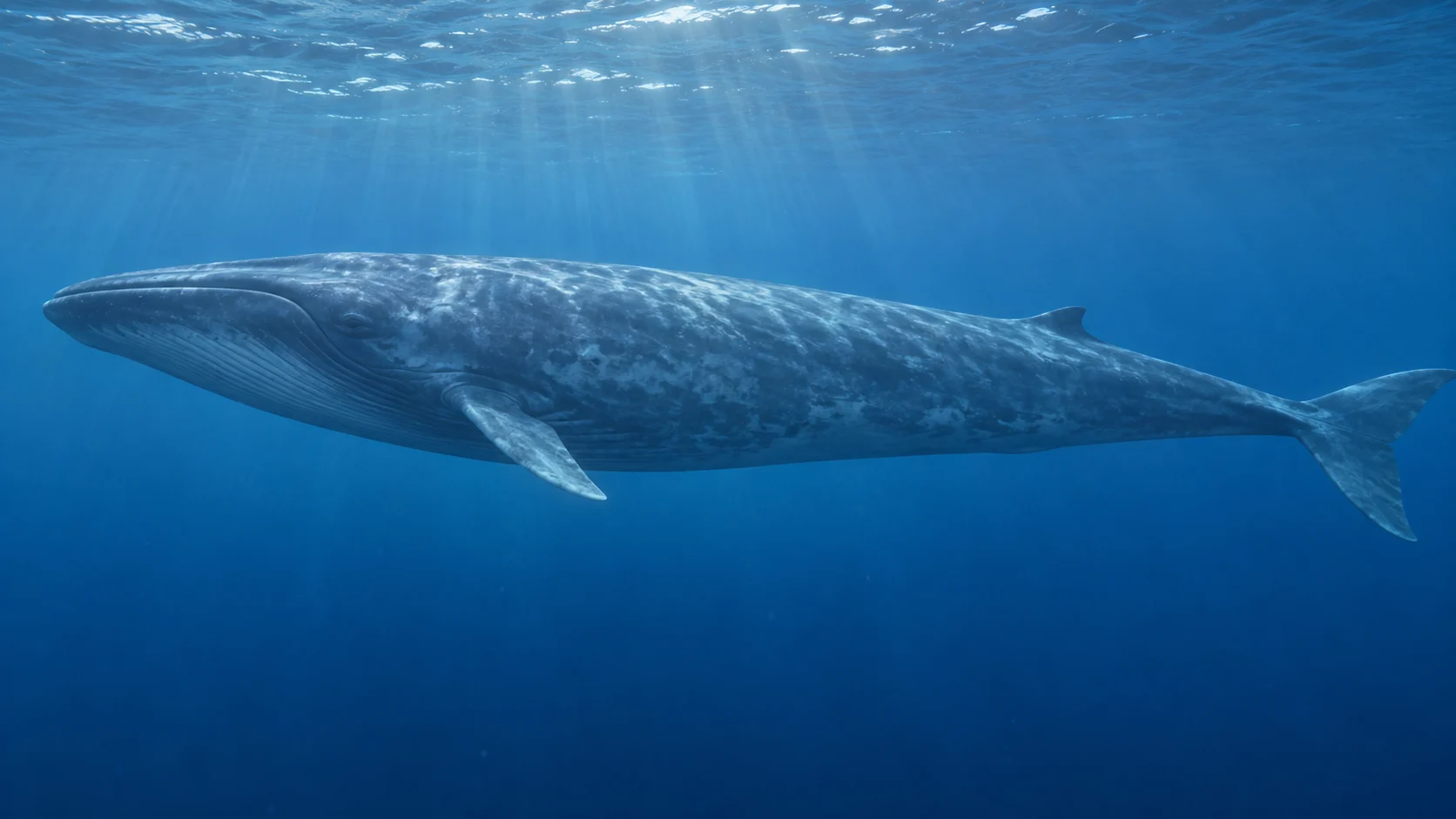
Q: What is the largest animal known to have lived?
A: The blue whale.
Q: What tiny crustaceans make up much of a blue whale's diet?
A: Krill.
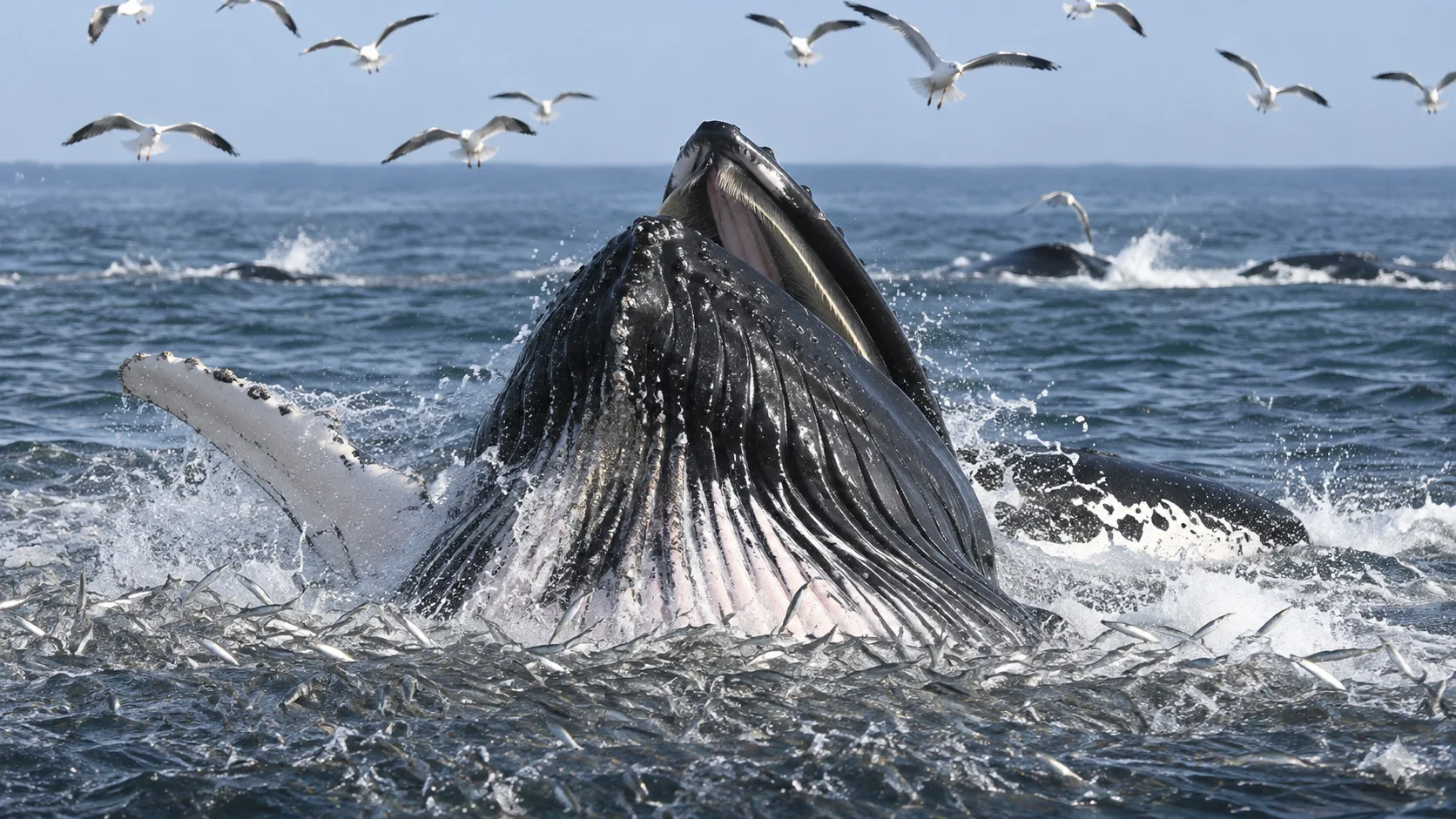
Q: What group of baleen whales expands throat pleats to engulf huge mouthfuls of water?
A: Rorquals.
Q: What feeding technique involves rushing forward with an open mouth?
A: Lunge feeding.
Q: Which whale is famous for cooperative bubble-net feeding?
A: The humpback whale.
Q: How does a bubble net help humpbacks feed?
A: Bubbles concentrate schooling prey.
Q: Which baleen whale has an arched mouth and exceptionally long baleen?
A: The bowhead whale.
Q: Which whales were called “right” whales because whalers considered them the right ones to hunt?
A: Right whales.
Q: Why did dead right whales tend to float?
A: Their bodies contained large amounts of blubber.
Q: What rough patches of skin on a right whale's head are called?
A: Callosities.
Q: Which gray whale feeding method disturbs seafloor sediment?
A: Bottom feeding by suction.
Q: What is the smallest living baleen whale species?
A: The pygmy right whale.
Toothed Whales and Echolocation
Q: What biological sonar do toothed whales use?
A: Echolocation.
Q: What fatty forehead organ helps focus echolocation clicks?
A: The melon.
Q: Through what part of the lower jaw are returning echoes transmitted toward the ear?
A: Specialized fatty tissues.
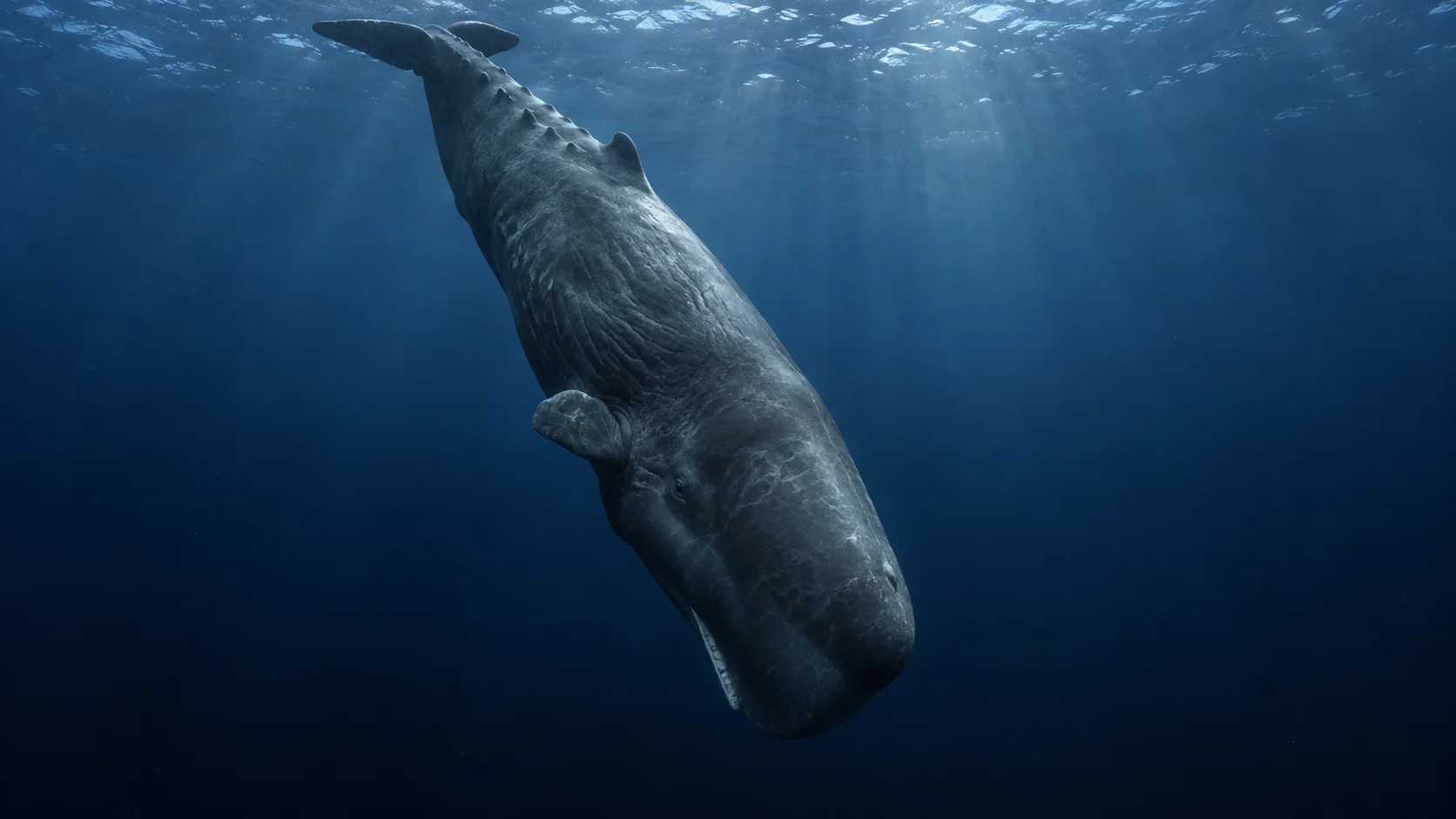
Q: What is the largest toothed whale?
A: The sperm whale.
Q: What huge organ fills much of a sperm whale's head?
A: The spermaceti organ.
Q: What deep-sea prey is strongly associated with sperm whales?
A: Squid.
Q: Which whale has a long tusk that is actually an enlarged tooth?
A: The narwhal.
Q: Which sex of narwhal usually develops the prominent tusk?
A: Males.
Q: What white Arctic whale can turn its head more freely than most cetaceans?
A: The beluga.
Q: Why is the beluga sometimes called the sea canary?
A: It makes a wide variety of vocal sounds.
Q: Is an orca a whale or the largest member of the dolphin family?
A: It is the largest member of the dolphin family.
Q: What family includes orcas and pilot whales?
A: Delphinidae.
Q: Which toothed whales are famous for very deep, long dives and beak-shaped snouts?
A: Beaked whales.
Q: What sound-producing structures inside a toothed whale's head are called?
A: Phonic lips.
Q: Do baleen whales use the same high-frequency echolocation system as toothed whales?
A: No.
Songs, Pods, and Whale Behavior
Q: Which sex of humpback whale produces long, structured songs?
A: Males.
Q: Do humpback songs remain exactly the same year after year?
A: No, they change over time.
Q: What is a social group of whales commonly called?
A: A pod.
Q: What behavior sends a whale leaping partly or fully out of the water?
A: Breaching.
Q: What is lobtailing?
A: Slapping the tail flukes on the water.
Q: What is spyhopping?
A: Rising vertically to look above the surface.
Q: What behavior involves slapping a flipper against the surface?
A: Pectoral slapping.
Q: What are patterned sequences of sperm-whale clicks called?
A: Codas.
Q: What term describes learned behaviors shared within whale groups?
A: Culture.
Q: Which whale has matrilineal societies led by older females?
A: The orca.
Q: What does matrilineal mean?
A: Organized through the maternal family line.
Q: Can different orca communities have distinct call repertoires?
A: Yes.
Q: What is logging behavior in whales?
A: Resting nearly motionless at the surface.
Q: How can a whale sleep while still surfacing to breathe?
A: It can rest one brain hemisphere at a time.
Q: What close social act involves whales touching or rubbing one another?
A: Social rubbing.
Migration, Oceans, and Epic Journeys
Q: Why do many baleen whales migrate toward polar waters?
A: To feed in highly productive seas.
Q: Why do many baleen whales travel to warmer waters?
A: To mate and give birth.
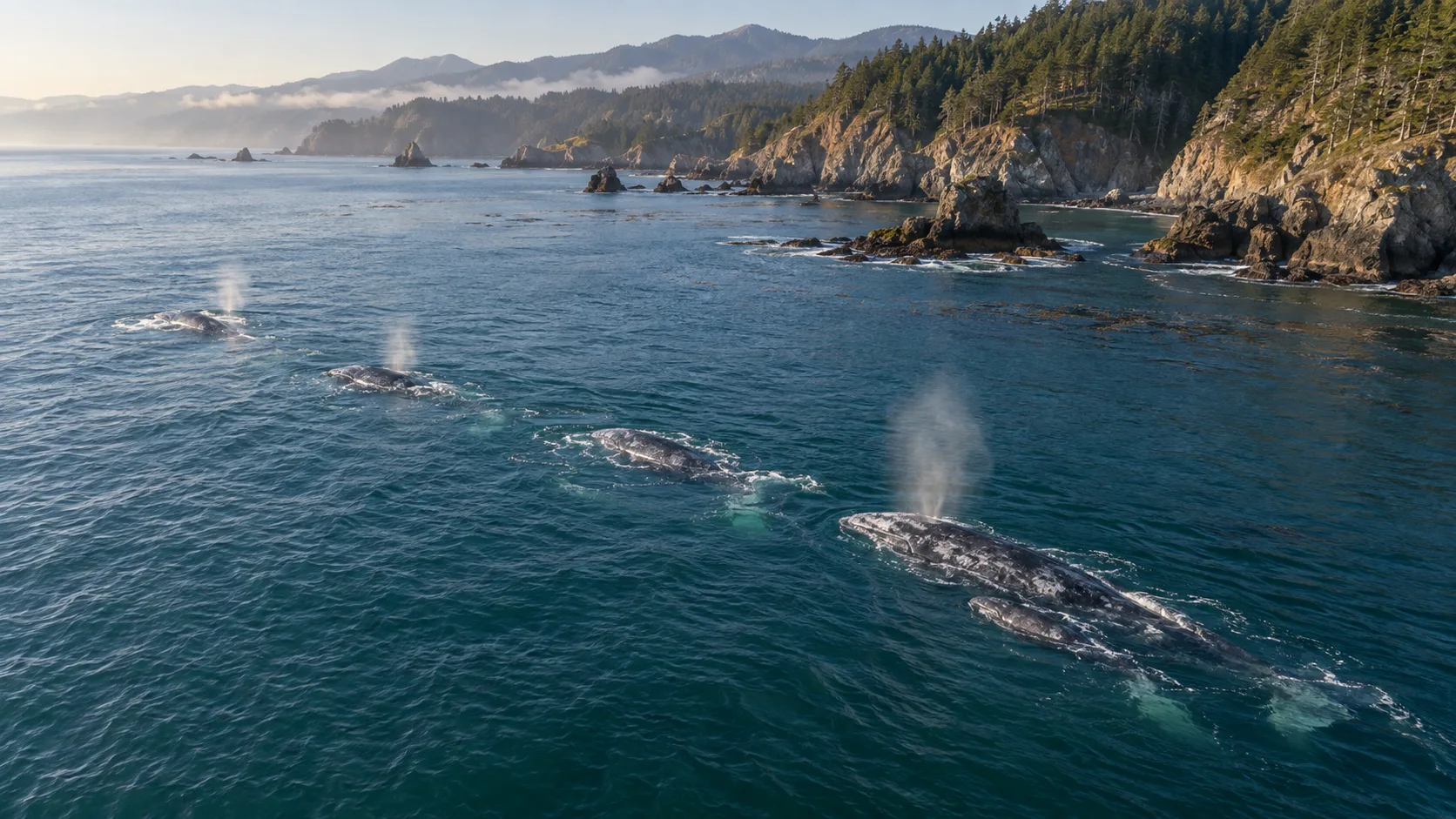
Q: Which species makes a famous migration along North America's Pacific coast?
A: The gray whale.
Q: Between what two broad regions do eastern North Pacific gray whales migrate?
A: Arctic feeding grounds and Mexican breeding lagoons.
Q: What warm-water region is a major North Atlantic humpback breeding ground?
A: The Caribbean.
Q: What cold northern region supports major North Atlantic humpback feeding grounds?
A: Waters around New England, Canada, Greenland, Iceland, and Norway.
Q: Do all whale populations undertake long migrations?
A: No.
Q: What microscopic plant life supports the marine food webs whales depend on?
A: Phytoplankton.
Q: What ocean process brings nutrient-rich deep water toward the surface?
A: Upwelling.
Q: What floating fecal material from whales helps recycle nutrients near the surface?
A: Whale fecal plumes.
Q: What name is given to the nutrient-cycling effect of whales moving nutrients upward?
A: The whale pump.
Q: How can whale carcasses support deep-sea communities?
A: They create whale falls rich in food and habitat.
Q: What creatures can inhabit whale bones during late stages of a whale fall?
A: Bone-eating Osedax worms.
Q: What helps some whales navigate across huge ocean distances?
A: A combination of learned routes and environmental cues.
Q: Which hemisphere's humpbacks often feed around Antarctica?
A: Southern Hemisphere humpbacks.
Species Spotlights from Blue to Bowhead
Q: Which whale is recognized by extremely long pectoral flippers?
A: The humpback whale.
Q: Which rorqual has a sharply pointed head and is among the fastest large whales?
A: The fin whale.
Q: What nickname refers to the fin whale's great speed?
A: The greyhound of the sea.
Q: Which baleen whale is named for sei, the Norwegian word for pollock?
A: The sei whale.
Q: Which small rorqual is commonly found in oceans worldwide?
A: The minke whale.
Q: What unusual feature makes a sperm whale's blow angle forward and left?
A: Its blowhole sits off-center on the left side.
Q: Which whale has the longest baleen plates?
A: The bowhead whale.
Q: Which whale species can live for more than 200 years?
A: The bowhead whale.
Q: Which right-whale species lives in the North Atlantic?
A: The North Atlantic right whale.
Q: Which critically endangered gray-whale population uses the western North Pacific?
A: The western North Pacific gray whale population.
Q: Which small Arctic whale lacks a dorsal fin and has a rounded forehead?
A: The beluga.
Q: Why is having no dorsal fin useful to bowheads, belugas, and narwhals?
A: It helps them move beneath sea ice.
Q: Which whale is the sole living species in the family Eschrichtiidae?
A: The gray whale.
Q: Which two small sperm-whale relatives can release dark intestinal fluid when threatened?
A: Dwarf and pygmy sperm whales.
Q: Which toothed whale has males with two erupted teeth resembling tusks?
A: The strap-toothed whale.
Whaling, Protection, and Ocean Threats
Q: What products drove much historic commercial whaling?
A: Oil, baleen, and meat.
Q: What waxy substance from sperm whales was once used in candles and machinery?
A: Spermaceti.
Q: What international body regulates commercial whaling?
A: The International Whaling Commission.
Q: In what year did the IWC's commercial-whaling moratorium take effect?
A: 1986.
Q: Does the IWC moratorium prohibit every whale hunt worldwide?
A: No, some countries object or reserve, and aboriginal subsistence hunts are separately managed.
Q: What U.S. law protects whales and other marine mammals?
A: The Marine Mammal Protection Act.
Q: In what year was the U.S. Marine Mammal Protection Act enacted?
A: 1972.
Q: What fishing-gear threat can trap and injure whales?
A: Entanglement.
Q: What shipping threat can kill whales near busy coasts?
A: Vessel strikes.
Q: What kind of pollution can mask whale communication?
A: Underwater noise pollution.
Q: How can climate change affect whales indirectly?
A: It shifts sea ice, currents, and prey distribution.
Q: What debris can be swallowed by whales or entangle them?
A: Plastic and abandoned fishing gear.
Q: What noninvasive method identifies individual humpbacks by their tails?
A: Photo-identification.
Q: What small tissue sample can reveal a whale's genetics and diet?
A: A biopsy sample.
Q: What do researchers attach temporarily to some whales to record dives and movements?
A: Tags.
Your Whale-Sized Finish
If you surfaced with all 120 answers, that score deserves a breach and a tail slap. Keep exploring amazing lives with our famous people trivia or cruise through pop culture with pop culture trivia.

Ellie Ewert is the founder and author of RandomTrivia.co, blending her passion for research with years of experience in content creation to deliver accurate, engaging, and well-sourced trivia. Dedicated to providing readers with trustworthy and entertaining facts, she applies meticulous fact-checking and SEO expertise to ensure every article meets the highest standards. Read more about our high standards in our Editorial Guidelines.