
Branch out with tree and forest trivia that travels from tiny seeds to towering canopies.
These questions explore tree biology, woodland wildlife, famous forests, and the natural forces that keep forests growing.
Meet the Trees
Q: What type of plant is a tree?
A: A perennial woody plant.
Q: What science focuses on trees and other woody plants?
A: Dendrology.
Q: What is a tree that sheds its leaves seasonally called?
A: Deciduous.
Q: What is a tree that keeps functional leaves through every season called?
A: Evergreen.
Q: What major group of seed plants produces flowers and fruits?
A: Angiosperms.
Q: What major group includes cone-bearing trees such as pines and firs?
A: Gymnosperms.
Q: What cone-bearing tree group includes pines, spruces, and firs?
A: Conifers.
Q: What broad term describes a tree with wide, flat leaves rather than needles or scales?
A: A broadleaf tree.
Q: What woody plant usually has several main stems growing from near the ground?
A: A shrub.
Q: What is the main woody stem of a tree called?
A: The trunk.
Q: What collective name covers a tree's branches and leaves?
A: The crown.
Q: What protective outer covering surrounds a tree's trunk and branches?
A: Bark.
Q: What underground structures anchor a tree and absorb water?
A: Roots.
Q: What is a young tree called after it has passed the seedling stage?
A: A sapling.
Q: What name is given to a tree cultivated in miniature through careful pruning and training?
A: Bonsai.
Inside a Tree
Q: What tissue carries water and dissolved minerals upward from the roots?
A: Xylem.
Q: What tissue transports sugars made in the leaves?
A: Phloem.
Q: What thin layer of dividing cells produces new xylem and phloem?
A: The vascular cambium.
Q: What active outer wood carries most of a tree's water?
A: Sapwood.
Q: What darker, older central wood mainly provides support?
A: Heartwood.
Q: What pores on leaves regulate gas exchange and water loss?
A: Stomata.
Q: What green pigment captures light energy for photosynthesis?
A: Chlorophyll.
Q: What process allows a tree to make sugars using light, water, and carbon dioxide?
A: Photosynthesis.
Q: What gas do trees take in for photosynthesis?
A: Carbon dioxide.
Q: What gas is released as a byproduct of photosynthesis?
A: Oxygen.
Q: What is the loss of water vapor from leaves called?
A: Transpiration.
Q: What tiny root extensions greatly increase the surface area for absorption?
A: Root hairs.
Q: What partnership between fungi and roots helps many trees obtain water and nutrients?
A: A mycorrhiza.
Q: What sticky substance can seal wounds and deter insects in many conifers?
A: Resin.
Q: What cells in wood form the tubes that move water in flowering trees?
A: Vessel elements.
Seeds, Growth, and Seasons
Q: What must a seed do when it begins developing into a new plant?
A: Germinate.
Q: What seed leaves nourish or emerge from a young plant embryo?
A: Cotyledons.
Q: What winged seed is famously produced by maples?
A: A samara.
Q: What hard fruit of an oak contains one seed?
A: An acorn.
Q: What fleshy fruit surrounds the seed of a peach tree?
A: A drupe.
Q: What natural agent carries the lightweight pollen of many forest trees?
A: Wind.
Q: What process transfers pollen to a flower's receptive surface?
A: Pollination.
Q: What dormant structure can grow into a leaf, flower, or shoot?
A: A bud.
Q: What growth tissue at a shoot tip lengthens a branch?
A: An apical meristem.
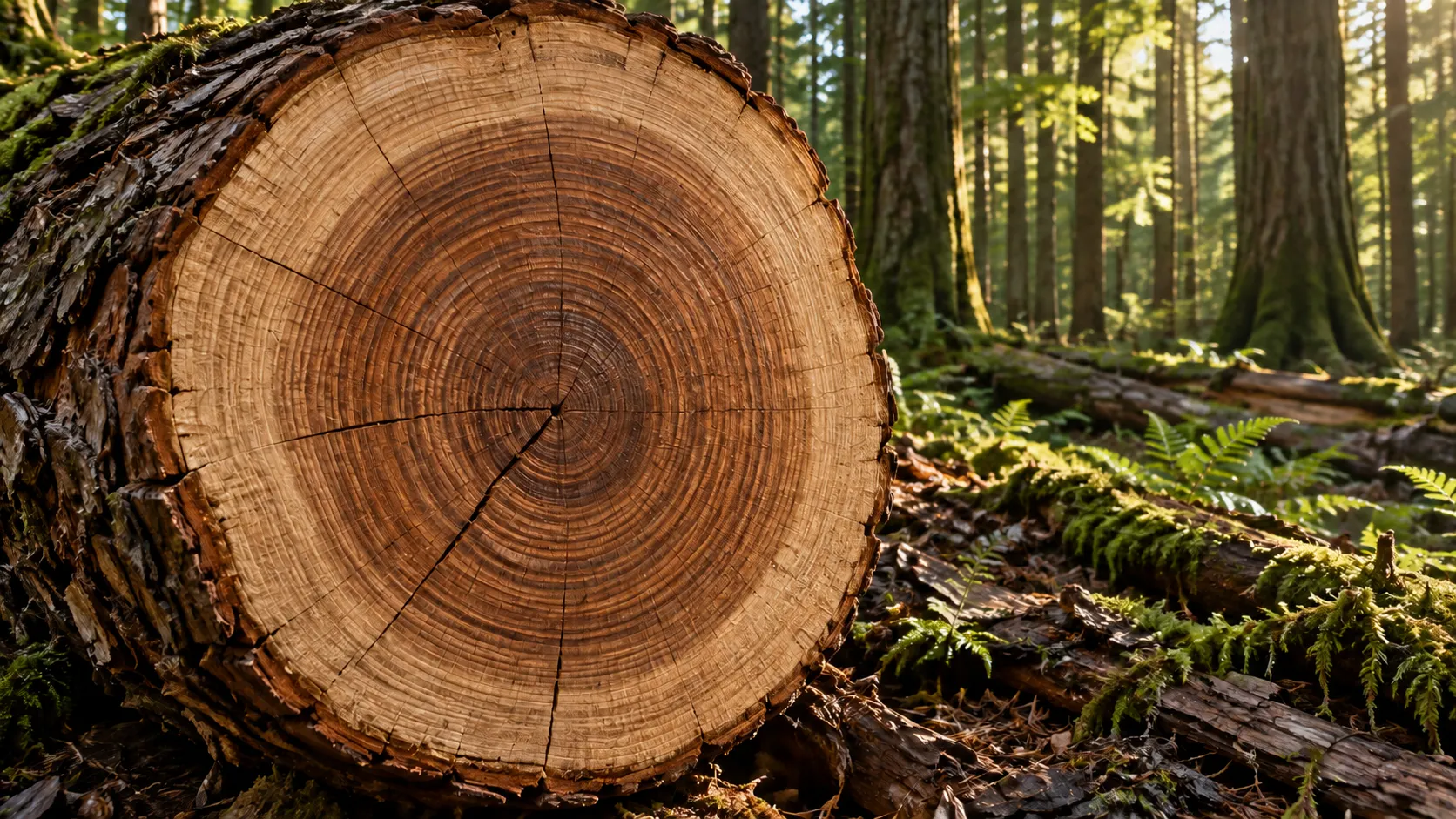
Q: What seasonal layers in a trunk can be counted to estimate a tree's age?
A: Growth rings.
Q: What part of a growth ring usually forms early in the growing season and has larger cells?
A: Earlywood.
Q: What denser part of a growth ring usually forms later in the growing season?
A: Latewood.
Q: What term describes a plant bending or growing toward light?
A: Phototropism.
Q: What pigments reveal yellow and orange colors when chlorophyll breaks down in autumn?
A: Carotenoids.
Q: What protective layer forms where a deciduous leaf detaches from its twig?
A: An abscission layer.
Layers of the Forest
Q: What leafy roof formed by mature tree crowns is called the canopy?
A: The forest's upper leaf layer.
Q: What forest layer lies beneath the main canopy?
A: The understory.
Q: What layer contains low-growing herbs, grasses, and seedlings?
A: The forest floor layer.
Q: What name is given to trees that rise above the main canopy?
A: Emergent trees.
Q: What layer of fallen leaves and twigs covers much of a woodland floor?
A: Leaf litter.
Q: What organisms break down dead material and return nutrients to the soil?
A: Decomposers.
Q: What decayed organic material helps enrich forest soil?
A: Humus.
Q: What term describes all the living organisms plus their physical environment?
A: An ecosystem.
Q: What is the role of a species within its ecosystem called?
A: Its ecological niche.
Q: What species has an unusually large effect on its ecosystem relative to its abundance?
A: A keystone species.
Q: What gradual change in a biological community over time is called succession?
A: Ecological succession.
Q: What fast-growing species are often among the first trees to colonize an open site?
A: Pioneer species.
Q: What standing dead tree provides nesting and feeding habitat for wildlife?
A: A snag.
Q: What fallen dead wood slowly releases nutrients and stores moisture?
A: A nurse log.
Q: What boundary area between two habitat types often supports species from both?
A: An ecotone.
Forests Around the World
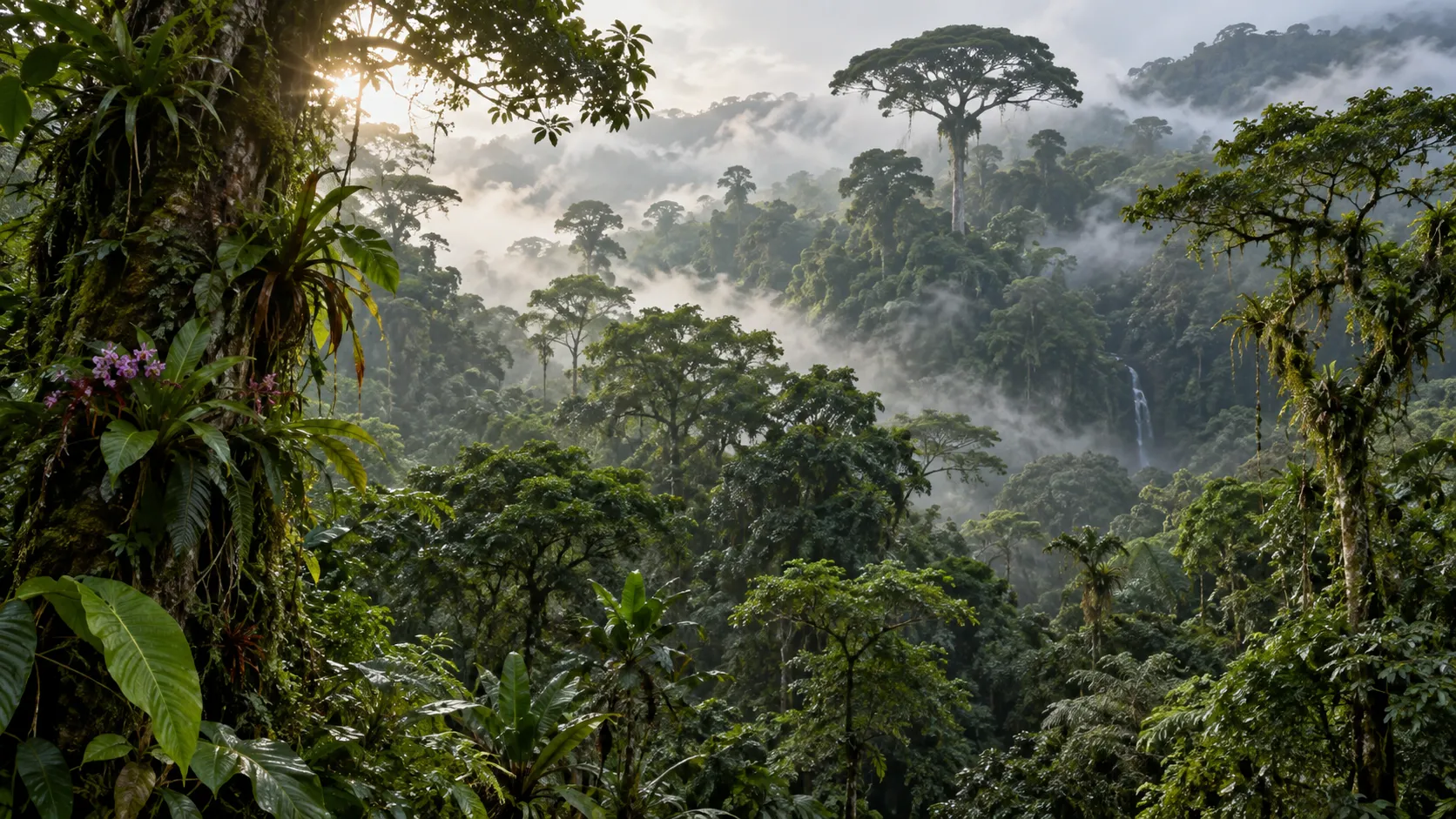
Q: What forest biome near the equator is warm, wet, and exceptionally diverse?
A: Tropical rainforest.
Q: What northern forest biome is dominated by cold-tolerant conifers?
A: The boreal forest, or taiga.
Q: What forest biome has distinct seasons and many deciduous trees?
A: Temperate deciduous forest.
Q: What foggy coastal forest type receives abundant moisture and has mild temperatures?
A: Temperate rainforest.
Q: What high-elevation tropical forest is frequently covered by low clouds?
A: A cloud forest.
Q: What flooded tropical forest grows along salty coastlines on stilt-like roots?
A: A mangrove forest.
Q: What is the world's largest tropical rainforest?
A: The Amazon rainforest.
Q: On which continent is the Congo rainforest located?
A: Africa.
Q: What vast boreal region stretches across much of Canada and Alaska?
A: The North American boreal forest.
Q: What kind of forest surrounds California's giant sequoias in the Sierra Nevada?
A: Mixed-conifer forest.
Q: What Australian forest tree dominates many landscapes and feeds koalas?
A: Eucalyptus.
Q: What conifer forests cloak the Pacific coast from northern California to Alaska?
A: Temperate rainforests.
Q: What name is given to a forest that has developed for a long time with little major disturbance?
A: Old-growth forest.
Q: What is a forest that regrows after logging, farming, or another disturbance called?
A: Secondary forest.
Q: What line marks the upper elevation or latitude beyond which trees cannot grow upright?
A: The tree line.
Record Breakers and Famous Species
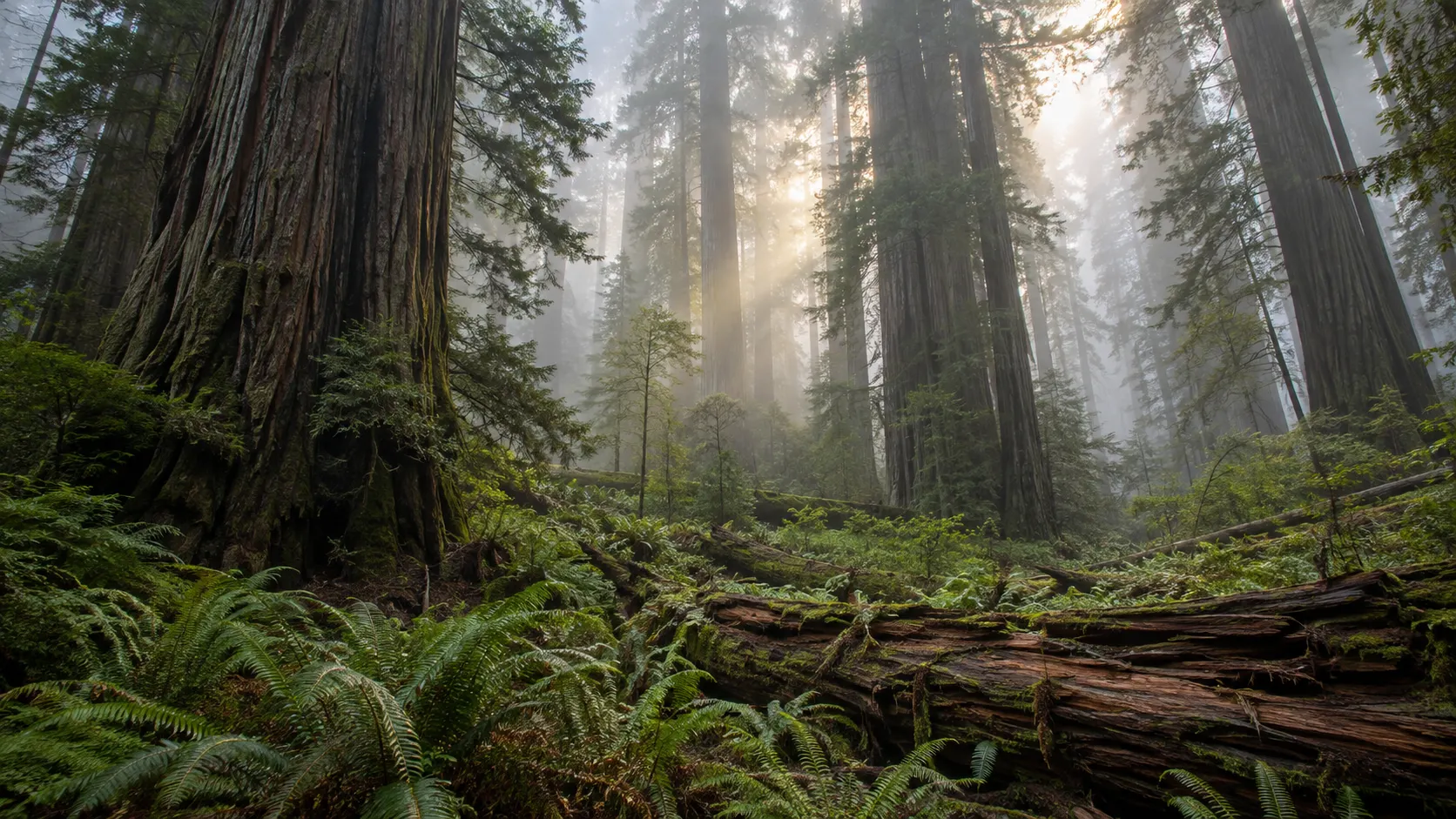
Q: What tree species includes the tallest known living trees?
A: Coast redwood.
Q: What species includes the largest living single-stem trees by volume?
A: Giant sequoia.
Q: What long-lived North American tree can survive for more than 4,000 years?
A: Great Basin bristlecone pine.
Q: What massive African tree stores water in its swollen trunk?
A: The baobab.
Q: What tree is known for fan-shaped leaves and an ancient fossil record?
A: Ginkgo.
Q: What Mediterranean tree produces cork that can be harvested without cutting it down?
A: Cork oak.
Q: What tree produces the sap boiled into maple syrup?
A: Sugar maple.
Q: What conifer produces the edible nuts commonly called pine nuts?
A: A pine tree.
Q: What tropical tree produces cacao pods used to make chocolate?
A: The cacao tree.
Q: What Southeast Asian tree produces the famously aromatic durian fruit?
A: The durian tree.
Q: What tree is the national emblem of Lebanon?
A: Cedar of Lebanon.
Q: What North American tree has pale, peeling bark and produces sweet sap?
A: Paper birch.
Q: What tropical tree is the source of natural rubber latex?
A: The rubber tree.
Q: What tree genus includes willows, whose bark helped inspire aspirin development?
A: Salix.
Q: What tree bears the olive fruit?
A: The olive tree.
Wildlife and Forest Partnerships
Q: What insect carves galleries beneath bark and can damage stressed trees?
A: A bark beetle.
Q: What bird drills into trunks to find insects and excavate nest cavities?
A: A woodpecker.
Q: What animal famously buries acorns and may help oak forests spread?
A: A squirrel.
Q: What North American bird hides thousands of pine seeds and helps whitebark pine reproduce?
A: Clark's nutcracker.
Q: What process occurs when animals carry seeds away from a parent tree?
A: Seed dispersal.
Q: What climbing plant uses a tree for support without necessarily taking nutrients from it?
A: A liana.
Q: What plant grows on another plant for support but is not a parasite?
A: An epiphyte.
Q: What partnership forms a lichen from a fungus and a photosynthetic organism?
A: Symbiosis.
Q: What insects farm fungi inside elaborate colonies built from chewed leaves?
A: Leafcutter ants.
Q: What large herbivore shapes African woodlands by browsing branches and pushing over trees?
A: An elephant.
Q: What arboreal marsupial eats mainly eucalyptus leaves?
A: The koala.
Q: What primate builds sleeping nests in rainforest trees?
A: An orangutan.
Q: What gliding mammal uses a membrane between its limbs to travel among trees?
A: A flying squirrel.
Q: What term describes animals that live mainly in trees?
A: Arboreal.
Q: What food-chain role do green trees occupy by making their own food?
A: Producers.
Fire, Climate, and Forest Care
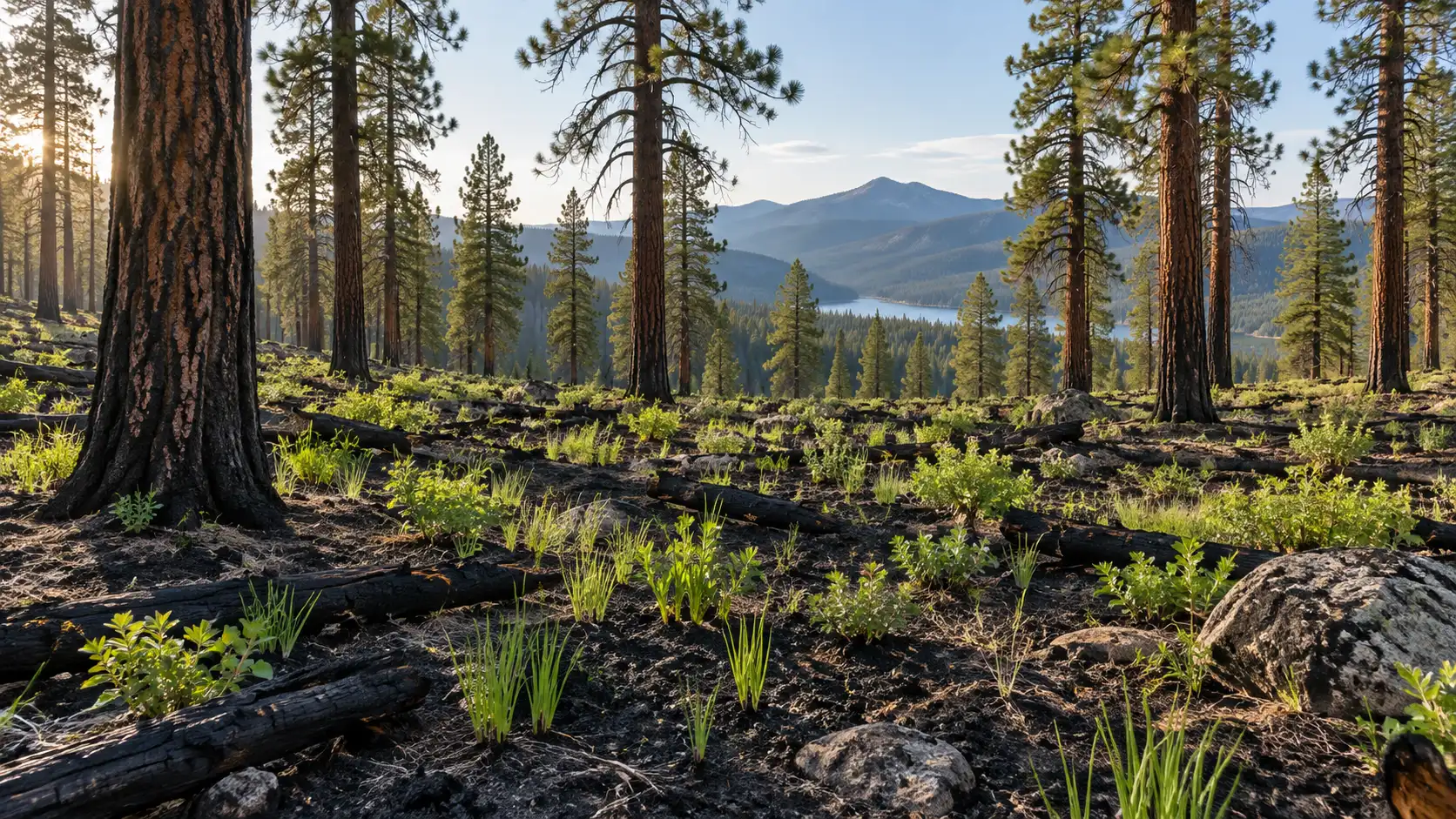
Q: What natural disturbance can release nutrients and open some fire-adapted cones?
A: Wildfire.
Q: What cones remain closed with resin until heat triggers them to open?
A: Serotinous cones.
Q: What carefully planned fire is used to reduce fuels or restore habitat?
A: A prescribed burn.
Q: What forest material can feed a fire, including dry leaves, twigs, and branches?
A: Fuel.
Q: What type of wildfire burns in the tops of trees?
A: A crown fire.
Q: What practice establishes trees on land that was not recently forested?
A: Afforestation.
Q: What practice restores tree cover to previously forested land?
A: Reforestation.
Q: What permanent removal of forest for another land use is called deforestation?
A: The conversion of forest to nonforest land.
Q: What climate-warming gas is stored in wood and forest soils as carbon?
A: Carbon dioxide.
Q: What term describes a reservoir that absorbs more carbon than it releases?
A: A carbon sink.
Q: What method removes selected trees while leaving much of the forest standing?
A: Selective harvesting.
Q: What connected strip of habitat helps wildlife move between forest patches?
A: A wildlife corridor.
Q: What is the division of a large habitat into smaller isolated patches called?
A: Habitat fragmentation.
Q: What science and practice manages forests for environmental, social, and economic goals?
A: Forestry.
Q: What tree-care professional specializes in the cultivation and health of individual trees?
A: An arborist.
You Are at the Top of the Trivia Tree
If you nailed all 120 answers, your forest knowledge has deep roots and a magnificent crown. Keep exploring the natural world with our science trivia.

Ellie Ewert is the founder and author of RandomTrivia.co, blending her passion for research with years of experience in content creation to deliver accurate, engaging, and well-sourced trivia. Dedicated to providing readers with trustworthy and entertaining facts, she applies meticulous fact-checking and SEO expertise to ensure every article meets the highest standards. Read more about our high standards in our Editorial Guidelines.