
Reindeer are far more interesting than their annual roof-delivery gig suggests. These 120 questions cover real caribou biology, Arctic adaptations, herding cultures, migration, Santa's original team, and the very famous red nose that joined them later.
Reindeer Biology and Names
Q: What is the scientific name for reindeer and caribou?
A: Rangifer tarandus.
Q: Which animal family includes reindeer?
A: Cervidae, the deer family.
Q: What name is commonly used for wild Rangifer in North America?
A: Caribou.
Q: What name is commonly used for the species in Europe and Asia?
A: Reindeer.
Q: How are caribou and reindeer related biologically?
A: They are the same species, although populations differ in behavior and domestication history.
Q: Which order includes reindeer?
A: Artiodactyla, the even-toed hoofed mammals.
Q: What are adult male reindeer commonly called?
A: Bulls.
Q: What are adult female reindeer commonly called?
A: Cows.
Q: What are young reindeer called?
A: Calves.
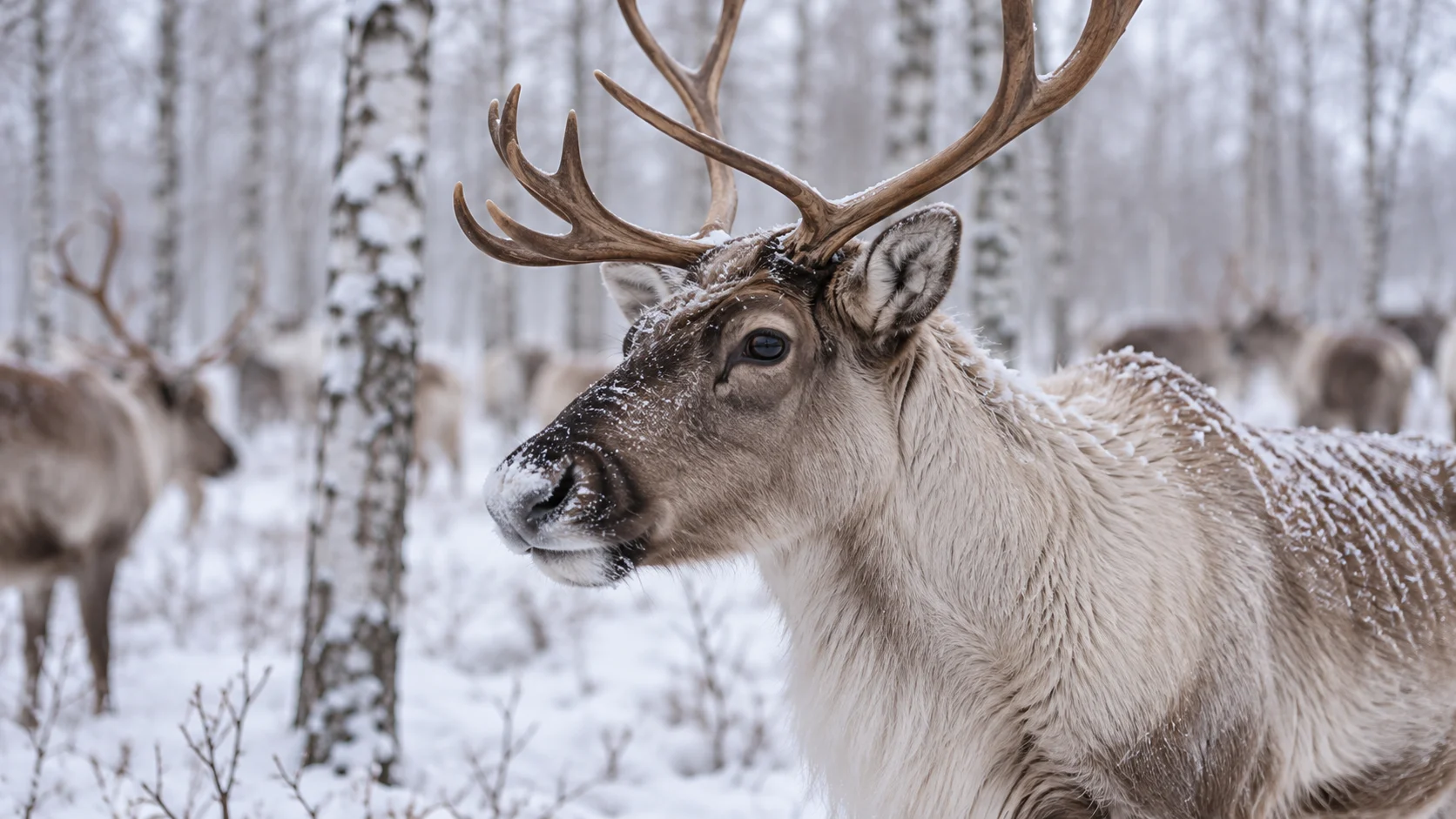
Q: Which sexes can grow antlers in reindeer?
A: Both males and females can grow them.
Q: What makes female reindeer unusual among deer?
A: They are the only deer species in which females commonly grow antlers.
Q: What living tissue covers a growing antler?
A: Velvet.
Q: What happens to antlers after their annual growth cycle?
A: They are shed and regrown.
Q: When do many mature bulls shed their antlers?
A: After the fall rut, often by early winter.
Q: When can pregnant cows retain their antlers?
A: Through winter and into the spring calving period.
Q: What advantage may winter antlers give pregnant females?
A: They help defend feeding craters and food from antlerless animals.
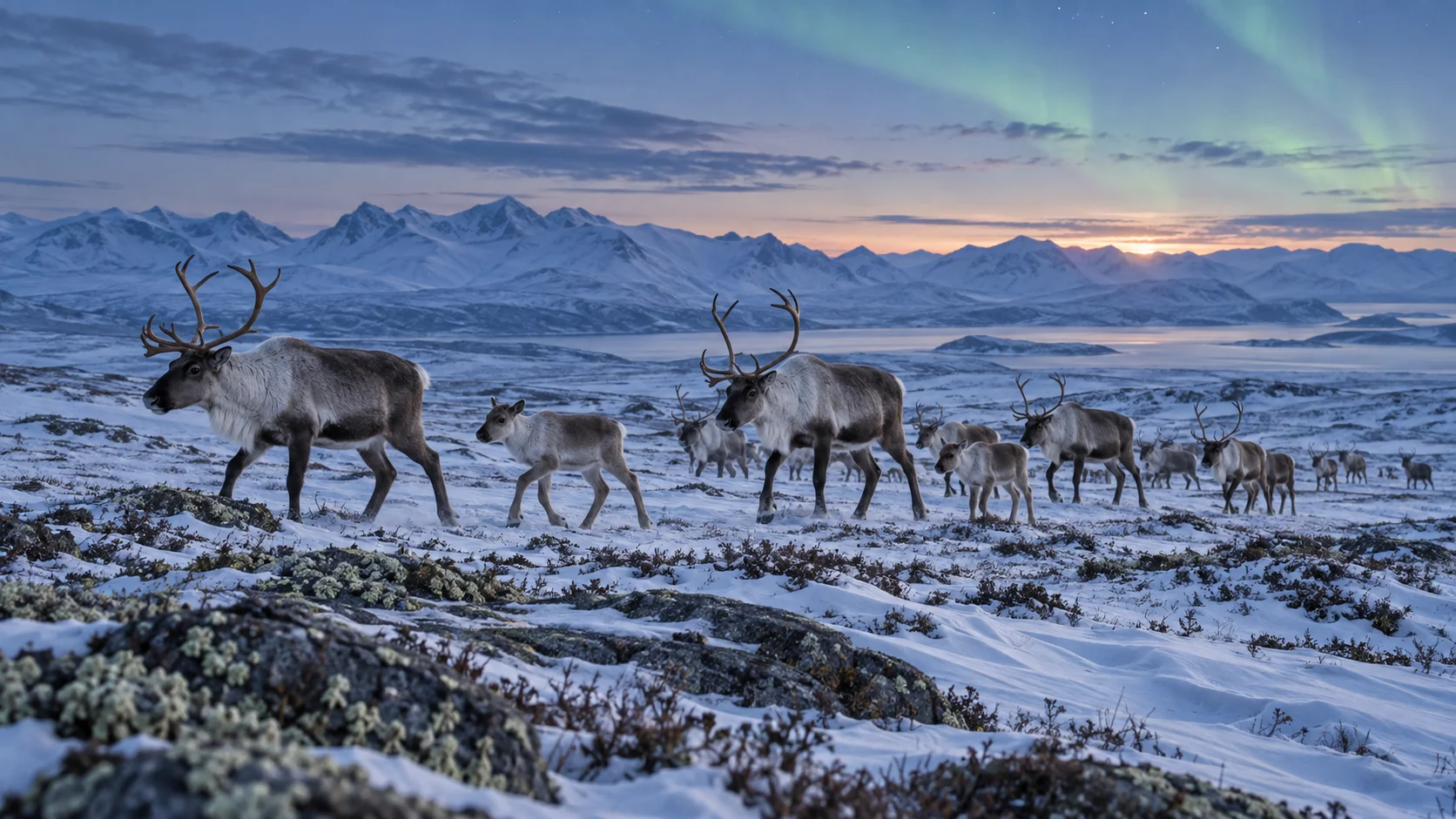
Q: What broad color range can reindeer coats show?
A: Nearly white through gray and brown to very dark brown.
Q: Which reindeer form is especially small and pale?
A: Peary caribou of the Canadian High Arctic.
Q: Which form is generally larger and darker?
A: Woodland caribou.
Q: What long hair feature appears beneath many males' necks?
A: A mane.
Q: How many main toes support each reindeer foot?
A: Two large weight-bearing toes.
Q: What smaller hoof structures sit behind the main hooves?
A: Dewclaws.
Q: What type of diet do reindeer have?
A: They are herbivores.
Q: Which winter food is famously important to many populations?
A: Lichens.
Q: What do reindeer eat besides lichens?
A: Grasses, sedges, leaves, fungi, mosses, and woody plants, depending on season.
Q: What is the reindeer mating season called?
A: The rut.
Q: When does the rut usually occur?
A: In fall, often from late September through October.
Q: How long is a typical reindeer pregnancy?
A: About seven and a half months.
Q: When are many calves born?
A: May or early June.
Q: How many calves does a cow usually bear at once?
A: One.
Cold-Weather Adaptations, Movement, and Survival
Q: What two layers make a reindeer's winter coat effective?
A: A dense woolly undercoat and longer guard hairs.
Q: What is unusual about many reindeer guard hairs?
A: They are hollow or air-filled, improving insulation and buoyancy.
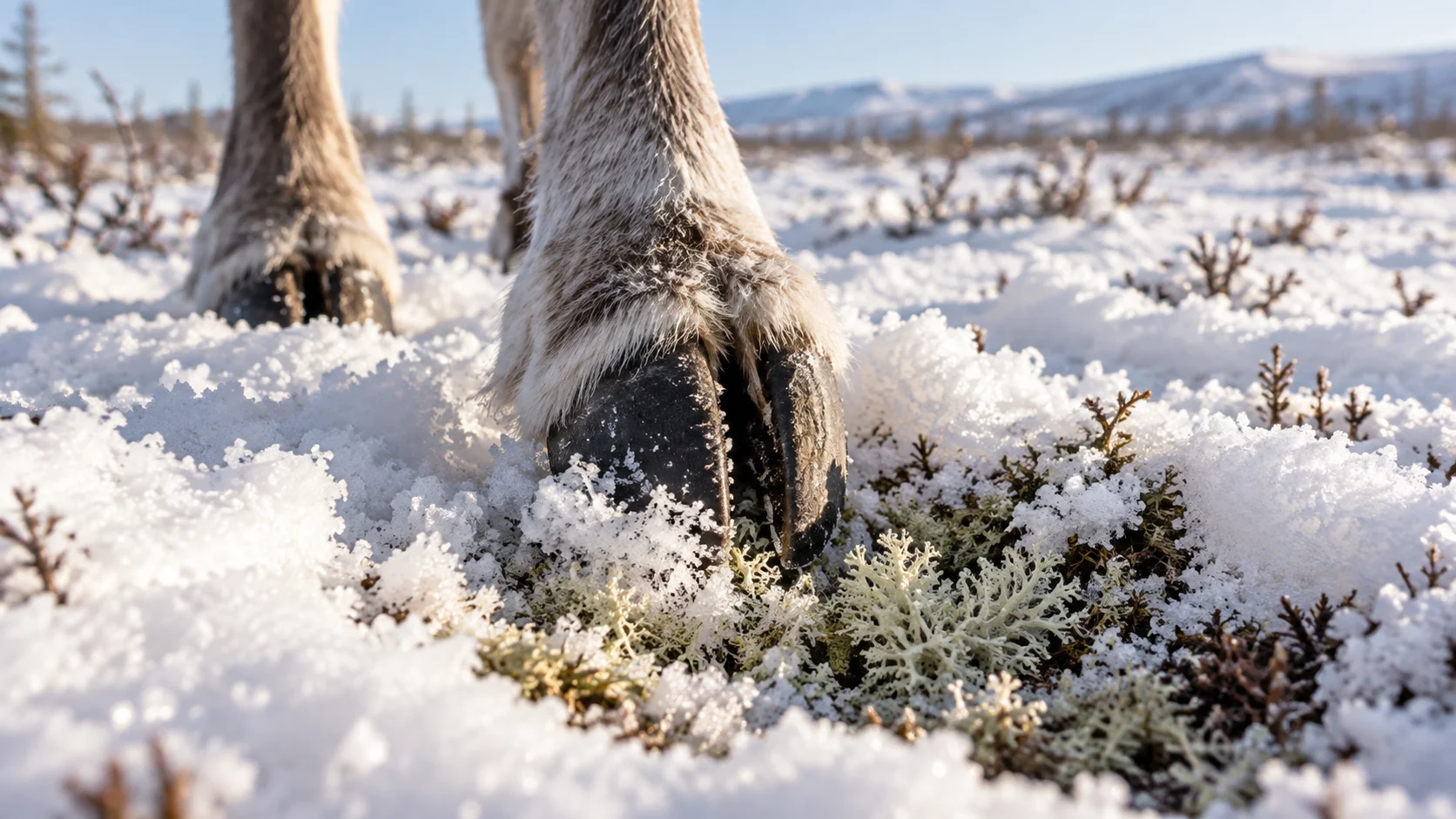
Q: How do broad hooves help on snow?
A: They spread the animal's weight like snowshoes.
Q: How do reindeer hooves help in wetlands?
A: Their wide shape supports movement across soft, boggy ground.
Q: How do the hooves help reindeer swim?
A: They work like paddles.
Q: How do reindeer reach food beneath snow?
A: They dig craters with their hooves and use smell to locate forage.
Q: What Scandinavian word describes digging through snow for food?
A: Cratering is often called graving in English discussions of reindeer behavior.
Q: How do reindeer conserve warmth while breathing?
A: Nasal passages help warm incoming air and recover heat and moisture from exhaled air.
Q: What seasonal change occurs in reindeer footpads?
A: Soft summer pads shrink in winter, exposing harder hoof edges for ice.
Q: What ultraviolet ability has been documented in reindeer vision?
A: They can perceive ultraviolet light.
Q: Why can ultraviolet vision help in snowy landscapes?
A: Lichens, urine, and predators may contrast against UV-reflecting snow.
Q: What seasonal change occurs in the reflective tissue of reindeer eyes?
A: It shifts color between summer and winter to suit changing light.
Q: Which color is associated with the winter eye reflection?
A: Deep blue.
Q: Which color is associated with the summer eye reflection?
A: Golden or yellow.
Q: How quickly can a newborn calf begin following its mother?
A: Within hours.
Q: Why do many cows travel to traditional calving grounds?
A: Those areas can provide food, open visibility, and reduced predator risk.
Q: Which predators hunt reindeer or caribou?
A: Wolves, bears, wolverines, lynx, and golden eagles can prey on them.
Q: Which predator is especially important across much of caribou range?
A: Wolves.
Q: What insects can severely bother herds in summer?
A: Mosquitoes, black flies, and parasitic warble and nose-bot flies.
Q: How can reindeer respond to heavy insect harassment?
A: They bunch together, seek wind, climb snowfields, or move to exposed ground.
Q: Which populations make some of the longest land migrations by mammals?
A: Migratory tundra caribou herds.
Q: Why do not all reindeer migrate long distances?
A: Movement patterns vary among populations, habitats, and domesticated herds.
Q: What terrain can migrating caribou cross?
A: Tundra, mountains, deep snow, rivers, wetlands, and sea ice.
Q: How does hollow fur assist swimming?
A: Trapped air increases insulation and buoyancy.
Q: What body reserve helps reindeer survive winter shortages?
A: Stored fat.
Q: How does winter metabolism help conserve energy?
A: Reindeer can reduce energy expenditure during the cold season.
Q: What is a major obstacle created by freezing rain?
A: Ice can seal forage beneath a hard crust.
Q: How can warming winters harm access to food?
A: Rain-on-snow and thaw-freeze events can lock lichens beneath ice.
Q: Why are migration routes vulnerable to development?
A: Roads, mines, fences, and other infrastructure can fragment seasonal habitat.
Q: What ecosystem zones support reindeer worldwide?
A: Arctic tundra, boreal forest, mountains, and subarctic woodlands.
Range, Herding, and Human Relationships
Q: Across which continents are native reindeer populations found?
A: Europe, Asia, and North America.
Q: What is the North American wild form usually called?
A: Caribou.
Q: Which U.S. state supports large wild caribou herds?
A: Alaska.
Q: Which country has caribou on its twenty-five-cent coin?
A: Canada.
Q: Which Canadian province and territory feature caribou on their coat of arms?
A: Newfoundland and Labrador uses caribou prominently in regional symbolism.
Q: What are the two broad lifestyles often used to describe caribou populations?
A: Migratory and more sedentary or resident.
Q: Which habitat gives woodland caribou their common name?
A: Boreal and mountain forests.
Q: Which caribou live on Arctic islands in Canada?
A: Peary caribou.
Q: What human activity distinguishes many Old World reindeer populations?
A: Long histories of herding and domestication.
Q: Which Indigenous people are strongly associated with reindeer herding in northern Scandinavia and Russia?
A: The Sámi.
Q: Which people herd large reindeer groups on Russia's Yamal Peninsula?
A: The Nenets.
Q: Which Mongolian community is known for small-scale taiga reindeer herding?
A: The Dukha, also called Tsaatan.
Q: Which Siberian peoples have long reindeer-herding traditions?
A: Evenki, Even, Chukchi, and several other northern peoples.
Q: What products can herded reindeer provide?
A: Transport, meat, hides, antler material, milk in some communities, and cultural livelihood.
Q: How have reindeer traditionally assisted travel?
A: They pull sleds and can carry loads.
Q: What is a pulk?
A: A small sled used in northern regions and sometimes pulled by reindeer.
Q: What is joik in Sámi culture?
A: A traditional vocal form, not a generic name for a reindeer song.
Q: Why should reindeer-herding cultures not be described as identical?
A: Communities have distinct languages, lands, methods, and histories.
Q: Where were domestic reindeer introduced in Alaska in the late nineteenth century?
A: They were imported from Siberia to support new herding programs.
Q: Which Indigenous Alaskan group became central to many reindeer-herding programs?
A: Iñupiat communities.
Q: What happened when some introduced Alaskan reindeer joined wild herds?
A: They mixed with caribou and dispersed beyond managed herds.
Q: What term describes moving livestock between seasonal pastures?
A: Transhumance.
Q: Why do herders move reindeer seasonally?
A: To reach forage, calving areas, insect relief, and winter range.
Q: How are individual domestic reindeer sometimes identified?
A: Ear marks, collars, ownership records, and herd knowledge.
Q: Why is lichen-rich winter pasture important to herders?
A: It can sustain animals when green plants are unavailable.
Q: What land-use conflict can affect herding routes?
A: Forestry, mining, roads, wind development, and other projects may divide pasture.
Q: What international region spans northern Norway, Sweden, Finland, and Russia?
A: Sápmi, the traditional homeland of the Sámi.
Q: Which domesticated trait can differ from wild-caribou behavior?
A: Herded reindeer are generally more manageable around people.
Q: What does Rangifer mean as a genus name?
A: It is the scientific genus containing reindeer and caribou.
Q: Why are reindeer culturally more than Christmas animals?
A: They support real northern ecosystems, economies, identities, and living herding traditions.
Santa's Reindeer, Rudolph, and Holiday Trivia
Q: Which 1823 poem popularized Santa's team of eight reindeer?
A: A Visit from St. Nicholas.
Q: What alternate title is commonly used for that poem?
A: 'Twas the Night Before Christmas.
Q: How was the poem first published?
A: Anonymously in a New York newspaper.
Q: Who is the poem traditionally attributed to?
A: Clement Clarke Moore, although the authorship has been disputed.
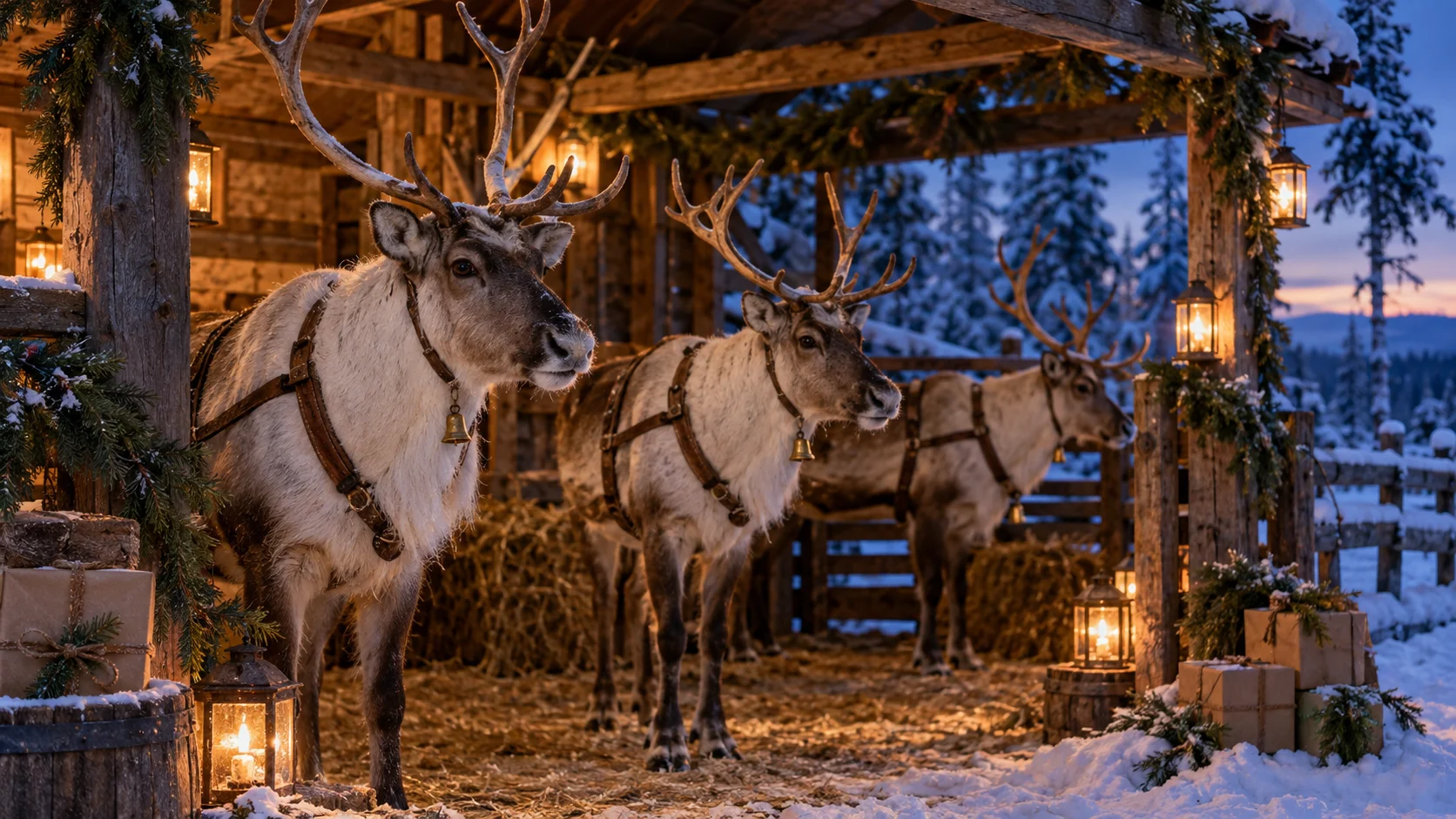
Q: Which eight reindeer are named in the familiar modern version?
A: Dasher, Dancer, Prancer, Vixen, Comet, Cupid, Donner, and Blitzen.
Q: Which reindeer name comes first in the poem's roll call?
A: Dasher.
Q: Which name follows Dasher?
A: Dancer.
Q: Which reindeer is named after a lively movement?
A: Prancer.
Q: Which reindeer name can mean a female fox?
A: Vixen.
Q: Which reindeer shares a name with a celestial object?
A: Comet.
Q: Which reindeer shares a name with the Roman god of love?
A: Cupid.
Q: What do Donner and Blitzen mean in German?
A: Thunder and lightning.
Q: What earlier spellings appeared for Donner and Blitzen?
A: Dunder and Blixem, with later variants including Donder and Blitzen.
Q: Which 1821 illustrated poem showed Santa using a single reindeer?
A: Old Santeclaus with Much Delight.
Q: Who created Rudolph the Red-Nosed Reindeer?
A: Robert L. May.
Q: In what year did Rudolph first appear?
A: 1939.
Q: Why was the original Rudolph story created?
A: It was a promotional booklet for Montgomery Ward.
Q: What job did Robert L. May have when he created Rudolph?
A: He was a copywriter for Montgomery Ward.
Q: Who wrote the famous Rudolph song?
A: Johnny Marks.
Q: How was Johnny Marks related to Robert L. May?
A: He was May's brother-in-law.
Q: Who made the Rudolph song a major hit in 1949?
A: Gene Autry.
Q: Which television special introduced Hermey and Yukon Cornelius?
A: The 1964 stop-motion Rudolph the Red-Nosed Reindeer special.
Q: Which production company made that television special?
A: Rankin/Bass, then credited as Videocraft International.
Q: Who narrates the special as Sam the Snowman?
A: Burl Ives.
Q: What does Hermey want to become?
A: A dentist.
Q: What is Yukon Cornelius searching for?
A: Silver and gold.
Q: Who rules the Island of Misfit Toys?
A: King Moonracer.
Q: What weather problem makes Rudolph useful to Santa?
A: Thick fog threatens the Christmas Eve flight.
Q: What part of Rudolph lights the route?
A: His glowing red nose.
Q: What biology clue suggests Santa's antlered Christmas team could be female?
A: Adult males often shed antlers before Christmas, while pregnant females usually retain theirs.
How Did You Score?
If Rangifer tarandus, velvet, UV vision, Sápmi, Johnny Marks, and the meaning of Donner and Blitzen came easily, you know the herd beyond the sleigh. I am still giving Rudolph credit for excellent low-visibility navigation.

Ellie Simons creates and edits Random Trivia. She researches trivia using primary and authoritative sources whenever possible and is currently reviewing the site's older trivia library for accuracy, clarity, and playability. Read more on the About page.
About this quiz
Site editor: Ellie Simons. Read our Trivia Methodology to learn how questions are researched and updated. Page last updated: . Report an error.