
This is not trivia about one culture, because there has never been just one. These 120 questions cover distinct tribal nations, sovereignty, ancient cities, federal policy, languages, leaders, arts, survival, and the living communities too often pushed into the past tense.
Tribal Nations, Identity, and Sovereignty
Q: Why is there no single Native American culture?
A: Hundreds of distinct nations have their own governments, languages, histories, and traditions.
Q: What name is usually most precise for a Native person or nation?
A: The specific tribal or national name that the person or community uses.
Q: Which broad terms may all be acceptable depending on preference?
A: Native American, American Indian, Indigenous, Native, and specific nation names.
Q: What does tribal sovereignty mean?
A: A tribal nation's inherent authority to govern its citizens and territory.
Q: What relationship does a federally recognized tribe have with the United States?
A: A government-to-government relationship.
Q: How many federally recognized tribes were listed in the United States in 2026?
A: 575.
Q: What does federal recognition acknowledge besides eligibility for services?
A: A continuing political relationship and inherent rights of self-government.
Q: Who determines citizenship requirements within a tribal nation?
A: The tribal nation itself.
Q: What factors can tribal citizenship rules include?
A: Lineal descent, community ties, historical rolls, blood quantum, or other nation-specific standards.
Q: Why is self-identification alone not the same as tribal citizenship?
A: Citizenship is a political status determined by a sovereign tribal nation.
Q: What is Indian Country in U.S. law?
A: A legal term covering reservations, dependent Indian communities, and certain allotments.
Q: What is a reservation?
A: Land reserved for a tribe through treaty, statute, executive action, or other legal process.
Q: How universal are reservations among federally recognized tribes?
A: They are not universal; land bases and legal histories differ widely.
Q: What is trust land?
A: Land whose legal title is held by the United States for a tribe or individual Native owner.
Q: Which federal department contains the Bureau of Indian Affairs?
A: The Department of the Interior.
Q: In what year was the Bureau of Indian Affairs established?
A: 1824.
Q: What federal agency operates schools serving some tribal communities?
A: The Bureau of Indian Education.
Q: What does a treaty represent in federal Indian law?
A: An agreement between sovereign political entities.
Q: Which part of the Constitution calls treaties the supreme law of the land?
A: Article VI.
Q: When did Congress end treaty-making with tribal nations?
A: 1871, while existing treaties remained legally binding.
Q: What are reserved treaty rights?
A: Rights tribes retained rather than rights granted by the United States.
Q: Which activities can treaty rights protect?
A: Fishing, hunting, gathering, water use, access, and other nation-specific rights.
Q: What is tribal jurisdiction?
A: A tribal government's legal authority over certain people, lands, and matters.
Q: What is a tribal court?
A: A court operated under a tribal nation's laws and government.
Q: What is a tribal council?
A: A governing body used by many, but not all, tribal governments.
Q: Why should the word chief not be used for every Native leader?
A: Nations use different offices, including chairperson, president, governor, and principal chief.
Q: What is a pueblo in the Southwest?
A: It can mean both a community and a distinct tribal nation with long-settled villages.
Q: Which Indigenous people of Hawaii have a distinct historical and legal framework?
A: Native Hawaiians.
Q: What month is National Native American Heritage Month?
A: November.
Q: What is the strongest rule for respectful Native history trivia?
A: Treat Native nations as living, diverse sovereign communities rather than a vanished culture.
Homelands, Ancient Cities, Food, and Innovation
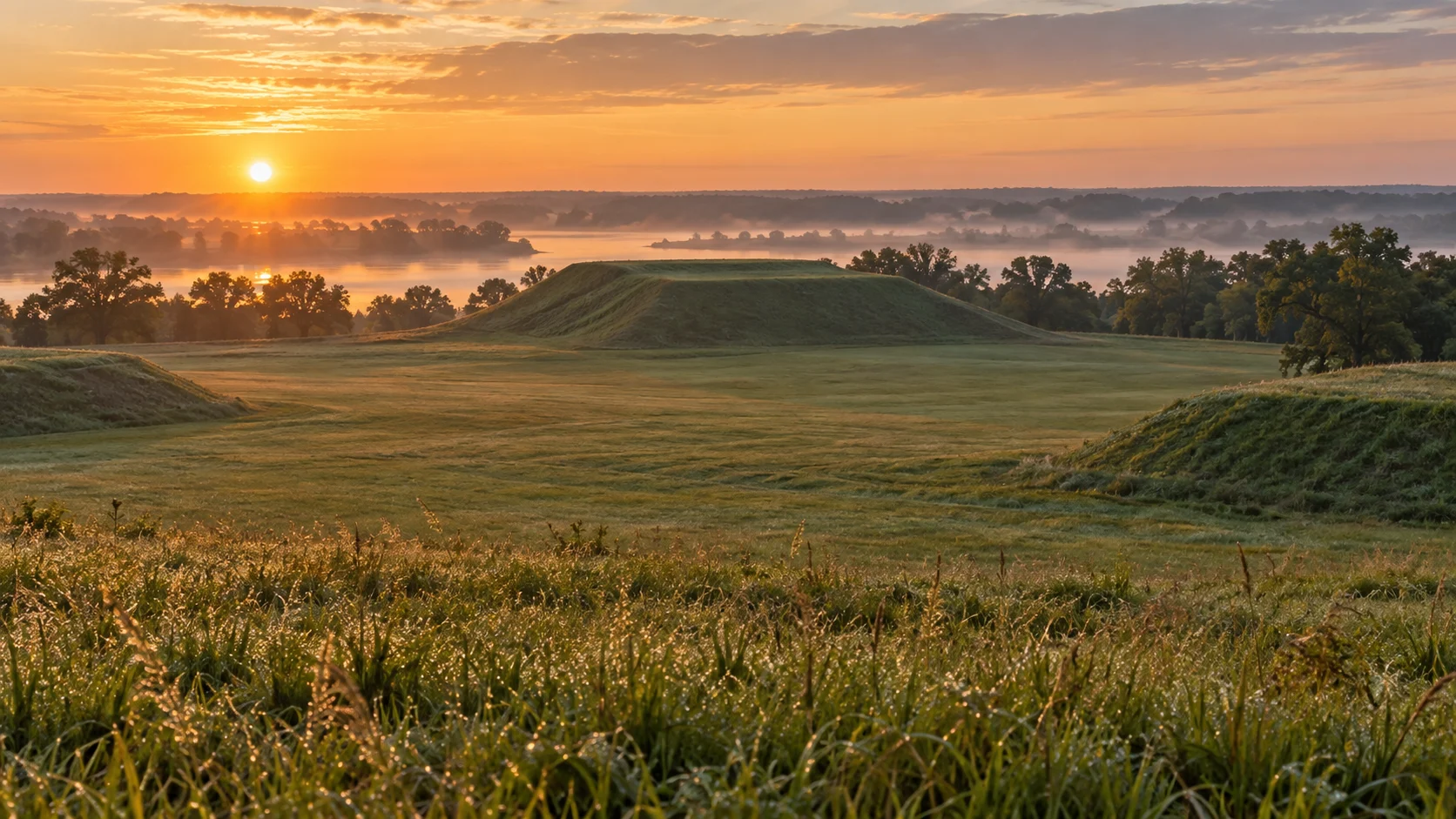
Q: Which ancient city near present-day St. Louis became the largest urban center north of Mexico?
A: Cahokia.
Q: What enormous earthwork dominates Cahokia?
A: Monks Mound.
Q: Which cultural tradition built Cahokia and many southeastern mound centers?
A: Mississippian cultures.
Q: Which Louisiana earthwork site predates Cahokia by thousands of years?
A: Poverty Point.
Q: What shapes characterize Poverty Point's main earthworks?
A: Concentric ridges and large mounds.
Q: Which Ohio earthwork tradition created vast geometric enclosures?
A: The Hopewell tradition.
Q: Which Alabama site was a major Mississippian political center?
A: Moundville.
Q: Which Georgia site contains major Mississippian mounds?
A: Etowah.
Q: Which ancestral city in New Mexico contains Pueblo Bonito?
A: Chaco Canyon.
Q: Which people built the great houses of Chaco Canyon?
A: Ancestors of today's Pueblo peoples.
Q: Which Colorado park preserves Ancestral Pueblo cliff dwellings?
A: Mesa Verde National Park.
Q: What is the largest cliff dwelling at Mesa Verde?
A: Cliff Palace.
Q: What is a kiva?
A: A ceremonial and community space used in Pueblo traditions.
Q: Which Arizona site preserves a large ancestral Hohokam structure?
A: Casa Grande Ruins.
Q: What irrigation achievement supported Hohokam communities?
A: Extensive canal systems in the Sonoran Desert.
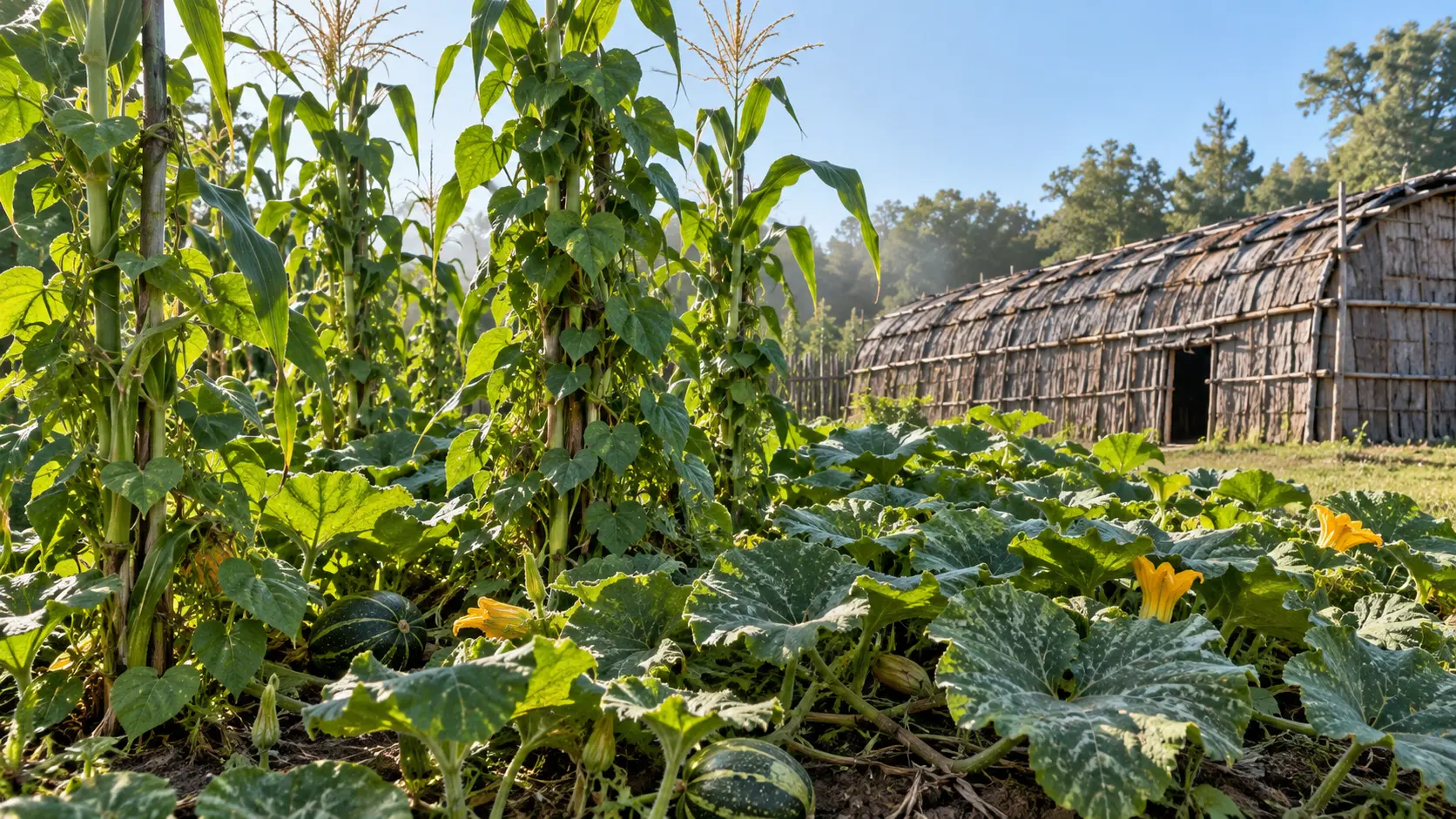
Q: Which three crops are often called the Three Sisters?
A: Corn, beans, and squash.
Q: How do the Three Sisters support one another when grown together?
A: Corn offers structure, beans add nitrogen, and squash shades soil.
Q: Where was maize first domesticated?
A: Mexico, before spreading through trade and cultivation across the Americas.
Q: Which food did Indigenous peoples develop from wild teosinte?
A: Corn, or maize.
Q: Which important crop originated in the Andes rather than North America?
A: Potatoes.
Q: Which sweetener did northeastern peoples make from maple sap?
A: Maple sugar and syrup.
Q: Which food is harvested from lakes in the Great Lakes region?
A: Wild rice, called manoomin in Anishinaabe languages.
Q: What is pemmican?
A: A concentrated food combining dried meat with fat and sometimes berries.
Q: Which transportation technology is closely associated with Arctic Indigenous peoples?
A: The kayak.
Q: What is an umiak?
A: A larger open skin boat traditionally used by Arctic communities.
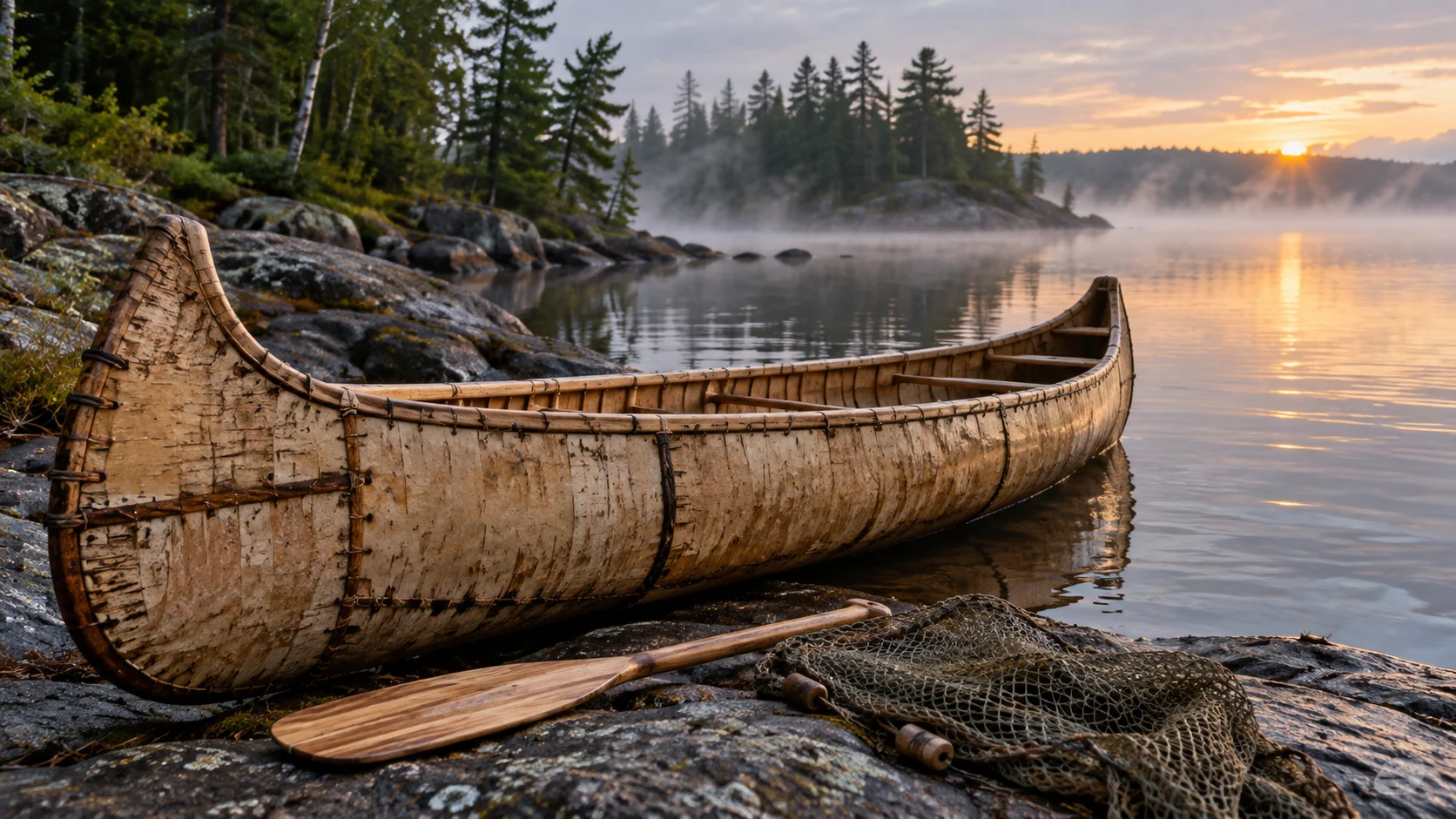
Q: Which lightweight boat was developed in northeastern forest and lake regions?
A: The birchbark canoe.
Q: What is a travois?
A: A frame used to drag loads, historically pulled by people or dogs and later horses.
Q: Which Plains structure uses a portable conical frame and hide or canvas covering?
A: A tipi.
Q: Why is a tipi not a universal Native dwelling?
A: Nations built homes suited to different climates, materials, and lifeways.
Q: What homes did Haudenosaunee communities traditionally build?
A: Longhouses.
Colonization, Removal, Allotment, and Resistance
Q: Which 1830 law authorized forced removal policies in the Southeast?
A: The Indian Removal Act.
Q: Which president signed the Indian Removal Act?
A: Andrew Jackson.
Q: Which nations are often grouped as the Five Tribes in removal history?
A: Cherokee, Chickasaw, Choctaw, Muscogee, and Seminole.
Q: What does the Trail of Tears most specifically commemorate?
A: The forced removal of Cherokee people in 1838 and 1839.
Q: Where were removed southeastern nations forced to relocate?
A: Indian Territory, largely in present-day Oklahoma.
Q: Which Cherokee leader opposed removal and served as principal chief?
A: John Ross.
Q: Which Supreme Court case described tribes as domestic dependent nations?
A: Cherokee Nation v. Georgia in 1831.
Q: Which 1832 case held that Georgia law had no force in Cherokee territory?
A: Worcester v. Georgia.
Q: What conflict grew from Seminole resistance to removal in Florida?
A: The Second Seminole War.
Q: Which 1864 massacre killed Cheyenne and Arapaho people in Colorado Territory?
A: The Sand Creek Massacre.
Q: Which 1890 killing of Lakota people occurred in South Dakota?
A: The Wounded Knee Massacre.
Q: Which spiritual movement was associated with Wounded Knee victims?
A: The Ghost Dance movement.
Q: What did the 1887 Dawes Act attempt to do?
A: Divide communally held tribal lands into individual allotments.
Q: What happened to much land declared surplus under allotment?
A: It was opened or sold to non-Native ownership.
Q: What was a major result of the allotment era?
A: Tribes lost tens of millions of acres of land.
Q: Which 1928 report criticized federal Indian administration and reservation conditions?
A: The Meriam Report.
Q: What did the Indian Citizenship Act of 1924 grant?
A: U.S. citizenship to Native people born in the United States.
Q: Why did the 1924 act not immediately ensure equal voting access?
A: Some states continued to block Native voters.
Q: Which 1934 law ended allotment as a general policy and supported tribal governments?
A: The Indian Reorganization Act.
Q: What was the federal termination era?
A: A mid-twentieth-century policy seeking to end federal recognition and trust relationships for selected tribes.
Q: Which 1953 measure announced termination as federal policy?
A: House Concurrent Resolution 108.
Q: What did urban relocation programs encourage Native people to do?
A: Move from reservations to cities, often with inadequate promised support.
Q: Which 1975 law expanded tribal control of federally funded programs?
A: The Indian Self-Determination and Education Assistance Act.
Q: Which 1978 law protects Native children's connections to tribes and families in many custody cases?
A: The Indian Child Welfare Act.
Q: Which 1978 law recognized protections for Native religious practices?
A: The American Indian Religious Freedom Act.
Q: Which 1990 law requires certain institutions to return Native human remains and cultural items?
A: The Native American Graves Protection and Repatriation Act.
Q: What does NAGPRA stand for?
A: Native American Graves Protection and Repatriation Act.
Q: Which 1971 law reshaped Native land claims in Alaska?
A: The Alaska Native Claims Settlement Act.
Q: Which movement began in Minneapolis in 1968?
A: The American Indian Movement.
Q: How long did the Indians of All Tribes occupation of Alcatraz last?
A: From November 1969 until June 1971.
Languages, Arts, Leaders, and Living Cultures
Q: Who created the Cherokee syllabary?
A: Sequoyah.
Q: What is a syllabary?
A: A writing system in which symbols generally represent syllables.
Q: How quickly did Cherokee literacy spread after the syllabary's adoption?
A: It spread rapidly during the 1820s.
Q: What newspaper began publication in Cherokee and English in 1828?
A: The Cherokee Phoenix.
Q: Which language family includes Ojibwe, Cree, and Blackfoot?
A: Algonquian.
Q: Which language family includes Cherokee?
A: Iroquoian.
Q: Which language family includes Diné Bizaad, the Navajo language?
A: Athabaskan, also called Dene.
Q: What does Diné mean in the Navajo language?
A: The People.
Q: Which confederacy is also called the Haudenosaunee?
A: The Six Nations, historically formed as the Five Nations.
Q: Which nation joined the original Haudenosaunee confederacy sixth?
A: The Tuscarora.
Q: What does Haudenosaunee commonly translate as?
A: People of the Longhouse.
Q: Which five nations formed the original Haudenosaunee confederacy?
A: Mohawk, Oneida, Onondaga, Cayuga, and Seneca.
Q: What is a powwow?
A: A gathering centered on dance, music, community, and specific host traditions.
Q: What is the Grand Entry at many powwows?
A: The formal opening procession of dancers, flags, veterans, and leaders.
Q: Why should powwows not be treated as one ancient ceremony?
A: Modern powwows have varied histories, purposes, categories, and community protocols.
Q: What is ledger art?
A: A Plains art form that developed on paper, including repurposed ledger books.
Q: Which Pueblo potter became famous for polished black-on-black pottery?
A: Maria Martinez of San Ildefonso Pueblo.
Q: Which Kiowa artist combined Native subjects with bold modern painting?
A: T.C. Cannon.
Q: Who became the first Native American U.S. poet laureate?
A: Joy Harjo of the Muscogee Nation.
Q: Which novelist wrote Love Medicine and is an enrolled Turtle Mountain Band of Chippewa member?
A: Louise Erdrich.
Q: Which Osage ballerina became America's first major prima ballerina?
A: Maria Tallchief.
Q: Which athlete won Olympic gold in both pentathlon and decathlon in 1912?
A: Jim Thorpe.
Q: Which nation elected Wilma Mankiller as its first woman principal chief?
A: The Cherokee Nation.
Q: Who was the first Native American woman to become a physician in the United States?
A: Susan La Flesche Picotte of the Omaha Tribe.
Q: Which Yankton Dakota writer and activist used the name Zitkála-Šá?
A: Gertrude Simmons Bonnin.
Q: Which Kaw citizen became U.S. vice president in 1929?
A: Charles Curtis.
Q: Which Laguna Pueblo citizen became the first Native American U.S. cabinet secretary?
A: Deb Haaland.
Q: What work did Navajo Code Talkers perform during World War II?
A: They transmitted military messages using a code built around the Navajo language.
Q: Which Native soldiers pioneered military code talking during World War I?
A: Choctaw soldiers were among the best-known early code talkers.
Q: What fact matters most after 120 questions about Native history?
A: Native nations and cultures continue to govern, create, teach, adapt, and shape the present.
How Did You Score?
If sovereignty, Cahokia, manoomin, Worcester, allotment, Sequoyah, NAGPRA, and Haudenosaunee all felt familiar, you built a strong score. The better win is remembering that every broad label contains many present-day nations with their own voices.

Ellie Simons creates and edits Random Trivia. She researches trivia using primary and authoritative sources whenever possible and is currently reviewing the site's older trivia library for accuracy, clarity, and playability. Read more on the About page.
About this quiz
Site editor: Ellie Simons. Read our Trivia Methodology to learn how questions are researched and updated. Page last updated: . Report an error.