
You’re gonna need a bigger trivia sheet. These 87 Jaws questions cover Brody, Hooper, Quint, Amity Island, the Orca, the Indianapolis speech, the shark hunt, sequels, mechanical effects, and John Williams’s score.
Amity Island, Brody, Hooper & Quint
Q: Who directed Jaws?
A: Steven Spielberg. Source
Q: In what year was the film Jaws released?
A: 1975. Source
Q: Which Peter Benchley novel was adapted into the film Jaws?
A: Jaws by Peter Benchley.
Q: Which fictional island community is threatened by a shark in Jaws?
A: Amity Island.
Q: Who is Amity Island's police chief in Jaws?
A: Martin Brody.
Q: Who plays Chief Martin Brody in Jaws?
A: Roy Scheider.
Q: Which city did Chief Brody move from before coming to Amity Island?
A: New York City.
Q: What fear makes Chief Brody's job on Amity Island ironic?
A: Brody is afraid of water.
Q: Who is Chief Brody's wife in Jaws?
A: Ellen Brody.
Q: Which marine scientist comes to Amity Island in Jaws?
A: Matt Hooper.
Q: Who plays Matt Hooper in Jaws?
A: Richard Dreyfuss.
Q: What field does Matt Hooper study?
A: Oceanographer/shark expert.
Q: Which character is the professional shark hunter in Jaws?
A: Quint.
Q: Who plays Quint in Jaws?
A: Robert Shaw.
Q: What does Quint scrape at the Amity town meeting to get attention?
A: A chalkboard.
Q: How much money does Quint demand to kill Amity's shark?
A: $10,000 to kill the shark. Source
Q: What is the name of Quint's boat in Jaws?
A: Orca.
Q: Which shark species attacks Amity Island in Jaws?
A: Great white shark.
Q: Is the shark shown clearly at the start of Jaws?
A: No.
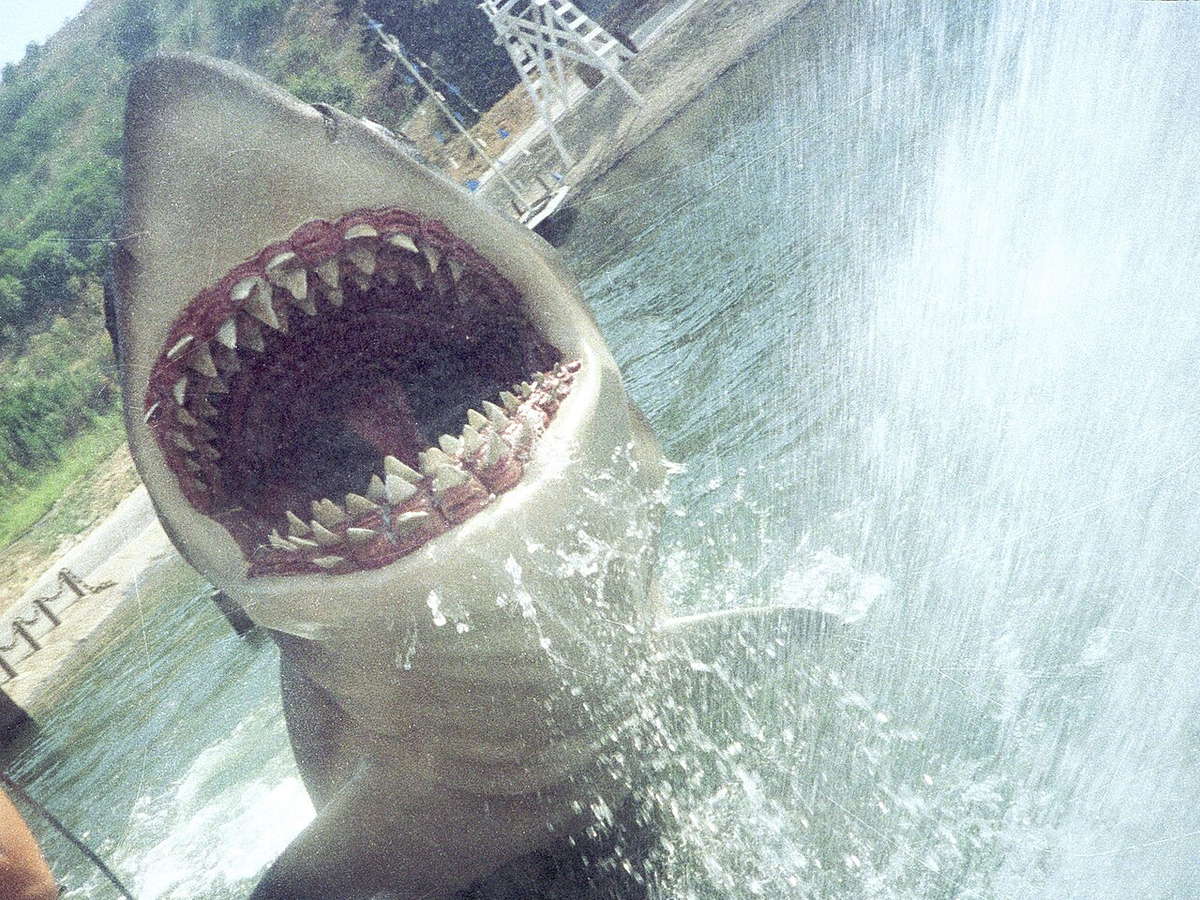
Q: Why did Steven Spielberg show the mechanical shark less often than planned?
A: The mechanical shark repeatedly malfunctioned. Source
Q: Who is the first shark-attack victim in Jaws?
A: Chrissie Watkins.
Q: What is Chrissie Watkins doing when the shark attacks her?
A: Swimming at night.
Q: What does Chief Brody want to do with Amity's beaches after the first attack?
A: Close the beaches.
Q: Which Amity official resists closing the beaches?
A: Mayor Larry Vaughn and local business interests.
Q: Why does Mayor Vaughn resist closing the beaches?
A: Summer tourism and Fourth of July revenue.
Q: Which boy is killed by the shark during the day in Jaws?
A: Alex Kintner.
Q: What does Mrs. Kintner do to Chief Brody after her son's death?
A: Publicly slaps Brody and blames him for keeping beaches open.
The Beach, Orca, Barrels & Indianapolis Speech
Q: Which camera move emphasizes Brody's reaction to seeing a beach attack?
A: A dolly zoom.
Q: How does a dolly zoom change the image?
A: The camera moves as the lens zooms in the opposite direction, changing the background perspective.
Q: Which holiday increases pressure to reopen Amity's beaches?
A: Fourth of July.
Q: What prank makes beachgoers think the shark has returned?
A: Kids use a fake shark fin.
Q: What happens in Amity's lagoon on the Fourth of July?
A: The shark attacks a boater and approaches Brody’s son.
Q: What finally prompts Mayor Vaughn to approve a shark hunt?
A: Another shark attack puts the danger beyond dispute.
Q: Which three men sail out to hunt the shark?
A: Brody, Hooper, and Quint.
Q: What does Quint use to attach floating barrels to the shark?
A: Harpoons and lines.
Q: What do Quint's barrels help the crew track?
A: The shark’s movements.
Q: What is Brody doing when the shark first appears beside the Orca?
A: Chums the water.
Q: What does Brody say after seeing the shark beside the Orca?
A: “You're gonna need a bigger boat.”
Q: What do Quint and Hooper compare aboard the Orca?
A: Scars.
Q: Which wartime naval disaster does Quint describe aboard the Orca?
A: The sinking of the USS Indianapolis.
Q: What kind of ship was the USS Indianapolis?
A: U.S. Navy cruiser sunk in 1945.
Q: What had the USS Indianapolis delivered shortly before it sank?
A: Parts of the atomic bomb later used on Hiroshima. Source
Q: What dangers killed many USS Indianapolis survivors while they waited for rescue?
A: Exposure, dehydration, injuries, and shark attacks.
Q: Why does the Indianapolis disaster shape Quint's feelings about sharks?
A: He survived the sinking and witnessed attacks on fellow sailors.
Q: Which song do Brody, Hooper, and Quint sing aboard the Orca?
A: “Show Me the Way to Go Home.”
Q: What interrupts the men's singing aboard the Orca?
A: The shark rams the boat.
Q: What does Quint do to the Orca's radio?
A: Smashes it.
Q: What happens to the Orca in the final shark attack?
A: Shark damages and sinks it.
Q: What protective equipment does Hooper enter to confront the shark?
A: Shark cage.
Q: What does the shark do to Hooper's cage?
A: Attacks and destroys the cage.
Q: Does Matt Hooper survive the Jaws film?
A: No.
Q: What happens to Matt Hooper in Peter Benchley's Jaws novel?
A: Hooper dies.
Final Battle, Sequels & Franchise Legacy
Q: What happens to Quint in the Jaws finale?
A: Shark eats him as Orca sinks.
Q: What does Brody put in the shark's mouth during the finale?
A: A scuba tank.
Q: How does Brody kill the shark in Jaws?
A: He shoots the scuba tank, causing an explosion.
Q: What does Brody say just before his final shot at the shark?
A: “Smile, you son of a…”
Q: Which scientist resurfaces after the shark dies?
A: Hooper.
Q: How do Brody and Hooper get back toward shore?
A: They paddle on wreckage toward shore.
Q: What threat confronts Amity Island in Jaws 2?
A: Another great white shark threatens Amity and Brody's family.
Q: Does Roy Scheider return as Chief Brody in Jaws 2?
A: Yes.
Q: Which tagline promoted Jaws 2?
A: “Just when you thought it was safe to go back in the water...”
Q: What visual effect is named in the title Jaws 3-D?
A: Third film using 3D effects.
Q: At what kind of marine park is Jaws 3-D set?
A: SeaWorld-style marine park in Florida.
Q: Which of Brody's sons is central to Jaws 3-D?
A: Mike Brody.
Q: Who plays Mike Brody in Jaws 3-D?
A: Dennis Quaid.
Q: Which Brody family member is central to Jaws: The Revenge?
A: Ellen Brody.
Q: In which island nation is much of Jaws: The Revenge set?
A: The Bahamas.
Q: Who plays Ellen Brody in Jaws: The Revenge?
A: Lorraine Gary.
Q: Who plays Hoagie in Jaws: The Revenge?
A: Michael Caine.
Q: Which Oscar ceremony did Michael Caine miss while filming Jaws: The Revenge?
A: The 1987 Academy Awards, when he won Supporting Actor for Hannah and Her Sisters. Source
Q: Which film-release strategy did Jaws help popularize?
A: A wide summer release backed by major television advertising.
Q: Did Jaws author Peter Benchley later support shark conservation?
A: Yes.
Q: Which two-note sound motif identifies the shark in Jaws?
A: John Williams’s two-note shark theme.

Mechanical Shark, Martha's Vineyard, Music & Hard Jaws Trivia
Q: Which Massachusetts island hosted much of Jaws filming?
A: Martha's Vineyard, Massachusetts. Source
Q: Why was Martha's Vineyard's shallow offshore water useful to Jaws filmmakers?
A: Its shallow water let crews work farther offshore while filming a deep-water setting.
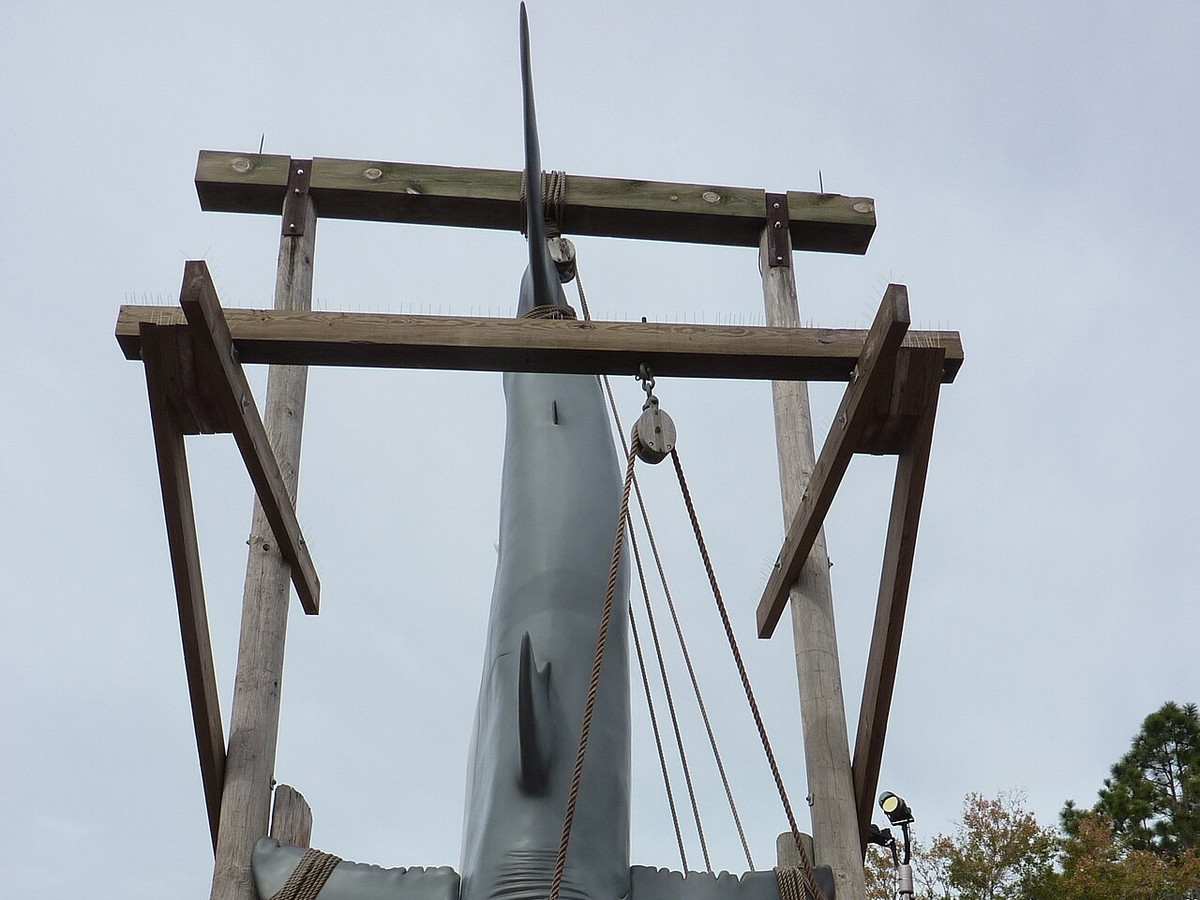
Q: What nickname did the Jaws crew give the mechanical shark?
A: Bruce. Source
Q: Which of Spielberg's associates inspired the mechanical shark's nickname Bruce?
A: Spielberg’s lawyer Bruce Ramer.
Q: Did the Jaws crew use only one mechanical shark model?
A: No. Several models served different shots. Source
Q: What did saltwater do to the mechanical shark props?
A: The mechanisms corroded and malfunctioned. Source
Q: Which techniques did Spielberg use when the mechanical shark malfunctioned?
A: Barrels, point-of-view shots, music, partial views, and actors’ reactions.
Q: Who composed the music for Jaws?
A: John Williams. Source
Q: Which Academy Award did John Williams win for Jaws?
A: Music (Original Score). Source
Q: Which two other Academy Awards did Jaws win?
A: Film Editing and Sound. Source
Q: Was Steven Spielberg nominated for Best Director for Jaws?
A: No. Source
Q: Which two writers are credited with the Jaws screenplay?
A: Peter Benchley and Carl Gottlieb.
Q: Which shark species appears in the live-action cage footage filmed in Australia?
A: Great white sharks.
Q: How did filmmakers make the real sharks in Jaws cage footage appear larger?
A: Used a smaller cage and stunt performer to alter scale.
How Did You Score?
If the dolly zoom, Indianapolis, Orca, Bruce, Martha's Vineyard shallows, shark barrels, and John Williams's Oscar-winning score all came easily, you did not need a bigger quiz.

Ellie Simons creates and edits Random Trivia. She researches trivia using primary and authoritative sources whenever possible and is currently reviewing the site's older trivia library for accuracy, clarity, and playability. Read more on the About page.
Explore more questions in our movies trivia guide.
About this quiz
Site editor: Ellie Simons. Read our Trivia Methodology to learn how questions are researched and updated. Page last updated: . Report an error.