
Lace up for a climb through cloud forests, royal roads, and stonework so precise it still makes engineers stare.
These Inca Empire trivia questions travel across the Andes to explore rulers, daily life, religion, farming, architecture, conquest, and living legacies.
Finding Tawantinsuyu on the Map
Q: What name did the Inca use for their empire?
A: Tawantinsuyu.
Q: What does Tawantinsuyu roughly mean?
A: The Land of the Four Quarters.
Q: What city served as the Inca capital?
A: Cusco.
Q: In which modern country is Cusco located?
A: Peru.
Q: Which mountain range formed the heartland of the Inca Empire?
A: The Andes.
Q: Along which continent's western side did the empire extend?
A: South America.
Q: What ocean lay west of the Inca Empire?
A: The Pacific Ocean.
Q: Which modern countries contained the largest portions of the Inca heartland?
A: Peru, Ecuador, and Bolivia.
Q: Into which two modern countries did the empire extend farthest south?
A: Chile and Argentina.
Q: What high plateau spans parts of Peru and Bolivia?
A: The Altiplano.
Q: Which great lake near the Inca heartland straddles Peru and Bolivia?
A: Lake Titicaca.
Q: What valley northwest of Cusco is dotted with major Inca sites?
A: The Sacred Valley.
Q: What language became the empire's main administrative language?
A: Quechua.
Q: Which northern quarter of Tawantinsuyu included much of present-day Ecuador?
A: Chinchaysuyu.
Q: Which southern quarter was the empire's largest territorial division?
A: Collasuyu.
Origins, Expansion, and Royal Power
Q: Which legendary founder emerged in Inca origin traditions?
A: Manco Cápac.
Q: Who was Manco Cápac's sister-wife in a famous origin story?
A: Mama Ocllo.
Q: Which lake appears in one prominent Inca origin tradition?
A: Lake Titicaca.
Q: What title was commonly used for the Inca emperor?
A: Sapa Inca.
Q: Which ninth ruler transformed Cusco and greatly expanded the empire?
A: Pachacuti.
Q: What name did Pachacuti take that can be interpreted as “world reformer”?
A: Pachacuti Inca Yupanqui.
Q: Which ruler succeeded Pachacuti and continued expansion?
A: Topa Inca Yupanqui.
Q: Which ruler was emperor when a devastating epidemic spread before the Spanish arrival?
A: Huayna Capac.
Q: Which two sons of Huayna Capac fought a civil war?
A: Huáscar and Atahualpa.
Q: Which brother won that civil war shortly before meeting the Spaniards?
A: Atahualpa.
Q: What royal descent group preserved a deceased ruler's estate and memory?
A: A panaca.
Q: What title was given to the Inca emperor's principal wife?
A: Coya.
Q: What did the Inca often require conquered elites to do in return for retaining local authority?
A: Accept Inca rule and provide labor and tribute.
Q: What resettled communities did the state move for labor, security, or cultural integration?
A: Mitmaqkuna, or mitimaes.
Q: In which century did the Inca Empire reach its greatest extent?
A: The 16th century.
Ayllus, Officials, and the Inca Road
Q: What kin-based community formed a basic unit of Andean society?
A: The ayllu.
Q: What labor obligation supported state projects instead of a cash tax?
A: The mit'a.
Q: What knotted-cord device recorded numerical and administrative information?
A: A quipu, or khipu.
Q: What specialists made and interpreted quipus?
A: Quipucamayocs.
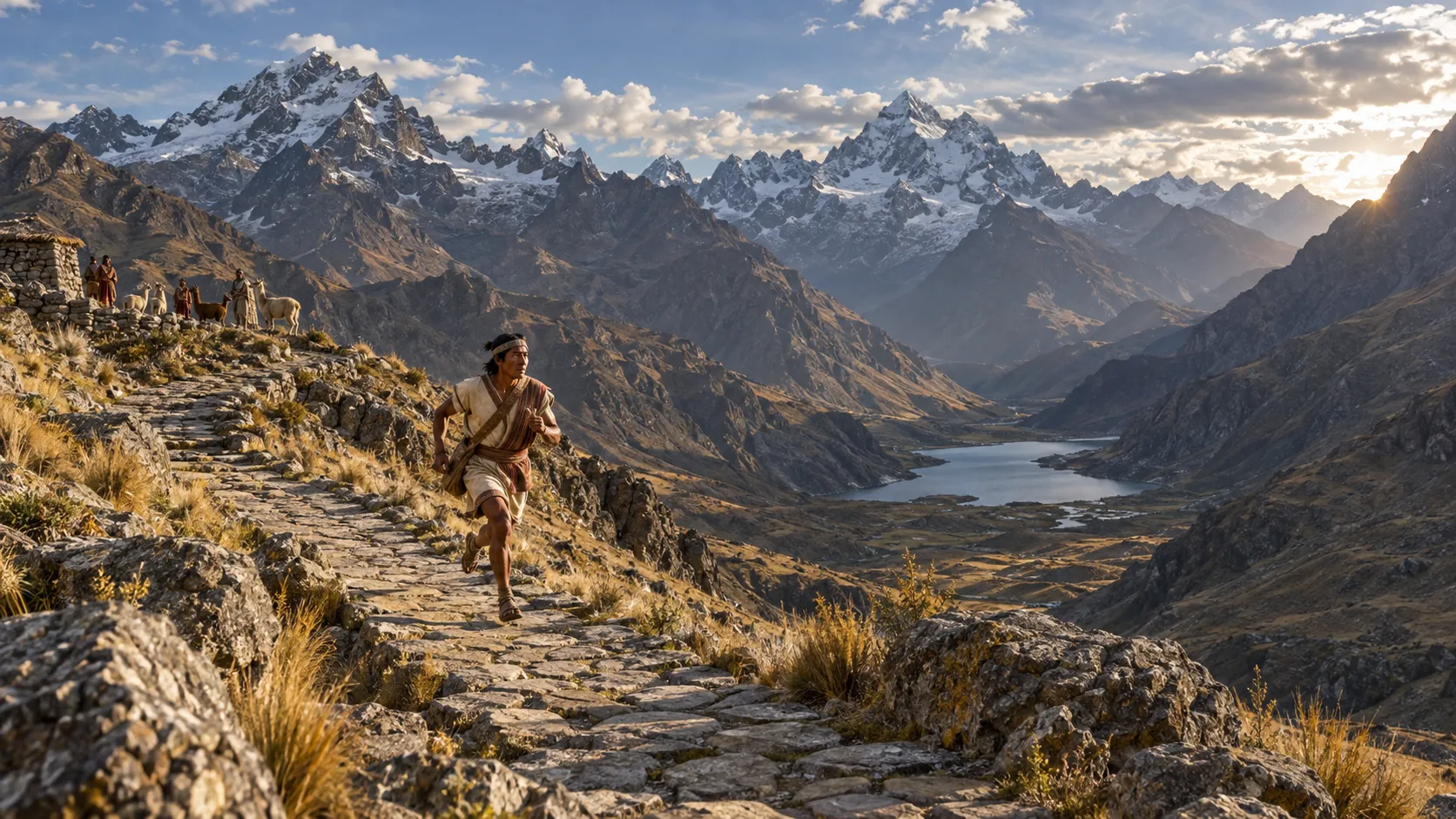
Q: What were the empire's relay runners called?
A: Chasquis.
Q: What vast road network linked the empire?
A: The Qhapaq Ñan.
Q: About how did messages travel quickly over long distances without horses?
A: Chasquis passed them in relays.
Q: What roadside stations offered supplies and lodging?
A: Tambos.
Q: What state storehouses held food, textiles, and equipment?
A: Qollqas, or collcas.
Q: What type of bridge carried roads across steep Andean gorges?
A: Woven suspension bridges.
Q: What plant fiber is traditionally used to renew the Q'eswachaka bridge?
A: Ichu grass.
Q: Did the Inca use a coin-based economy?
A: No, exchange and state labor obligations were central.
Q: What decimal structure helped Inca officials organize households?
A: Groups based on units of ten.
Q: What local leader often supervised a community under Inca administration?
A: A curaca.
Q: Which animal carried goods along steep Andean roads?
A: The llama.
Terraces, Textiles, and Daily Life
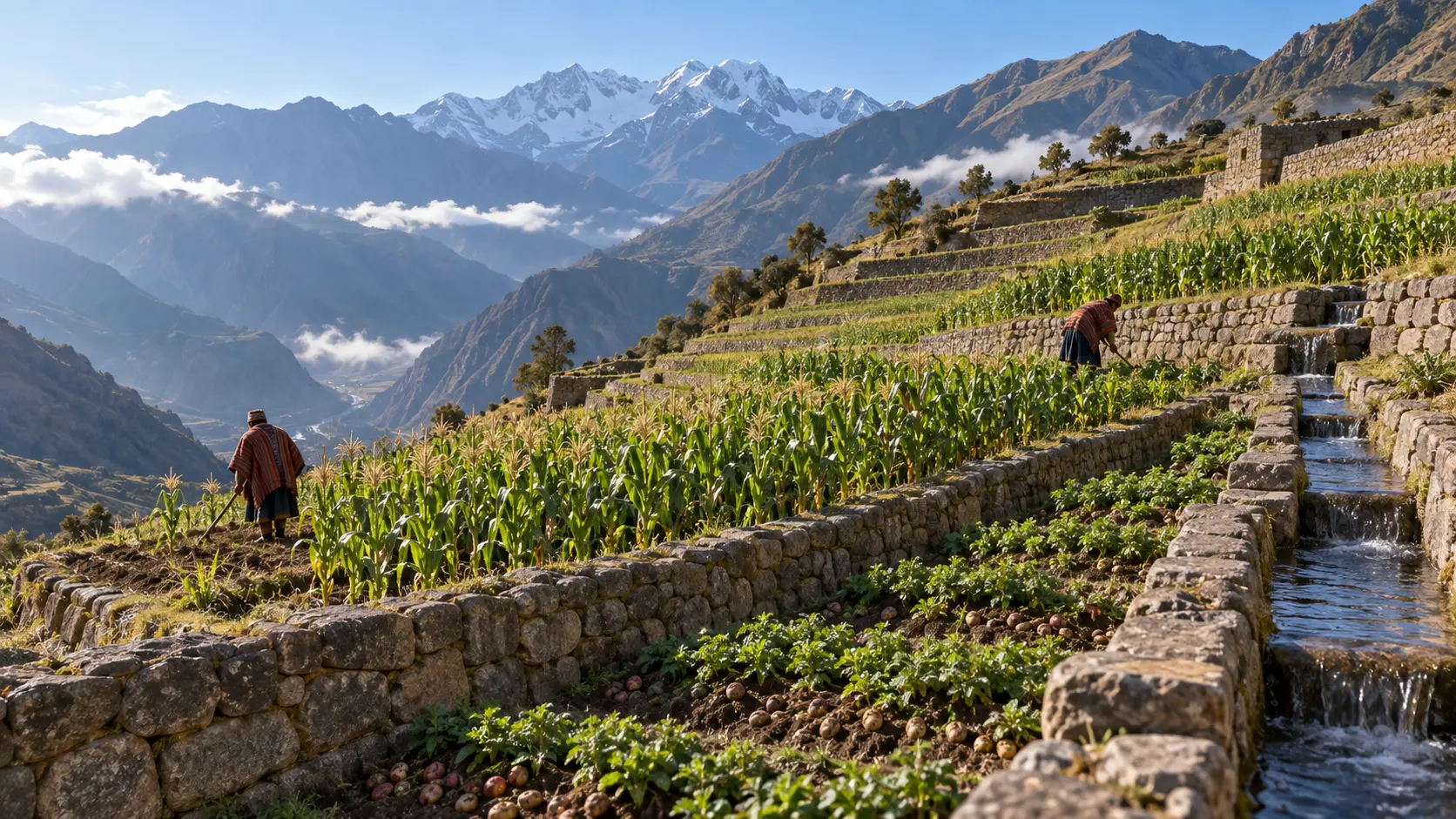
Q: What farming technique created level fields on steep slopes?
A: Terracing.
Q: What staple tuber was cultivated in thousands of Andean varieties?
A: The potato.
Q: What grainlike crop prized for its protein grew well at high elevations?
A: Quinoa.
Q: What crop called maize was important for food and ritual drink?
A: Corn.
Q: What freeze-dried potato product could be stored for years?
A: Chuño.
Q: What fermented drink was commonly made from maize?
A: Chicha.
Q: What small domesticated animal was raised for meat in Andean households?
A: The guinea pig, or cuy.
Q: Which camelid supplied especially fine wool for elite textiles?
A: The vicuña.
Q: Which domesticated camelid was valued for softer fiber rather than heavy loads?
A: The alpaca.
Q: What leaves were chewed or brewed to help with fatigue and high-altitude conditions?
A: Coca leaves.
Q: What technology directed water to fields in dry regions?
A: Irrigation canals.
Q: What raised-field farming system near Lake Titicaca helped manage frost and water?
A: Waru waru.
Q: Which craft produced some of the empire's most valued prestige goods?
A: Textile weaving.
Q: What tunic worn by elite men displayed carefully woven designs?
A: An uncu.
Q: What name is given to the geometric design blocks woven into elite Inca textiles?
A: Tocapu.
Sun Gods, Sacred Places, and Ceremony
Q: Who was the Inca sun god?
A: Inti.
Q: Which creator deity was important in Inca religion?
A: Viracocha.
Q: Which goddess was associated with the moon?
A: Mama Quilla.
Q: What Andean earth mother remains important in Indigenous traditions?
A: Pachamama.
Q: What was a huaca?
A: A sacred place, object, or being.
Q: What was the great Temple of the Sun in Cusco called?
A: Coricancha, or Qorikancha.
Q: Which annual festival honored the sun around the June solstice?
A: Inti Raymi.
Q: What ritual system linked sacred sites around Cusco along imaginary lines?
A: The ceque system.
Q: What did the Inca do with some deceased rulers after mummification?
A: They preserved and consulted them ceremonially.
Q: What name is given to high-altitude state ceremonies that sometimes included human sacrifice?
A: Capacocha.
Q: On which Argentine volcano were three remarkably preserved capacocha burials found?
A: Llullaillaco.
Q: What precious metal was closely associated with the sun?
A: Gold.
Q: What metal was associated with the moon in Inca symbolism?
A: Silver.
Q: Which birds were valued for colorful feathers used in elite objects?
A: Tropical birds such as macaws.
Q: What natural feature called Apus was revered as a powerful spirit?
A: A mountain.
Stonework, Strongholds, and Machu Picchu
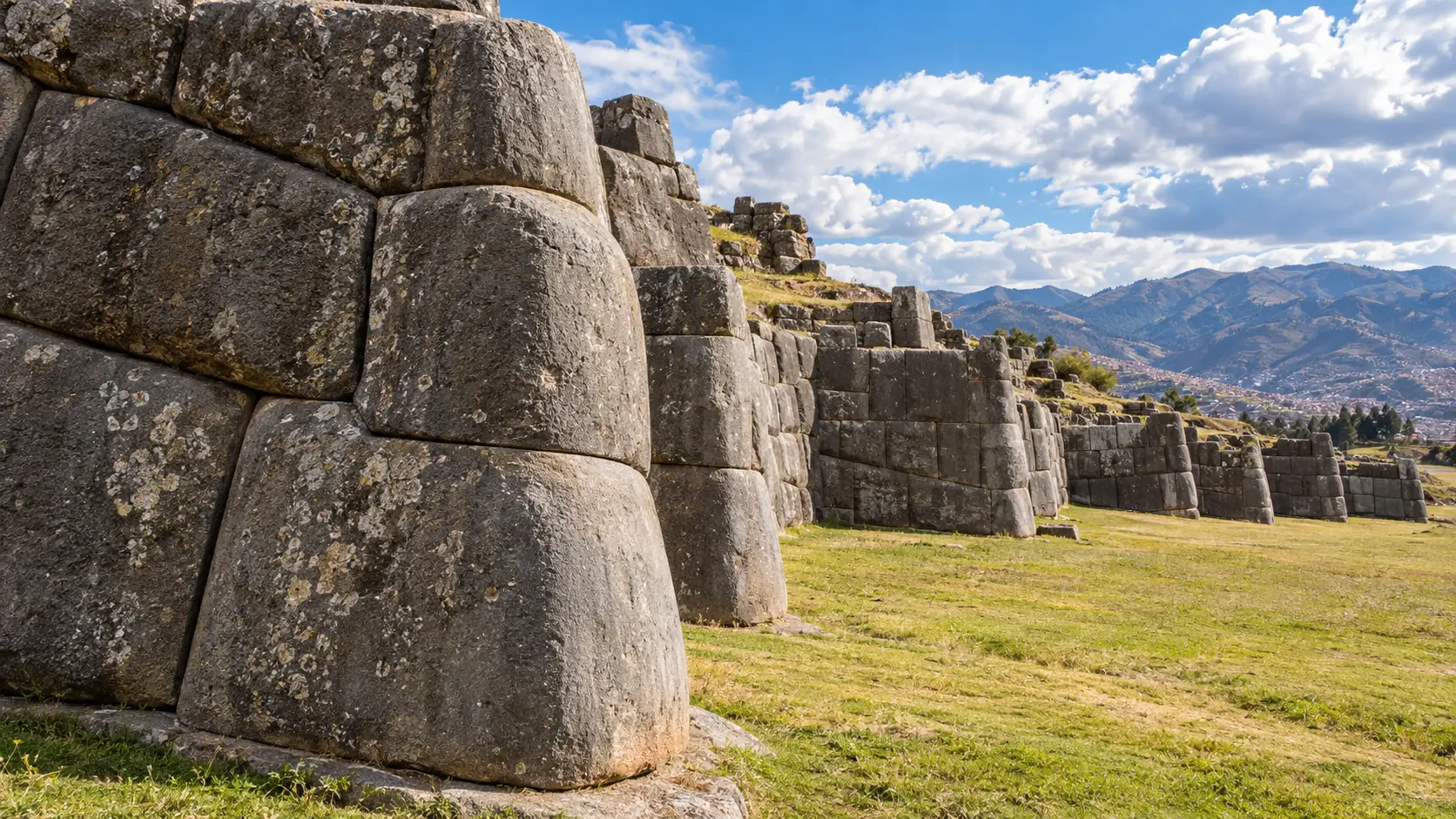
Q: What construction style fits dressed stones together without mortar?
A: Ashlar masonry.
Q: What doorway shape helped Inca buildings withstand earthquakes?
A: A trapezoid.
Q: What massive ceremonial complex overlooks Cusco?
A: Sacsayhuamán.
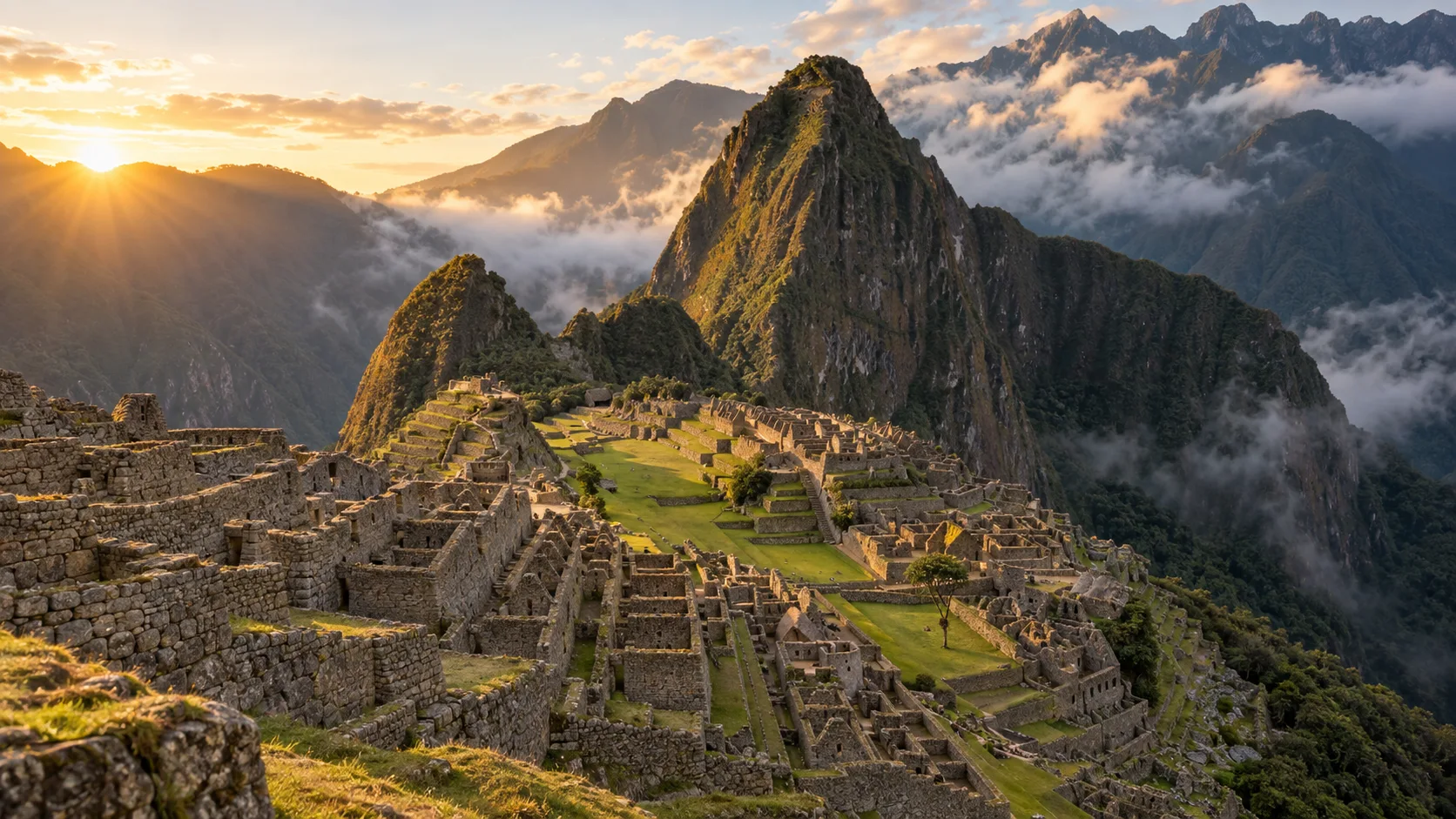
Q: Which Inca ruler is widely associated with building Machu Picchu?
A: Pachacuti.
Q: In what mountain range is Machu Picchu located?
A: The Andes.
Q: Which American explorer brought international attention to Machu Picchu in 1911?
A: Hiram Bingham III.
Q: Why is it misleading to say Hiram Bingham “discovered” Machu Picchu?
A: Local people already knew the site.
Q: What carved stone at Machu Picchu is known as the Intihuatana?
A: A ritual stone associated with the sun.
Q: Which Sacred Valley town preserves major terraces and a monumental Inca complex?
A: Ollantaytambo.
Q: Which site near Cusco has circular terraces often linked to agricultural experimentation?
A: Moray.
Q: Which Sacred Valley site combines hillside terraces with an Inca settlement above?
A: Pisac.
Q: What site northwest of Cusco features a carved rock and water channels?
A: Qenqo.
Q: What engineering feature carried water through many Inca settlements?
A: Stone-lined canals and fountains.
Q: What material commonly roofed Inca buildings but rarely survives archaeologically?
A: Thatch.
Q: What modern trail follows part of the Inca road system to Machu Picchu?
A: The Inca Trail.
Conquest, Civil War, and Resistance
Q: Which Spanish conquistador led the expedition that captured Atahualpa?
A: Francisco Pizarro.
Q: In what year was Atahualpa captured?
A: 1532.
Q: In which Andean city did the Spaniards seize Atahualpa?
A: Cajamarca.
Q: What was Atahualpa promised in exchange for filling rooms with precious metals?
A: His freedom.
Q: Was Atahualpa released after the ransom was collected?
A: No, he was executed.
Q: In what year did Spanish forces enter Cusco?
A: 1533.
Q: Which epidemic disease weakened the empire before Pizarro arrived?
A: Smallpox.
Q: What recent conflict had divided the empire when the Spaniards arrived?
A: The civil war between Huáscar and Atahualpa.
Q: Which Inca ruler installed by the Spanish later led a major rebellion?
A: Manco Inca Yupanqui.
Q: What city did Manco Inca's forces besiege in 1536?
A: Cusco.
Q: To what remote region did the resistant Inca state retreat?
A: Vilcabamba.
Q: What is the common name for the resistant Inca state based at Vilcabamba?
A: The Neo-Inca State.
Q: Who was the final ruler of the Neo-Inca State?
A: Túpac Amaru.
Q: In what year was Túpac Amaru executed?
A: 1572.
Q: Besides weapons, what gave the Spaniards a major strategic advantage?
A: Alliances with Indigenous rivals of the Inca.
Living Languages and Lasting Legacies
Q: Which language family spoken by millions today is strongly associated with the Inca?
A: Quechua.
Q: What common English word for a pack animal comes from Quechua?
A: Llama.
Q: What English word for a jerky-like food comes through Spanish from Quechua ch'arki?
A: Jerky.
Q: What UNESCO World Heritage designation recognizes the Inca road system?
A: Qhapaq Ñan, Andean Road System.
Q: Which Inca city became a UNESCO World Heritage Site in 1983?
A: Cusco.
Q: Which mountain sanctuary also became a UNESCO World Heritage Site in 1983?
A: Machu Picchu.
Q: What annual celebration in modern Cusco re-creates an Inca festival of the sun?
A: Inti Raymi.
Q: Which form of Inca recordkeeping remains only partly understood by scholars?
A: Quipu records.
Q: What traditional Andean weaving tool is still used to make patterned textiles?
A: A backstrap loom.
Q: Which Spanish colonial church was built over part of Cusco's Coricancha?
A: The Convent of Santo Domingo.
Q: What Inca agricultural technique still shapes hillsides around Cusco?
A: Terrace farming.
Q: Which bridge is rebuilt annually by Quechua communities using traditional techniques?
A: Q'eswachaka.
Q: What title did the 18th-century rebel José Gabriel Condorcanqui adopt from the last Inca ruler?
A: Túpac Amaru II.
Q: What Peruvian currency shares its Spanish name with the sun?
A: The sol.
Q: What 20th-century movement in Peru championed Indigenous subjects and identity in art and literature?
A: Indigenismo.
Your Andean Expedition Is Complete
If you crossed every road, terrace, and royal courtyard, your score deserves a view from the mountaintop. Keep exploring remarkable eras with our famous people trivia and decades trivia.

Ellie Ewert is the founder and author of RandomTrivia.co, blending her passion for research with years of experience in content creation to deliver accurate, engaging, and well-sourced trivia. Dedicated to providing readers with trustworthy and entertaining facts, she applies meticulous fact-checking and SEO expertise to ensure every article meets the highest standards. Read more about our high standards in our Editorial Guidelines.