
Step into the wonderfully weird world of fungi, where mushrooms pop up overnight and vast networks stay hidden underfoot.
These questions wander through spores, forests, foods, medicines, famous species, and a few genuinely strange fungal talents.
Welcome to Kingdom Fungi
Q: What is the singular form of the word fungi?
A: Fungus.
Q: Are fungi plants?
A: No, they belong to their own kingdom.
Q: Are fungi more closely related to animals or plants?
A: Animals.
Q: What tough material is found in most fungal cell walls?
A: Chitin.
Q: What green pigment used in photosynthesis do fungi lack?
A: Chlorophyll.
Q: How do fungi obtain nutrients?
A: They digest material externally and absorb the nutrients.
Q: What carbohydrate do fungi commonly store as an energy reserve?
A: Glycogen.
Q: What is the scientific study of fungi called?
A: Mycology.
Q: What sterol is an important component of many fungal cell membranes?
A: Ergosterol.
Q: Is every fungus a mushroom?
A: No.
Q: What is a mushroom in relation to a fungus?
A: A spore-producing fruiting body.
Q: What single-celled fungi are important in baking and brewing?
A: Yeasts.
Q: What familiar fuzzy growths are made by many microscopic fungi?
A: Molds.
Q: What fungal group contains most familiar gilled mushrooms, puffballs, and bracket fungi?
A: Basidiomycota.
Q: What fungal group includes morels, truffles, and many yeasts?
A: Ascomycota.
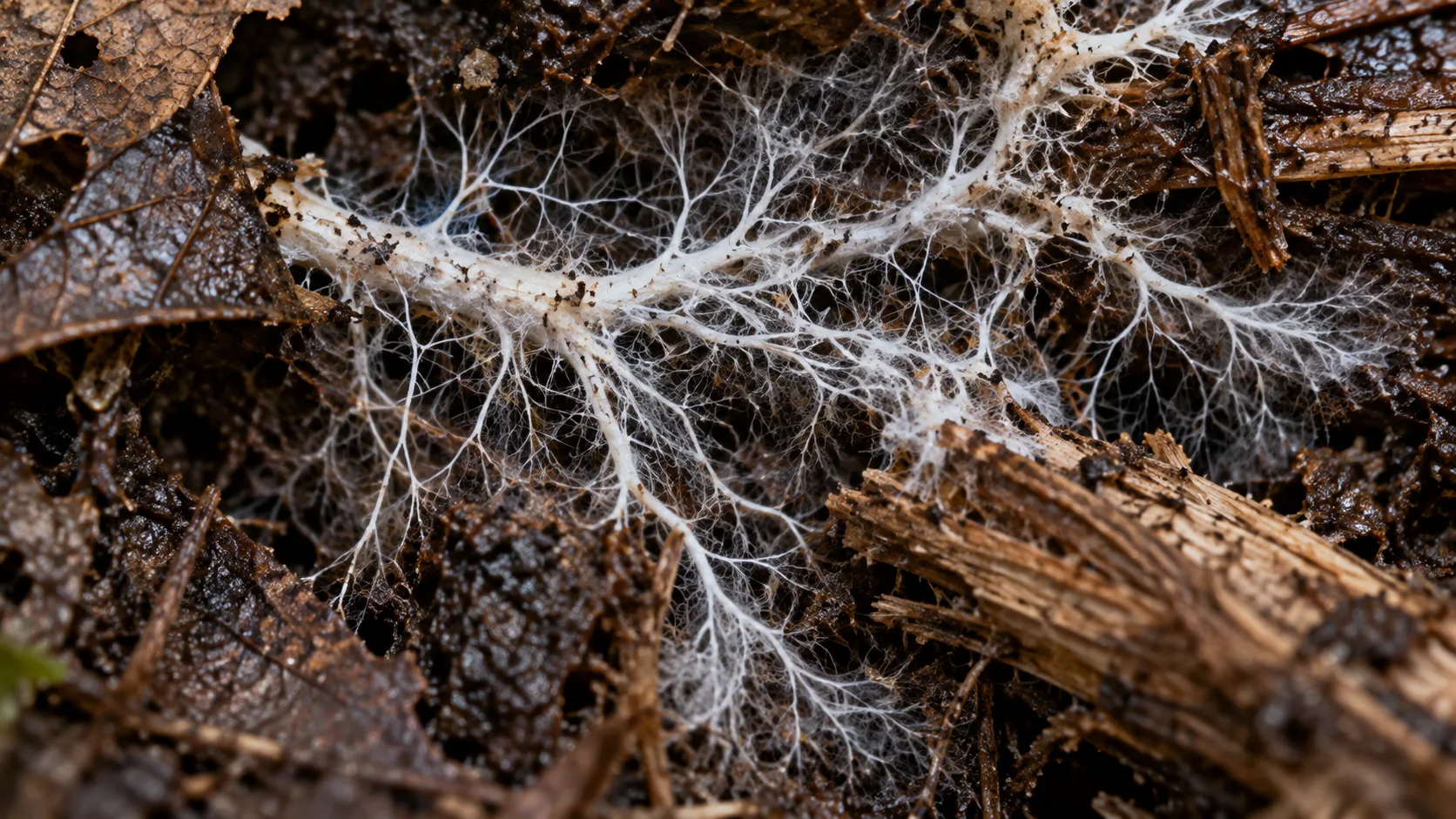
Hyphae, Mycelium, and Spores
Q: What threadlike structures make up the body of most fungi?
A: Hyphae.
Q: What is a network of fungal hyphae called?
A: Mycelium.
Q: What tiny reproductive units allow fungi to disperse?
A: Spores.
Q: Are fungal spores the same as plant seeds?
A: No.
Q: What part of a typical mushroom supports the cap?
A: The stalk, or stipe.
Q: What thin plates beneath many mushroom caps produce spores?
A: Gills.
Q: What sponge-like structures replace gills beneath boletes?
A: Pores.
Q: What cup-shaped structure may remain at the base of some mushrooms?
A: A volva.
Q: What skirt-like tissue may encircle a mushroom stalk?
A: A ring, or annulus.
Q: What protective membrane encloses the young fruiting body in some mushrooms?
A: A universal veil.
Q: What laboratory method reveals a mushroom's spore color?
A: A spore print.
Q: What does a fungal spore do when conditions are suitable?
A: It germinates.
Q: What asexual process allows many yeasts to reproduce?
A: Budding.
Q: Can fungi reproduce both sexually and asexually?
A: Yes.
Q: What is the main job of a mushroom's fruiting body?
A: Producing and dispersing spores.
Forest Partners and Recyclers
Q: What do decomposer fungi break down?
A: Dead organic matter.
Q: Why are fungal decomposers essential to ecosystems?
A: They recycle nutrients.
Q: What partnership joins a fungus with plant roots?
A: A mycorrhiza.
Q: What do mycorrhizal fungi commonly receive from plants?
A: Sugars and other carbon compounds.
Q: What do plants commonly gain from mycorrhizal fungi?
A: Improved access to water and mineral nutrients.
Q: What partnership consists mainly of a fungus plus an alga or cyanobacterium?
A: A lichen.
Q: What does the photosynthetic partner provide in a lichen?
A: Sugars.
Q: What does the fungal partner provide in a lichen?
A: Structure, protection, and access to moisture and minerals.
Q: Can lichens grow on bare rock?
A: Yes.
Q: Why are some lichens used as air-quality indicators?
A: They are sensitive to air pollution.
Q: What is a fungus that feeds on dead material called?
A: A saprotroph.
Q: What is a fungus that draws nutrients from a living host called?
A: A parasite.
Q: What is an endophytic fungus?
A: A fungus that lives within plant tissues without necessarily causing disease.
Q: Which durable plant material can many white-rot fungi break down?
A: Lignin.
Q: What visible lines and colors can fungal competition create in wood?
A: Spalting.
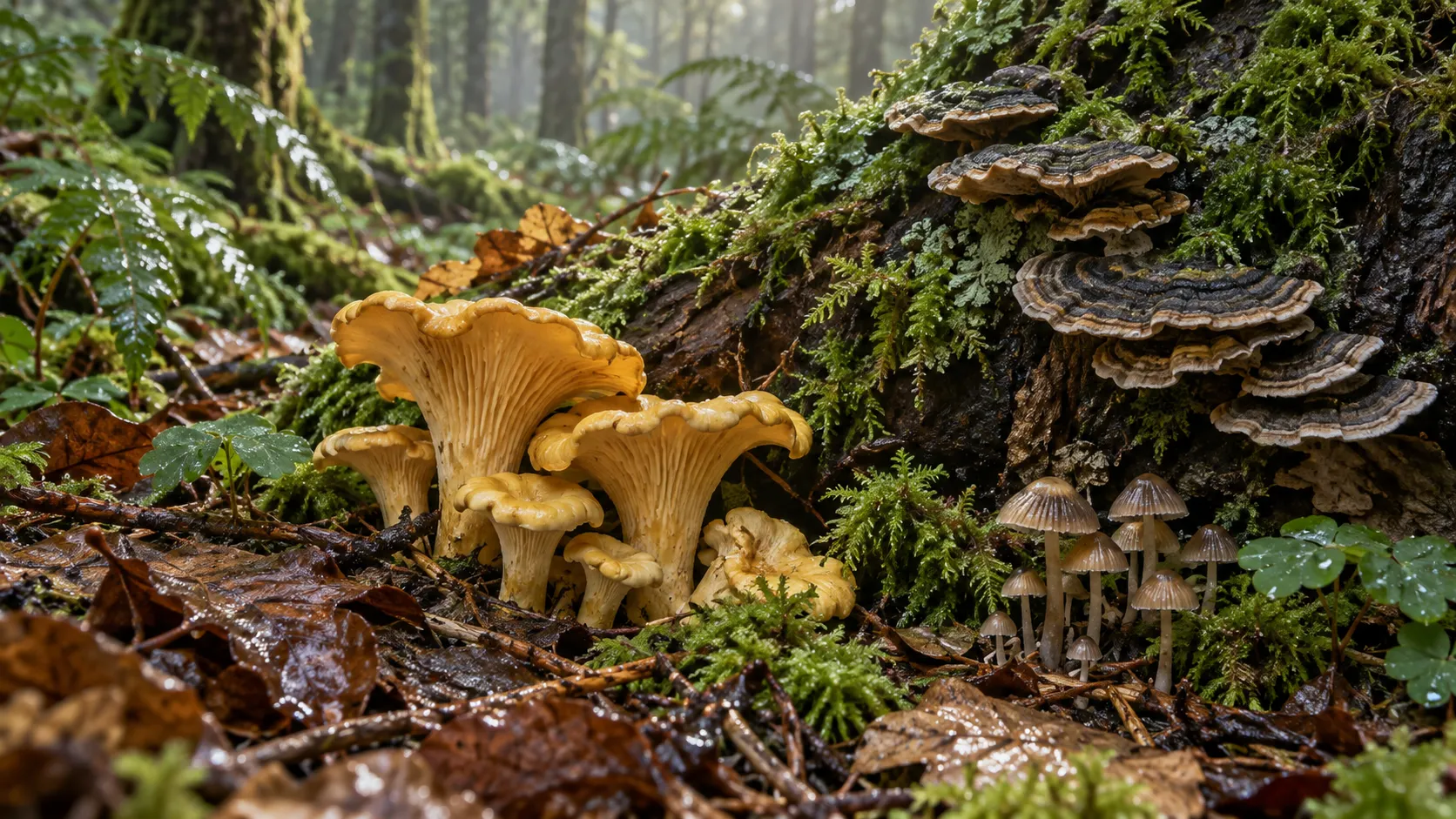
Remarkable Wild Mushrooms
Q: What mushroom is famous for its red cap with white spots?
A: Fly agaric.
Q: What deadly Amanita species is responsible for many fatal mushroom poisonings worldwide?
A: The death cap.
Q: What prized spring mushroom has a honeycombed cap?
A: A morel.
Q: What underground fungus is located with trained dogs or pigs?
A: A truffle.
Q: What mushroom releases spores in a cloud when squeezed or struck?
A: A puffball.
Q: What fungus gets its name from its foul-smelling spore slime?
A: A stinkhorn.
Q: What shelf-like fungi commonly grow from tree trunks?
A: Bracket fungi.
Q: What mushroom has a shaggy white mane that dissolves into black liquid?
A: Shaggy ink cap.
Q: What bright orange mushroom resembles a cluster of trumpets?
A: A chanterelle.
Q: What toothed mushroom has dangling white spines and a mane-like appearance?
A: Lion's mane.
Q: What bracket fungus has colorful concentric bands resembling a bird's tail?
A: Turkey tail.
Q: What bioluminescent mushroom is named for a carved Halloween lantern?
A: Jack-o'-lantern mushroom.
Q: What common woodland mushroom has cap scales and a movable ring on a tall stalk?
A: Parasol mushroom.
Q: What cup fungus is named for its resemblance to a human ear?
A: Wood ear.
Q: What mushroom genus includes many waxy, brightly colored grassland species?
A: Hygrocybe.
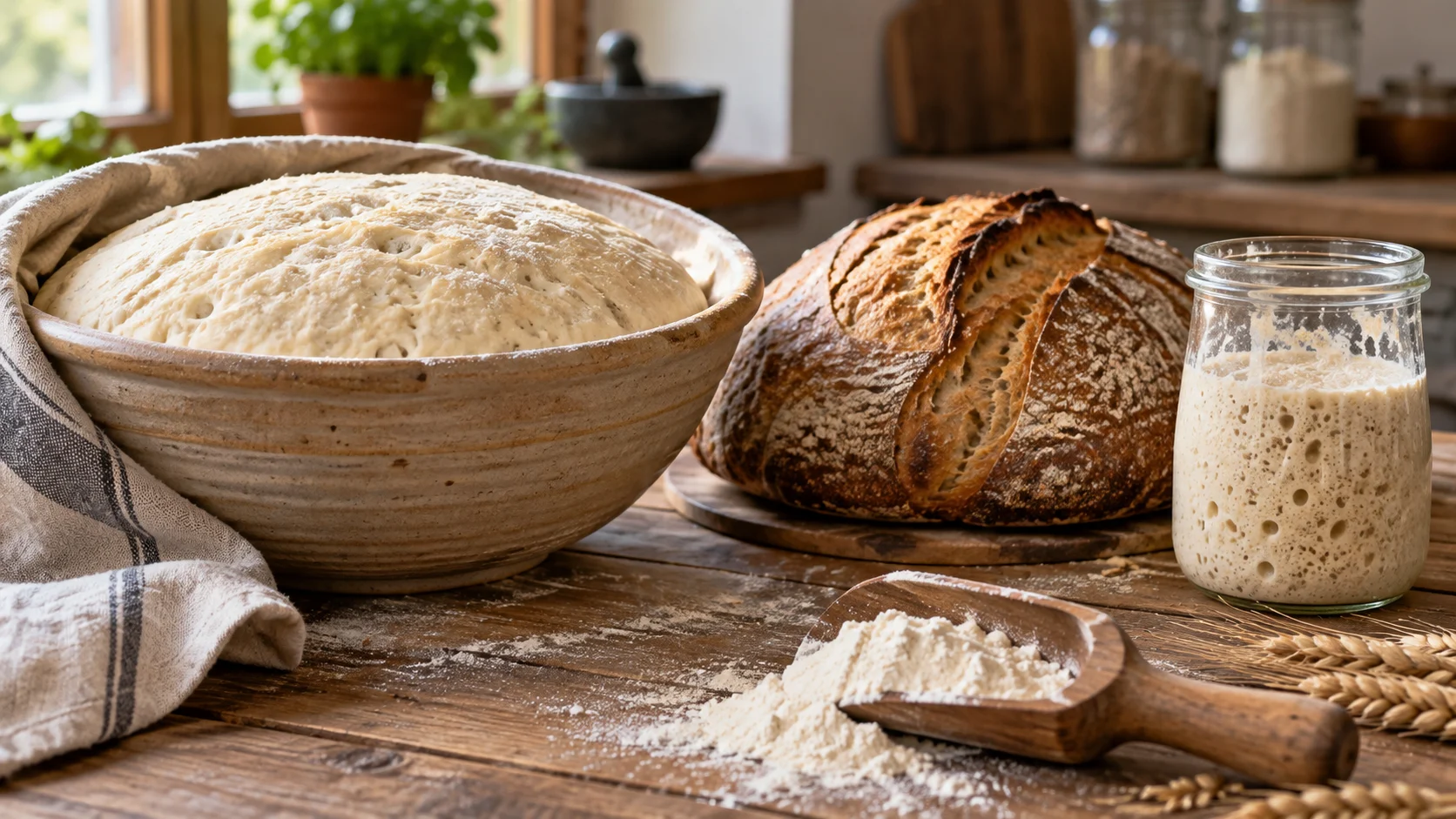
Fungi on the Menu
Q: What species is sold as button, cremini, and portobello mushrooms?
A: Agaricus bisporus.
Q: What mushroom is named for its shell-like shape?
A: Oyster mushroom.
Q: What East Asian mushroom commonly sold dried has a brown umbrella-shaped cap?
A: Shiitake.
Q: What long, slender cultivated mushroom is called enoki?
A: Flammulina filiformis.
Q: What Japanese name is commonly used for the hen-of-the-woods mushroom?
A: Maitake.
Q: What fungus ripens blue cheeses by creating blue-green veins?
A: Penicillium roqueforti.
Q: What fungus helps give Camembert and Brie their white rinds?
A: Penicillium camemberti.
Q: What mold is used to ferment soybeans into tempeh?
A: Rhizopus oligosporus.
Q: What cultured mold called koji is central to making miso, soy sauce, and sake?
A: Aspergillus oryzae.
Q: What gas makes bread dough rise during yeast fermentation?
A: Carbon dioxide.
Q: What alcohol does yeast produce during brewing and winemaking?
A: Ethanol.
Q: What yeast species is widely used for bread, beer, and wine?
A: Saccharomyces cerevisiae.
Q: What savory taste are many mushrooms known for?
A: Umami.
Q: What vitamin can increase in mushrooms exposed to ultraviolet light?
A: Vitamin D.
Q: Should an unknown wild mushroom ever be tasted to identify it?
A: No.
Medicine, Science, and Useful Fungi
Q: What antibiotic was discovered after a Penicillium mold contaminated a bacterial culture?
A: Penicillin.
Q: Who famously observed the antibacterial effect that led to penicillin?
A: Alexander Fleming.
Q: What cholesterol-lowering drug class was first developed from fungal compounds?
A: Statins.
Q: What transplant medicine originally derived from a fungus suppresses immune rejection?
A: Cyclosporine.
Q: What ergot-derived medicine is used to help control severe bleeding after childbirth?
A: Ergometrine.
Q: What bread mold became a classic model for linking genes to enzymes?
A: Neurospora crassa.
Q: What fungal process converts sugars without oxygen into alcohol and carbon dioxide?
A: Fermentation.
Q: What is mycoremediation?
A: Using fungi to help break down or remove pollutants.
Q: What fungal material is being developed into packaging and leather-like products?
A: Mycelium.
Q: What enzyme-producing ability makes fungi valuable in food and biotechnology?
A: Breaking down complex organic materials.
Q: What Japanese savory seasoning is produced with koji mold?
A: Miso.
Q: What fermented soybean cake depends on a Rhizopus fungus?
A: Tempeh.
Q: What filamentous fungus is used to make mycoprotein for meat substitutes?
A: Fusarium venenatum.
Q: What term describes fungal enzymes digesting substances outside the fungal body?
A: Extracellular digestion.
Q: What collection preserves dried fungi for scientific study?
A: A fungarium.
Fungal Diseases and Defenses
Q: What fungus causes athlete's foot?
A: A dermatophyte fungus.
Q: What common yeast genus can cause thrush?
A: Candida.
Q: What fungal disease has killed millions of North American bats?
A: White-nose syndrome.
Q: What fungus causes white-nose syndrome in bats?
A: Pseudogymnoascus destructans.
Q: What fungal disease devastated American chestnut trees?
A: Chestnut blight.
Q: What fungal disease caused the Irish potato crop failures of the 1840s?
A: Late blight.
Q: Is the organism that causes potato late blight a true fungus?
A: No, it is an oomycete.
Q: What plant disease group produces orange or brown pustules on leaves and stems?
A: Rusts.
Q: What fungal plant diseases often replace grain kernels with dark spore masses?
A: Smuts.
Q: What toxic compounds can some molds produce in food?
A: Mycotoxins.
Q: What potent mycotoxin is associated with some Aspergillus molds?
A: Aflatoxin.
Q: What grain-infecting fungus can produce ergot alkaloids?
A: Claviceps purpurea.
Q: What does antifungal medicine target?
A: Fungal infections.
Q: Why can fungal infections be challenging to treat?
A: Fungal cells share many features with human cells.
Q: What simple practice helps prevent athlete's foot?
A: Keeping feet clean and dry.
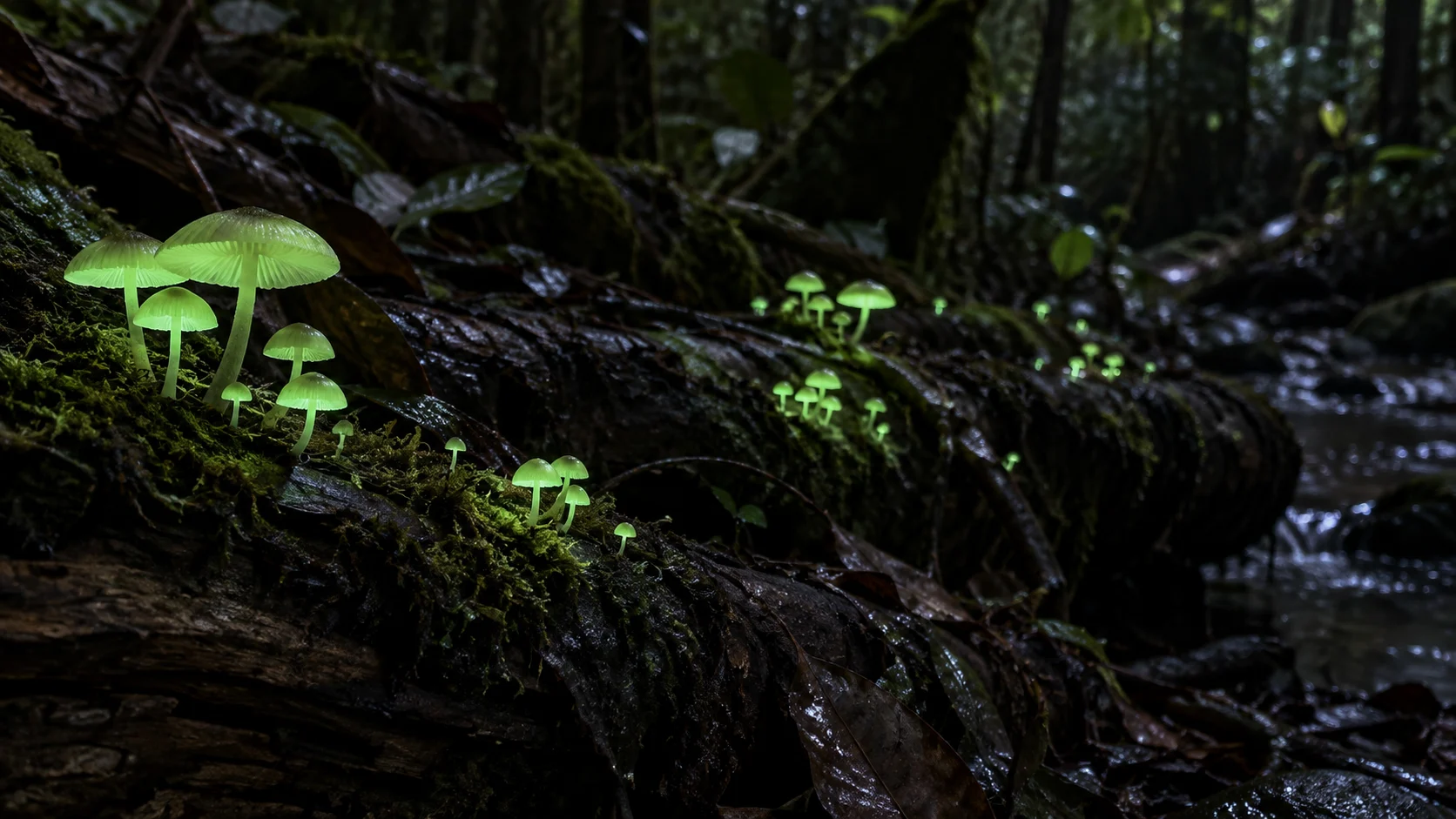
Giants, Glows, and Fungal Curiosities
Q: What honey fungus in Oregon is among the largest known organisms by area?
A: Armillaria ostoyae.
Q: In which national forest is Oregon's enormous Armillaria found?
A: Malheur National Forest.
Q: What name is given to light produced by living fungi?
A: Bioluminescence.
Q: What nickname describes bioluminescent fungal glow in decaying wood?
A: Foxfire.
Q: What are fairy rings?
A: Circles or arcs of mushrooms produced by outward-growing mycelium.
Q: Do fairy rings require anything supernatural?
A: No.
Q: What fossil organism formed tall trunk-like structures and is often interpreted as fungal?
A: Prototaxites.
Q: What insect-controlling fungi can grow from infected ants?
A: Ophiocordyceps fungi.
Q: What does an Ophiocordyceps fungus manipulate in some infected ants?
A: Their behavior.
Q: What fungus famously launches its spores with exceptional acceleration?
A: Pilobolus.
Q: On what material does Pilobolus commonly grow?
A: Herbivore dung.
Q: What creates the dusty cloud when a mature puffball is compressed?
A: Millions of spores.
Q: Why can mushrooms appear soon after rain?
A: Moist conditions trigger rapid fruiting-body expansion in many species.
Q: Can mushroom appearance alone always prove a species is safe to eat?
A: No.
Q: Who should confirm a wild mushroom's identity before anyone considers eating it?
A: A qualified local expert.
Your Knowledge Just Mushroomed
If you conquered all 120, you are officially the champignon of this quiz. Grow your trivia streak with our famous people trivia and decades trivia.

Ellie Ewert is the founder and author of RandomTrivia.co, blending her passion for research with years of experience in content creation to deliver accurate, engaging, and well-sourced trivia. Dedicated to providing readers with trustworthy and entertaining facts, she applies meticulous fact-checking and SEO expertise to ensure every article meets the highest standards. Read more about our high standards in our Editorial Guidelines.