
I love a creature story that starts with a blurry photograph and ends with someone insisting the batteries mysteriously died. These 120 cryptid questions cover famous legends, regional oddities, alleged evidence, and the very ordinary explanations that often follow.
Bigfoot, Mothman & American Cryptids
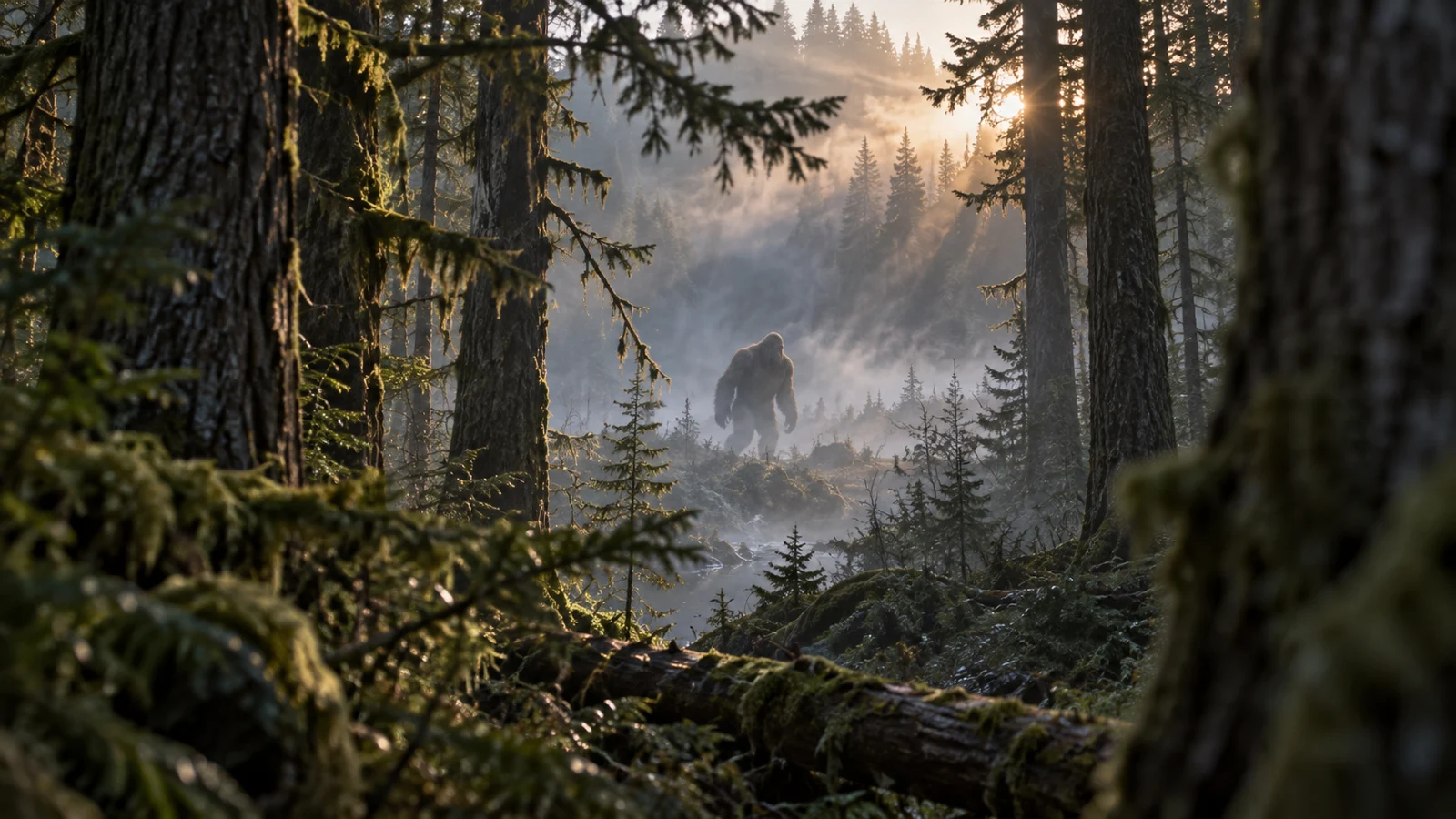
Q: What cryptid is said to roam the forests of the Pacific Northwest?
A: Bigfoot, also called Sasquatch, is usually described as a large, hair-covered, humanlike creature.
Q: Which Indigenous-language term helped inspire the English name Sasquatch?
A: The name is generally traced to sásq’ets, a Halkomelem word from the Pacific Northwest.
Q: What famous 1967 film claims to show Bigfoot walking beside a California creek?
A: The Patterson-Gimlin film, recorded at Bluff Creek, remains the best-known piece of Bigfoot footage.
Q: Which two men recorded the Patterson-Gimlin film?
A: Roger Patterson and Bob Gimlin filmed the subject while traveling on horseback.
Q: In which state was the Patterson-Gimlin film made?
A: California, in the remote Bluff Creek area of Del Norte County.
Q: What nickname is commonly given to the figure in the Patterson-Gimlin film?
A: Patty, a reference to filmmaker Roger Patterson.
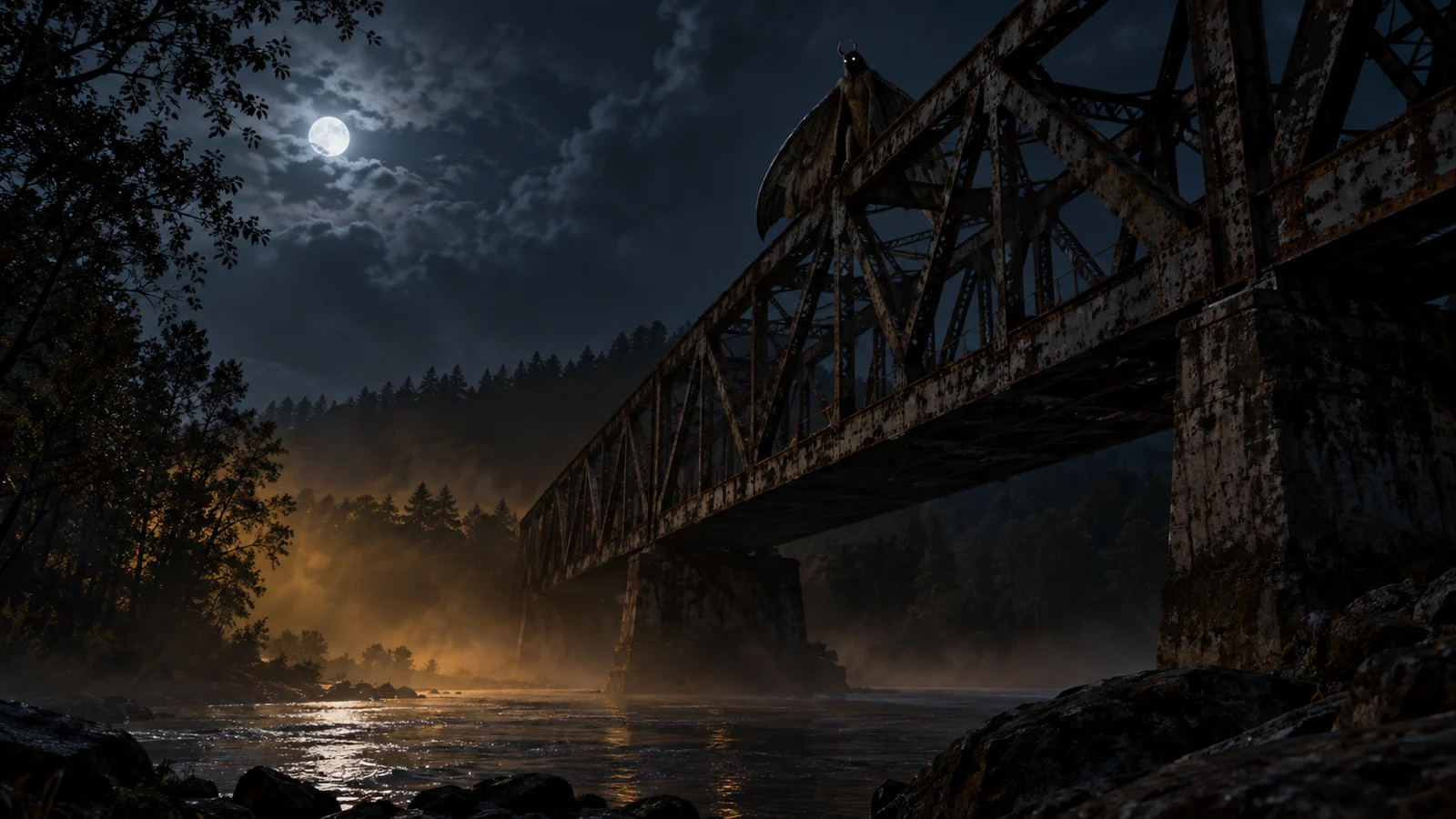
Q: Which cryptid allegedly terrorized Point Pleasant in 1966 and 1967?
A: Mothman, a winged figure often described with glowing red eyes.
Q: In which state is Point Pleasant located?
A: West Virginia, near the meeting of the Ohio and Kanawha rivers.
Q: What bridge disaster became linked to the Mothman legend?
A: The Silver Bridge collapse of December 15, 1967, which killed 46 people.
Q: Which annual event celebrates Mothman in Point Pleasant?
A: The Mothman Festival draws visitors for costumes, speakers, vendors, and local history.
Q: What New Jersey cryptid is associated with the Pine Barrens?
A: The Jersey Devil, traditionally described as a strange winged animal with hooves.
Q: Which family is central to the Jersey Devil origin legend?
A: The Leeds family, especially a figure remembered in folklore as Mother Leeds.
Q: What name was reportedly given to a winged creature seen near Flatwoods in 1952?
A: The Flatwoods Monster, also called the Braxton County Monster.
Q: In which state did the Flatwoods Monster story begin?
A: West Virginia, after witnesses investigated a bright object in the sky.
Q: What owl has been suggested as an explanation for the Flatwoods Monster?
A: A barn owl, whose face and spread wings may look startling in poor light.
Q: Which Wisconsin cryptid takes its name from a road near Elkhorn?
A: The Beast of Bray Road, described in reports as a wolf-like, upright creature.
Q: What Maryland cryptid is said to resemble a human-goat hybrid?
A: The Goatman, a legend told in several places around Prince George’s County.
Q: Which Louisiana swamp monster is associated with Honey Island?
A: The Honey Island Swamp Monster, often described as a hairy humanoid.
Q: What cryptid name is used for a giant bird reported in parts of North America?
A: Thunderbird, although the cryptid stories should not be confused with distinct Indigenous sacred traditions.
Q: Which Illinois town became famous for reports of a three-legged creature in 1973?
A: Enfield, home of the story called the Enfield Horror.
Q: What winged humanoid was reported in Chicago beginning prominently in 2017?
A: The Chicago Phantom or Chicago Mothman, names applied to a cluster of anecdotal reports.
Q: Which desert cryptid is associated with the town of Loveland, Ohio?
A: The Loveland Frog, a human-sized frog-like figure in local legend.
Q: What creature is the subject of alleged sightings around Dover, Massachusetts, in 1977?
A: The Dover Demon, described as a pale, long-fingered creature with a large head.
Q: Which cryptid is said to live around Pope Lick Creek near Louisville?
A: The Pope Lick Monster, a goat-like humanoid tied to a dangerous railroad trestle legend.
Q: What safety issue makes the Pope Lick legend especially risky?
A: People trespass on an active, narrow railroad trestle where trains cannot be safely avoided.
Q: Which Arizona legend describes a red camel carrying a skeletal rider?
A: The Red Ghost, a nineteenth-century frontier tale probably inspired by an escaped camel.
Q: What giant octopus-like carcass washed ashore in Florida in 1896?
A: The St. Augustine Monster, later identified through tissue analysis as whale material.
Q: Which cryptid is named for a small Arkansas town near Boggy Creek?
A: The Fouke Monster, a hairy humanoid legend associated with the town of Fouke.
Q: Which Arkansas cryptid inspired the 1972 movie The Legend of Boggy Creek?
A: The Fouke Monster, named for the small town near alleged sightings.
Q: What Oklahoma cryptid is described as an octopus living in freshwater lakes?
A: The Oklahoma Octopus, a modern legend despite no known freshwater octopus species living there.
Lake Monsters & Cryptids Around the World
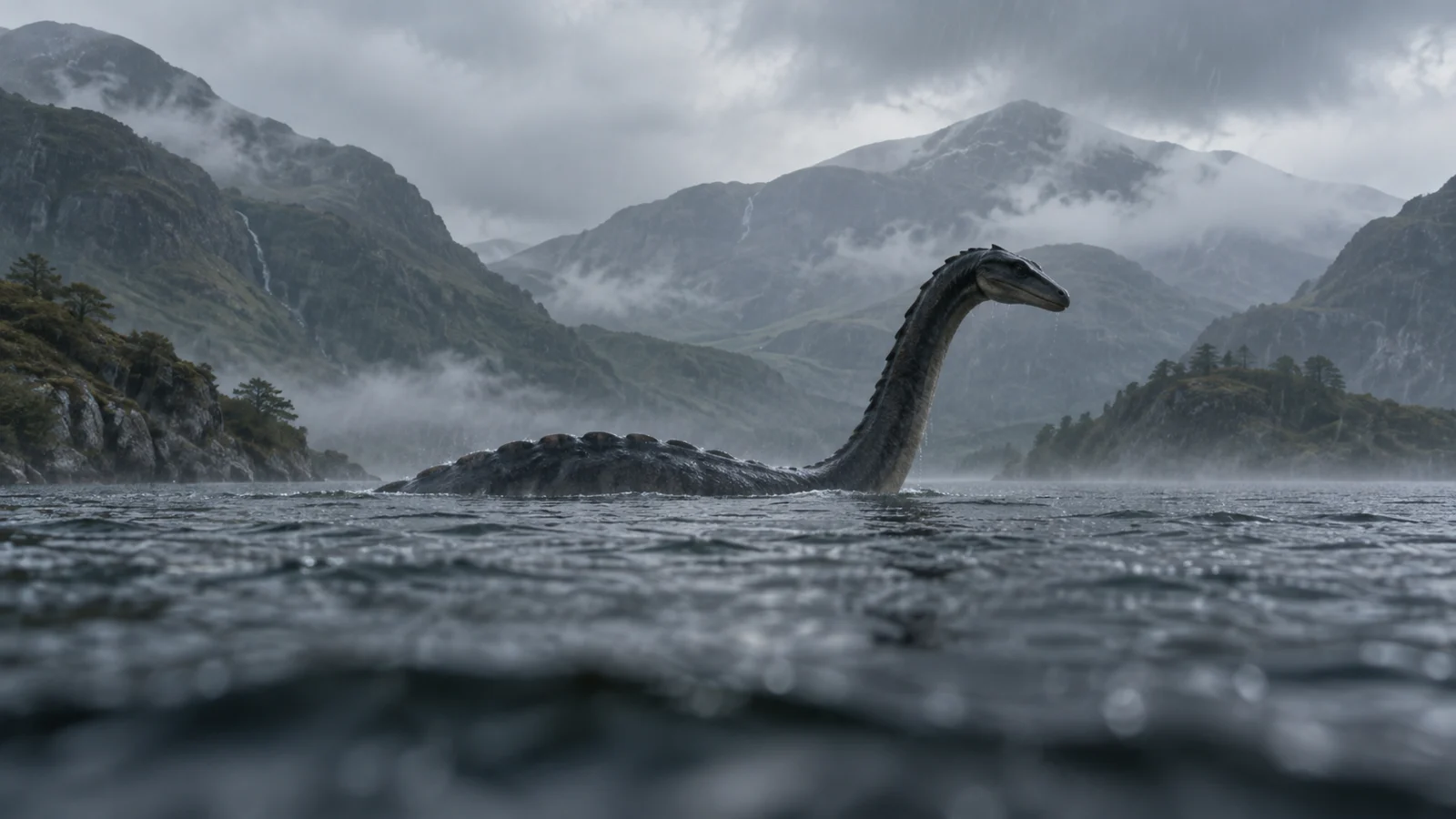
Q: Which Scottish lake is home to the world’s most famous lake monster?
A: Loch Ness, a deep freshwater loch in the Scottish Highlands.
Q: What affectionate nickname is used for the Loch Ness Monster?
A: Nessie, a nickname that turned the creature into a global tourism icon.
Q: What 1934 image became known as the Surgeon’s Photograph?
A: A supposed picture of Nessie that was later exposed as a staged hoax.
Q: Who publicly helped reveal the Surgeon’s Photograph hoax?
A: Christian Spurling described building a small model for the deception.
Q: What natural phenomenon can create monster-like wakes on Loch Ness?
A: Boat wakes, waves, floating logs, and swimming animals can look unusual at a distance.
Q: Which Canadian lake monster is associated with Okanagan Lake?
A: Ogopogo, traditionally called N’ha-a-itk in Syilx cultural contexts.
Q: In which province is Okanagan Lake located?
A: British Columbia, Canada.
Q: What lake monster is said to inhabit Lake Champlain?
A: Champ, a serpentine creature reported in waters shared by New York, Vermont, and Quebec.
Q: Which sea-serpent legend is associated with Chesapeake Bay?
A: Chessie, a playful regional counterpart to Nessie.
Q: What Argentine lake monster is nicknamed Nahuelito?
A: A creature said to live in Nahuel Huapi Lake in Patagonia.
Q: Which Icelandic lake is associated with the Lagarfljót Worm?
A: Lagarfljót, a long lake and river system in eastern Iceland.
Q: What Swedish lake monster is called Storsjöodjuret?
A: The Great Lake Monster, said to inhabit Lake Storsjön.
Q: Which Japanese cryptid is described as a small river creature with a dish on its head?
A: The kappa, a yōkai from folklore rather than a modern zoological claim.
Q: What Japanese cryptid is commonly compared with Bigfoot?
A: The Hibagon, reported around Mount Hiba in Hiroshima Prefecture.
Q: Which Himalayan creature is also called the Abominable Snowman?
A: The Yeti, a legendary humanlike being associated with high mountain regions.
Q: What animal has explained some alleged Yeti hair samples?
A: Bears, including Himalayan and Tibetan bear populations, have matched tested specimens.
Q: Which Australian cryptid is described as a large creature inhabiting swamps and billabongs?
A: The bunyip, whose stories vary widely across Aboriginal traditions and later settler folklore.
Q: What Indonesian cryptid name means short person?
A: Orang pendek, a small upright creature said to inhabit forests of Sumatra.
Q: Which African cryptid is described as a long-necked animal in the Congo Basin?
A: Mokele-mbembe, often imagined by outsiders as a surviving sauropod.
Q: What problem challenges expeditions searching for Mokele-mbembe?
A: The region is vast and difficult to survey, while descriptions and locations vary.
Q: Which Central African creature is sometimes described as a dangerous horned animal?
A: Emela-ntouka, a folklore creature whose name is often translated as killer of elephants.
Q: What Congolese cryptid is described as a large spider?
A: The j’ba fofi, a story about enormous spiders in Central African forests.
Q: Which Mexican and Puerto Rican cryptid supposedly attacks livestock?
A: The chupacabra, whose name means goat-sucker in Spanish.
Q: Where did the modern chupacabra legend gain wide attention in 1995?
A: Puerto Rico, following reports of animals found with puncture wounds.
Q: What ordinary animals explain many chupacabra photographs from the mainland United States?
A: Coyotes or other canids with severe mange.
Q: Which Brazilian cryptid is described as a giant ground sloth-like animal?
A: The mapinguari, a forest legend with descriptions that differ by storyteller.
Q: What creature in Filipino folklore is a horse-headed humanoid?
A: The tikbalang, a supernatural figure rather than a proposed undiscovered species.
Q: Which Irish lake is associated with the monster called Dobhar-chú?
A: The legend is linked broadly with Irish waterways, including Glenade Lake in County Leitrim.
Q: What Mongolian desert cryptid supposedly kills from a distance?
A: The Mongolian death worm, said to inhabit the Gobi Desert.
Q: Which New Zealand cryptid is described as a surviving giant moa?
A: Reports sometimes claim living moa, although the birds are considered extinct.
Famous Sightings, Hoaxes & Skeptical Explanations
Q: What field is devoted to searching for animals known mainly through stories or disputed evidence?
A: Cryptozoology, a pursuit outside mainstream zoology because its methods and evidence often lack scientific rigor.
Q: Who coined the term cryptozoology in the mid-twentieth century?
A: The word is strongly associated with Bernard Heuvelmans, who helped popularize the field.
Q: What does the prefix crypto mean in cryptozoology?
A: Hidden or secret, from Greek roots.
Q: What is a cryptid?
A: An animal or creature claimed to exist without generally accepted scientific confirmation.
Q: Which animal was once treated by many Europeans as legendary before science documented it?
A: The okapi, formally described by Western science in 1901, although local people already knew it.
Q: Which giant marine animal helped inspire old sea-monster stories before being filmed alive?
A: The giant squid, first photographed alive in its natural habitat in the twenty-first century.
Q: What distinction separates the coelacanth from a typical cryptid?
A: Scientists have physical specimens and living observations, so its existence is established.
Q: What kind of evidence would best establish a new large animal species?
A: A verifiable specimen, diagnostic DNA, repeatable observations, and peer-reviewed description.
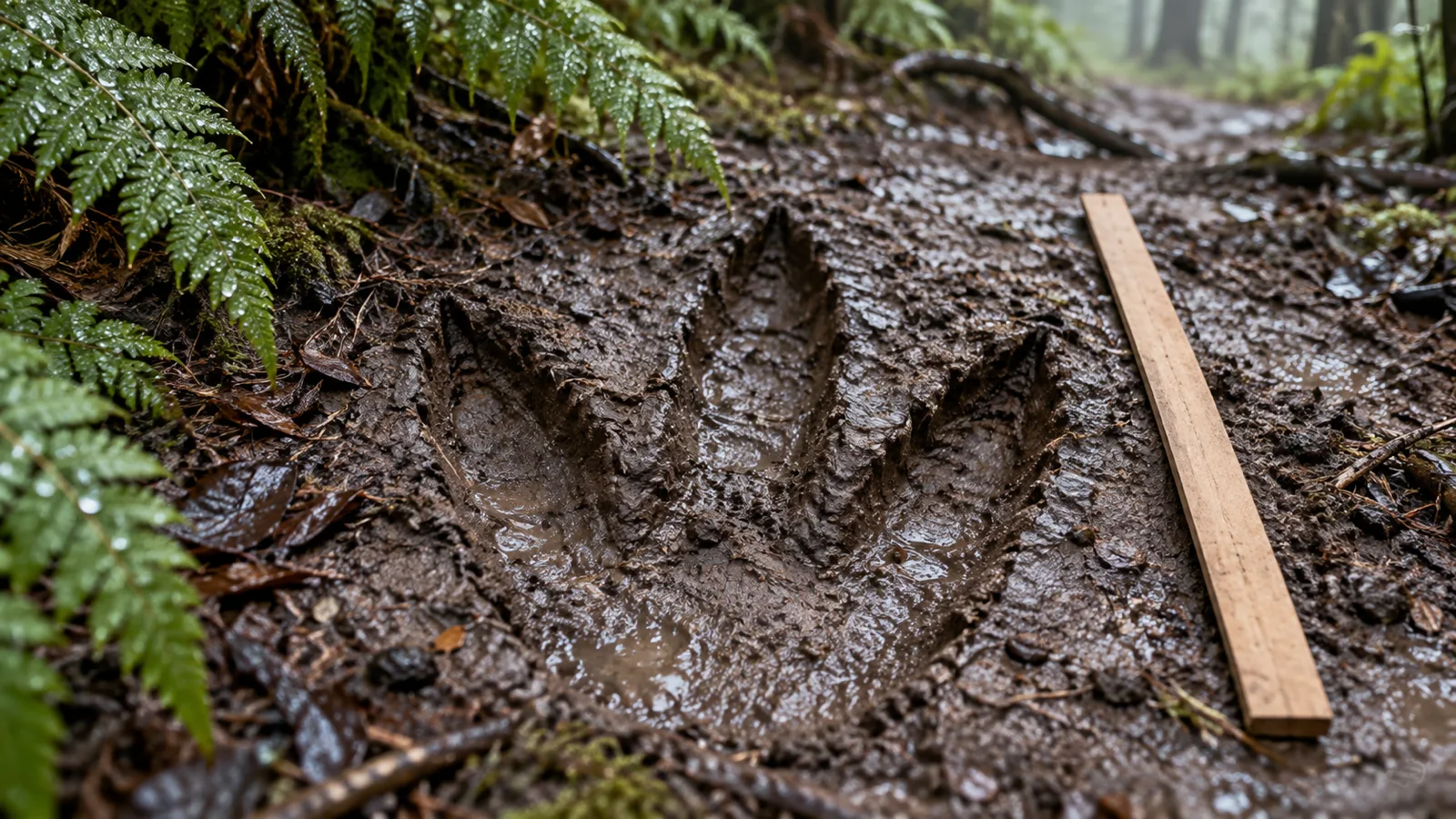
Q: Why is a footprint alone usually weak cryptid evidence?
A: Tracks can be misidentified, altered by weather, or deliberately fabricated.
Q: What material is often tested when investigators examine alleged cryptid hair?
A: DNA from hair roots or other biological material, when a usable sample survives.
Q: What problem occurs when a hair sample lacks a root?
A: It may contain too little nuclear DNA for strong identification.
Q: Why are blurry photographs common in cryptid stories?
A: Distant subjects, low light, camera movement, and digital enlargement all erase useful detail.
Q: What camera technology is commonly placed along wildlife trails?
A: Motion-triggered trail cameras, which routinely photograph known animals.
Q: Why do trail cameras challenge claims about large breeding cryptid populations?
A: Thousands of cameras cover habitat, yet they have not produced clear, repeatable documentation.
Q: What statistical problem affects dramatic eyewitness reports?
A: Memorable reports get repeated while ordinary misidentifications receive little attention.
Q: What cognitive tendency makes people see familiar shapes in vague images?
A: Pareidolia, such as recognizing a face or creature in shadows.
Q: What memory issue can change an eyewitness account over time?
A: Memory is reconstructive, so retelling and later information can alter details.
Q: How can distance make a known animal look unusually large?
A: Without a reliable scale reference, people often misjudge size and range.
Q: What bear behavior can produce a briefly humanlike silhouette?
A: A bear can stand or walk several steps on its hind legs.
Q: What bird is frequently proposed for red-eyed winged-monster reports?
A: A large owl, whose eyes can reflect light and whose legs may appear surprisingly long.
Q: What skin condition gives coyotes a hairless, unfamiliar appearance?
A: Sarcoptic mange, caused by mites that irritate the skin and cause fur loss.
Q: How can decomposing carcasses create sea-monster reports?
A: Decay removes recognizable features and can expose connective tissue in strange shapes.
Q: What term describes a decomposed unidentified mass found on a shoreline?
A: Globster, a label used before the tissue or carcass is identified.
Q: What animal tissue explains many supposed globsters?
A: Whale blubber and connective tissue, sometimes called blubber collagen.
Q: Why do hoaxes remain powerful after exposure?
A: The original image or story often spreads farther than the correction.
Q: What did Ray Wallace’s family claim after his death in 2002?
A: They said he had created famous Bigfoot tracks using carved wooden feet.
Q: Which famous showman displayed a supposed mermaid made from animal parts?
A: P. T. Barnum exhibited a Fiji mermaid assembled from a monkey and fish.
Q: What photographic limitation affected many early monster pictures?
A: Slow film, poor lenses, distance, and copying could turn ordinary objects into suggestive blobs.
Q: Why does the absence of bones matter in Bigfoot debates?
A: A breeding population of large mammals should leave bodies, bones, hair, waste, and DNA.
Q: What principle asks whether an ordinary explanation fits before proposing an unknown animal?
A: Occam’s razor favors the explanation requiring the fewest unsupported assumptions.
Cryptozoology, Folklore & Hard Cryptid Trivia
Q: Which book helped popularize the word cryptozoology in English-language culture?
A: Bernard Heuvelmans’s On the Track of Unknown Animals became a foundational cryptozoology text.
Q: What organization uses the initials ISC in cryptozoology history?
A: The International Society of Cryptozoology, founded in 1982 and later becoming inactive.
Q: Which zoologist investigated the famous 1958 Yeti scalp at Khumjung?
A: Sir Edmund Hillary’s expedition studied it and concluded it was made from serow skin.
Q: What is a serow?
A: A goat-like Asian mammal whose hide has been used in ritual objects.
Q: Which explorer led a widely publicized 1960 expedition seeking Yeti evidence?
A: Edmund Hillary, who had earlier climbed Mount Everest with Tenzing Norgay.
Q: What museum now stands in Point Pleasant beside a Mothman statue?
A: The Mothman Museum, devoted to local reports and their pop-culture afterlife.
Q: Who wrote The Mothman Prophecies?
A: John Keel, who connected the Point Pleasant reports with other paranormal claims.
Q: Which actor starred in the 2002 film adaptation of The Mothman Prophecies?
A: Richard Gere played reporter John Klein, a fictionalized central character.
Q: What movie introduced many viewers to the Fouke Monster legend?
A: The Legend of Boggy Creek, a low-budget 1972 docudrama.
Q: Who directed The Legend of Boggy Creek?
A: Charles B. Pierce, who mixed reenactment with documentary-style narration.
Q: Which 1954 film featured the Gill-man, a fictional cryptid-like creature?
A: Creature from the Black Lagoon.
Q: What television series sent agents Mulder and Scully after unusual creatures?
A: The X-Files, which used cryptid-style plots alongside aliens and conspiracies.
Q: Which animated mystery series regularly unmasked supposed monsters?
A: Scooby-Doo, Where Are You!, where the culprit was usually a person in disguise.
Q: What children’s franchise includes a cryptid-hunting family called the Saturdays?
A: The Secret Saturdays, an animated series built around cryptozoology.
Q: Which role-playing game franchise features a Mothman creature in West Virginia?
A: Fallout, especially Fallout 76 and its fictionalized Appalachian setting.
Q: What tourism term describes travel inspired by legendary creatures?
A: Cryptid tourism, including festivals, museums, statues, tours, and themed shops.
Q: Which town markets itself as the Bigfoot Capital of the World?
A: Willow Creek, California, near the region connected with the Patterson-Gimlin film.
Q: What annual Washington celebration centers on Sasquatch?
A: Several exist, including Bigfoot festivals that combine folklore, speakers, and family events.
Q: Which Vermont and New York communities use Champ in local branding?
A: Communities around Lake Champlain use the monster on souvenirs, team names, and attractions.
Q: What minor-league baseball mascot is based on Champ?
A: Champ is the mascot of the Vermont Lake Monsters.
Q: Which Canadian city displays an Ogopogo statue near Okanagan Lake?
A: Kelowna, British Columbia, where the legend is prominent in local tourism.
Q: What concern arises when commercial cryptid stories borrow Indigenous traditions?
A: They can flatten distinct beliefs, mistranslate names, or detach stories from their communities.
Q: How should trivia distinguish a folkloric being from a claimed animal?
A: It should state whether the figure belongs to spiritual tradition, modern legend, or cryptozoological speculation.
Q: What makes the jackalope different from an allegedly witnessed wild species?
A: It began as a humorous taxidermy creation made by attaching antlers to a jackrabbit.
Q: Which Wyoming town is strongly associated with jackalope souvenirs?
A: Douglas, which promotes itself as the home of the jackalope.
Q: What virus may have helped inspire horned-rabbit legends?
A: Shope papillomavirus can cause keratinous growths on rabbits.
Q: What fearsome North American lumberjack creature supposedly spins like a wheel?
A: The hoop snake belongs to tall-tale folklore and is said to bite its own tail to roll.
Q: Which lumberjack creature is said to lean against trees because its legs differ in length?
A: The sidehill gouger, invented to explain life on steep slopes.
Q: What creature is jokingly hunted during an American snipe hunt?
A: An imaginary version of the snipe, although real snipe are actual wading birds.
Q: Why do cryptid stories endure even without decisive evidence?
A: They give landscapes a mystery, communities a shared story, and witnesses a wonderfully stubborn puzzle.
How Did You Score?
If you knew the difference between Champ, Chessie, Nessie, and Ogopogo, your cryptid map is impressively crowded. I scored well until the regional monsters arrived, which feels exactly how a creature hiding in the woods would want it.

Ellie Ewert is the founder and author of RandomTrivia.co, blending her passion for research with years of experience in content creation to deliver accurate, engaging, and well-sourced trivia. Dedicated to providing readers with trustworthy and entertaining facts, she applies meticulous fact-checking and SEO expertise to ensure every article meets the highest standards. Read more about our high standards in our Editorial Guidelines.