
Beer can be crisp, cloudy, sour, smoky, or dark enough to make a flashlight nervous.
These beer trivia questions explore ingredients, brewing, styles, terminology, and history without turning the round into a consumption contest.
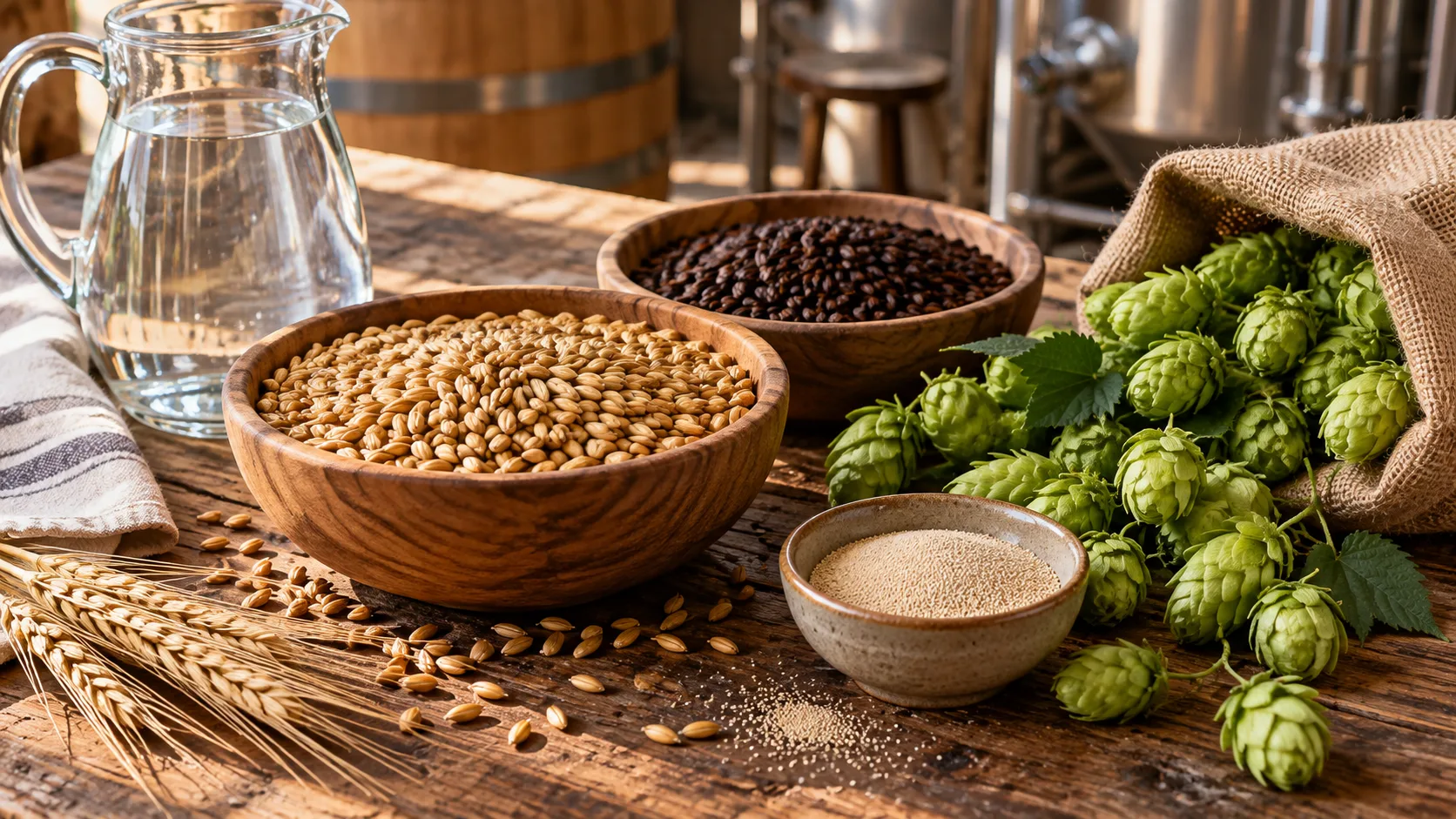
Beer's Four Core Ingredients
Start with the grain, hops, yeast, and water that give brewers an astonishing number of possibilities.
- What four ingredients are traditionally central to beer?
Answer: Water, malted grain, hops, and yeast - Which grain is most commonly malted for brewing?
Answer: Barley - What does malting encourage a grain to produce?
Answer: Enzymes that can convert starch into sugar - Which plant provides beer's familiar bitterness and many aromas?
Answer: Hops - What part of the hop plant is used in brewing?
Answer: The cone-shaped female flowers - What compound in hops contributes most of beer's bitterness?
Answer: Alpha acids - Which microorganism converts fermentable sugars into alcohol and carbon dioxide?
Answer: Yeast - What is the liquid extracted from mashed grain called?
Answer: Wort - What mineral-rich water helped shape the pale ales of Burton upon Trent?
Answer: Burton water - Which grain is especially important in hefeweizen?
Answer: Wheat - Which roasted grain gives many stouts coffee-like flavors?
Answer: Roasted barley - What ingredient can add body and haze to an oat stout?
Answer: Oats - Which grain is traditional in rye beer?
Answer: Rye - What sugar from malt is especially important in wort?
Answer: Maltose - What term describes ingredients such as corn or rice used alongside malted barley?
Answer: Adjuncts
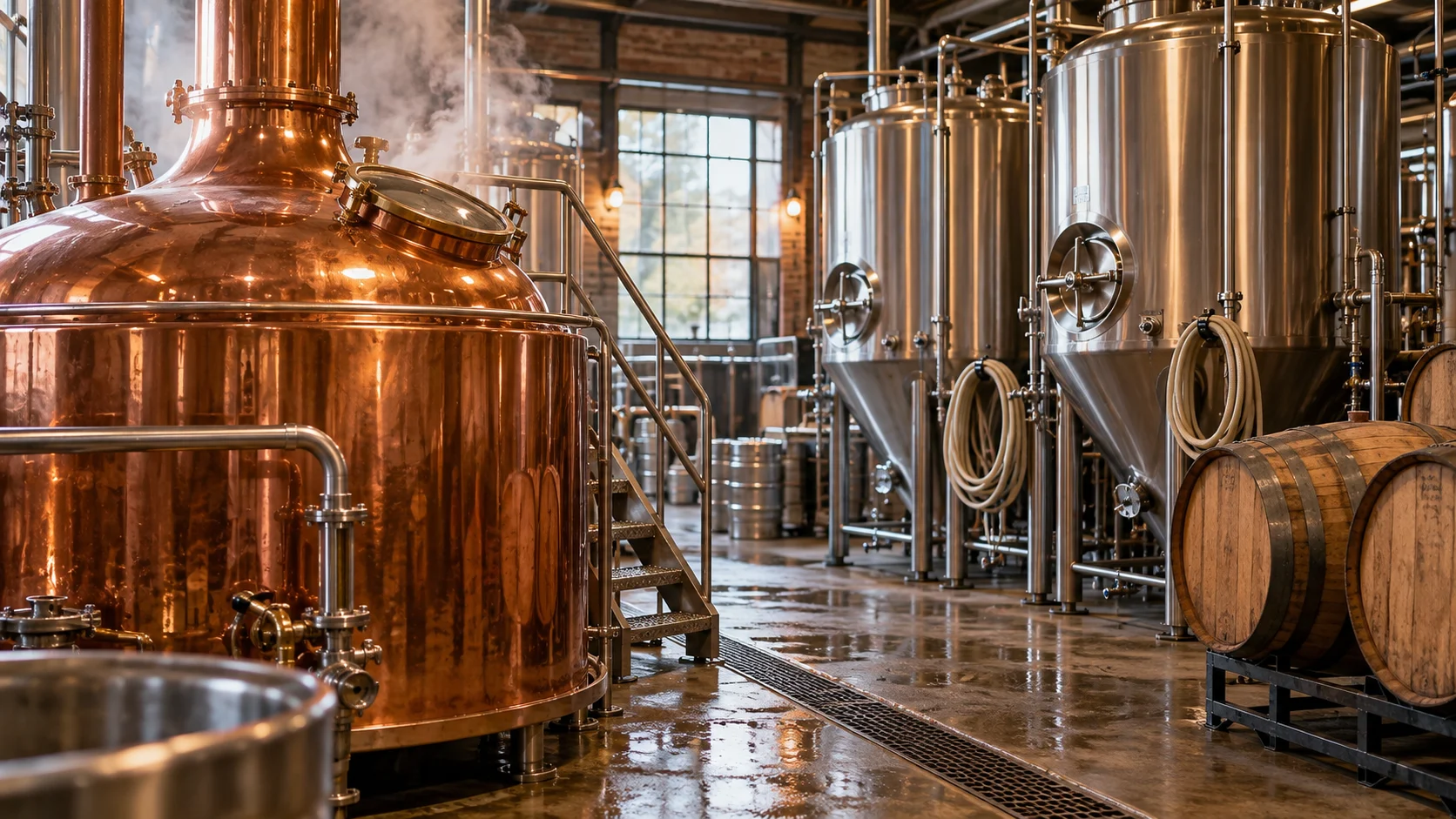
From Mash Tun to Fermenter
Follow a batch through the brewhouse, where temperature and timing do nearly as much work as the recipe.
- What brewing step mixes crushed malt with hot water?
Answer: Mashing - What vessel commonly holds the mash?
Answer: A mash tun - What process separates sweet wort from spent grain?
Answer: Lautering - What is the rinsing of grain with hot water called?
Answer: Sparging - During which step are hops commonly added for bitterness?
Answer: The boil - What does boiling help sterilize?
Answer: The wort - What device rapidly lowers wort temperature before fermentation?
Answer: A wort chiller - What process begins after yeast is added to cooled wort?
Answer: Fermentation - What is adding yeast to wort called?
Answer: Pitching - What do brewers call the sediment of yeast and proteins at the bottom of a fermenter?
Answer: Trub - What fermentation method uses a fresh dose of hops after the boil?
Answer: Dry hopping - What does conditioning allow a beer to do?
Answer: Mature and develop flavor - What natural process can carbonate beer in a bottle?
Answer: Bottle conditioning - What is unfermented wort's density measurement called before fermentation?
Answer: Original gravity - What cleaning priority is essential because unwanted microbes can spoil beer?
Answer: Sanitation
Ale Styles and Top Fermentation
Ales range from pub-friendly bitters to hop-forward IPAs and inky stouts.
- What broad beer family commonly uses Saccharomyces cerevisiae at warmer temperatures?
Answer: Ale - What English ale style is known for balanced malt and restrained bitterness?
Answer: Bitter - What does IPA stand for?
Answer: India pale ale - Which ingredient is usually emphasized in an American IPA?
Answer: Hops - What style is a stronger, more intensely hopped version of an IPA?
Answer: Double IPA or imperial IPA - Which dark ale style grew from porter traditions?
Answer: Stout - What stout subtype is associated with lactose sweetness?
Answer: Milk stout - Which stout subtype commonly features high alcohol and roasted intensity?
Answer: Imperial stout - What brown London beer style became popular with porters and other workers?
Answer: Porter - Which Belgian ale style often has spicy yeast character and high carbonation?
Answer: Saison - What Trappist-inspired Belgian style is stronger and darker than a dubbel?
Answer: Quadrupel - Which Belgian style is typically golden, strong, and highly carbonated?
Answer: Tripel - What German wheat ale is known for banana and clove aromas?
Answer: Hefeweizen - Which tart German wheat style is traditionally seasoned with coriander and salt?
Answer: Gose - What pale, lightly tart wheat beer originated in Berlin?
Answer: Berliner Weisse
Lagers, Pilsners, and Cold Fermentation
Lagers reward cooler fermentation and patience, from brilliantly pale pilsners to dark, toasty bocks.
- What broad beer family typically ferments cooler with Saccharomyces pastorianus?
Answer: Lager - What does the German word lagern mean?
Answer: To store - In which Czech city was the first pale pilsner brewed in 1842?
Answer: Plzeň, or Pilsen - What brewery made that first pale pilsner?
Answer: Pilsner Urquell - Which German pale lager style is softer and maltier than many pilsners?
Answer: Helles - What amber Bavarian lager is traditionally linked with Oktoberfest?
Answer: Märzen - What strong German lager has a name meaning goat?
Answer: Bock - What stronger bock style often has a name ending in -ator?
Answer: Doppelbock - What dark German lager takes its name from the German word for black?
Answer: Schwarzbier - Which crisp amber lager originated in Vienna?
Answer: Vienna lager - What strong pale lager is produced by freezing and removing ice?
Answer: Eisbock - Which light-bodied American lager style often includes corn or rice?
Answer: American adjunct lager - What pale lager style is associated with Dortmund?
Answer: Dortmunder export - Which Czech dark lager category is known as tmavé pivo?
Answer: Czech dark lager - What aging period gives lager its clean, smooth character?
Answer: Cold conditioning
Sour, Wild, Smoked, and Specialty Beer
Not every beer follows the clean-fermentation playbook, and this round gets delightfully funky.
- Which yeast genus creates the earthy character often called Brett?
Answer: Brettanomyces - What Belgian beer family is traditionally fermented with airborne microorganisms?
Answer: Lambic - What blend combines young and aged lambic?
Answer: Gueuze - What lambic flavored with cherries is called kriek?
Answer: Kriek - What lambic flavored with raspberries is called framboise?
Answer: Framboise - Which Belgian sour red style is associated with Flanders?
Answer: Flanders red ale - What souring bacteria commonly produce lactic acid in beer?
Answer: Lactobacillus - Which other bacterium can contribute lactic acidity and complex aging character?
Answer: Pediococcus - What German style uses malt dried over beechwood smoke?
Answer: Rauchbier - In which German city is rauchbier especially associated?
Answer: Bamberg - What Finnish farmhouse beer may be flavored with juniper?
Answer: Sahti - What Norwegian farmhouse yeast cultures are collectively called?
Answer: Kveik - What beer style incorporates oysters during brewing?
Answer: Oyster stout - What is beer aged in wooden spirits casks commonly called?
Answer: Barrel-aged beer - What modern process adds fruit puree or whole fruit after primary fermentation?
Answer: Fruit conditioning
Beer Around the World
Match famous brewing traditions with the places, laws, and pub customs that shaped them.
- Which country is home to the Trappist breweries Orval and Chimay?
Answer: Belgium - Which country is the birthplace of Guinness?
Answer: Ireland - In which city was Guinness founded?
Answer: Dublin - What Bavarian festival is famous for serving beer in large tents?
Answer: Oktoberfest - In which city is Oktoberfest held?
Answer: Munich - What 1516 Bavarian law is commonly called the German Beer Purity Law?
Answer: Reinheitsgebot - Which four ingredients did later versions of the purity tradition permit for beer?
Answer: Water, malt, hops, and yeast - Which Czech city gave Budweiser Budvar its geographic identity?
Answer: České Budějovice - What is the British tradition of serving naturally conditioned beer from a cask called?
Answer: Cask ale - What hand-operated device draws cask ale at a pub?
Answer: A beer engine - What French farmhouse style is called beer for keeping?
Answer: Bière de garde - Which country is associated with witbier?
Answer: Belgium - What Japanese lager brand was founded in Sapporo in 1876?
Answer: Sapporo - Which Mexican town gave Tecate beer its name?
Answer: Tecate, Baja California - What Indigenous Andean drink is traditionally made from fermented maize?
Answer: Chicha
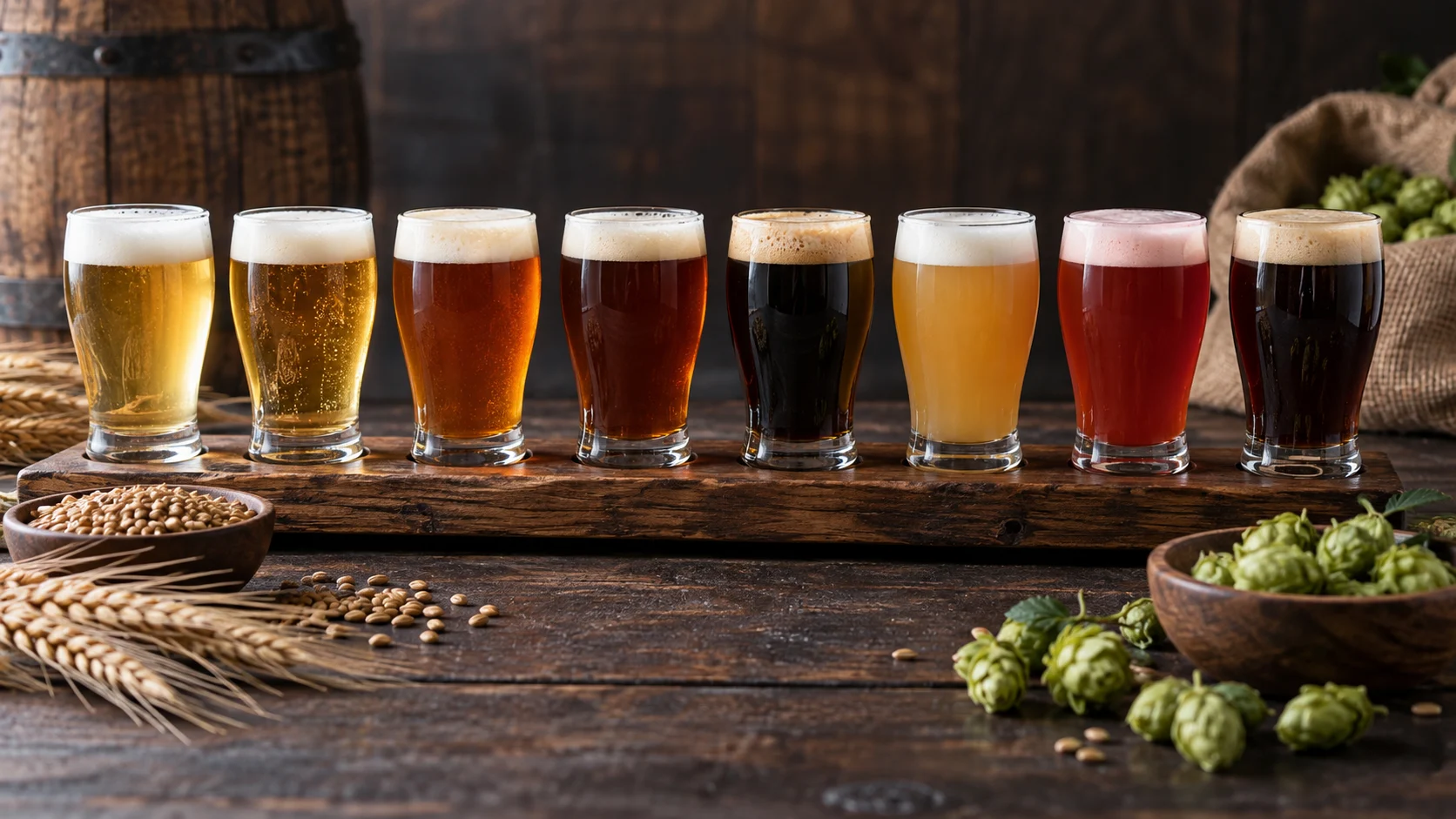
Glassware, Tasting, and Serving Terms
You do not need a fancy glass to enjoy the round, but knowing why one exists is fair game.
- What tall, narrow glass is commonly associated with pilsner?
Answer: A pilsner glass - What bulbous Belgian glass narrows near the rim and sits on a stem?
Answer: A tulip glass - What handled German vessel is called a stein in English?
Answer: A beer mug - What dimpled English pub glass has a handle?
Answer: A dimple mug - What wide-mouthed stemmed glass is often used for strong Belgian ales?
Answer: A goblet or chalice - What term describes the foam on top of a poured beer?
Answer: Head - What patterns left by foam on a glass are called?
Answer: Lacing - What serving gas blend gives many stouts a creamy texture?
Answer: Nitrogen and carbon dioxide - What device in a stout can helps create a nitrogenated pour?
Answer: A widget - What aroma compound can smell like butter or butterscotch?
Answer: Diacetyl - What light-struck off-flavor is often called skunky?
Answer: A reaction involving hop compounds and light - What aroma compound can smell like green apples?
Answer: Acetaldehyde - What unit commonly measures beer color in the United States?
Answer: SRM - What unit is commonly used to express bitterness?
Answer: IBU - What does ABV stand for?
Answer: Alcohol by volume
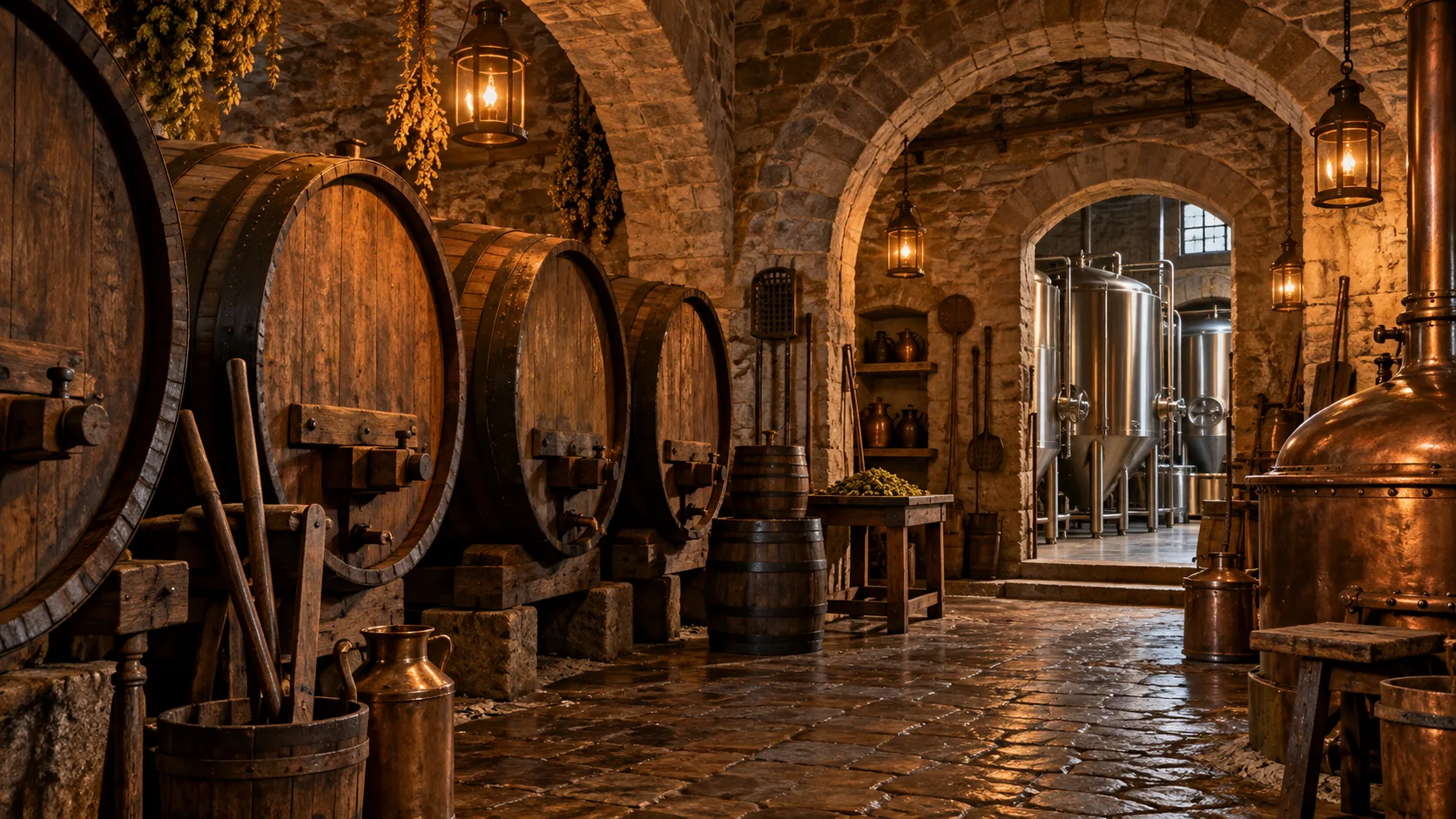
Beer History, Business, and Brewing Science
Finish with ancient recipes, modern craft milestones, and the tiny measurements behind a consistent pint.
- Which ancient civilization left the Hymn to Ninkasi, a text connected with brewing?
Answer: Sumer - Who was Ninkasi?
Answer: The Sumerian goddess of beer - What ancient Egyptian laborers are documented as receiving beer rations?
Answer: Workers on major building projects - Which medieval religious communities became important European brewers?
Answer: Monasteries - Which bittering ingredient gradually displaced gruit across much of medieval Europe?
Answer: Hops - What was gruit?
Answer: An herb mixture used to flavor beer before hops became dominant - What instrument measures the specific gravity of wort or beer?
Answer: A hydrometer - What optical instrument can estimate sugar concentration from a small sample?
Answer: A refractometer - What unit expresses dissolved sugar in degrees for brewers?
Answer: Degrees Plato - What gas is produced alongside alcohol during fermentation?
Answer: Carbon dioxide - What does IBU measure chemically?
Answer: Iso-alpha-acid bitterness concentration - What U.S. legal change in 1978 allowed homebrewing federally, subject to state law?
Answer: A federal tax-code amendment signed by President Jimmy Carter - What organization certifies beer judges in the United States?
Answer: The Beer Judge Certification Program - What term describes a brewery that produces beer mainly for another company's brand?
Answer: A contract brewery - What process removes alcohol from finished beer by methods such as vacuum distillation or membrane filtration?
Answer: Dealcoholization
Keep the game going with food trivia, chemistry trivia, and coffee, tea, and chocolate trivia.
Sources and Further Reading
- Brewers Association beer style guidelines
- Beer Judge Certification Program style guidelines
- U.S. Alcohol and Tobacco Tax and Trade Bureau beer resources
- Smithsonian: Brewing History Initiative
- Encyclopaedia Britannica: Beer

Ellie Ewert is the founder and author of RandomTrivia.co, blending her passion for research with years of experience in content creation to deliver accurate, engaging, and well-sourced trivia. Dedicated to providing readers with trustworthy and entertaining facts, she applies meticulous fact-checking and SEO expertise to ensure every article meets the highest standards. Read more about our high standards in our Editorial Guidelines.