
Twirl into pasta trivia with enough shapes, sauces, and kitchen lore to fill a very cheerful colander.
These questions travel from durum wheat and al dente bites to stuffed specialties and beloved dishes around the world.
Pasta Basics
Q: What grain is used to make most traditional dried Italian pasta?
A: Durum wheat.
Q: What coarse flour milled from durum wheat is commonly used for pasta?
A: Semolina.
Q: What liquid is combined with semolina to make many dried pasta doughs?
A: Water.
Q: What ingredient commonly enriches fresh pasta dough?
A: Eggs.
Q: What does the Italian word pasta literally refer to in a culinary context?
A: Dough or paste.
Q: Is all Italian pasta made with eggs?
A: No.
Q: What protein network gives wheat pasta its structure and chew?
A: Gluten.
Q: What are the two broad commercial categories based on moisture and storage life?
A: Fresh pasta and dried pasta.
Q: What does the Italian category pasta secca contain?
A: Dried pasta.
Q: Which pasta category is sold soft and usually needs refrigeration?
A: Pasta fresca, or fresh pasta.
Q: What food category includes pasta made from wheat dough shaped before cooking?
A: A cereal-based food.
Q: What does whole-wheat pasta retain that refined pasta largely removes?
A: The bran and germ.
Q: What non-wheat ingredient is often used to make a gluten-free pasta?
A: Rice, corn, or legumes.
Q: What gives spinach pasta its green color?
A: Spinach.
Q: What ingredient traditionally colors pasta dough black?
A: Squid or cuttlefish ink.
At the Pasta Pot
Q: What does al dente mean when describing cooked pasta?
A: Firm to the bite.
Q: What should the water be doing before dried pasta is added?
A: Boiling.
Q: Why is pasta stirred soon after it enters the pot?
A: To help keep the pieces from sticking together.
Q: What kitchen tool drains pasta while letting water escape?
A: A colander.
Q: What starchy liquid can help bind sauce to pasta?
A: Pasta cooking water.
Q: What happens to dried pasta as it cooks in water?
A: It absorbs water and softens.
Q: What process causes starch granules to swell when heated with water?
A: Gelatinization.
Q: Why is pasta often finished in its sauce?
A: So the sauce coats and flavors it evenly.
Q: What does mantecare mean in pasta cooking?
A: Vigorously mixing pasta with sauce to create a cohesive finish.
Q: Does fresh pasta generally cook faster or slower than dried pasta?
A: Faster.
Q: Why are filled pastas often cooked at a controlled boil rather than a violent one?
A: Rough movement can tear them open.
Q: What tool cuts fresh pasta dough into ribbons?
A: A pasta wheel or knife.
Q: What machine rolls dough into progressively thinner sheets?
A: A pasta roller.
Q: What wooden board is ridged for shaping gnocchi or textured pasta?
A: A gnocchi board.
Q: What should a cook do to determine whether pasta has reached the desired texture?
A: Taste it.
Long Pasta Shapes
Q: What long, thin, round pasta is one of Italy's most familiar shapes?
A: Spaghetti.
Q: What pasta is thinner than standard spaghetti?
A: Spaghettini.
Q: What very thin pasta name translates as little worms?
A: Vermicelli.
Q: What extremely fine pasta is known as angel hair in English?
A: Capellini.
Q: What long pasta resembles spaghetti but has a hollow center?
A: Bucatini.
Q: What long, flat pasta is narrower than fettuccine and associated with Liguria?
A: Linguine.
Q: What long, flat ribbons are famously served with Alfredo sauce in American Italian cooking?
A: Fettuccine.
Q: What broad flat ribbon from Emilia-Romagna is often paired with ragù?
A: Tagliatelle.
Q: What very wide ribbon pasta is often served with hearty sauces?
A: Pappardelle.
Q: What square-cut strand from Abruzzo is traditionally made with a chitarra tool?
A: Spaghetti alla chitarra.
Q: What Tuscan hand-rolled pasta resembles thick, uneven spaghetti?
A: Pici.
Q: What thick, hollow strand from southern Italy resembles an elongated tube?
A: Ziti lunghi.
Q: What long ribbon pasta has ruffled edges on both sides?
A: Mafaldine.
Q: What Ligurian pasta resembles narrow, flat strips and is often served with pesto?
A: Trenette.
Q: What round pasta strand is thicker than standard spaghetti?
A: Spaghettoni.
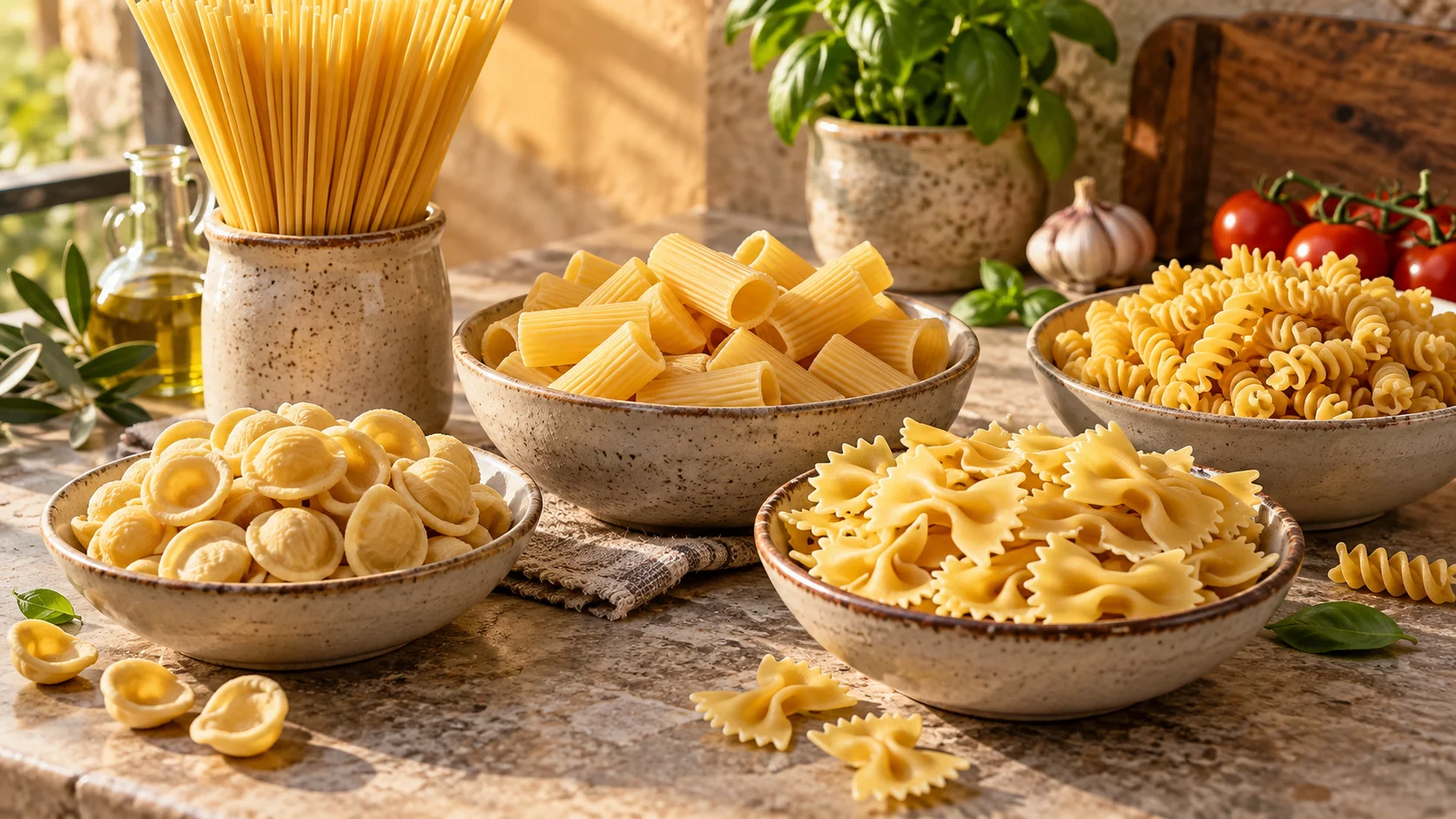
Short Pasta Shapes
Q: What tube-shaped pasta has diagonally cut ends?
A: Penne.
Q: What surface texture does the Italian word rigate describe?
A: Ridged.
Q: Which package word identifies a smooth pasta shape rather than a ridged one?
A: Lisce.
Q: What short, ridged tube has a name meaning half sleeves?
A: Mezze maniche.
Q: What curved tube pasta is commonly used in macaroni and cheese?
A: Elbow macaroni.
Q: What American pasta name commonly describes short corkscrew-shaped spirals?
A: Rotini.
Q: What pasta shape looks like small bow ties or butterflies?
A: Farfalle.
Q: What pasta name means little ears and is associated with Puglia?
A: Orecchiette.
Q: What shell-shaped pasta is called conchiglie?
A: Pasta shells.
Q: What pasta resembles small ridged tubes curved like a hook?
A: Cavatappi.
Q: What short twisted pasta has an Italian name meaning homemade?
A: Casarecce.
Q: What small rice-shaped pasta is often used in soups and salads?
A: Orzo.
Q: What tiny star-shaped pasta is called stelline?
A: Little stars.
Q: What wheel-shaped pasta is known as rotelle?
A: Wagon wheels.
Q: What ridged, quill-shaped pasta is larger than standard penne?
A: Pennoni.
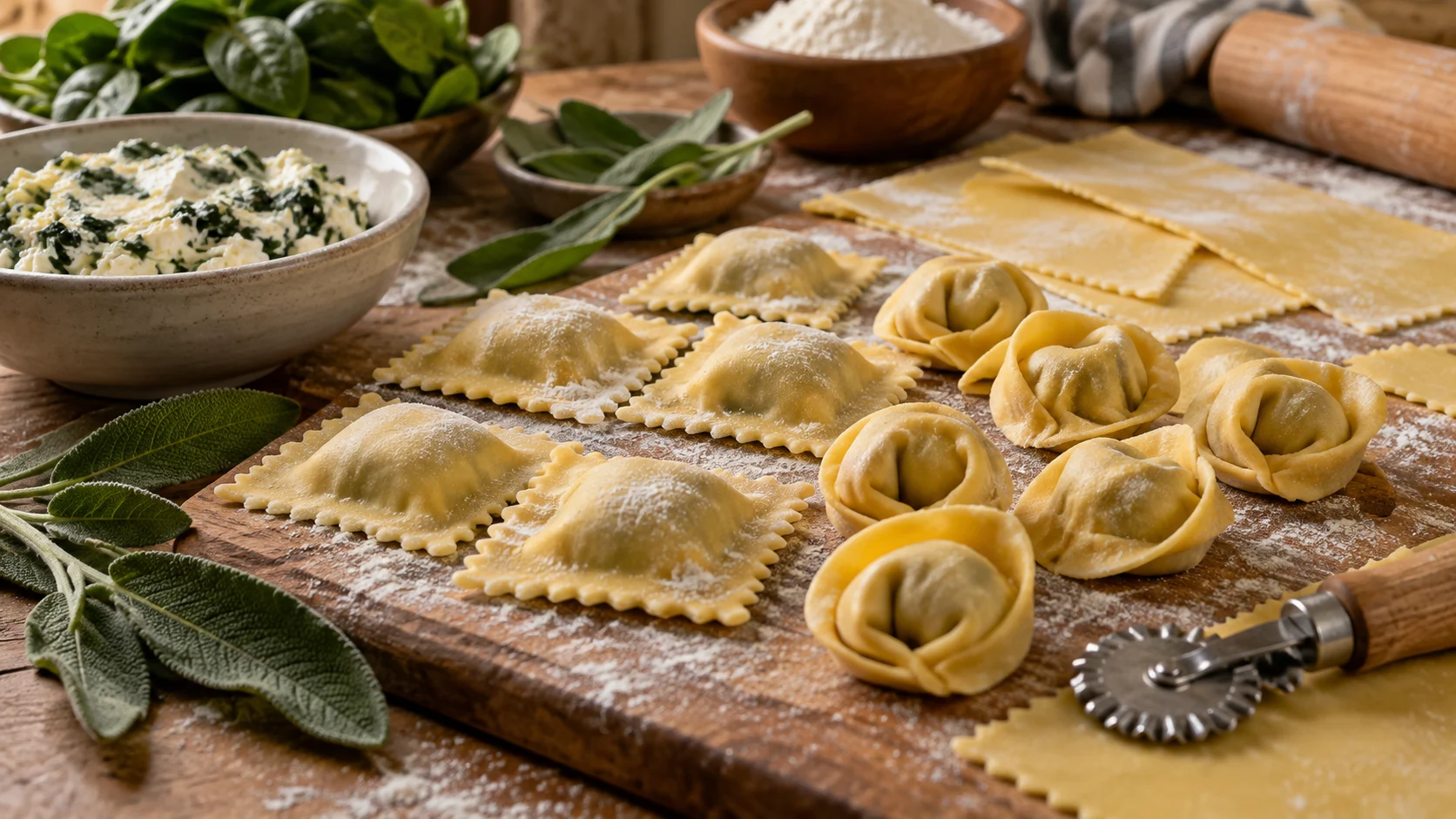
Filled, Folded, and Rolled
Q: What pasta consists of filling sealed between two layers of dough?
A: Ravioli.
Q: What ring-shaped filled pasta is associated with Bologna and Modena?
A: Tortellini.
Q: What larger ring-shaped filled pasta is called tortelloni?
A: A larger relative of tortellini.
Q: What stuffed pasta from Piedmont is traditionally pinched closed?
A: Agnolotti.
Q: What crescent-shaped stuffed pasta is associated with areas including Lombardy and northeastern Italy?
A: Casoncelli.
Q: What Sardinian stuffed pasta often contains potato, cheese, and mint?
A: Culurgiones.
Q: What large pasta tubes are filled and baked with sauce?
A: Cannelloni.
Q: What tube pasta whose name means sleeves is often stuffed and baked?
A: Manicotti.
Q: What large shell pasta is designed to hold generous fillings?
A: Conchiglioni.
Q: What layered baked pasta alternates sheets with sauce and fillings?
A: Lasagna.
Q: What Italian dumpling is commonly made from potato, flour, and sometimes egg?
A: Gnocchi.
Q: Are gnocchi technically the same type of wheat pasta as spaghetti?
A: No.
Q: What ricotta-and-spinach dumplings from Tuscany are sometimes called naked ravioli?
A: Gnudi.
Q: What baked pasta dish often uses tube shapes, tomato sauce, and cheese?
A: Baked ziti.
Q: What is pressed around stuffed pasta edges to keep the filling inside?
A: The dough seam.
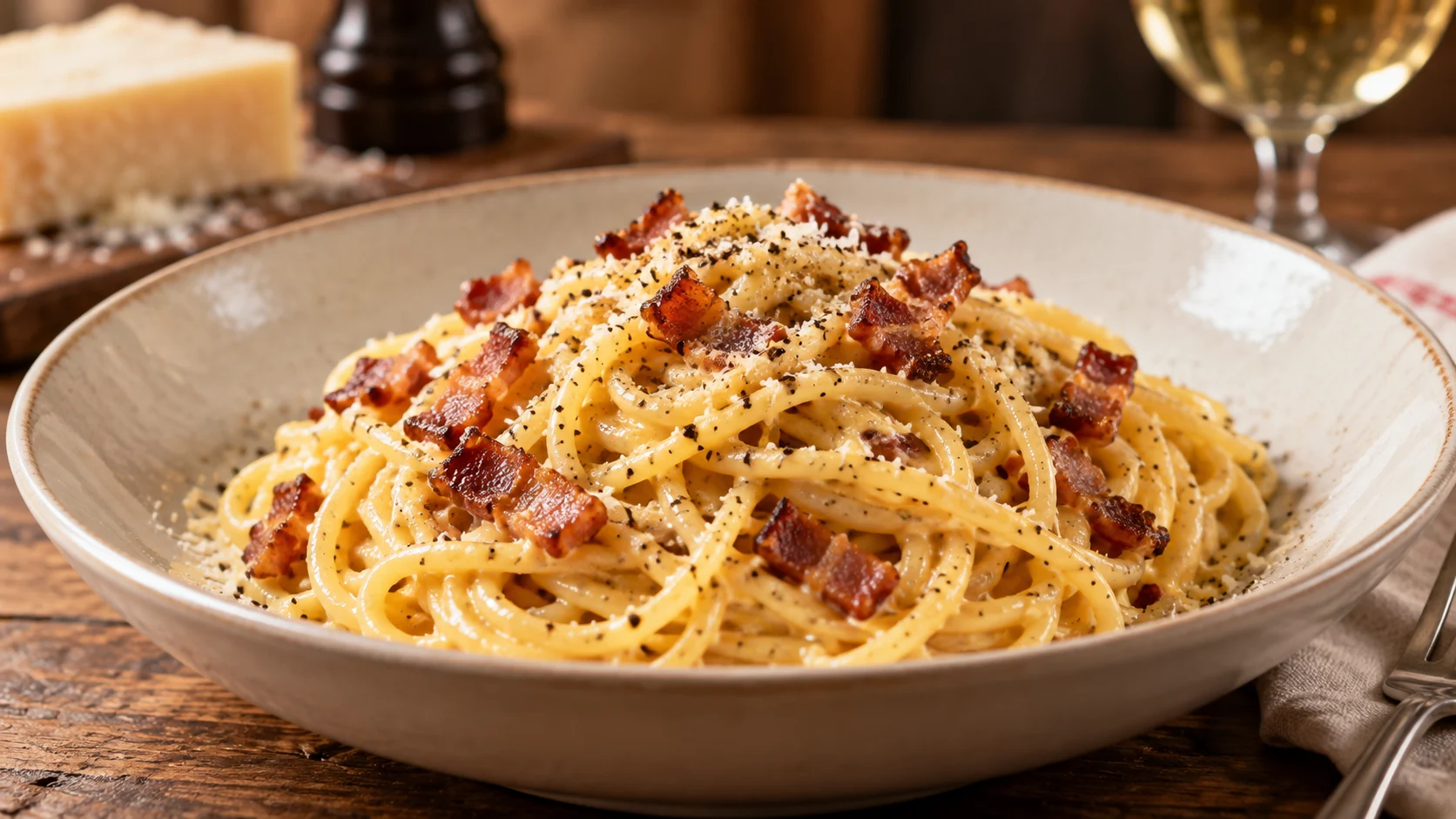
Sauces and Classic Pairings
Q: What Ligurian sauce combines basil, pine nuts, garlic, cheese, and olive oil?
A: Pesto Genovese.
Q: What Roman pasta dish combines pecorino Romano and black pepper?
A: Cacio e pepe.
Q: What Roman sauce traditionally combines eggs, hard cheese, cured pork, and black pepper?
A: Carbonara.
Q: Does traditional Roman carbonara require cream?
A: No.
Q: What cured pork cheek is traditional in carbonara and amatriciana?
A: Guanciale.
Q: What tomato-based Roman sauce adds guanciale and often chile?
A: Amatriciana.
Q: What sauce name refers to pasta tossed with garlic and oil?
A: Aglio e olio.
Q: What slow-cooked meat sauce is especially associated with Bologna?
A: Ragù alla bolognese.
Q: What cheese is central to the original Roman dish fettuccine Alfredo?
A: Parmesan.
Q: What spicy tomato sauce has a name meaning angry?
A: Arrabbiata.
Q: What sauce combines tomatoes, olives, capers, and often anchovies?
A: Puttanesca.
Q: What seafood gives spaghetti alle vongole its name?
A: Clams.
Q: What cheese is traditionally grated over many Roman pasta dishes?
A: Pecorino Romano.
Q: Why do ridged pasta shapes pair well with chunky sauces?
A: Their grooves help catch the sauce.
Q: Why are wide ribbons often paired with rich ragùs?
A: Their broad surface holds substantial sauce.
Pasta Beyond Italy
Q: What American comfort dish combines macaroni with a cheese sauce?
A: Macaroni and cheese.
Q: What cold American side dish commonly combines elbow macaroni with a creamy dressing?
A: Macaroni salad.
Q: What Greek baked dish layers tubular pasta, seasoned meat, and béchamel?
A: Pastitsio.
Q: What baked Maltese dish combines macaroni, meat sauce, and often cheese?
A: Imqarrun il-forn.
Q: What Filipino noodle dish uses small pasta tubes in a sweet, creamy fruit salad?
A: Macaroni salad.
Q: What Japanese dish coats spaghetti with a ketchup-based sauce and vegetables?
A: Napolitan.
Q: What Somali pasta dish is commonly called baasto?
A: Pasta, often served with a spiced sauce.
Q: What Egyptian dish combines rice, lentils, chickpeas, tomato sauce, and small pasta?
A: Koshari.
Q: What North African pasta-like food is made from tiny steamed granules of semolina?
A: Couscous.
Q: What German egg noodle is pressed or cut into small irregular pieces?
A: Spätzle.
Q: What Polish filled dumplings are commonly boiled and sometimes pan-fried?
A: Pierogi.
Q: What Chinese wheat noodles are pulled by hand?
A: Lamian.
Q: What Japanese noodle is made primarily from buckwheat?
A: Soba.
Q: What broad Japanese wheat noodle is known for a chewy texture?
A: Udon.
Q: Does the word noodle refer only to Italian pasta?
A: No.
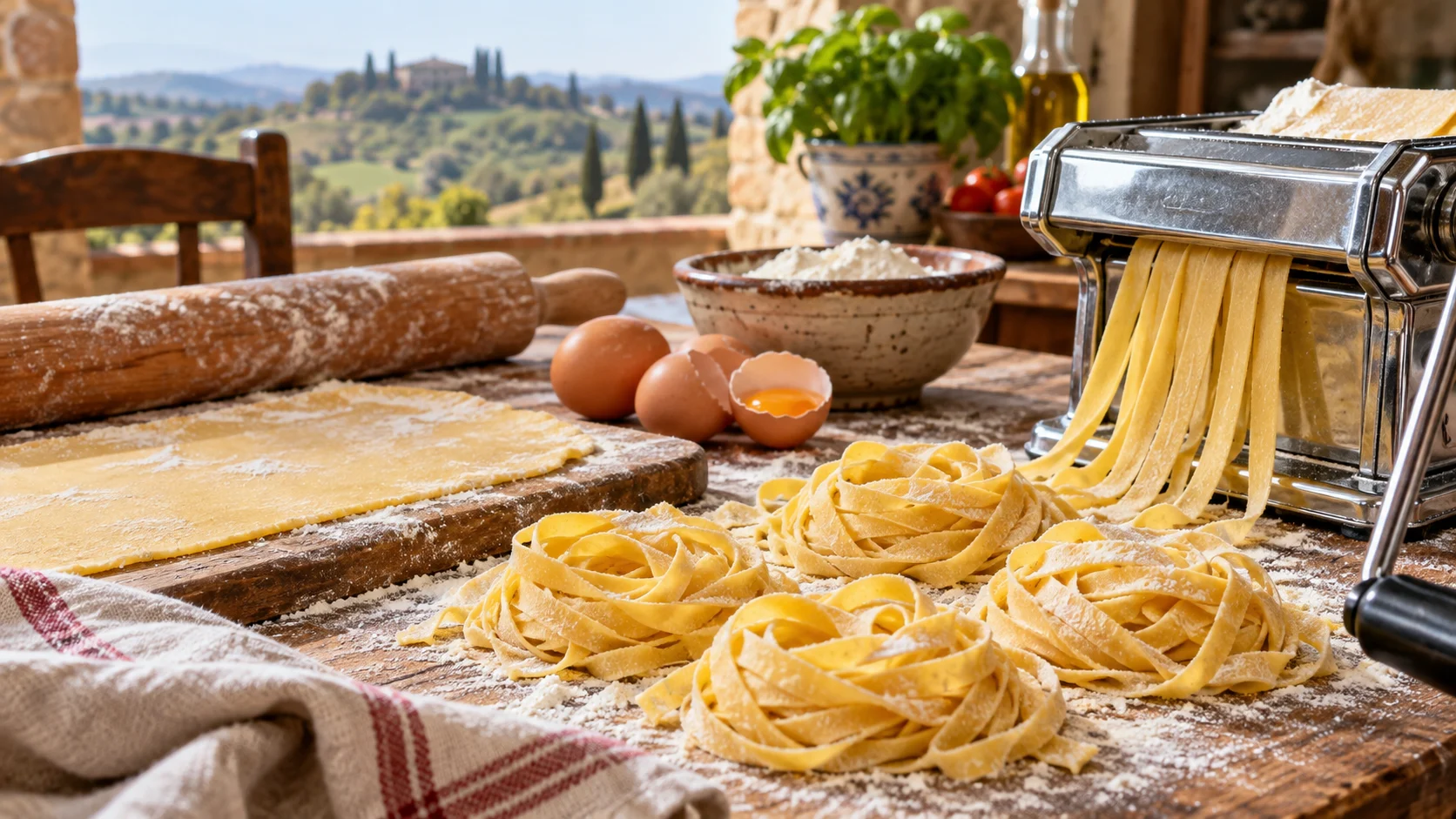
History, Craft, and Pasta Culture
Q: Did Marco Polo introduce pasta to Italy from China?
A: No, pasta existed in Italy before his travels.
Q: What ancient Mediterranean peoples ate dough preparations that were ancestors or relatives of later pasta?
A: Greeks and Romans.
Q: What island was noted for producing dried strand pasta during the Middle Ages?
A: Sicily.
Q: Why was dried pasta useful for travel and storage?
A: It kept well without refrigeration.
Q: What metal die is prized for giving extruded pasta a rough surface?
A: A bronze die.
Q: What does a pasta extruder force dough through?
A: A shaped die.
Q: What city in Emilia-Romagna is especially famous for tortellini and tagliatelle?
A: Bologna.
Q: What southern Italian city became a major center of dried pasta production?
A: Naples.
Q: What Puglian city gives orecchiette a famous street-making tradition?
A: Bari.
Q: What does pastificio mean in Italian?
A: A pasta factory or pasta-making shop.
Q: What is a pastaio or pastaia?
A: A pasta maker.
Q: What decorative ridging on some hand-shaped pasta is made by dragging dough across a textured surface?
A: Grooves.
Q: What flour is often dusted over fresh pasta to help prevent sticking?
A: Semolina flour.
Q: What does pasta corta mean?
A: Short pasta.
Q: What does pasta lunga mean?
A: Long pasta.
You Used Your Noodle
If you untangled all 120 answers, your pasta knowledge is officially al dente. Serve yourself another course with our food trivia.

Ellie Ewert is the founder and author of RandomTrivia.co, blending her passion for research with years of experience in content creation to deliver accurate, engaging, and well-sourced trivia. Dedicated to providing readers with trustworthy and entertaining facts, she applies meticulous fact-checking and SEO expertise to ensure every article meets the highest standards. Read more about our high standards in our Editorial Guidelines.