
Cheese can be fresh, funky, crumbly, creamy, or gloriously gooey, which makes it perfect trivia territory.
These 120 questions cover curds, cultures, famous wheels, cheesemaking science, and delicious traditions from around the world.
Cheese Basics
Q: What food is made by coagulating milk and separating curds from whey?
A: Cheese.
Q: What solid portion forms when milk coagulates?
A: Curds.
Q: What liquid drains away from curds?
A: Whey.
Q: What milk protein forms the main structure of most cheese curds?
A: Casein.
Q: What enzyme traditionally helps coagulate milk?
A: Rennet.
Q: What sugar in milk is fermented by starter bacteria?
A: Lactose.
Q: What acid do cheese cultures commonly produce from lactose?
A: Lactic acid.
Q: What mineral helps cheese curds hold together?
A: Calcium.
Q: What step removes more whey by cutting curds?
A: Curd cutting.
Q: What does pressing do to many cheeses?
A: Expels whey and shapes the cheese.
Q: What does salting add besides flavor?
A: Moisture control and preservation.
Q: What is the outer surface of a cheese called?
A: The rind.
Q: What does affinage mean?
A: Cheese aging and care.
Q: What is a person who ages and cares for cheese called?
A: An affineur.
Q: Can cheese be made from cow, goat, sheep, or buffalo milk?
A: Yes.
Fresh and Soft Cheeses
Q: Is fresh cheese usually aged for a long time?
A: No.
Q: What Italian fresh cheese is traditionally made from whey?
A: Ricotta.
Q: What fresh stretched-curd cheese tops many pizzas?
A: Mozzarella.
Q: What Mexican fresh cheese has a mild, crumbly texture?
A: Queso fresco.
Q: What Greek brined cheese is traditionally made from sheep's milk or a sheep-goat blend?
A: Feta.
Q: What soft French cheese has a bloomy white rind?
A: Brie.
Q: What Normandy cheese is famous for its small round form and bloomy rind?
A: Camembert.
Q: What rich Italian cheese is made by adding cream to curds?
A: Mascarpone.
Q: What spreadable American cheese is known as cream cheese?
A: Cream cheese.
Q: What Indian fresh cheese keeps its shape when cooked?
A: Paneer.
Q: What Middle Eastern cheese can be grilled without melting readily?
A: Halloumi.
Q: What fresh goat cheese is often called chèvre?
A: Fresh goat cheese.
Q: What cheese consists of mozzarella curds inside a creamy pouch?
A: Burrata.
Q: What mild cottage-style cheese contains visible curds?
A: Cottage cheese.
Q: What cultured dairy cheese is commonly used in cheesecake?
A: Cream cheese.
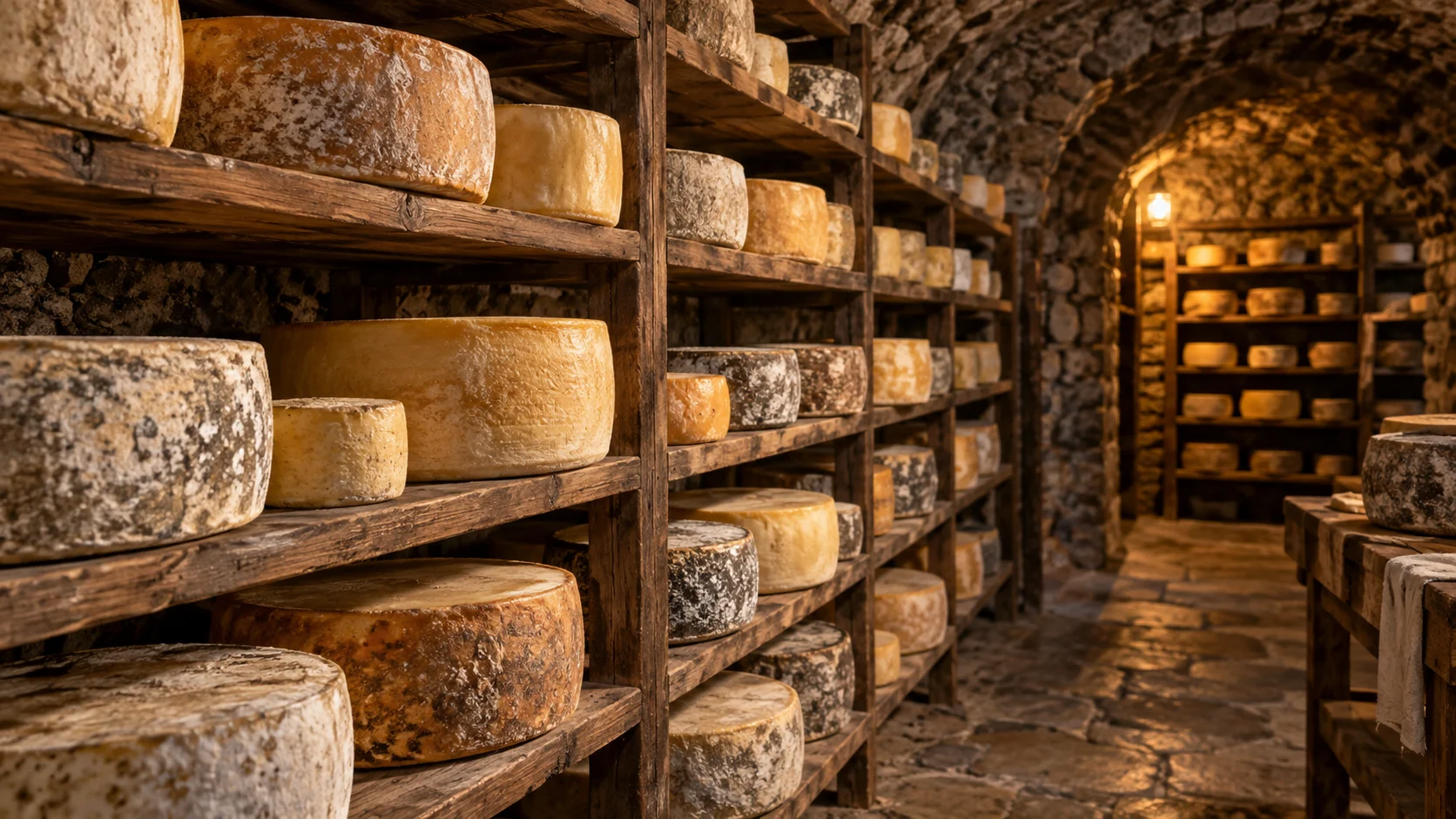
Hard and Aged Cheeses
Q: What Italian hard cheese is nicknamed the king of cheeses?
A: Parmigiano Reggiano.
Q: What hard Italian sheep's-milk cheese is named for pecora, meaning sheep?
A: Pecorino.
Q: What English cheese originated in the village of Cheddar?
A: Cheddar.
Q: What Swiss cheese is traditionally used in fondue and has small holes?
A: Gruyère.
Q: What Dutch cheese is commonly made in wheels with a smooth texture?
A: Gouda.
Q: What Dutch cheese is often shaped as a red-waxed sphere?
A: Edam.
Q: What Spanish sheep's-milk cheese comes from La Mancha?
A: Manchego.
Q: What French Alpine cheese is made in large wheels and used in cooking?
A: Comté.
Q: What Italian grating cheese is made in the Po River valley?
A: Grana Padano.
Q: What Swiss cheese gives its name to a category of holey cheeses?
A: Emmental.
Q: What crystal-forming amino acid can add crunch to aged cheese?
A: Tyrosine.
Q: Why does aged cheese generally contain less moisture?
A: Whey loss and evaporation during aging.
Q: What flavor quality often intensifies as cheese ages?
A: Umami.
Q: What does extra sharp usually indicate on cheddar?
A: A stronger aged flavor.
Q: Does every hard cheese need refrigeration for safe long-term storage?
A: Storage guidance varies by cheese.
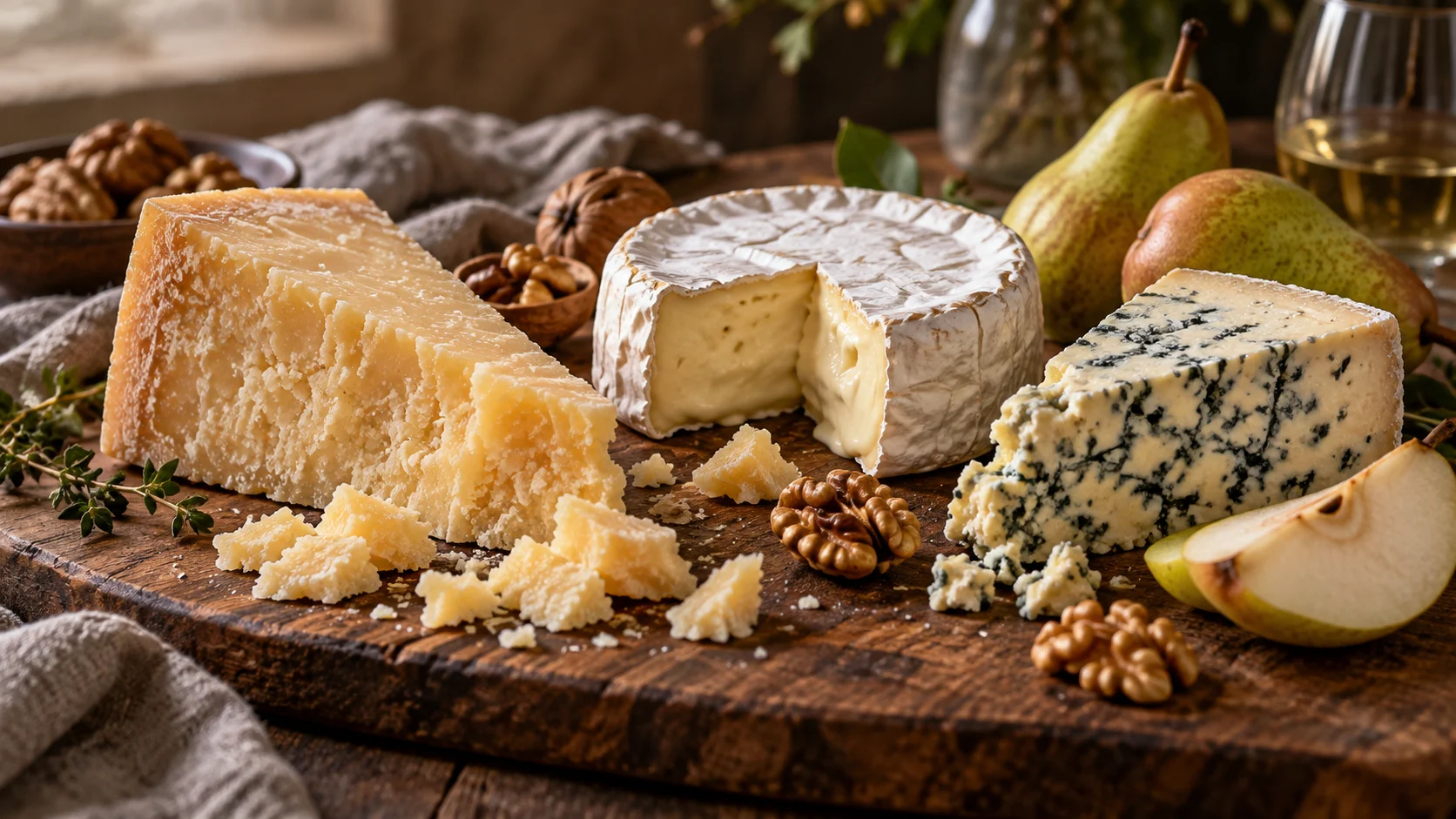
Blue, Washed, and Bloomy Rinds
Q: What mold creates blue veins in many blue cheeses?
A: Penicillium mold.
Q: What French blue cheese is traditionally made from sheep's milk?
A: Roquefort.
Q: What Italian blue cheese shares its name with a town near Milan?
A: Gorgonzola.
Q: What English blue cheese is often served at Christmas?
A: Blue Stilton.
Q: Why are blue cheeses pierced with needles?
A: To admit oxygen for mold growth.
Q: What is a bloomy rind?
A: A soft rind covered by surface mold.
Q: What mold genus helps form the white rind on Brie and Camembert?
A: Penicillium.
Q: What treatment creates a washed-rind cheese?
A: Regular washing with brine or another liquid.
Q: What bacterium helps give many washed rinds an orange color and strong aroma?
A: Brevibacterium linens.
Q: What Belgian washed-rind cheese is known for a powerful aroma?
A: Limburger.
Q: What French washed-rind cheese is famously pungent and orange?
A: Époisses.
Q: What cheese style ripens from the outside toward the center?
A: Surface-ripened cheese.
Q: Are the blue veins in blue cheese bacteria?
A: No, they are produced by fungi.
Q: Can an edible rind contribute flavor to cheese?
A: Yes.
Q: Should wax or cloth coverings be treated as edible rinds?
A: No.
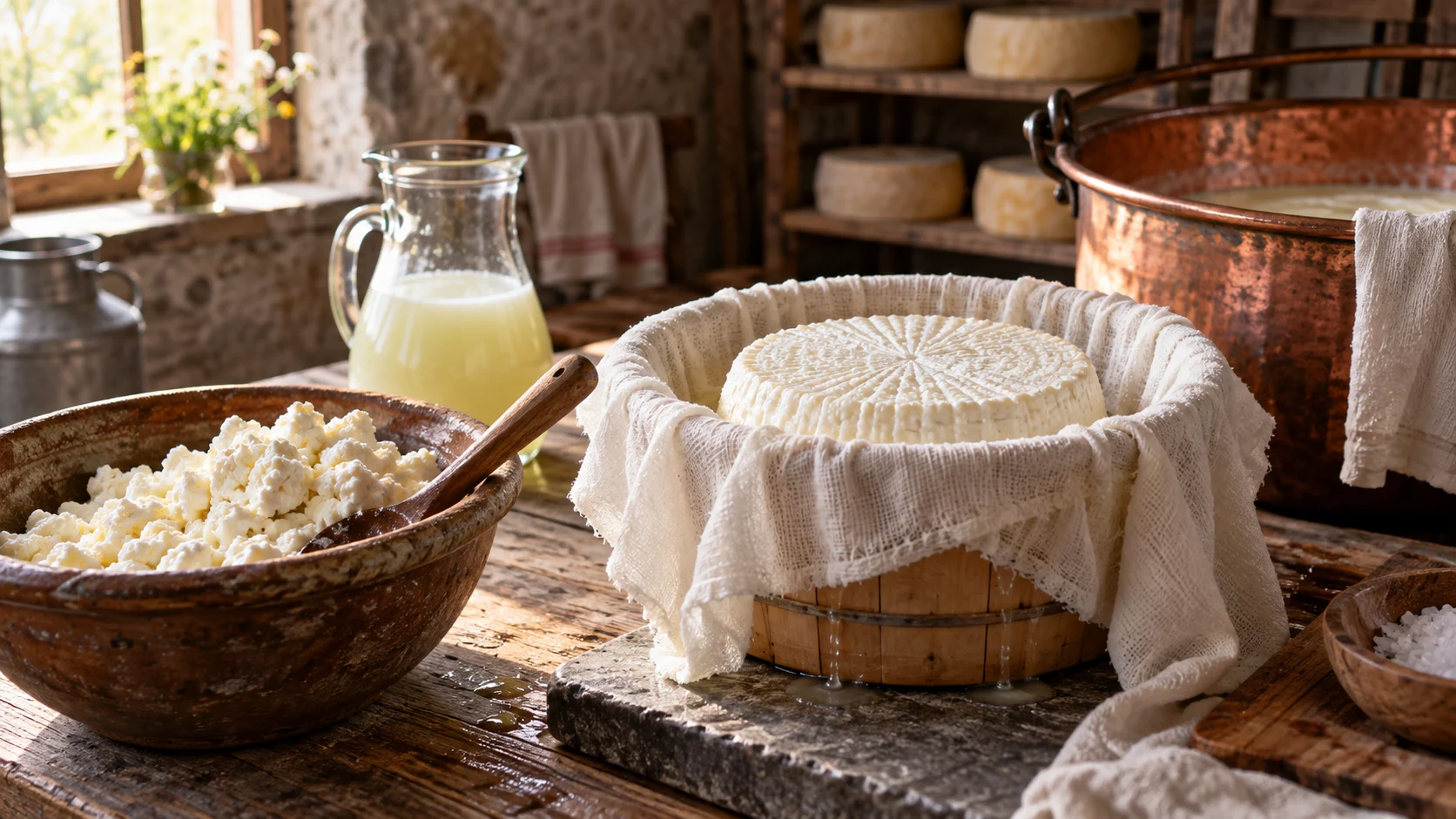
Cheesemaking Science
Q: What happens to casein when milk acidifies enough?
A: It coagulates.
Q: What microbial cultures begin controlled acid production in cheese?
A: Starter cultures.
Q: What temperature-loving cultures are called thermophilic?
A: Thermophilic cultures.
Q: What moderate-temperature cultures are called mesophilic?
A: Mesophilic cultures.
Q: What process heats milk to reduce harmful microbes?
A: Pasteurization.
Q: Does pasteurization sterilize milk?
A: No.
Q: What method removes some water from curds through cooking and stirring?
A: Curd cooking.
Q: What cheddar-making step stacks and turns slabs of curd?
A: Cheddaring.
Q: What stretching process gives mozzarella its texture?
A: Pasta filata.
Q: What gas creates eyes in some Swiss-style cheeses?
A: Carbon dioxide.
Q: Which bacterium produces much of that carbon dioxide in Swiss cheese?
A: Propionibacterium freudenreichii.
Q: What is proteolysis in cheese aging?
A: The breakdown of proteins.
Q: What is lipolysis in cheese aging?
A: The breakdown of fats.
Q: What flavor compounds can lipolysis release?
A: Fatty acids.
Q: Why does cheese melt?
A: Heat loosens its protein network and mobilizes fat and water.
Cheese Around the World
Q: Which country is the home of Parmigiano Reggiano?
A: Italy.
Q: Which country is the home of Roquefort?
A: France.
Q: Which country is the home of Manchego?
A: Spain.
Q: Which country is the home of Gouda?
A: The Netherlands.
Q: Which country is the home of Cheddar?
A: England.
Q: Which country is the home of Gruyère?
A: Switzerland.
Q: Which country is feta most closely associated with?
A: Greece.
Q: What Cypriot cheese is famous for grilling?
A: Halloumi.
Q: What Indian cheese is commonly cubed in curries?
A: Paneer.
Q: What Mexican cheese is traditionally pulled into strings?
A: Quesillo, or Oaxaca cheese.
Q: What Georgian bread boat is filled with cheese and often topped with egg?
A: Khachapuri.
Q: What Canadian dish tops fries with cheese curds and gravy?
A: Poutine.
Q: What Swiss dish melts cheese with wine in a communal pot?
A: Fondue.
Q: What Alpine dish melts cheese and scrapes it over potatoes?
A: Raclette.
Q: What Brazilian baked snack is made with cheese and cassava starch?
A: Pão de queijo.
History and Traditions
Q: Did cheesemaking begin before written history?
A: Yes.
Q: Why was cheese valuable before refrigeration?
A: It preserved nutrients from milk.
Q: What ancient pottery evidence suggests early cheesemaking?
A: Strainers with milk-fat residues.
Q: Which ancient civilization left tomb art showing dairy processing?
A: Ancient Egypt.
Q: What epic describes the Cyclops making cheese?
A: The Odyssey.
Q: What two broad methods can coagulate milk into curds?
A: Acidification and enzymes.
Q: What natural enzyme in young ruminant stomachs coagulates milk?
A: Chymosin.
Q: What religious communities preserved and refined many European cheese traditions?
A: Monasteries.
Q: What seasonal practice moved livestock to mountain pastures?
A: Transhumance.
Q: What is a protected designation intended to safeguard?
A: A food's regional name and production tradition.
Q: What does PDO stand for in European food labeling?
A: Protected Designation of Origin.
Q: Why are some cheeses aged in caves?
A: Caves provide cool, humid conditions.
Q: What wooden tool traditionally stirs curds in a cheese vat?
A: A cheese harp or curd cutter.
Q: What festival spectacle sends competitors chasing a cheese downhill?
A: Cheese rolling.
Q: Which English hill hosts the famous cheese-rolling race?
A: Cooper's Hill.
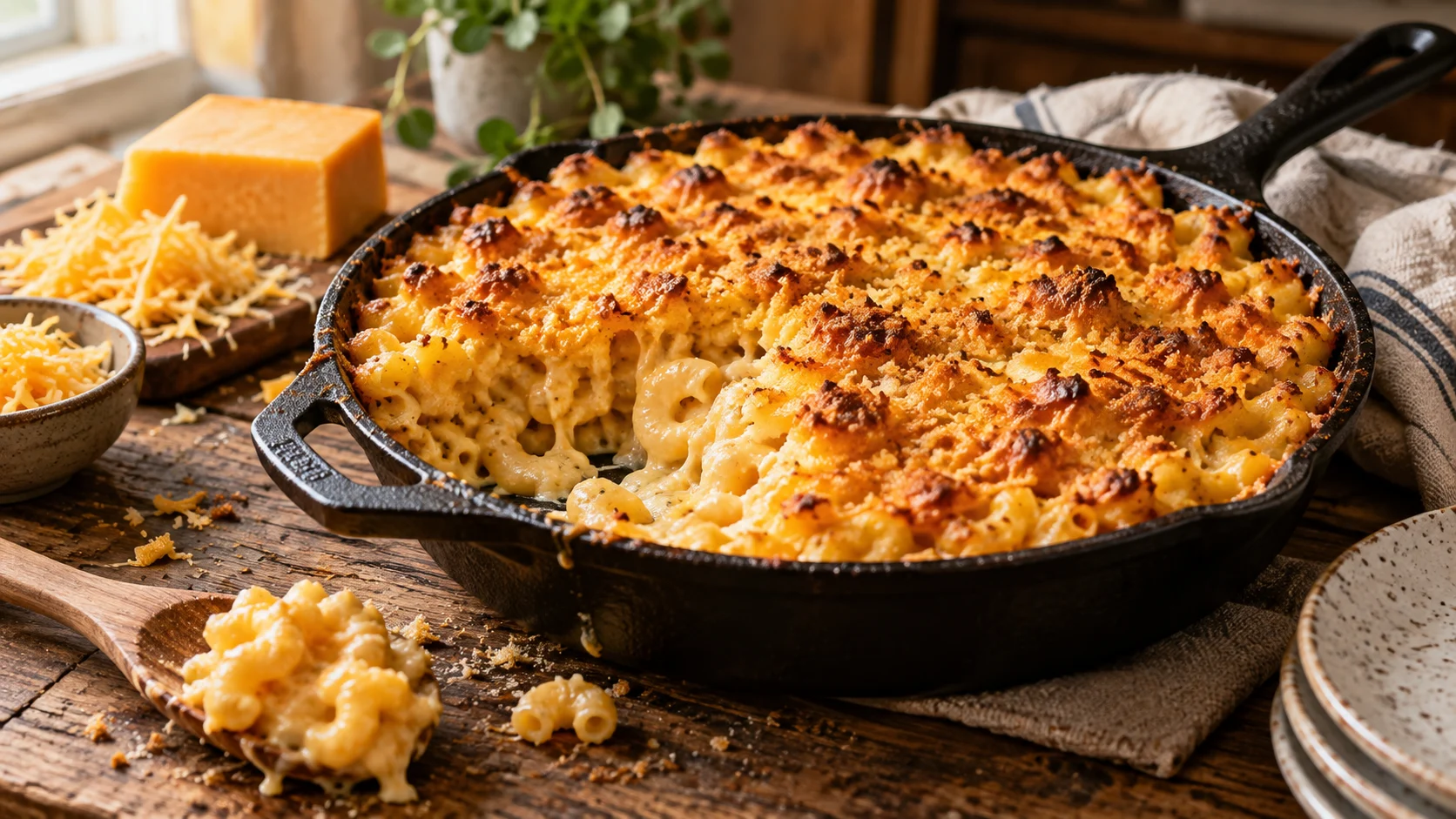
Cooking With Cheese
Q: What cheese is classic on a Margherita pizza?
A: Mozzarella.
Q: What cheese is grated over many pasta dishes?
A: Parmigiano Reggiano.
Q: What cheese sauce begins with béchamel plus cheese?
A: Mornay sauce.
Q: What French sandwich is topped with cheese and béchamel?
A: Croque monsieur.
Q: What cheese is traditional in Greek salad?
A: Feta.
Q: What cheese is commonly melted in a quesadilla?
A: A good melting cheese such as Oaxaca.
Q: What cheese gives tiramisu its creamy body?
A: Mascarpone.
Q: What cheese is traditional in cannoli filling?
A: Ricotta.
Q: What cheese is often used for saag paneer?
A: Paneer.
Q: What blend makes classic Swiss fondue?
A: Gruyère and another Swiss cheese such as Vacherin Fribourgeois.
Q: Why is starch sometimes added to fondue?
A: To help stabilize the melted mixture.
Q: Why can very aged cheese melt less smoothly?
A: Its protein network and moisture have changed.
Q: What happens when cheese browns under a broiler?
A: Maillard reactions create color and flavor.
Q: What cheese is traditionally squeaky when very fresh?
A: Cheese curds.
Q: What causes fresh curds to squeak?
A: Their elastic protein network rubbing against teeth.
A Grate Finish
You made it through 120 cheese questions without a single meltdown. That is a gouda reason to feel proud.

Ellie Ewert is the founder and author of RandomTrivia.co, blending her passion for research with years of experience in content creation to deliver accurate, engaging, and well-sourced trivia. Dedicated to providing readers with trustworthy and entertaining facts, she applies meticulous fact-checking and SEO expertise to ensure every article meets the highest standards. Read more about our high standards in our Editorial Guidelines.