
Christmas can involve straw goats, hidden almonds, roller skates, paper lanterns, fried chicken, beach picnics, or a horse skull arriving at the door. These 120 questions travel through religious observances, family customs, seasonal foods, gift-bringers, decorations, and local traditions around the world.
Christmas Traditions Across Europe
Q: Which country is strongly associated with the modern Advent wreath?
A: Germany, where Johann Hinrich Wichern used an early wreath with candles in the nineteenth century.
Q: What does an Advent calendar count down?
A: The days leading to Christmas, usually beginning on December 1.
Q: What outdoor shopping tradition fills German town squares before Christmas?
A: Christmas markets, or Weihnachtsmärkte.
Q: Which German city is famous for the Christkindlesmarkt?
A: Nuremberg.
Q: What spiced hot wine is served at many German Christmas markets?
A: Glühwein.
Q: What fruit-filled bread is associated with Dresden?
A: Stollen.
Q: Which German Christmas figure brings gifts in many Protestant regions?
A: The Christkind.
Q: Which frightening companion may accompany Saint Nicholas in Alpine traditions?
A: Krampus.
Q: On what night are Krampus processions often held?
A: December 5, the eve of Saint Nicholas Day.
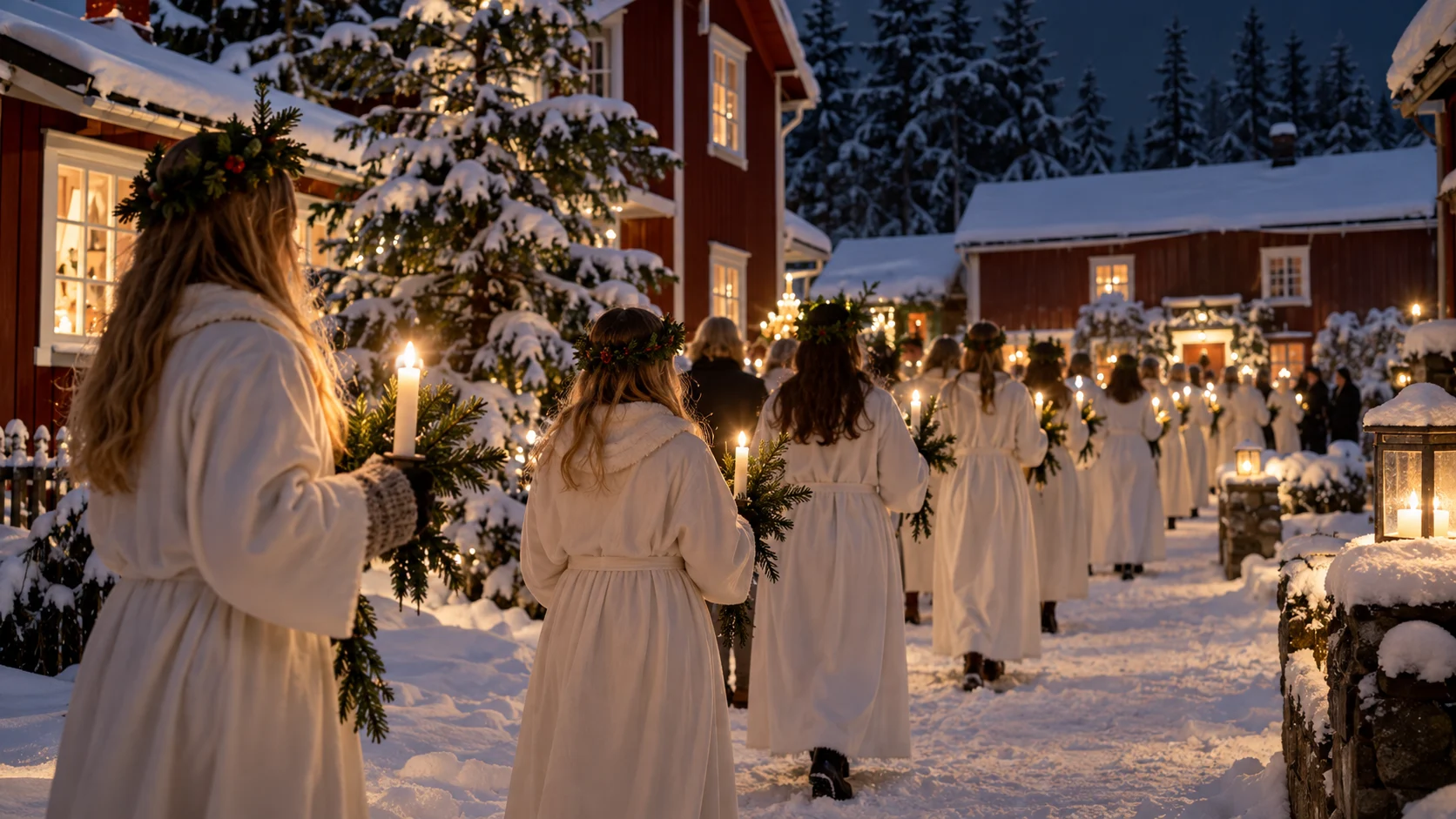
Q: What Swedish celebration occurs on December 13?
A: Saint Lucia Day.
Q: What does the traditional Lucia leader wear on her head?
A: A crown of candles or safer electric lights.
Q: What saffron bun is served for Saint Lucia Day?
A: Lussekatter.
Q: What straw animal is a Swedish Christmas symbol?
A: The Yule Goat, or julbock.
Q: Which Swedish city builds a giant straw Yule Goat each year?
A: Gävle.
Q: What television program do many Swedish families watch on Christmas Eve?
A: A Donald Duck and Disney cartoon special known as Kalle Anka.
Q: What rice dessert hides an almond in Denmark?
A: Risalamande.
Q: What may the person who finds the almond receive?
A: A small almond gift, traditionally including marzipan.
Q: What do Icelandic children receive during the thirteen nights before Christmas?
A: Small gifts or potatoes in shoes from the Yule Lads.
Q: What Icelandic custom involves exchanging books on Christmas Eve?
A: Jólabókaflóð, the Christmas book flood.
Q: What animal prowls Icelandic folklore looking for people without new clothes?
A: The Yule Cat.
Q: What is the main Christmas Eve meal called in Poland?
A: Wigilia.
Q: What thin wafer do Polish families share before Wigilia dinner?
A: Opłatek.
Q: Why is an extra place sometimes set at a Polish Christmas table?
A: It welcomes an unexpected guest or remembers someone absent.
Q: How many meatless dishes are traditionally served at many Polish Wigilia meals?
A: Twelve, often linked with the apostles or months of the year.
Q: What Ukrainian ornament tradition features spiderweb shapes?
A: A folktale about spiders decorating a poor family’s tree inspired web ornaments.
Q: What log-shaped cake is served in France?
A: Bûche de Noël.
Q: What are the thirteen desserts of Provence associated with?
A: A Christmas Eve spread symbolizing Jesus and the twelve apostles.
Q: Which gift-bringer visits Italian children around January 6?
A: La Befana.
Q: What Spanish celebration brings gifts on January 6?
A: Three Kings Day, or Día de los Reyes.
Q: What Catalan log is fed and then tapped to produce gifts?
A: Tió de Nadal, popularly called the Caga Tió.
Christmas Customs in North, Central & South America
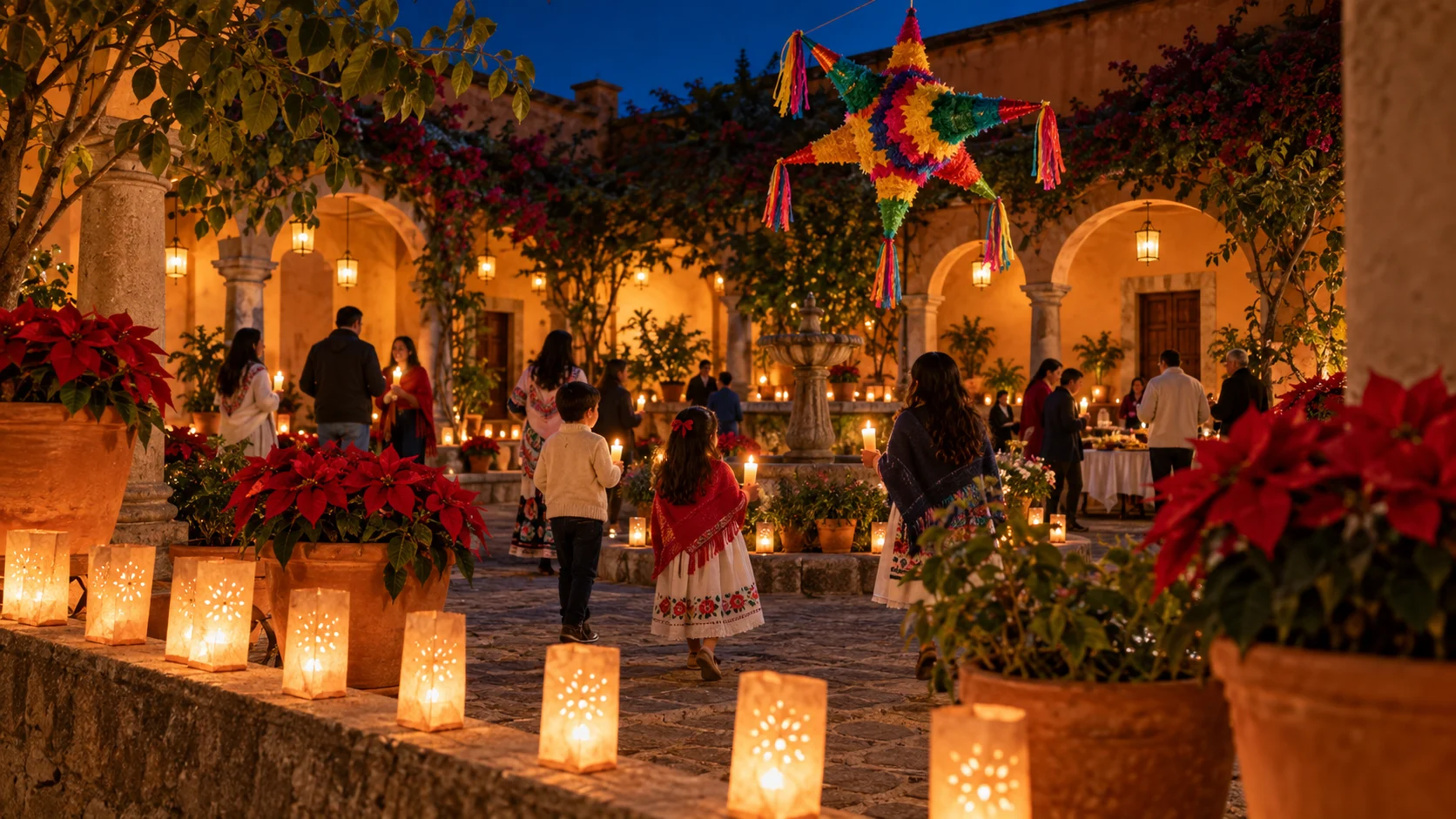
Q: What nine-night Mexican tradition reenacts Mary and Joseph seeking lodging?
A: Las Posadas.
Q: On what dates are Las Posadas commonly held?
A: December 16 through December 24.
Q: What shape is a traditional Posadas piñata?
A: A seven-pointed star.
Q: What Mexican flower became an international Christmas plant?
A: The poinsettia, known in Mexico as flor de Nochebuena.
Q: What theatrical tradition retells the shepherds’ journey in Mexico?
A: Las Pastorelas.
Q: What sweet corn drink is served during some Mexican holiday gatherings?
A: Atole.
Q: What Christmas Eve feast is called Nochebuena in many Spanish-speaking countries?
A: The family meal and celebration on the night of December 24.
Q: What Puerto Rican musical visits move from house to house?
A: Parrandas or asaltos navideños.
Q: What do Puerto Rican children leave for the Three Kings’ camels?
A: Grass or hay, often placed in a box under the bed.
Q: What coconut holiday drink is popular in Puerto Rico?
A: Coquito.
Q: Which Venezuelan city is famous for a tradition of traveling to early Mass on roller skates?
A: Caracas.
Q: What series of early morning church services is called Misa de Aguinaldo in Venezuela?
A: Christmas-season Masses held before dawn.
Q: What Colombian celebration lights candles on December 7?
A: Día de las Velitas, or Little Candles Day.
Q: What does Día de las Velitas mark?
A: The eve of the Feast of the Immaculate Conception and the start of Colombia’s Christmas season.
Q: What Guatemalan custom burns devil figures or unwanted items on December 7?
A: La Quema del Diablo.
Q: What dish brings Costa Rican families together for holiday assembly?
A: Tamales wrapped in banana leaves.
Q: What meal anchors Christmas Eve for many Cuban families?
A: Nochebuena dinner, often featuring roast pork.
Q: What outdoor cooking method is used for Cuban lechón?
A: A pig may be roasted slowly in a caja china or over coals, depending on family tradition.
Q: What Brazilian gift exchange resembles Secret Santa?
A: Amigo secreto.
Q: What is Santa called in Brazil?
A: Papai Noel.
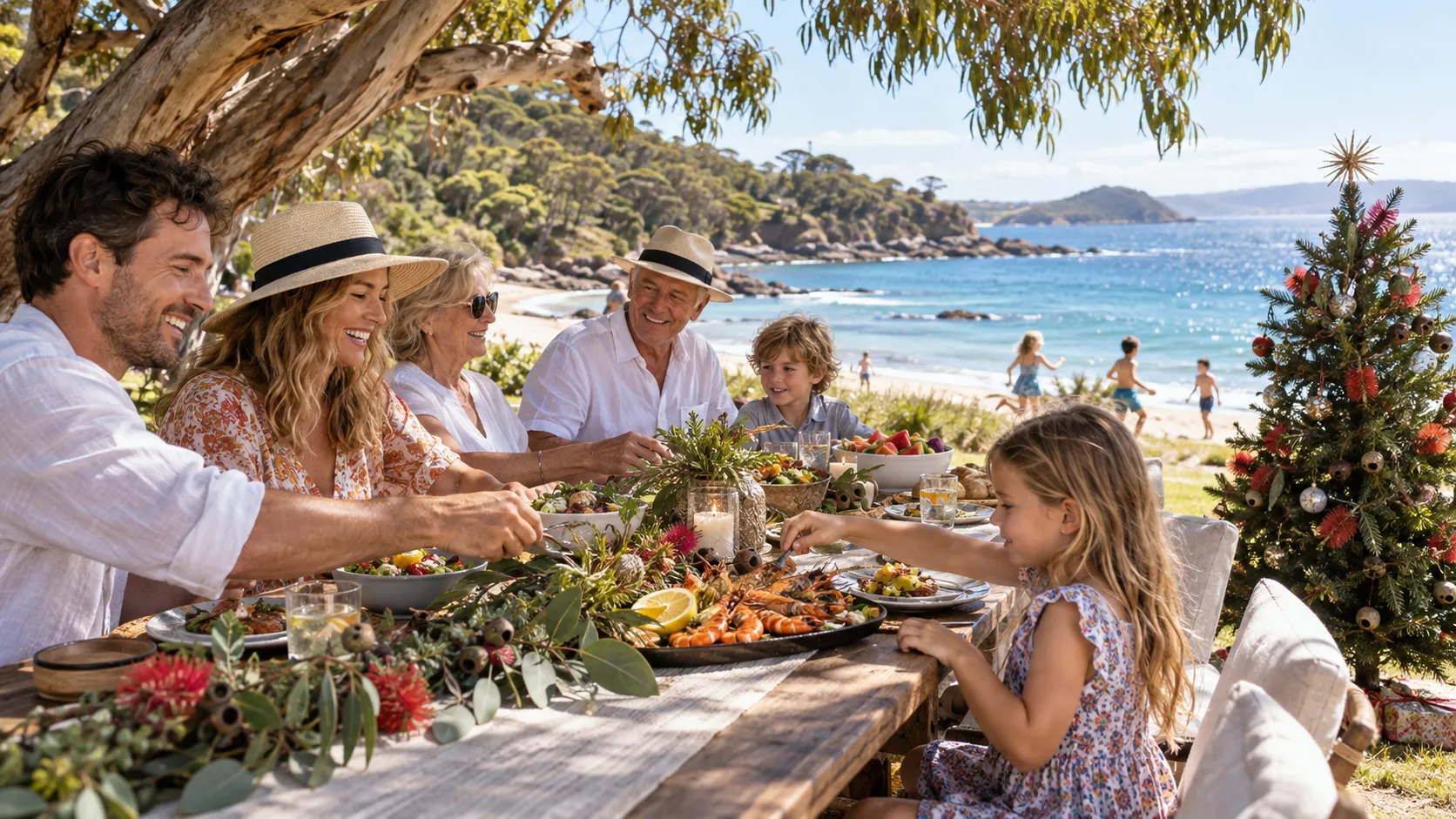
Q: Why do many South American Christmas scenes feel summery?
A: December falls during the Southern Hemisphere summer.
Q: What sweet bread is common at Christmas in Peru?
A: Panetón, a local version of Italian panettone.
Q: What community event in Peru gives children hot chocolate and panetón?
A: A chocolatada.
Q: What is Santa commonly called in Chile?
A: Viejito Pascuero.
Q: What French Canadian Christmas Eve feast is called réveillon?
A: A late family meal traditionally served around Midnight Mass.
Q: What Quebec meat pie often appears at réveillon?
A: Tourtière.
Q: What Newfoundland tradition involves disguised visitors entering homes?
A: Mummering.
Q: What must hosts do when mummers arrive?
A: Guess their identities while offering food, drink, music, or conversation.
Q: What New Mexican Christmas decoration uses paper bags, sand, and candles?
A: Luminarias or farolitos, with regional preferences over the names.
Q: What U.S. charity tradition places gift wishes on store or community trees?
A: Angel Trees and giving trees connect donors with requested presents.
Christmas in Asia, Australia, New Zealand & the Pacific
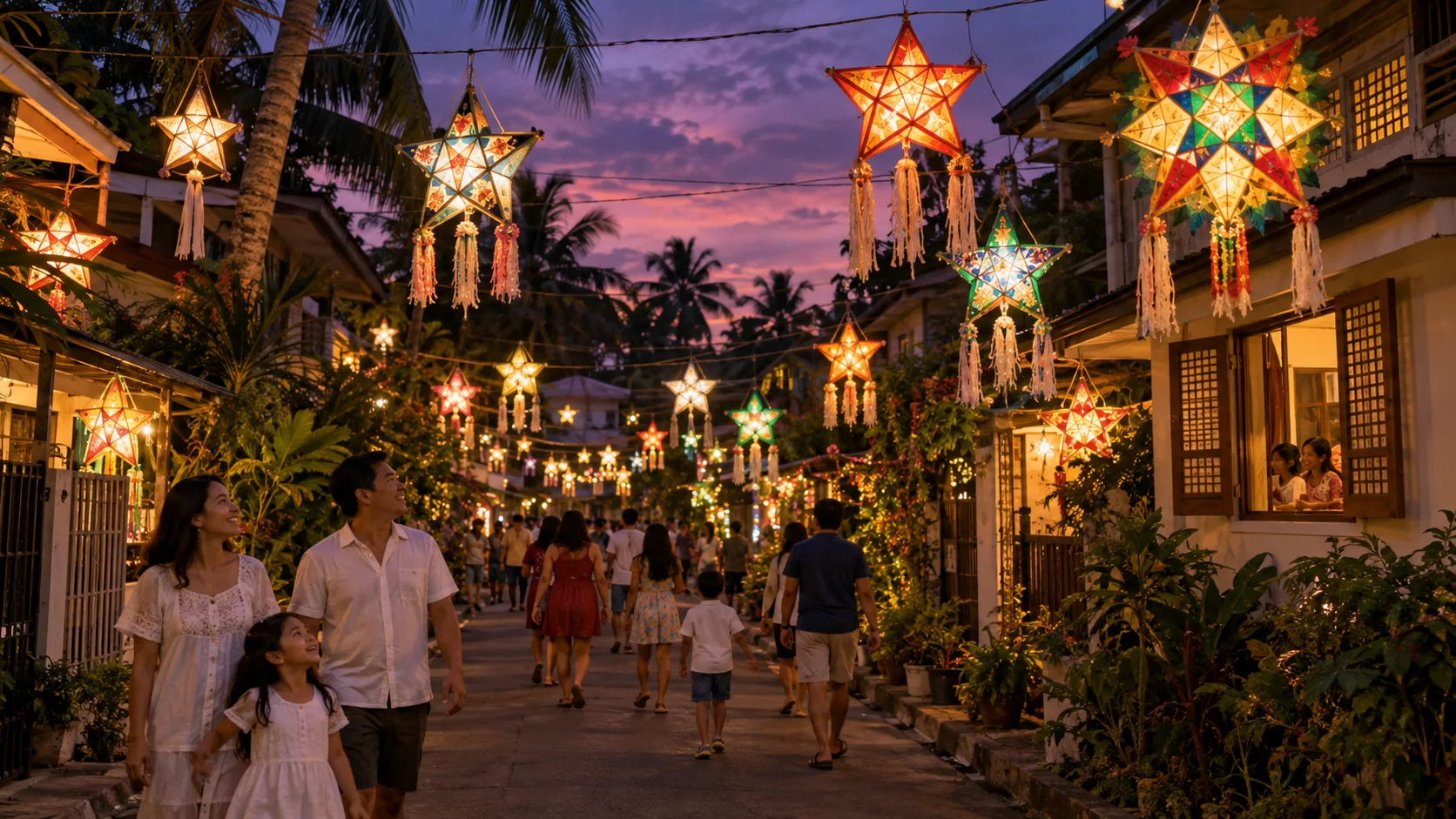
Q: Which country is famous for star-shaped Christmas lanterns called parols?
A: The Philippines.
Q: What does a parol traditionally symbolize?
A: The Star of Bethlehem.
Q: What nine-day Filipino series of dawn Masses leads to Christmas?
A: Simbang Gabi.
Q: What purple rice cake is often sold after Simbang Gabi?
A: Puto bumbong.
Q: What Filipino rice cake is baked in banana leaves at Christmas?
A: Bibingka.
Q: What feast follows Christmas Eve Mass in many Filipino homes?
A: Noche Buena.
Q: Why is the Philippine Christmas season often described as exceptionally long?
A: Decorations and music can begin in September and celebrations extend into January.
Q: Which fast-food meal became a Japanese Christmas tradition through advertising?
A: Kentucky Fried Chicken.
Q: What slogan helped launch Japan’s Christmas KFC campaign?
A: Kentucky for Christmas, promoted nationally in the 1970s.
Q: What light dessert is called Christmas cake in Japan?
A: A sponge cake with whipped cream and strawberries.
Q: How is Christmas commonly treated in Japan?
A: As a largely secular occasion for meals, gifts, lights, and romantic outings.
Q: Which East Asian country observes Christmas as a national public holiday?
A: South Korea.
Q: What fruit may be wrapped and given on Christmas Eve in parts of China?
A: Apples.
Q: Why are apples linked with Christmas Eve in a modern Chinese custom?
A: The phrase for peace apple plays on the Chinese name for Christmas Eve, or peaceful night.
Q: What giant illuminated displays are popular in Hong Kong at Christmas?
A: Shopping districts and harborfront buildings mount elaborate lights and decorations.
Q: What star-shaped lantern is displayed outside many Indian Christian homes?
A: A paper Christmas star.
Q: Which Indian state is especially known for large Christian Christmas celebrations?
A: Goa.
Q: What trees may substitute for fir trees in parts of India?
A: Banana or mango trees, along with artificial trees and local evergreens.
Q: What Anglo-Indian sweet is shaped into small festive pieces?
A: Kulkuls, fried curls coated with sugar.
Q: What traditional Australian event combines outdoor crowds with Christmas songs?
A: Carols by Candlelight.
Q: In which city did the major Carols by Candlelight tradition begin?
A: Melbourne.
Q: What kind of meal suits an Australian summer Christmas?
A: Outdoor lunches may feature seafood, salads, cold meats, barbecue, fruit, and pavlova.
Q: Which flower is known as New Zealand’s Christmas tree?
A: Pōhutukawa.
Q: Why is pōhutukawa linked with Christmas?
A: It produces vivid red blossoms around December.
Q: What dessert do Australia and New Zealand both claim as a national favorite?
A: Pavlova.
Q: What animal may pull Santa’s sleigh in Australian novelty songs and images?
A: Kangaroos, sometimes called boomers.
Q: What Hawaiian greeting means Merry Christmas?
A: Mele Kalikimaka.
Q: Why does Mele Kalikimaka sound different from the English phrase?
A: Hawaiian phonology adapts borrowed words to its available consonants and syllable patterns.
Q: What Pacific island church tradition often features community singing?
A: Choirs and extended worship services are central in many Christian island communities.
Q: Why do Pacific Christmas foods vary sharply by island?
A: Local fish, pork, taro, breadfruit, tropical fruit, colonial histories, and church traditions differ.
Africa, the Middle East, Calendar Differences & Hard Trivia
Q: On what date do many Ethiopian Orthodox Christians celebrate Christmas?
A: January 7 on the Gregorian calendar.
Q: What is Ethiopian Christmas commonly called?
A: Genna or Ganna.
Q: What white clothing may Ethiopian worshippers wear for Genna services?
A: A netela or other traditional white garment.
Q: What sport shares the name Genna in Ethiopian tradition?
A: A hockey-like field game associated with the holiday.
Q: On what date do many Coptic Orthodox Christians in Egypt celebrate Christmas?
A: January 7.
Q: What fasting practice precedes Coptic Christmas for observant believers?
A: A long vegan fast that avoids meat and animal products.
Q: What feast follows the end of the Coptic Christmas fast?
A: Families may eat meat, bread, rice, and festive dishes after late worship.
Q: What South African dessert often appears at summer Christmas meals?
A: Trifle, fruit desserts, malva pudding, or pavlova may accompany outdoor meals.
Q: What does Christmas fall during in South Africa?
A: Summer.
Q: What Ghanaian foods may appear at Christmas gatherings?
A: Jollof rice, chicken, goat, fufu, soups, and regional family dishes.
Q: What lively church element is common in many Ghanaian Christmas services?
A: Choir singing, drumming, dancing, and extended worship.
Q: Which West African masquerade season overlaps Christmas in parts of Sierra Leone?
A: Colorful masked devil and cultural society performances may appear during holiday festivities.
Q: What Lebanese Christmas decoration begins with seeds grown on damp cotton?
A: Sprouted wheat, lentils, or chickpeas arranged around a Nativity scene.
Q: When are Lebanese Christmas seeds often started?
A: Around December 4, the feast of Saint Barbara.
Q: What sweet is associated with Saint Barbara’s Day in Lebanon?
A: Burbara, a wheat-berry pudding flavored with spices and toppings.
Q: On what date does the Armenian Apostolic Church celebrate the Nativity and Epiphany together?
A: January 6.
Q: What Georgian Christmas tree is made from curled hazelnut or walnut branches?
A: A chichilaki.
Q: What happens to a chichilaki after the holiday season in some households?
A: It is ceremonially burned as a symbol of leaving past troubles behind.
Q: Why do Orthodox Christmas dates differ among churches?
A: Some use the Julian calendar for fixed feasts while others use a revised or Gregorian calendar.
Q: What is Epiphany in Western Christian tradition?
A: A January 6 feast associated with the visit of the Magi.
Q: What does Advent mean in the Christian calendar?
A: The season of preparation before Christmas.
Q: How many Sundays are in Advent?
A: Four.
Q: What does Midnight Mass celebrate?
A: The Nativity of Jesus at the transition into Christmas Day.
Q: Why do Nativity scenes differ from place to place?
A: Artists place the biblical story within local clothing, architecture, animals, and landscapes.
Q: Who is credited with popularizing a live Nativity scene in 1223?
A: Francis of Assisi at Greccio, Italy.
Q: What are Christmas carols?
A: Songs associated with the Nativity, winter celebration, worship, or seasonal community singing.
Q: What is Boxing Day?
A: December 26, observed in several countries shaped by British traditions.
Q: What is the Twelve Days of Christmas period?
A: The span from Christmas Day through the eve of Epiphany in Western tradition.
Q: Why should trivia avoid calling one custom a country’s universal tradition?
A: Religious identity, region, ethnicity, climate, migration, and family preference create major differences within every nation.
Q: What connects the world’s many Christmas customs despite their differences?
A: Families adapt faith, food, gifts, music, memory, and local winter or summer life into celebrations that feel like home.
How Did You Score?
If you knew Jólabókaflóð, Las Posadas, parols, and Genna, your holiday passport is impressively stamped. I am volunteering for every tradition involving books or dessert and respectfully observing the horse-skull singing contest from indoors.

Ellie Simons creates and edits Random Trivia. She researches trivia using primary and authoritative sources whenever possible and is currently reviewing the site's older trivia library for accuracy, clarity, and playability. Read more on the About page.
About this quiz
Site editor: Ellie Simons. Read our Trivia Methodology to learn how questions are researched and updated. Page last updated: . Report an error.