
I first came for the food questions and immediately got distracted by royal palaces, turtle ships, esports, and the fact that Korean age etiquette can turn one introduction into a small research project. These 120 questions cover South Korea without reducing the country to K-pop.
Map, Cities, Language & Everyday Basics
Q: What is South Korea’s official name?
A: The Republic of Korea.
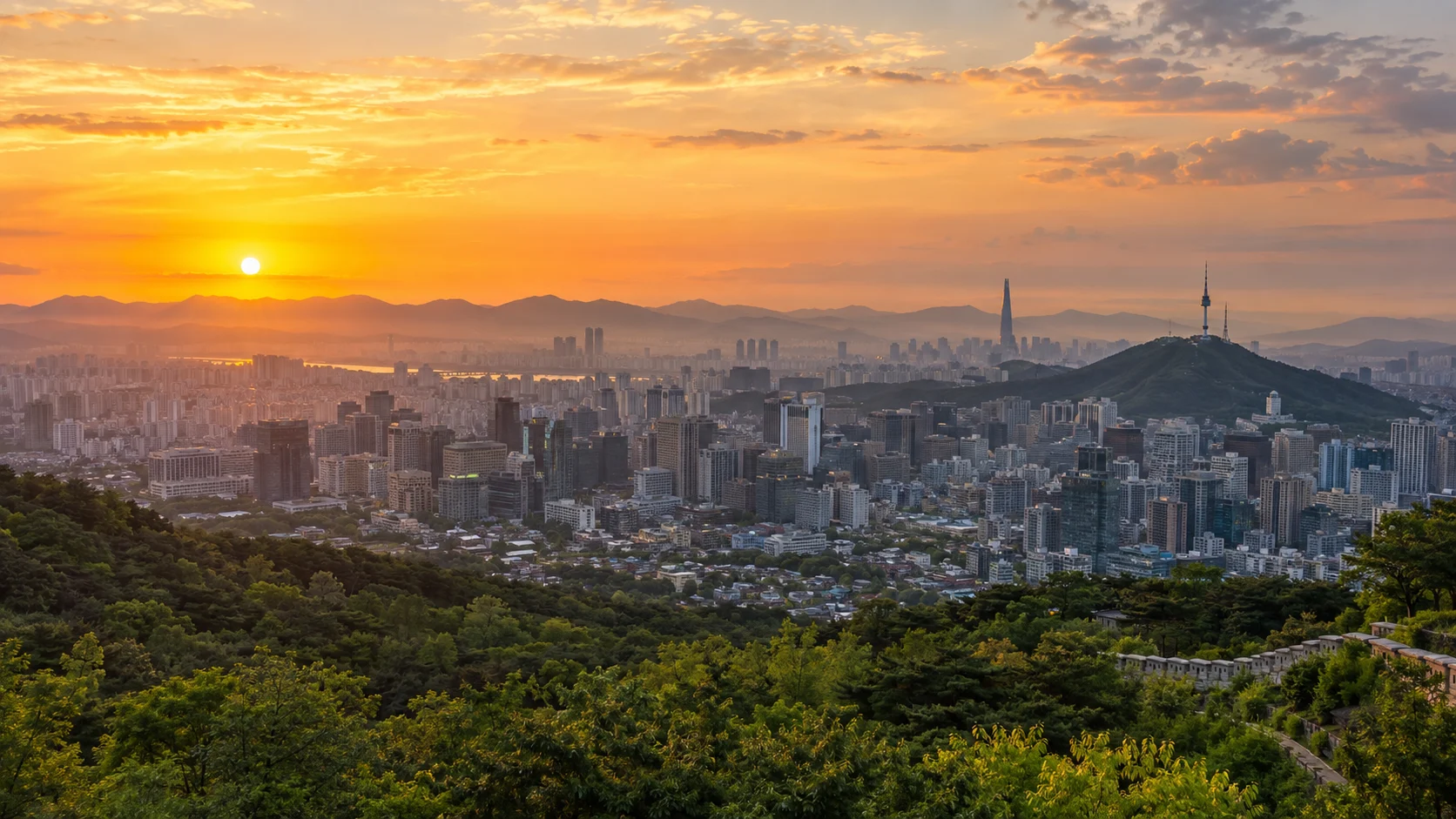
Q: What is the capital of South Korea?
A: Seoul.
Q: On which peninsula is South Korea located?
A: The Korean Peninsula.
Q: Which country borders South Korea by land?
A: North Korea.
Q: What heavily fortified zone separates North and South Korea?
A: The Korean Demilitarized Zone, or DMZ.
Q: Which sea lies west of South Korea?
A: The Yellow Sea.
Q: Which body of water lies east of South Korea?
A: The Sea of Japan, commonly called the East Sea in South Korea.
Q: Which strait separates South Korea from Japan?
A: The Korea Strait.
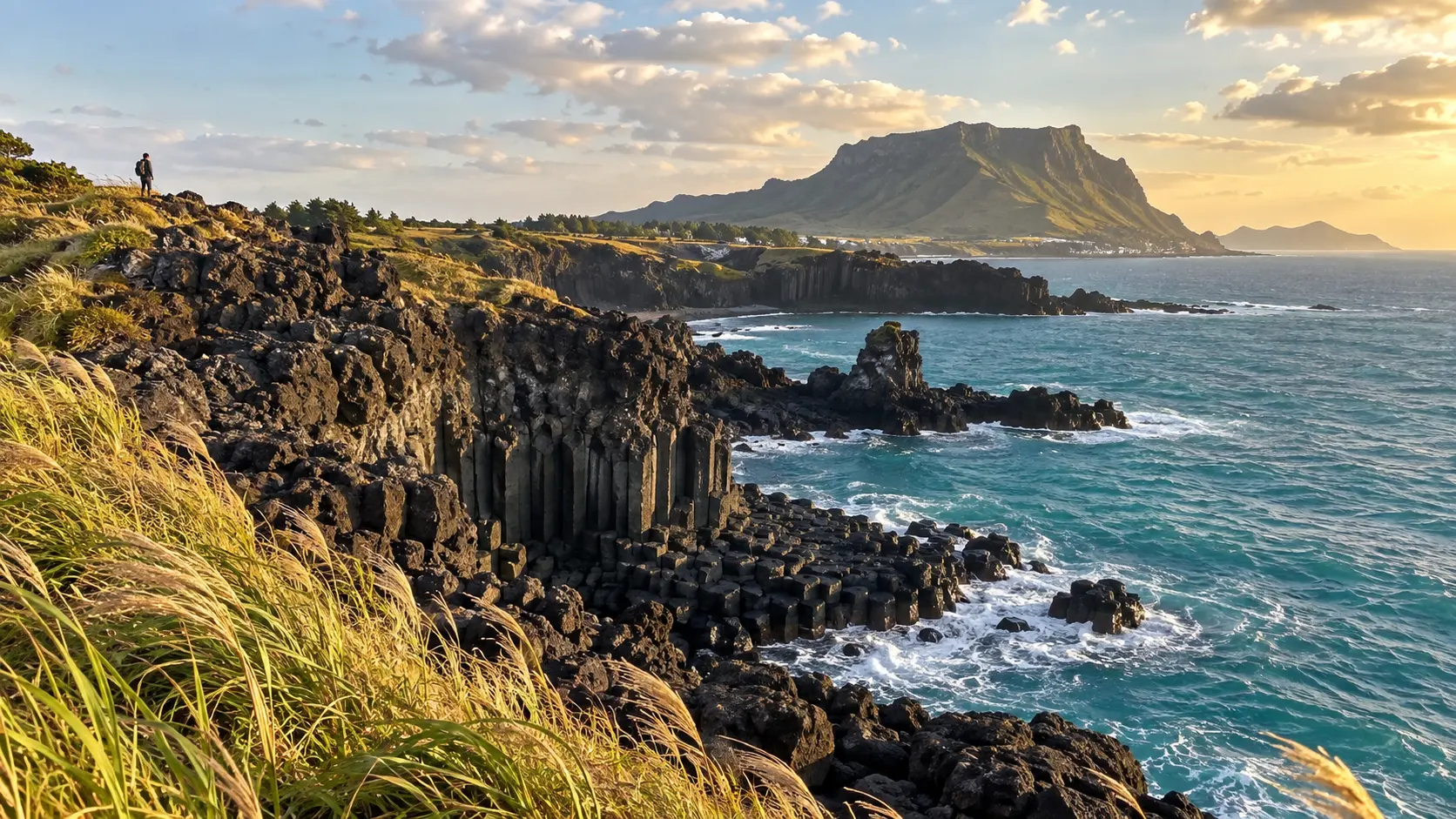
Q: What is South Korea’s largest island?
A: Jeju Island.
Q: What volcanic mountain is the highest point in South Korea?
A: Hallasan.
Q: Where is Hallasan located?
A: Jeju Island.
Q: Which river runs through Seoul?
A: The Han River.
Q: Which city is South Korea’s largest port?
A: Busan.
Q: Which city is known for beaches and the Busan International Film Festival?
A: Busan.
Q: Which city hosts many national government ministries?
A: Sejong City.
Q: Which city is known as a center of science and research?
A: Daejeon.
Q: Which city hosted the 2018 Winter Olympics?
A: Pyeongchang.
Q: Which city hosted the 1988 Summer Olympics?
A: Seoul.
Q: What is the primary language of South Korea?
A: Korean.
Q: What is the Korean alphabet called?
A: Hangul.
Q: Who is credited with commissioning Hangul?
A: King Sejong the Great.
Q: In which century was Hangul created?
A: The fifteenth century.
Q: What is South Korea’s currency?
A: The South Korean won.
Q: What symbol is used for the won?
A: ₩.
Q: What is the name of South Korea’s flag?
A: Taegeukgi.
Q: What central symbol appears on the Taegeukgi?
A: A red-and-blue taegeuk circle.
Q: What surrounds the taegeuk on the flag?
A: Four black trigrams.
Q: What time zone does South Korea use?
A: Korea Standard Time, UTC+9.
Q: What side of the road do vehicles use in South Korea?
A: The right.
Q: What term describes the greater Seoul urban region?
A: The Seoul Capital Area.
Kingdoms, War, Democracy & Historic Sites
Q: Which ancient kingdom controlled much of the peninsula at its height?
A: Goguryeo.
Q: What three states are called Korea’s Three Kingdoms?
A: Goguryeo, Baekje, and Silla.
Q: Which kingdom unified most of the peninsula in 668?
A: Silla.
Q: Which dynasty gave Korea its common English name?
A: Goryeo.
Q: Which dynasty ruled from 1392 to 1910?
A: Joseon.
Q: Who founded the Joseon dynasty?
A: Yi Seong-gye, known as King Taejo.
Q: What philosophy strongly influenced Joseon government and society?
A: Neo-Confucianism.
Q: Which admiral is famous for victories against Japanese fleets in the 1590s?
A: Yi Sun-sin.
Q: What armored warship is associated with Admiral Yi?
A: The turtle ship, or geobukseon.
Q: What Japanese invasions of Korea began in 1592?
A: The Imjin War invasions.
Q: When did Japan formally annex Korea?
A: 1910.
Q: When did Japanese colonial rule in Korea end?
A: 1945.
Q: What date is celebrated as National Liberation Day in South Korea?
A: August 15.
Q: Along which parallel was Korea initially divided after World War II?
A: The 38th parallel.
Q: When did the Korean War begin?
A: 1950.
Q: What event began the Korean War?
A: North Korean forces invaded South Korea.
Q: When was the Korean Armistice Agreement signed?
A: 1953.
Q: What did the 1953 armistice fail to create?
A: A final peace treaty formally ending the Korean War.
Q: What village is associated with armistice talks and the Joint Security Area?
A: Panmunjom.
Q: Which South Korean president pursued rapid industrial development beginning in the 1960s?
A: Park Chung-hee.
Q: What phrase describes South Korea’s rapid economic growth?
A: The Miracle on the Han River.
Q: What did the June Democratic Struggle of 1987 help achieve?
A: Constitutional reforms and direct presidential elections.
Q: What is a chaebol?
A: A large, family-controlled South Korean business conglomerate.
Q: Which palace was the main royal palace of the Joseon dynasty?
A: Gyeongbokgung.
Q: Which Seoul palace is known for its Secret Garden?
A: Changdeokgung.
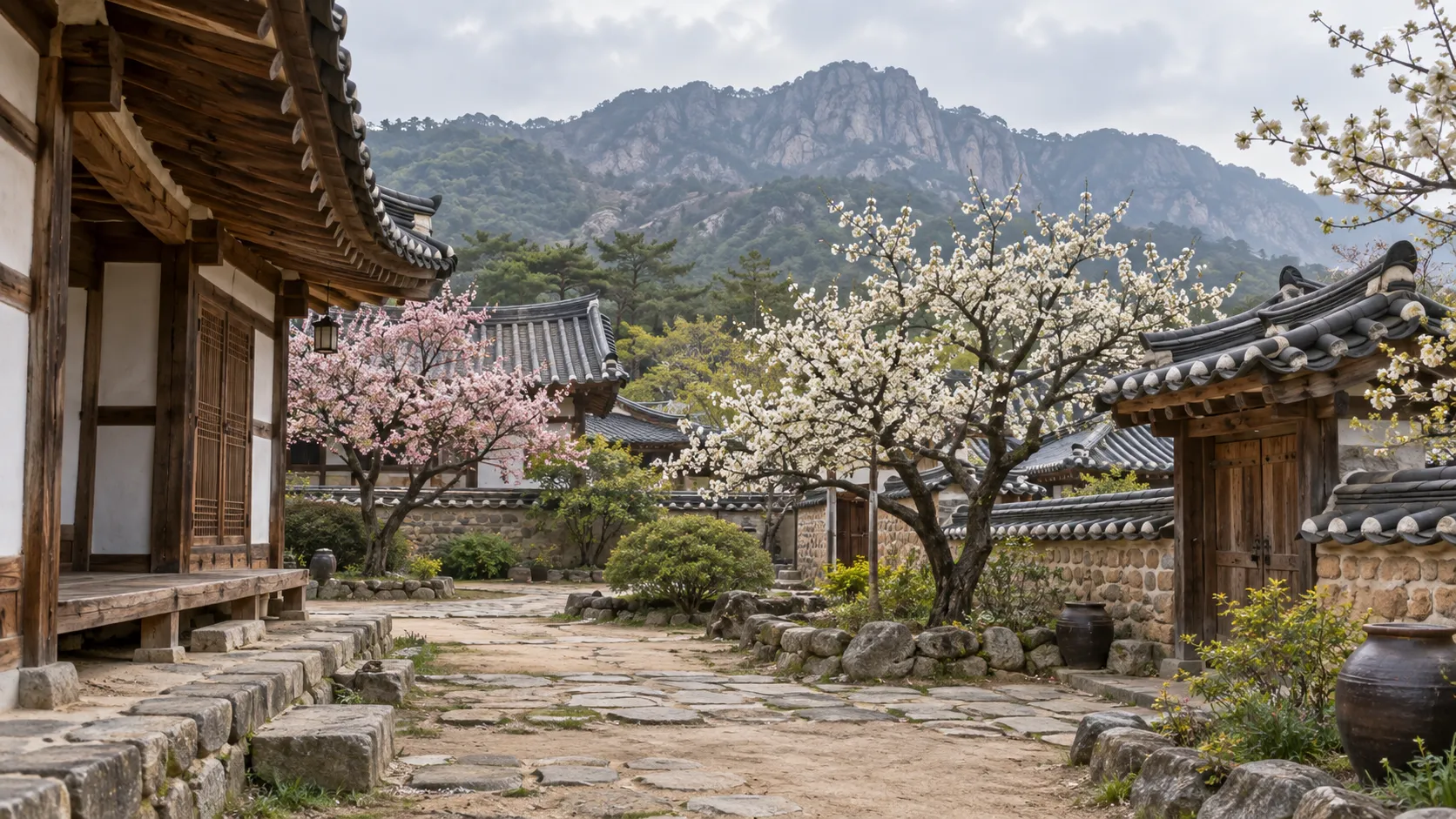
Q: What historic village in Seoul preserves traditional houses?
A: Bukchon Hanok Village.
Q: What are traditional Korean houses called?
A: Hanok.
Q: What ancient capital contains Bulguksa Temple and royal tombs?
A: Gyeongju.
Q: What Buddhist grotto near Gyeongju contains a celebrated stone Buddha?
A: Seokguram Grotto.
Q: What UNESCO-listed fortress surrounds part of Suwon?
A: Hwaseong Fortress.
Food, Holidays, Traditions & Daily Culture
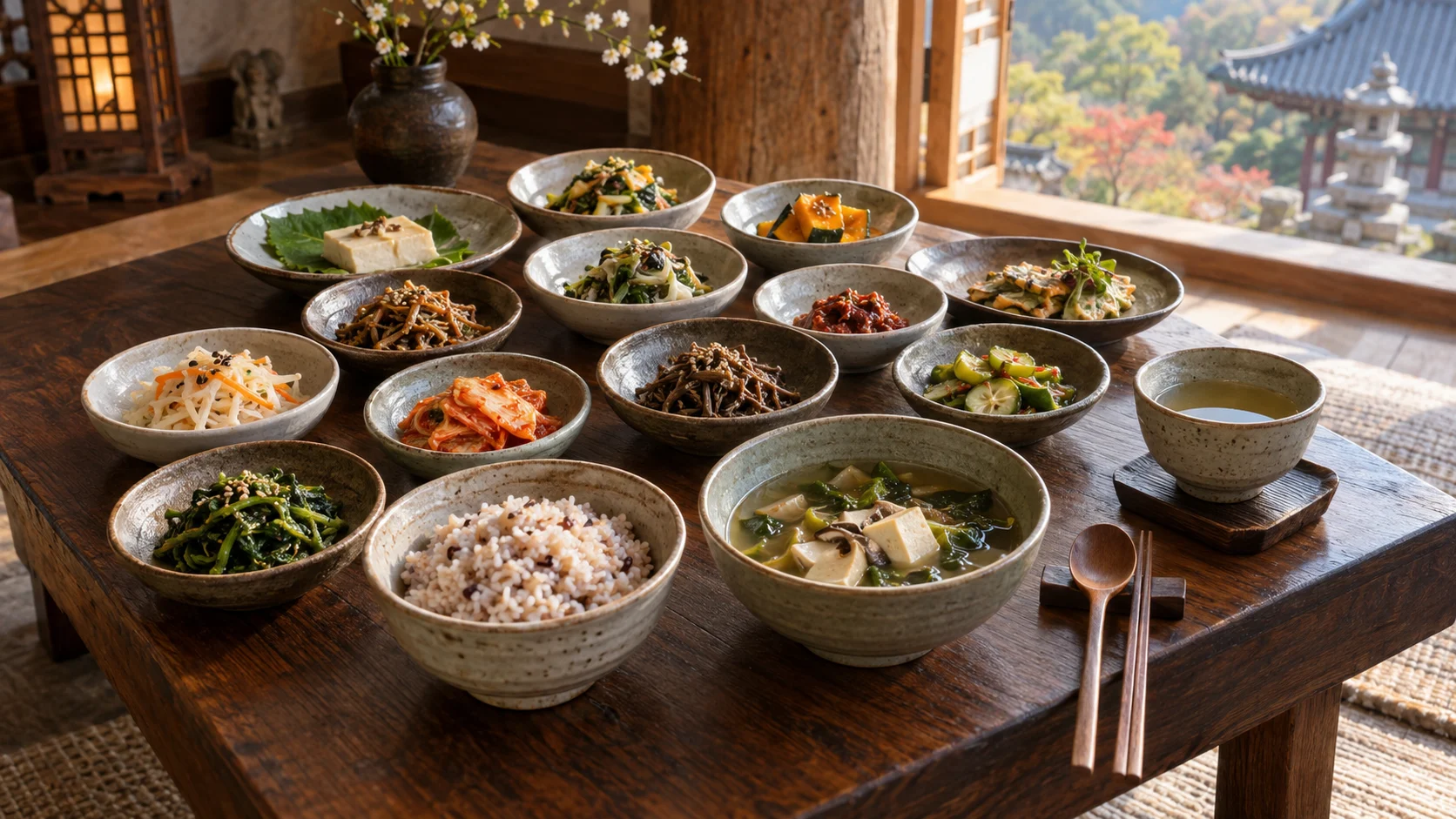
Q: What is kimchi?
A: Fermented vegetables seasoned in many regional styles.
Q: Which vegetable is commonly used for baechu kimchi?
A: Napa cabbage.
Q: What is kimjang?
A: The communal tradition of making and sharing kimchi.
Q: What dish combines rice with vegetables and often meat or egg?
A: Bibimbap.
Q: What grilled marinated beef dish is called fire meat?
A: Bulgogi.
Q: What dish consists of grilled slices of pork belly?
A: Samgyeopsal.
Q: What chewy rice-cake dish is served in a spicy red sauce?
A: Tteokbokki.
Q: What fermented chili paste flavors many Korean dishes?
A: Gochujang.
Q: What fermented soybean paste is used in soups and stews?
A: Doenjang.
Q: What clear distilled spirit is commonly associated with Korean dining?
A: Soju.
Q: What milky rice beverage has a lightly sparkling texture?
A: Makgeolli.
Q: What seaweed rice rolls are called?
A: Gimbap.
Q: What Korean fried pancake can contain scallions or kimchi?
A: Jeon.
Q: What soup is traditionally eaten on birthdays?
A: Miyeok-guk, or seaweed soup.
Q: What sliced rice-cake soup is eaten for Lunar New Year?
A: Tteokguk.
Q: What is Korean Lunar New Year called?
A: Seollal.
Q: What major harvest holiday honors family and ancestors?
A: Chuseok.
Q: What half-moon rice cakes are associated with Chuseok?
A: Songpyeon.
Q: What traditional Korean clothing is worn for celebrations?
A: Hanbok.
Q: What floor-heating system is traditional in Korean homes?
A: Ondol.
Q: What etiquette governs removing shoes in many Korean homes?
A: Shoes are left at the entrance before stepping onto the interior floor.
Q: What respectful gesture often accompanies a greeting?
A: A bow.
Q: How are age and status reflected in Korean speech?
A: Speakers use honorifics and different levels of formality.
Q: What is nunchi?
A: Social awareness used to read a room and respond to unspoken cues.
Q: What is a jjimjilbang?
A: A Korean bathhouse and sauna complex with communal relaxation areas.
Q: What board game uses four wooden sticks as dice?
A: Yutnori.
Q: What martial art is South Korea’s national sport?
A: Taekwondo.
Q: What folk song is often treated as an unofficial Korean anthem?
A: Arirang.
Q: What does K-pop stand for?
A: Korean popular music.
Q: Which entertainment company formed BTS?
A: Big Hit Entertainment, now part of HYBE.
K-Pop, Film, Technology, Sports & Modern South Korea
Q: How many members are in BTS?
A: Seven.
Q: What is BTS’s Korean name commonly translated as?
A: Bulletproof Boy Scouts.
Q: Which BTS song became the group’s first Billboard Hot 100 number one?
A: Dynamite.
Q: Which four-member girl group includes Jisoo, Jennie, Rosé, and Lisa?
A: BLACKPINK.
Q: Which company formed BLACKPINK?
A: YG Entertainment.
Q: Why is one fandom label inadequate for everyone interested in Korean culture?
A: People follow distinct music, film, television, food, language, and cultural communities.
Q: What does Hallyu mean?
A: The Korean Wave of global interest in South Korean popular culture.
Q: Which 2012 song helped spread K-pop globally through a viral video?
A: Gangnam Style by Psy.
Q: Which Seoul district inspired Gangnam Style?
A: Gangnam.
Q: Which film became the first non-English-language movie to win Best Picture at the Academy Awards?
A: Parasite.
Q: Who directed Parasite?
A: Bong Joon Ho.
Q: Which thriller series follows indebted contestants playing deadly games?
A: Squid Game.
Q: Which streaming service released Squid Game internationally?
A: Netflix.
Q: What Korean term commonly refers to television drama series?
A: K-drama.
Q: Which historical zombie series is set during the Joseon era?
A: Kingdom.
Q: Which actress played the grandmother in Minari and won an Academy Award?
A: Youn Yuh-jung.
Q: Which South Korean company makes Galaxy smartphones?
A: Samsung Electronics.
Q: Which South Korean company is a major automaker alongside Kia?
A: Hyundai Motor Company.
Q: What internet technology has South Korea been known for adopting rapidly?
A: High-speed broadband and mobile connectivity.
Q: Which strategy video game became a major early esport in South Korea?
A: StarCraft.
Q: What Seoul neighborhood became closely associated with early esports arenas?
A: Yongsan was an important center for televised esports and electronics.
Q: What is the real name of the League of Legends player Faker?
A: Lee Sang-hyeok.
Q: Which sport did Kim Yuna win Olympic gold in 2010?
A: Figure skating.
Q: Which golfer became the youngest winner of the U.S. Women’s Open in 1998?
A: Pak Se-ri.
Q: Which South Korean soccer player captained Tottenham Hotspur?
A: Son Heung-min.
Q: Which baseball organization runs South Korea’s top professional league?
A: The Korea Baseball Organization, or KBO.
Q: Which traditional wrestling style is competed on sand?
A: Ssireum.
Q: What global event did South Korea co-host with Japan in 2002?
A: The men’s FIFA World Cup.
Q: How far did South Korea advance in the 2002 World Cup?
A: The semifinals.
Q: What makes modern South Korean culture difficult to reduce to K-pop alone?
A: Its literature, regional traditions, food, cinema, design, technology, sports, and long history extend far beyond the idol industry.
How Did You Score?
If Taegeukgi, Goryeo, kimjang, ondol, Hallyu, and ssireum all came easily, your South Korea trivia survived every section. I am awarding bonus points if you answered before mentally planning a bowl of tteokbokki.

Ellie Simons creates and edits Random Trivia. She researches trivia using primary and authoritative sources whenever possible and is currently reviewing the site's older trivia library for accuracy, clarity, and playability. Read more on the About page.
About this quiz
Site editor: Ellie Simons. Read our Trivia Methodology to learn how questions are researched and updated. Page last updated: . Report an error.