
Play 120 Seinfeld trivia questions about Jerry, George, Elaine, Kramer, memorable episodes, recurring characters, and catchphrases. Pick a section for a quick round or test all nine seasons.
For a longer game, try our 323-question Seinfeld quiz.
Keep watching with our TV show trivia, pop culture trivia, and 1990s trivia.
Jerry, George, Elaine & Kramer
Q: Who plays Jerry Seinfeld?
A: Jerry Seinfeld.
Q: What is Jerry's profession?
A: Stand-up comedian.
Q: What city is the show set in?
A: New York City.
Q: What borough does Jerry live in?
A: Manhattan.
Q: Who is Jerry's neurotic childhood friend?
A: George Costanza.
Q: Who plays George?
A: Jason Alexander.
Q: Who is Jerry's ex-girlfriend and close friend?
A: Elaine Benes.
Q: Who plays Elaine?
A: Julia Louis-Dreyfus.
Q: Who is Jerry's eccentric neighbor?
A: Cosmo Kramer.
Q: Who plays Kramer?
A: Michael Richards.
Q: What is Kramer's first name?
A: Cosmo.
Q: Was Kramer's first name known from the beginning?
A: No, it was revealed later.
Q: How does Kramer typically enter Jerry's apartment?
A: Bursting or sliding through the door.
Q: Does Kramer usually knock?
A: Rarely.
Q: What café does the group frequent?
A: Monk's Café.
Q: What real restaurant exterior inspired Monk's?
A: Tom's Restaurant in Manhattan.
Q: What food does Jerry frequently eat at the coffee shop?
A: Breakfast and diner food, with cereal especially associated with his apartment.
Q: What collection fills Jerry's kitchen shelves?
A: Breakfast cereal boxes.
Q: What cleanliness trait defines Jerry?
A: He is extremely neat and germ-conscious.
Q: What physical trait often makes George insecure?
A: Baldness.
Q: What is George's father's name?
A: Frank Costanza.
Q: Who plays Frank most famously?
A: Jerry Stiller.
Q: What is George's mother's name?
A: Estelle Costanza.
Q: What is Elaine's famous dance style like?
A: Jerky kicks and awkward movements.
Q: What does George compare Elaine’s dancing to?
A: A full-body dry heave set to music.
Q: What relationship do the four main characters have with personal growth?
A: Very little; selfishness and repeated mistakes are central to the comedy.
Q: What phrase is often used to describe the show's premise?
A: A show about nothing.
Q: Who co-created Seinfeld with Jerry Seinfeld?
A: Larry David.
Q: How many seasons does Seinfeld have?
A: Nine.
Q: Which network originally aired Seinfeld?
A: NBC.
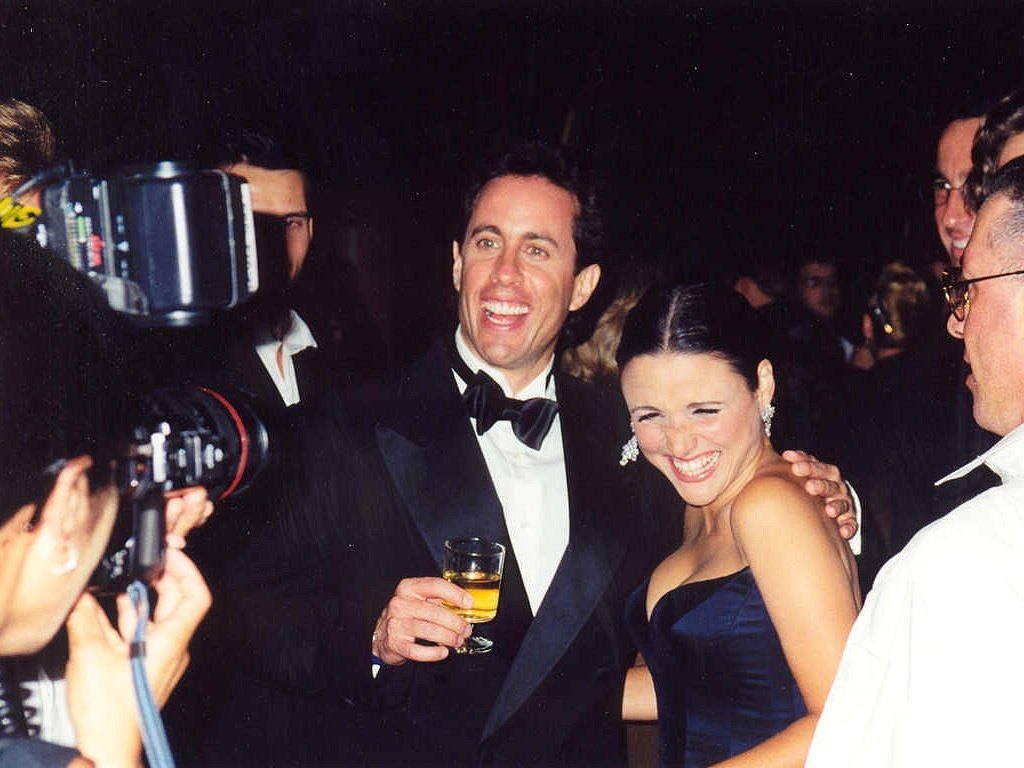
Art Vandelay, Jobs, Relationships & Newman
Q: What fake name does George use repeatedly?
A: Art Vandelay.
Q: What fictitious company name accompanies George’s alias Art Vandelay?
A: Vandelay Industries.
Q: What fictional profession does George assign Art Vandelay?
A: Architect, importer-exporter, and other invented jobs depending on the lie.
Q: What actual baseball organization hires George?
A: New York Yankees.
Q: Who is George's boss there?
A: George Steinbrenner.
Q: Is Steinbrenner shown normally from the front?
A: No, the character is often filmed from behind while Larry David provides the voice.
Q: What publishing company employs Elaine?
A: Pendant Publishing early on.
Q: What eccentric catalog boss later employs Elaine?
A: J. Peterman.
Q: Who plays J. Peterman?
A: John O'Hurley.
Q: What company does Elaine work for at the end?
A: J. Peterman Catalog.
Q: What is Newman's job?
A: Postal worker.
Q: Who plays Newman?
A: Wayne Knight.
Q: What is Jerry's reaction when Newman appears?
A: A disgusted “Hello, Newman.”
Q: What relationship does Newman have with Kramer?
A: Close friend and frequent co-conspirator.
Q: What building does Newman live in?
A: Jerry and Kramer's building.
Q: Who is George engaged to?
A: Susan Ross.
Q: What bizarre accident kills Susan?
A: Toxic glue from cheap wedding-invitation envelopes.
Q: Who chose the cheap invitations?
A: George.
Q: What is George's reaction to Susan's death?
A: Shock mixed with disturbing relief rather than conventional grief.
Q: What does George’s response to Susan’s death reveal about Seinfeld’s tone?
A: The show often rejects sentimental sitcom morality.
Q: What woman does Jerry describe as having “man hands”?
A: A girlfriend whose hands bother him.
Q: What tiny detail often ends Jerry's relationships?
A: Almost anything, including eating habits, voice, hygiene, appearance, or quirks.
Q: What relationship problem does Elaine have with Puddy?
A: They repeatedly break up and reunite.
Q: What is David Puddy's profession?
A: Auto mechanic and later car salesman.
Q: Who plays Puddy?
A: Patrick Warburton.
Q: What phrase is Puddy known for?
A: “Yeah, that's right.”
Q: What hockey team does Puddy support?
A: New Jersey Devils.
Q: How does Puddy show his New Jersey Devils support?
A: He paints his face like a devil.
Q: What kind of people populate Seinfeld's dating plots?
A: Normal-looking people with one tiny trait the characters obsess over.
Q: Why is Art Vandelay useful to George?
A: It gives him a reusable identity whenever a lie needs a professional-sounding name.
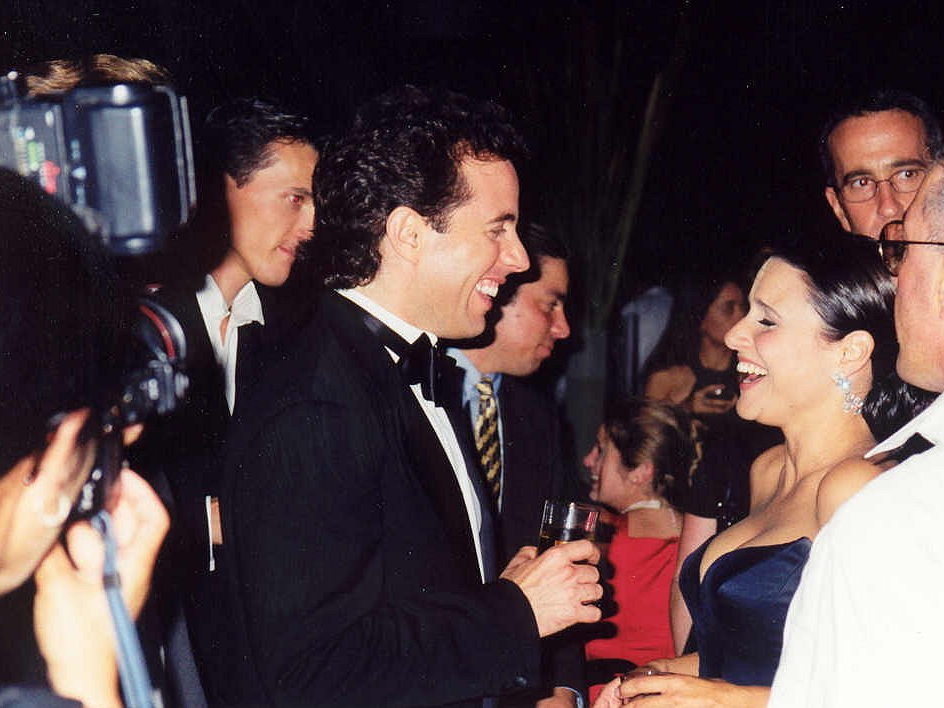
Festivus, Soup Nazi & Classic Episodes
Q: What holiday does Frank Costanza invent?
A: Festivus.
Q: When is Festivus celebrated?
A: December 23.
Q: What object replaces a Christmas tree?
A: An unadorned aluminum pole.
Q: Why is the pole unadorned?
A: Frank finds tinsel distracting.
Q: What dinner ritual lets people complain about one another?
A: Airing of Grievances.
Q: What physical contest can end Festivus?
A: Feats of Strength.
Q: What episode introduced Festivus?
A: “The Strike.”
Q: What strict soup vendor becomes famous in one episode?
A: The Soup Nazi.
Q: What phrase does the Soup Nazi use to ban customers?
A: “No soup for you!”
Q: What is the character's name?
A: Yev Kassem.
Q: What does Elaine find that threatens the Soup Nazi?
A: His recipes in an armoire.
Q: What episode features the group's parking-garage ordeal?
A: “The Parking Garage.”
Q: What are Jerry, George, Elaine, and Kramer trying to find in “The Parking Garage”?
A: Kramer’s car.
Q: What embarrassing problem affects Jerry?
A: He is caught urinating in the garage.
Q: What episode follows the group waiting for a table at a Chinese restaurant?
A: “The Chinese Restaurant.”
Q: Does the episode largely happen in one location?
A: Yes.
Q: What episode revolves around a bet involving self-control?
A: “The Contest.”
Q: Does the episode explicitly name the act being avoided?
A: No.
Q: What phrase signals someone has lost?
A: “I'm out.”
Q: What object falls into a surgical patient in “The Junior Mint”?
A: A Junior Mint.
Q: How does a Junior Mint fall into the surgical patient?
A: Kramer and Jerry accidentally launch it from the observation area.
Q: What clothing item makes Jerry look like a pirate?
A: Puffy shirt.
Q: Why does Jerry agree to wear the puffy shirt?
A: He cannot hear the low-talking designer and accidentally agrees.
Q: What is a close talker?
A: Someone who stands uncomfortably close during conversation.
Q: What is a low talker?
A: Someone who speaks extremely quietly.
Q: What is a high talker?
A: A man with an unusually high-pitched voice.
Q: What rye bread causes an elaborate scheme?
A: Marble rye.
Q: How does Kramer try to get the marble rye into George’s apartment?
A: He fishes it up with a line.
Q: What does George shout during a fire escape?
A: He pushes past children and elderly people in panic, revealing his selfishness.
Q: Why do tiny objects like soup, mints, shirts, and bread become iconic?
A: Seinfeld builds entire social disasters around mundane details.

The Finale, Catchphrases & Hard Seinfeld Trivia
Q: What happens in the series finale?
A: Jerry, George, Elaine, and Kramer are arrested and tried under a Good Samaritan law.
Q: What do the four Seinfeld characters fail to do in the finale?
A: Help a man being robbed.
Q: What do the four characters do instead of helping the robbery victim?
A: They joke and film the incident.
Q: What unusual trial device brings back many past characters?
A: Witnesses testify about the group's selfish behavior.
Q: What sentence do the four receive?
A: One year in prison.
Q: What conversation do Jerry and George repeat in prison?
A: A button placement discussion echoing the pilot.
Q: What does the button-conversation callback in the finale emphasize?
A: The characters have barely changed.
Q: What is the final episode called?
A: “The Finale.”
Q: In what year did Seinfeld end?
A: 1998.
Q: In what year did Seinfeld premiere?
A: 1989.
Q: What was the pilot originally called?
A: The Seinfeld Chronicles.
Q: What show did Larry David later create and star in?
A: Curb Your Enthusiasm.
Q: What recurring phrase does Kramer use when proposing an idea?
A: Variations of excited business schemes, often followed by Jerry's skepticism.
Q: What nickname does George use for a fictional alter ego opposite his normal personality?
A: Opposite George is a concept in “The Opposite,” not a formal alias.
Q: What does George decide to do in “The Opposite”?
A: Do the exact opposite of his instincts.
Q: What happens?
A: His life immediately improves.
Q: What baseball job does George get after doing the opposite?
A: A position with the New York Yankees.
Q: What happens to Elaine in “The Opposite” as George’s life improves?
A: Her life begins falling apart.
Q: What does “yada yada yada” mean in the show?
A: Skipping over details in a story.
Q: Which episode popularized the phrase “yada yada yada”?
A: “The Yada Yada.”
Q: What does “sponge-worthy” mean?
A: Elaine deciding whether a partner merits using one of her limited contraceptive sponges.
Q: Why are the sponges limited?
A: Her preferred contraceptive product is discontinued.
Q: What is “shrinkage”?
A: A joke about temporary male anatomical shrinkage after cold water.
Q: Which episode introduced the show’s “shrinkage” joke?
A: “The Hamptons.”
Q: What holiday is “for the rest of us”?
A: Festivus.
Q: What does “master of your domain” refer to?
A: The unnamed contest of self-control.
Q: What is “double dipping”?
A: Biting a chip and dipping the bitten chip again.
Q: Who is confronted for double dipping?
A: George.
Q: What makes Seinfeld especially deep trivia material?
A: Mundane etiquette, fake names, one-off characters, food, relationships, New York locations, and phrases became permanent pop-culture shorthand.
Q: Why is a show “about nothing” actually full of trivia?
A: It treats tiny social rules as if they are world-changing events.
How Did You Score?
If Art Vandelay, the marble rye, Junior Mint, Festivus pole, Puddy's face paint, “The Contest,” the Good Samaritan trial, and the button conversation all came easily, your Seinfeld trivia is real and spectacular.

Ellie Simons creates and edits Random Trivia. She researches trivia using primary and authoritative sources whenever possible and is currently reviewing the site's older trivia library for accuracy, clarity, and playability. Read more on the About page.
About this quiz
Site editor: Ellie Simons. Read our Trivia Methodology to learn how questions are researched and updated. Page last updated: . Report an error.