
Chicago trivia has range. One minute I am untangling a cow story that never checked out, and the next I am choosing between a dipped Italian beef, a square of tavern pizza, and the train platform I should have used two stops ago.
Crossroads, Fire, Industry & the First Skyscrapers
Q: Which state contains Chicago?
A: Illinois. The city sits in the state’s northeastern corner.
Q: Which lake forms Chicago’s eastern edge?
A: Lake Michigan. It is the only Great Lake located entirely within the United States.
Q: What is Chicago’s common nickname?
A: The Windy City. The nickname may refer as much to boastful talk as to weather.
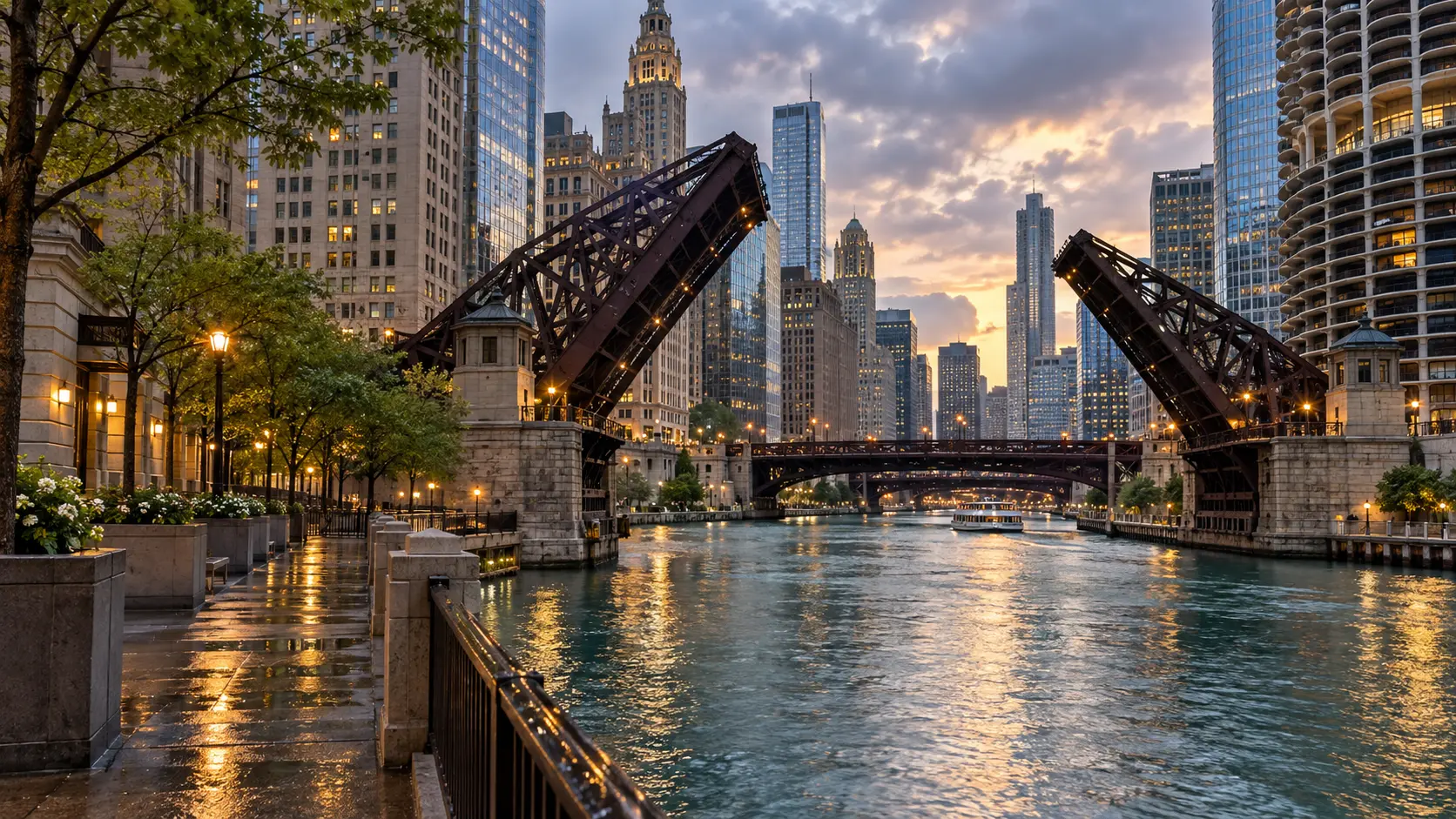
Q: Which river runs through downtown Chicago?
A: The Chicago River. Its branches divide several parts of the city.
Q: What French name inspired the word Chicago?
A: Chicagou, a French rendering of an Indigenous word for wild garlic or onion.
Q: Which Indigenous peoples lived in the Chicago region before permanent European settlement?
A: Several peoples, including the Potawatomi, Miami, and Illinois Confederation. The area was a major crossroads.
Q: Who is widely recognized as Chicago’s first permanent non-Indigenous settler?
A: Jean Baptiste Point du Sable. He established a trading post near the river’s mouth.
Q: When was Chicago incorporated as a city?
A: 1837. Its population then was only a small fraction of today’s.
Q: Which 1830s project connected the Great Lakes to the Mississippi River system?
A: The Illinois and Michigan Canal. It linked the Chicago River with the Illinois River.
Q: What transportation industry made Chicago a national hub in the nineteenth century?
A: Railroads. Lines radiated from the city across the country.
Q: What 1871 disaster destroyed much of central Chicago?
A: The Great Chicago Fire. It burned from October 8 through October 10.
Q: Where did the Great Chicago Fire famously begin?
A: Near the O’Leary family barn on DeKoven Street. The exact cause remains unknown.
Q: Which famous fire story has never been proved?
A: The claim that Mrs. O’Leary’s cow kicked over a lantern. A reporter later admitted inventing details.
Q: What symbol rose from Chicago’s rebuilding after the Great Fire?
A: A phoenix. It appears on the city flag as a sign of rebirth.
Q: Which 1893 fair was held in Chicago?
A: The World’s Columbian Exposition. It commemorated the four-hundredth anniversary of Columbus’s voyage.
Q: What nickname described the bright classical buildings of the 1893 fair?
A: The White City. Electric lighting added to the spectacle.
Q: Which amusement ride debuted as a major attraction at the 1893 fair?
A: The original Ferris wheel. George Washington Gale Ferris Jr. designed it.
Q: Which Chicago museum occupies the fair’s former Palace of Fine Arts?
A: The Museum of Science and Industry. The building was later substantially rebuilt.
Q: Which serial killer operated during the era of the 1893 fair?
A: H. H. Holmes. Popular retellings often exaggerate parts of his story.
Q: What labor protest in 1886 became a global symbol of workers’ rights?
A: The Haymarket affair. A bomb and gunfire killed police officers and civilians.
Q: Which 1894 labor conflict began at a company town south of downtown?
A: The Pullman Strike. Federal intervention helped break the strike.
Q: What engineering project reversed the Chicago River’s flow?
A: The Chicago Sanitary and Ship Canal system. It opened in 1900.
Q: Why was the Chicago River reversed?
A: To carry sewage away from Lake Michigan, the city’s drinking-water source.
Q: Which 1909 proposal shaped Chicago’s boulevards, parks, and lakefront?
A: The Plan of Chicago. Daniel Burnham and Edward Bennett prepared it.
Q: Who is associated with the advice to make no little plans?
A: Daniel Burnham. The exact wording was reported after his death.
Q: Which Chicago building is often called the first modern skyscraper?
A: The Home Insurance Building. It was completed in 1885 and later demolished.
Q: Which construction system helped make early skyscrapers possible?
A: Metal-frame construction. The frame carried loads that thick masonry walls once bore.
Q: Which architect developed Prairie School houses in and around Chicago?
A: Frank Lloyd Wright. His home and studio are in nearby Oak Park.
Q: Which architecture firm designed the Auditorium Building?
A: Adler and Sullivan. The landmark combines a theater, hotel, and offices.
Q: Which architect became known for the phrase form follows function?
A: Louis Sullivan. He helped define the look of the early skyscraper.
The Loop, Neighborhoods, Transit & Lakefront Landmarks
Q: Which downtown area forms Chicago’s central business district?
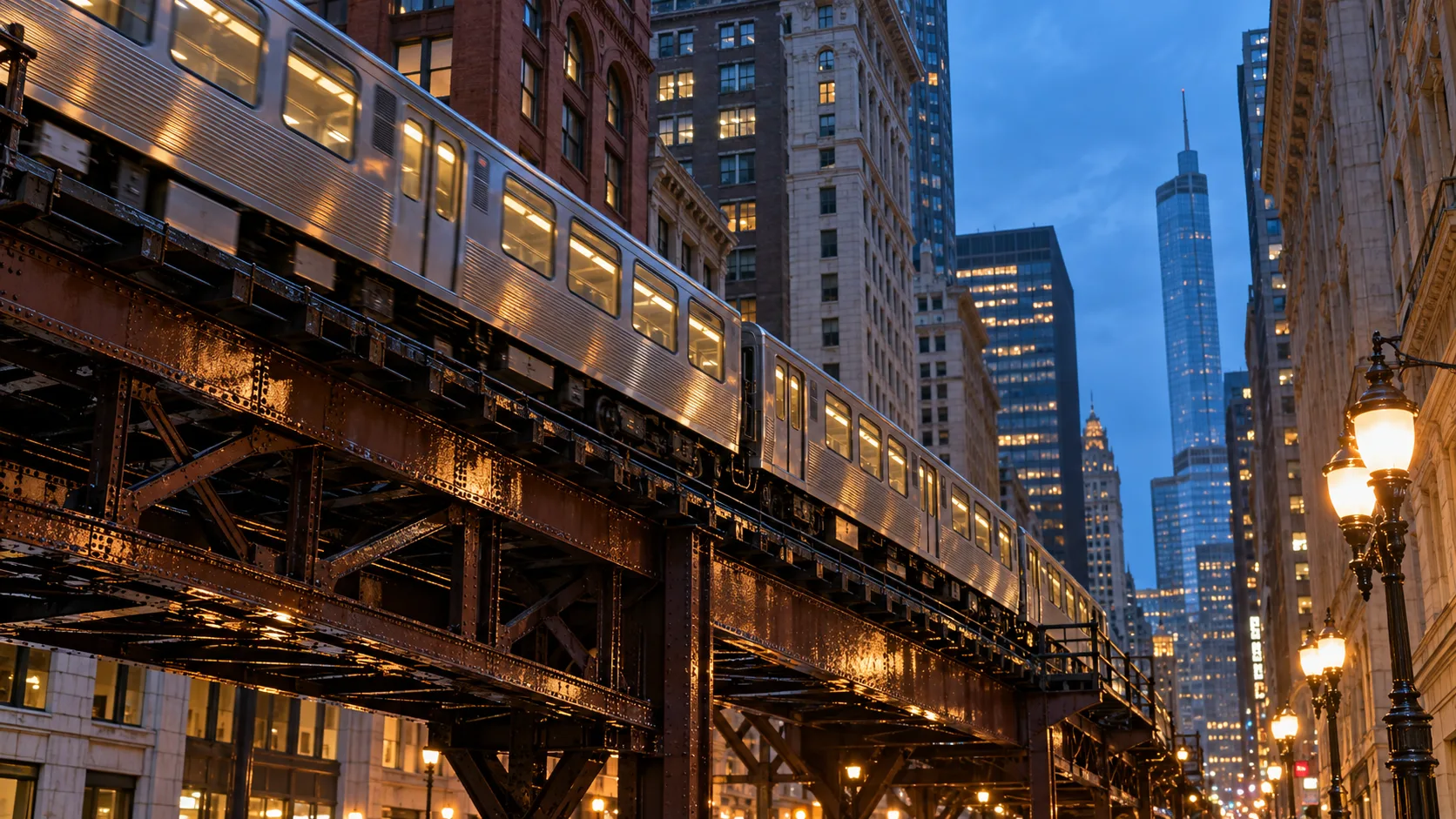
A: The Loop. Elevated train tracks encircle part of it.
Q: What does the L in Chicago transit refer to?
A: Elevated rail. Some lines also run at street level or underground.
Q: Which agency operates Chicago’s buses and L trains?
A: The Chicago Transit Authority, or CTA.
Q: Which commuter rail system connects downtown with the suburbs?
A: Metra. Its trains use several terminal stations.
Q: Which airport is one of Chicago’s two major commercial airports?
A: O’Hare International Airport. Midway is the other major airport.
Q: Which airport was once the world’s busiest by passenger traffic?
A: O’Hare International Airport. Its growth followed World War II.
Q: Which street is nicknamed the Magnificent Mile?
A: North Michigan Avenue. Shops and landmarks line the avenue north of the river.
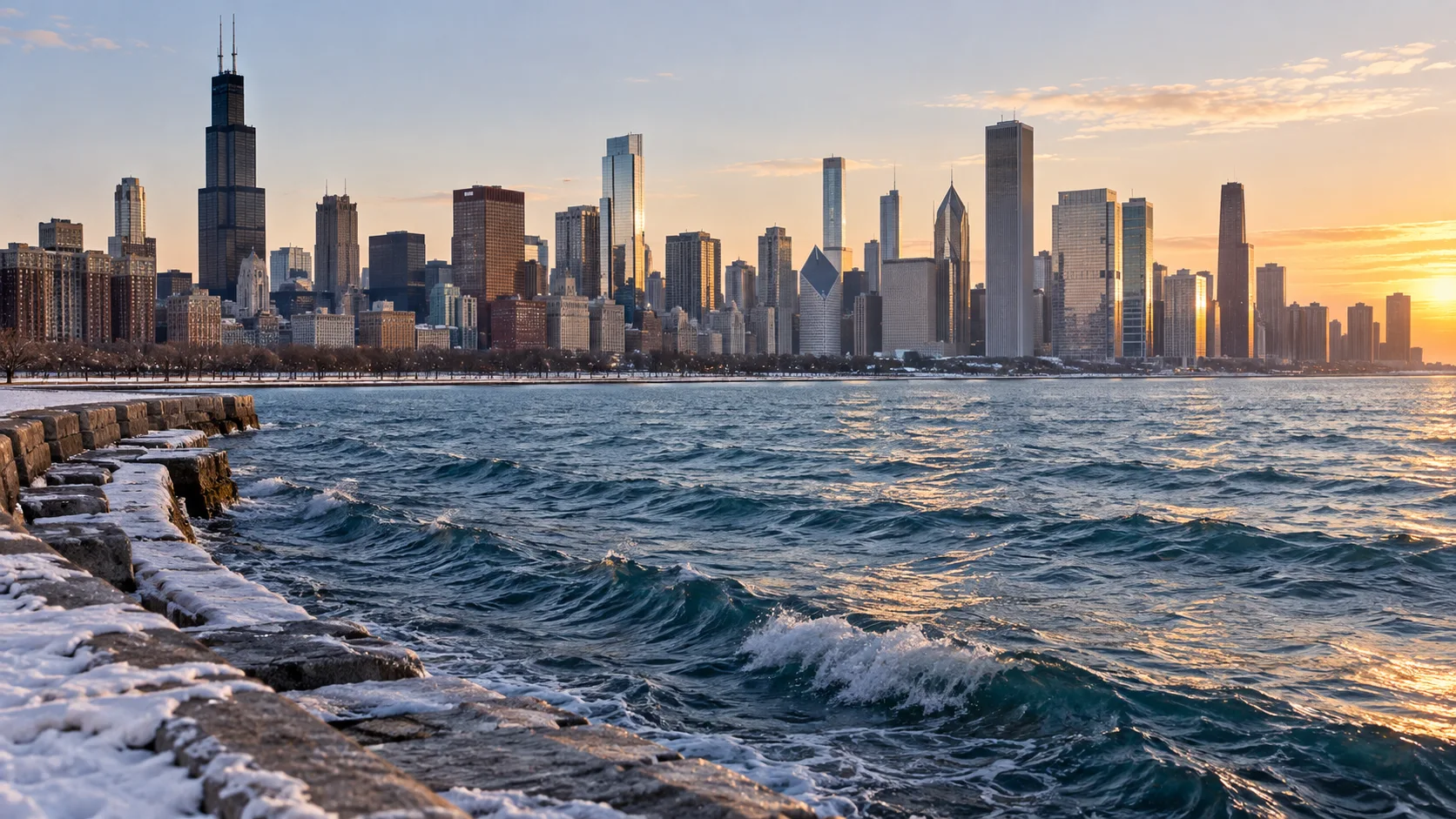
Q: Which tower was once called the Sears Tower?
A: Willis Tower. The building kept its familiar silhouette after the name change.
Q: What glass attraction extends from the Willis Tower Skydeck?
A: The Ledge. Its boxes project beyond the building’s exterior.
Q: Which lakefront skyscraper has a tapering form and two antennas?
A: The John Hancock Center, officially 875 North Michigan Avenue.
Q: Which pair of towers has curving balconies that resemble corn cobs?
A: Marina City. Bertrand Goldberg designed the mixed-use complex.
Q: Which public artwork in Millennium Park is nicknamed the Bean?
A: Cloud Gate. Anish Kapoor designed its reflective stainless-steel form.
Q: Which outdoor venue in Millennium Park has a curling metal canopy?
A: Jay Pritzker Pavilion. Frank Gehry designed it.
Q: Which fountain in Millennium Park projects giant video faces?
A: Crown Fountain. Water periodically pours from the towers’ digital mouths.
Q: Which park sits beside Lake Michigan and contains Buckingham Fountain?
A: Grant Park. It is often called Chicago’s front yard.
Q: What is one of the world’s largest fountains and a Grant Park landmark?
A: Buckingham Fountain. It was dedicated in 1927.
Q: Which pier is a major lakefront attraction with rides and boats?
A: Navy Pier. It opened in 1916 as Municipal Pier.
Q: Which museum campus includes the Field Museum, Shedd Aquarium, and Adler Planetarium?
A: Museum Campus. It occupies lakefront parkland south of downtown.
Q: Which museum displays the famous Tyrannosaurus rex called Sue?
A: The Field Museum. Sue is one of the most complete T. rex skeletons discovered.
Q: Which aquarium opened in Chicago in 1930?
A: Shedd Aquarium. It stands beside Lake Michigan.
Q: Which planetarium was the first in the Western Hemisphere?
A: Adler Planetarium. It opened in 1930.
Q: Which art museum owns A Sunday on La Grande Jatte?
A: The Art Institute of Chicago. Georges Seurat painted the work.
Q: Which two bronze animals guard the Art Institute’s Michigan Avenue entrance?
A: Lions. Sculptor Edward Kemeys created them.
Q: Which neighborhood is the historic center of Chicago’s Mexican American community?
A: Pilsen. Murals cover many buildings there.
Q: Which neighborhood is known for a large Puerto Rican community and Paseo Boricua?
A: Humboldt Park. Steel Puerto Rican flags mark the corridor.
Q: Which neighborhood became a major center of Black business and culture during the Great Migration?
A: Bronzeville. It lies on Chicago’s South Side.
Q: Which neighborhood is home to Wrigley Field?
A: Lakeview. The surrounding area is commonly called Wrigleyville.
Q: Which historic ballpark stands at Clark and Addison?
A: Wrigley Field. It opened in 1914.
Q: Which North Side district is known for a preserved Old Town Triangle and comedy clubs?
A: Old Town. Its streets include Victorian-era buildings.
Q: Which Chicago neighborhood is associated with Chinatown Square and restaurants along Wentworth Avenue?
A: Chinatown. The community shifted south from an earlier downtown location.
Pizza, Hot Dogs, Blues, House Music & Festivals
Q: Which Chicago food has cheese and toppings under a layer of tomato sauce?
A: Deep-dish pizza. Its tall pan-baked crust holds generous fillings.
Q: Which pizzeria is often credited with popularizing Chicago deep dish in 1943?
A: Pizzeria Uno. Ike Sewell and Ric Riccardo were among its founders.
Q: What is Chicago tavern-style pizza?
A: A thin, crisp pizza commonly cut into squares. Many locals eat it more often than deep dish.
Q: What makes a Chicago-style hot dog distinctive?
A: A beef frank is topped with mustard, relish, onions, tomato, pickle, sport peppers, and celery salt.
Q: Which condiment is traditionally left off a Chicago-style hot dog?
A: Ketchup. The omission inspires opinions far stronger than lunch requires.
Q: What type of bun holds a Chicago-style hot dog?
A: A poppy seed bun. It is usually steamed.
Q: What is an Italian beef sandwich?
A: Thin-sliced seasoned beef served on an Italian roll with its cooking juices.
Q: What does dipped mean when ordering Italian beef?
A: The whole sandwich is quickly submerged in gravy. It becomes deliciously messy.
Q: What pepper mixture often tops an Italian beef sandwich?
A: Giardiniera. Chicago versions commonly contain chopped pickled vegetables in oil.
Q: Which Chicago snack mixes cheese popcorn with caramel popcorn?
A: The blend often called the Chicago mix. Garrett Popcorn popularized its version.
Q: What liquor is infamous in Chicago as a bartender’s handshake?
A: Jeppson’s Malört. Its bitter flavor has become a local rite of passage.
Q: Which river is dyed green for Saint Patrick’s Day?
A: The Chicago River. The tradition began in 1962.
Q: Which annual parade is one of Chicago’s best-known Saint Patrick’s Day events?
A: The downtown Chicago Saint Patrick’s Day Parade. A separate South Side parade also has a long tradition.
Q: Which summer music festival takes over Grant Park?
A: Lollapalooza. Chicago became its permanent home in 2005.
Q: Which food festival has long showcased local restaurants in Grant Park?
A: Taste of Chicago. It began in 1980.
Q: Which massive blues festival is held by the city each year?
A: The Chicago Blues Festival. Admission has traditionally been free.
Q: Which electrified blues style developed in the city after the Great Migration?
A: Chicago blues. Amplified guitars and harmonicas helped define its sound.
Q: Which record label released influential Chicago blues recordings by Muddy Waters and Howlin’ Wolf?
A: Chess Records. Brothers Leonard and Phil Chess ran the label.
Q: Which singer is often called the father of modern Chicago blues?
A: Muddy Waters. He moved from Mississippi to Chicago in 1943.
Q: Which Chicago house-music club gave the genre its name?
A: The Warehouse. DJ Frankie Knuckles became central to its sound.
Q: Which DJ is widely called the godfather of house music?
A: Frankie Knuckles. He worked at the Warehouse and later the Power Plant.
Q: Which gospel singer became closely associated with Chicago?
A: Mahalia Jackson. She moved to the city as a teenager.
Q: Which orchestra plays at Symphony Center?
A: The Chicago Symphony Orchestra. It was founded in 1891.
Q: Which theater company performs at a landmark complex on Navy Pier?
A: Chicago Shakespeare Theater. Its productions range beyond Shakespeare.
Q: Which improvisational comedy company began in Chicago in 1959?
A: The Second City. Its alumni include many major comedians and actors.
Q: Which Chicago theater helped develop plays by David Mamet and other American writers?
A: Goodman Theatre. It began in 1925.
Q: What poetry performance format was born at Chicago’s Green Mill?
A: The poetry slam. Marc Smith organized early competitions there.
Q: Which historic jazz club is associated with Al Capone-era Chicago and poetry slams?
A: The Green Mill. It stands in the Uptown neighborhood.
Q: Which annual air show takes place along the lakefront?
A: The Chicago Air and Water Show. North Avenue Beach is a major viewing area.
Q: Which large annual parade celebrates Chicago’s LGBTQ+ community?
A: The Chicago Pride Parade. It is traditionally held on the North Side.
Cubs, Bulls, Bears, Movies & Famous Chicagoans
Q: Which Major League Baseball team plays at Wrigley Field?
A: The Chicago Cubs. They compete in the National League.
Q: Which Major League Baseball team plays at Rate Field?
A: The Chicago White Sox. They compete in the American League.
Q: Which Chicago baseball team ended a 108-year championship drought in 2016?
A: The Cubs. They defeated Cleveland in a seven-game World Series.
Q: Which scandal involved eight White Sox players from the 1919 World Series?
A: The Black Sox Scandal. The players were accused of conspiring to lose the series.
Q: Which basketball team won six NBA titles in the 1990s?
A: The Chicago Bulls. Their championships came in two three-peats.
Q: Which player led the Bulls dynasty of the 1990s?
A: Michael Jordan. He won six NBA Finals MVP awards.
Q: Which coach guided all six Bulls championship teams?
A: Phil Jackson. His system emphasized the triangle offense.
Q: Which hockey team shares the United Center with the Bulls?
A: The Chicago Blackhawks. They are one of the NHL’s Original Six teams.
Q: Which football team plays home games at Soldier Field?
A: The Chicago Bears. The franchise began as the Decatur Staleys.
Q: Which Bears team won Super Bowl XX?
A: The 1985 Chicago Bears. Their defense became one of football’s most celebrated units.
Q: Which running back was nicknamed Sweetness?
A: Walter Payton. He spent his entire NFL career with the Bears.
Q: Which women’s basketball team plays in Chicago?
A: The Chicago Sky. The team won the WNBA championship in 2021.
Q: Which soccer club plays in Major League Soccer?
A: Chicago Fire FC. Its name honors the Great Chicago Fire.
Q: Which mob boss became notorious during Prohibition-era Chicago?
A: Al Capone. Federal authorities ultimately convicted him of tax evasion.
Q: Which two federal prisons held Al Capone after his tax-evasion conviction?
A: The U.S. Penitentiary in Atlanta and Alcatraz. He was transferred to Alcatraz in 1934.
Q: Which architect designed the Robie House in Hyde Park?
A: Frank Lloyd Wright. The house is a landmark of Prairie School design.
Q: Which president worked as a community organizer and taught law in Chicago?
A: Barack Obama. His political career began in Illinois.
Q: Which first lady grew up on Chicago’s South Side?
A: Michelle Obama. She was raised in the South Shore neighborhood.
Q: Which animator and entertainment founder was born in Chicago in 1901?
A: Walt Disney. His birthplace stands in the Hermosa neighborhood.
Q: Which novelist wrote The Jungle after investigating Chicago’s meatpacking industry?
A: Upton Sinclair. The novel was published in 1906.
Q: Which poem begins by calling Chicago hog butcher for the world?
A: Chicago by Carl Sandburg. It portrays the city with both criticism and affection.
Q: Which movie musical follows Roxie Hart and Velma Kelly?
A: Chicago. The story grew from real 1920s murder trials.
Q: Which 1986 comedy features a teenager’s elaborate day off around Chicago?
A: Ferris Bueller’s Day Off. Its locations include the Art Institute and a downtown parade.
Q: Which holiday movie follows the McCallister family in suburban Chicago?
A: Home Alone. Much of it was filmed in and around the Chicago area.
Q: Which television drama follows the staff of a Chicago sandwich shop?
A: The Bear. The series uses Chicago neighborhoods and food culture as its setting.
Q: Which medical drama was set at the fictional County General Hospital?
A: ER. The long-running series was set in Chicago.
Q: Which legal drama follows Alicia Florrick in Chicago?
A: The Good Wife. Its story begins after a political scandal.
Q: Which director filmed The Dark Knight in recognizable Chicago locations?
A: Christopher Nolan. Lower Wacker Drive and downtown streets helped portray Gotham.
Q: Which university occupies a large campus in Hyde Park?
A: The University of Chicago. It was founded in 1890.
Q: Where did Enrico Fermi’s team achieve the first controlled, self-sustaining nuclear chain reaction?
A: Under Stagg Field at the University of Chicago. The experiment occurred in 1942.
How Did You Score?
If the river reversal, the Bean’s real name, the White City, Malört, Muddy Waters, and both baseball parks stayed sorted, you know Chicago well. I am rewarding myself with tavern-style pizza cut into squares, because geometry counts as culture here.

Ellie Simons creates and edits Random Trivia. She researches trivia using primary and authoritative sources whenever possible and is currently reviewing the site's older trivia library for accuracy, clarity, and playability. Read more on the About page.
About this quiz
Site editor: Ellie Simons. Read our Trivia Methodology to learn how questions are researched and updated. Page last updated: . Report an error.