
Welcome to the Octagon. These 120 UFC trivia questions cover UFC 1, the early no-weight-class era, modern rules, submissions, knockouts, championship history, The Ultimate Fighter, legendary fighters, famous rivalries, women's milestones, international expansion, and enough MMA vocabulary to survive a fight-night couch debate.
Historical milestones are checked against UFC's official history. Keep playing with our sports trivia, boxing trivia, and WWE trivia.
UFC 1, Royce Gracie & Early UFC History
Q: What does UFC stand for?
A: Ultimate Fighting Championship.
Q: In what year was UFC 1 held?
A: 1993.
Q: What city hosted UFC 1?
A: Denver, Colorado.
Q: What was the first event formally titled?
A: The Ultimate Fighting Championship.
Q: What was the original concept?
A: Match fighters from different martial arts to see which styles were effective in an open-rules contest.
Q: Were there modern weight classes at UFC 1?
A: No.
Q: Who won UFC 1?
A: Royce Gracie.
Q: What martial art was Royce Gracie famous for?
A: Brazilian jiu-jitsu.
Q: Why did Gracie's success shock many viewers?
A: He defeated larger opponents using grappling and submissions.
Q: What family is deeply connected with Brazilian jiu-jitsu and early UFC history?
A: Gracie family.
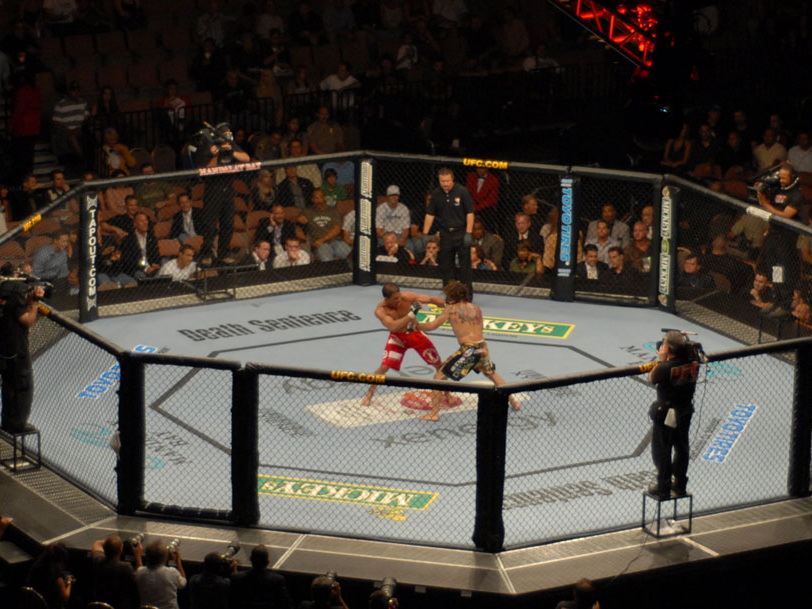
Q: What shape defines the UFC fighting enclosure?
A: Octagon.
Q: How many sides does an octagon have?
A: Eight.
Q: Why was the enclosure visually important to UFC branding?
A: It immediately distinguished UFC from boxing rings and other combat sports.
Q: Did early UFC have rounds like the modern sport?
A: Early formats differed greatly and evolved over time.
Q: What did “no holds barred” imply in early marketing?
A: Far fewer restrictions than modern regulated MMA, though even early events had some rules.
Q: Was literally everything legal at UFC 1?
A: No.
Q: What political criticism threatened UFC's survival in the 1990s?
A: Critics described it as dangerously violent and pushed broadcasters and states to reject it.
Q: What did UFC do to gain wider regulation?
A: Added weight classes, rounds, gloves, clearer fouls, judges, and standardized rules.
Q: What broader sport did UFC help popularize?
A: Mixed martial arts.
Q: What does MMA stand for?
A: Mixed martial arts.
Q: Does MMA mean one specific martial art?
A: No. It blends techniques from many combat disciplines.
Q: Name one striking art common in MMA.
A: Boxing, Muay Thai, kickboxing, or karate.
Q: Name one grappling art common in MMA.
A: Wrestling, Brazilian jiu-jitsu, judo, or sambo.
Q: What businessman became the public face of UFC leadership in the 2000s?
A: Dana White.
Q: What brothers acquired UFC through Zuffa in 2001?
A: Lorenzo and Frank Fertitta.
Q: What was Zuffa?
A: The company that owned and operated UFC during its major growth era.
Q: What reality show helped UFC reach a new audience in 2005?
A: The Ultimate Fighter.
Q: What famous finale fight helped make that show a breakthrough?
A: Forrest Griffin versus Stephan Bonnar.
Q: Who won that fight?
A: Forrest Griffin.
Q: Why is early UFC history essential?
A: It explains how a style-versus-style spectacle evolved into a regulated global sport.
Rules, Weight Classes, Submissions & MMA Language
Q: How many rounds are standard in many non-title UFC fights?
A: Three.
Q: How many rounds are standard in title fights?
A: Five.
Q: How long is a UFC round?
A: Five minutes.
Q: How long is the rest between rounds?
A: One minute.
Q: What does KO stand for?
A: Knockout.
Q: What does TKO stand for?
A: Technical knockout.
Q: What is a submission?
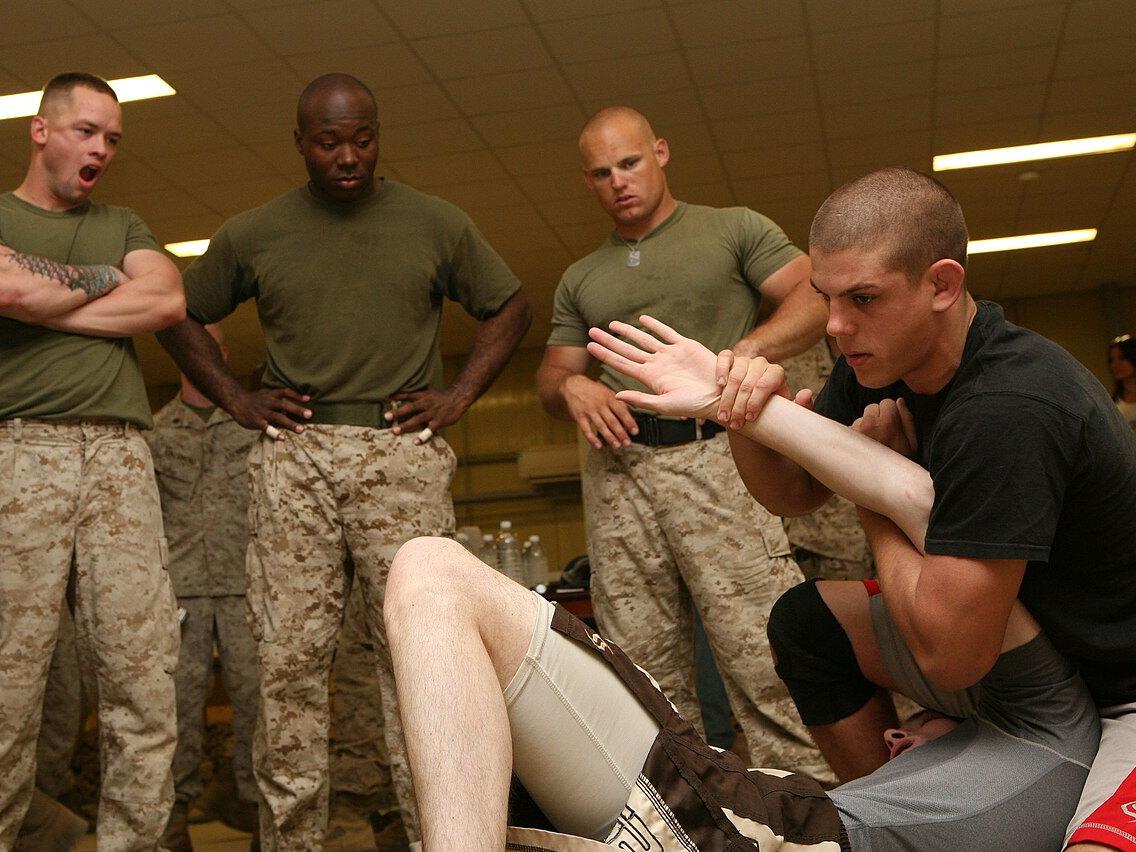
A: A fighter gives up, usually because of a choke or joint lock.
Q: What physical signal commonly indicates submission?
A: Tapping the opponent or mat.
Q: Can a fighter verbally submit?
A: Yes.
Q: What is a rear-naked choke?
A: A choke applied from behind without using clothing.
Q: What joint does an armbar attack?
A: Elbow.
Q: What joint does a kimura primarily attack?
A: Shoulder.
Q: What does guillotine refer to in MMA?
A: A front head-and-neck choke.
Q: What is a takedown?
A: Bringing an opponent from standing to the ground with control.
Q: What is ground-and-pound?
A: Striking an opponent while controlling a ground position.
Q: What is guard?
A: A ground position in which the fighter underneath uses the legs to control the opponent.
Q: What is mount?
A: A dominant top position sitting over the opponent's torso.
Q: What is side control?
A: A top grappling position across the opponent's torso.
Q: What is a sprawl?
A: A defensive movement used to stop takedowns.
Q: What does striking accuracy measure?
A: The proportion of attempted strikes that land under the stat system.
Q: What is significant strike terminology used for?
A: Tracking meaningful distance, clinch, and ground strikes under UFC statistics.
Q: How are fights scored if they reach the judges?
A: Using the 10-point must system under modern unified rules.
Q: What is a unanimous decision?
A: All judges choose the same winner.
Q: What is a split decision?
A: Two judges choose one fighter and one chooses the other.
Q: What is a majority decision?
A: Two judges choose one fighter and one scores a draw.
Q: What is a no contest?
A: A bout officially ends without a win or loss under certain circumstances.
Q: Are eye gouges legal?
A: No.
Q: Are bites legal?
A: No.
Q: Are strikes to the back of the head legal?
A: No.
Q: Why do weight classes matter?
A: They reduce extreme size mismatches and structure championships.
Champions, Legends & Famous Rivalries
Q: Who became the UFC's first women's champion?
A: Ronda Rousey.
Q: What division did Rousey champion?
A: Women's bantamweight.
Q: What submission was Rousey famous for?
A: Armbar.
Q: What former Olympic sport was Rousey's base?
A: Judo.
Q: What Brazilian fighter ended Rousey's unbeaten UFC run?
A: Amanda Nunes did not end it; Holly Holm did.
Q: How did Holly Holm beat Rousey?
A: Head-kick knockout.
Q: Who became a dominant two-division women's champion?
A: Amanda Nunes.
Q: What nickname is Nunes known by?
A: The Lioness.
Q: What two divisions did Nunes hold belts in?
A: Bantamweight and featherweight.
Q: What Canadian champion is often abbreviated GSP?
A: Georges St-Pierre.
Q: What division is GSP most associated with?
A: Welterweight.
Q: What second division did GSP win a title in?
A: Middleweight.
Q: What Brazilian middleweight champion became famous for a long UFC winning streak?
A: Anderson Silva.
Q: What nickname is Silva known by?
A: The Spider.
Q: What American fighter ended Silva's title reign?
A: Chris Weidman.
Q: What fighter became the youngest UFC champion?
A: Jon Jones.
Q: What division did Jones first dominate?
A: Light heavyweight.
Q: What longtime rival did Jones face twice in UFC competition?
A: Daniel Cormier.
Q: What Irish star became the first simultaneous UFC two-division champion?
A: Conor McGregor.
Q: What two divisions did McGregor hold simultaneously?
A: Featherweight and lightweight.
Q: Who did McGregor knock out in 13 seconds to win the featherweight title?
A: José Aldo.
Q: What Brazilian champion had held the featherweight title for years before McGregor?
A: José Aldo.
Q: What lightweight champion defeated McGregor by submission at UFC 229?
A: Khabib Nurmagomedov.
Q: What was Khabib's primary combat background?
A: Wrestling, sambo, and grappling.
Q: What record did Khabib retire with?
A: 29-0 in professional MMA.
Q: What heavyweight became famous for knockout power and later won a UFC title after emigrating from Cameroon?
A: Francis Ngannou.
Q: What longtime heavyweight champion is known for wrestling, boxing, and Cleveland roots?
A: Stipe Miocic.
Q: What fighter was nicknamed The Prodigy and won UFC titles in lightweight and welterweight?
A: B.J. Penn.
Q: What fighter famously fought with a “Stockton slap” style and high-volume boxing?
A: Nate Diaz.
Q: Why are UFC legacy debates so difficult?
A: Fighters competed in different eras, divisions, rule environments, and levels of sport maturity.
Events, Hall of Fame & Hard UFC Trivia
Q: What is a UFC numbered event?
A: A major card identified by a sequential event number.
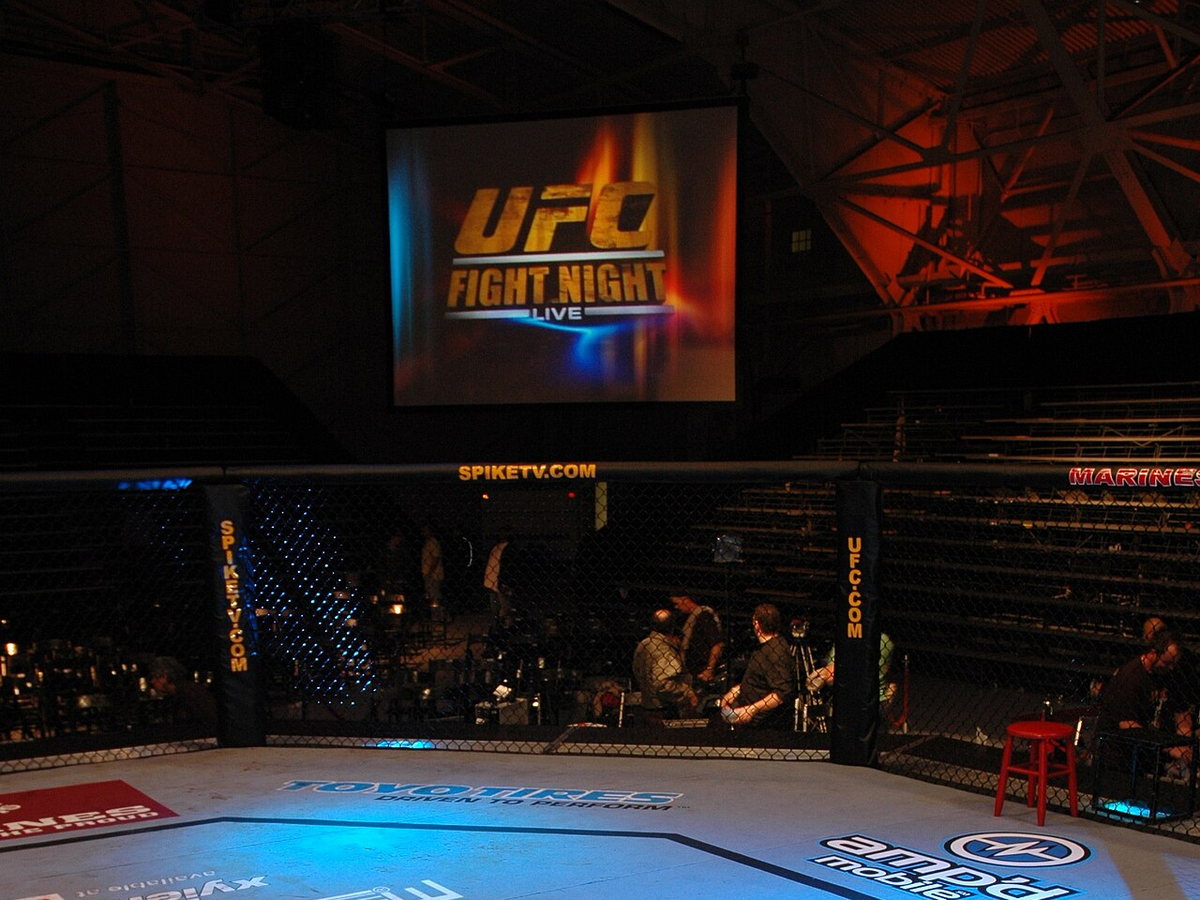
Q: What is UFC Fight Night?
A: A recurring event series separate from numbered pay-per-view-style cards.
Q: What venue city became closely associated with UFC during the pandemic era?
A: Abu Dhabi through Fight Island events.
Q: What was Fight Island's actual location?
A: Yas Island in Abu Dhabi.
Q: Why was Fight Island created?
A: To facilitate international fights during COVID-era travel restrictions.
Q: What venue in Las Vegas has hosted many UFC events?
A: T-Mobile Arena, among others.
Q: What smaller UFC facility hosts events and television production?
A: UFC Apex.
Q: What city is UFC headquarters associated with?
A: Las Vegas.
Q: What company acquired UFC in a landmark 2016 transaction?
A: A group led by WME-IMG, now Endeavor.
Q: What new public company combined UFC and WWE in 2023?
A: TKO Group Holdings.
Q: Does UFC itself mean the entire sport of MMA?
A: No.
Q: What does the UFC Hall of Fame honor?
A: Important fighters, fights, contributors, and pioneers.
Q: What Hall of Fame wing honors specific legendary bouts?
A: Fight Wing.
Q: What famous 2005 bout is in UFC's Hall of Fame?
A: Forrest Griffin versus Stephan Bonnar I.
Q: What reality series produced that fight?
A: The Ultimate Fighter.
Q: What do coaches often do between rounds?
A: Give tactical advice, manage cuts, hydrate fighters, and assess condition.
Q: What professional handles cuts and swelling in a fighter's corner?
A: Cutman.
Q: What medical professional can advise stopping a fight?
A: Ringside physician.
Q: What does a referee do besides start and stop action?
A: Enforces rules, protects fighters, separates fouls, and judges whether a fighter can intelligently defend.
Q: What does “intelligent defense” mean in stoppage discussions?
A: The fighter must show meaningful ability to protect themselves rather than merely remain conscious.
Q: What is a championship belt?
A: The physical symbol awarded to a UFC division champion.
Q: What is an interim championship?
A: A temporary title used when the undisputed champion cannot defend under certain circumstances.
Q: What does unification bout mean?
A: A fight intended to merge interim and undisputed championship claims.
Q: What does pound-for-pound mean?
A: Comparing fighters across weight classes as if size differences were removed.
Q: Is pound-for-pound ranking an actual championship division?
A: No.
Q: What is a weigh-in?
A: Official weight verification before a fight.
Q: What can happen if a fighter misses weight?
A: The bout may change terms, incur a purse penalty, lose title eligibility, or be canceled.
Q: Why should UFC trivia avoid current champion questions in evergreen articles?
A: Belts can change hands quickly.
Q: What makes UFC trivia different from boxing trivia?
A: UFC bouts combine striking, wrestling, submissions, clinch work, kicks, knees, elbows, and cage tactics under MMA rules.
Q: Why is UFC especially deep trivia material?
A: Three decades connect style-versus-style experiments, regulation, global stars, reality TV, evolving rules, multiple divisions, submissions, knockouts, and rapidly changing championship history.
How Did You Score?
If Denver 1993, Royce Gracie, Wing Slutz belongs elsewhere, the 10-point must system, Griffin-Bonnar, GSP, the 13-second Aldo knockout, Fight Island, and TKO Group all came easily, your UFC trivia can go five rounds.

Ellie Simons creates and edits Random Trivia. She researches trivia using primary and authoritative sources whenever possible and is currently reviewing the site's older trivia library for accuracy, clarity, and playability. Read more on the About page.
About this quiz
Site editor: Ellie Simons. Read our Trivia Methodology to learn how questions are researched and updated. Page last updated: . Report an error.